TikTok Creator Tracking Software for Fashion Brands That Run on Speed and Seasonality
If you manage influencer marketing for a fashion brand, you already know that TikTok moves faster than any other channel in your mix. Seasonal drops, seeding waves, and campaign bursts demand real-time visibility into what creators are posting, when, and how it performs. TikTok creator tracking software for fashion brands is no longer optional; it is the operational backbone that separates reactive teams from ones that scale.
CreatorWatcher gives influencer marketing managers a structured way to monitor every creator touchpoint across TikTok without toggling between native dashboards and spreadsheets. From whitelisting ad performance signals to post-level benchmarking during a capsule launch, the platform is built for the pace fashion demands.
This page breaks down the specific challenges fashion teams face on TikTok, why legacy tools fall short, and how CreatorWatcher fits into the weekly workflow of an influencer marketing manager running seasonal campaigns at scale.
Why TikTok Creator Tracking Is Uniquely Difficult for Fashion Brands
Seasonal Drop Timelines Compress Every Deadline
Fashion operates on tight seasonal calendars. A pre-fall seeding window might last two weeks, and if you cannot track which creators have posted, which posts are gaining traction, and which are still pending, you lose the ability to optimize mid-flight. Tracking gaps during these compressed windows cost real revenue.
Influencer Seeding at Scale Creates Visibility Gaps
Seeding campaigns often involve sending product to dozens or even hundreds of creators simultaneously. Without a centralized tracking layer, influencer marketing managers are left chasing DMs and scrolling profiles manually to confirm who posted and what the content looked like.
Campaign Bursts Require Real-Time Signal Detection
Fashion campaign bursts, such as a coordinated launch-day push, need immediate performance reads. Waiting 48 hours for a platform report or a manual spreadsheet update means you miss the window to amplify top-performing content or pause underperformers.
Whitelisting Ads Depend on Accurate Post-Level Data
When your paid media team wants to whitelist a creator's TikTok post for ad spend, they need to know which posts are actually resonating organically first. Without structured post-level tracking, whitelisting decisions are based on gut feel rather than performance signals.
Creator Rosters Shift Between Seasons
Fashion brands rarely work with the same creator roster year-round. New faces emerge every season, micro-creators break out during fashion weeks, and last season's top performer may have shifted aesthetics. Tracking needs to accommodate constant roster turnover.
Competitor Creator Activity Is Hard to Monitor
Rival fashion labels are recruiting from the same creator pool. Without a way to track competitor-affiliated creators on TikTok, you are blind to who is being seeded by other brands and which creators are splitting loyalty across competing labels.
Why Spreadsheets and Native Analytics Cannot Keep Up
TikTok's Native Dashboard Was Not Built for Multi-Creator Oversight
TikTok Creator Marketplace and native analytics give you data on your own branded content, but they do not let you monitor a roster of 80 seeded creators in one view. Influencer marketing managers asking how to track TikTok creators in fashion quickly discover that native tools were designed for individual creator insights, not cross-roster campaign tracking.
Spreadsheets Break Under Seasonal Volume
A manual spreadsheet might work for a five-creator capsule, but fashion teams running seasonal drops with 30 to 100 creators cannot maintain accuracy. Copy-paste errors, stale data, and inconsistent formatting make spreadsheets unreliable exactly when stakes are highest.
Screenshot-Based Reporting Wastes Hours Every Week
Many fashion teams still screenshot TikTok posts and paste them into slide decks for stakeholder reporting. This workflow consumes hours that could be spent on strategy, and the data is already outdated by the time it reaches a brand director's inbox.
No Structured Way to Compare Creator Performance Across Drops
Traditional tools do not let you compare how the same creator performed during your spring seeding versus your holiday campaign burst. Without longitudinal tracking, you cannot identify which creators consistently deliver and which are one-hit anomalies.
Whitelisting Decisions Are Delayed by Data Lag
When post-level metrics are scattered across DMs, emails, and platform exports, the paid team cannot move fast enough to whitelist high-performing organic content before the algorithm's momentum window closes.
Feature Breakdown for Fashion Influencer Marketing Managers
Creator Roster Monitoring
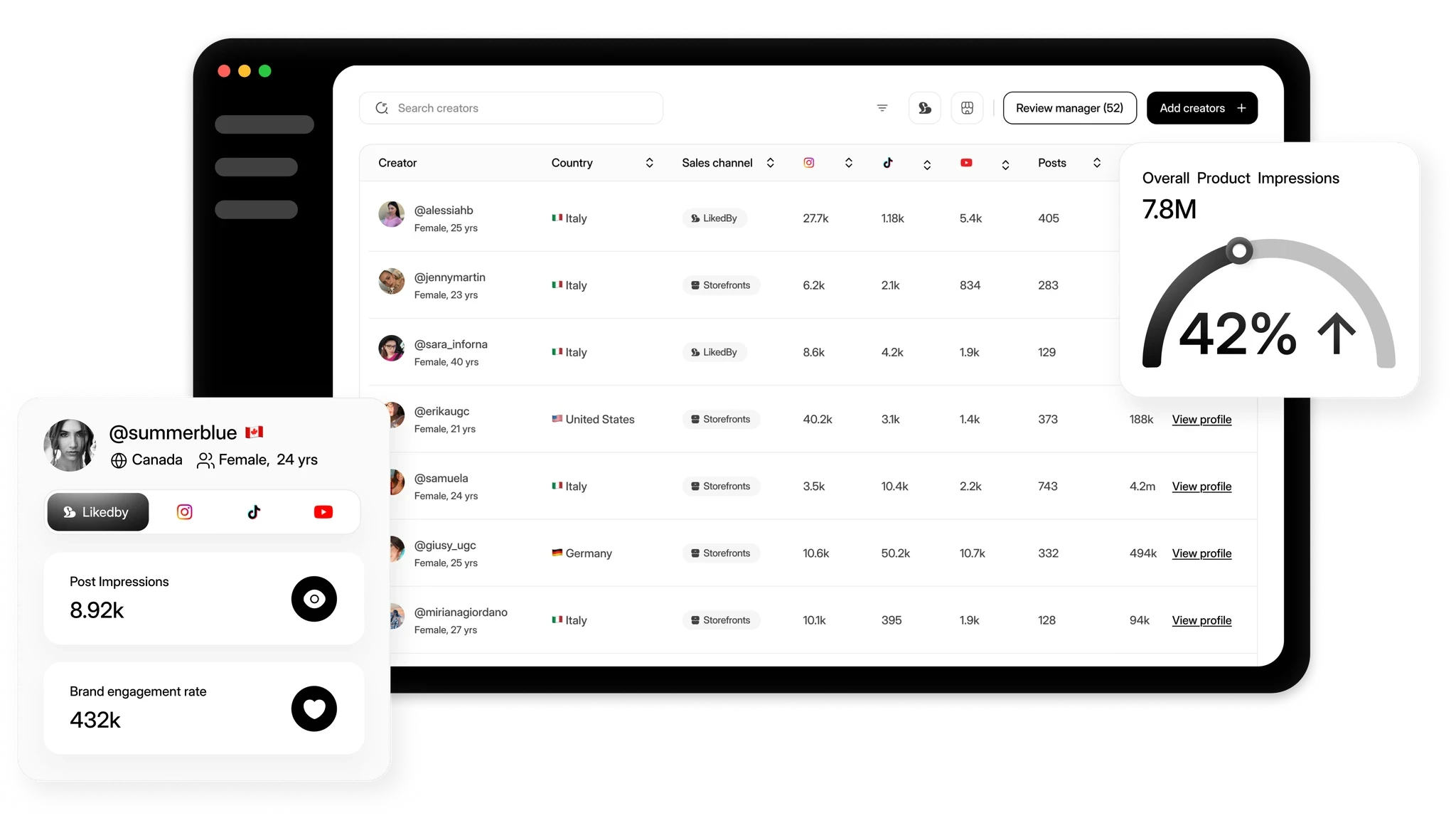
Add every creator from your seasonal roster and track their TikTok activity in one dashboard. When a seeded creator posts, the content surfaces automatically so you do not have to check profiles individually.
Post-Level Performance Tracking
Each TikTok post is tracked with publicly visible engagement signals including views, likes, comments, and shares. This granularity lets you identify which specific pieces of content are candidates for whitelisting or paid amplification.
Competitor Brand Account Tracking
Monitor rival fashion brand accounts on TikTok to see posting cadence, content themes, and engagement patterns. Use this data in weekly competitive briefings without manually auditing competitor profiles.
Campaign Burst Detection
When multiple creators in your roster post within a tight window, such as a coordinated launch day, CreatorWatcher groups that activity so you can see the burst's collective impact rather than evaluating posts in isolation.
Seasonal Benchmarking
Compare creator performance across different seasonal campaigns. See whether a creator who performed well during your resort collection seeding maintained that momentum for your fall drop, giving you data to inform future roster decisions.
Structured Reporting Exports
Generate reports that pull tracked post data into a format ready for stakeholder review. Replace the weekly screenshot-and-slide ritual with structured exports that include the metrics your brand directors actually care about.
Creator Discovery Signals
Surface creators who are organically tagging or mentioning your brand on TikTok but are not yet on your roster. This is especially useful during fashion weeks or viral trend moments when new creators emerge rapidly.
Multi-Account Watchlists
Organize tracked creators into watchlists by campaign, season, or tier. An influencer marketing manager running simultaneous seeding and paid whitelisting programs can keep those workflows separated without losing the cross-campaign view.
Use Cases for Fashion Brands on TikTok
Pre-Launch Seeding Visibility
A fashion brand seeds product to 60 creators ahead of a seasonal drop. The influencer marketing manager adds all 60 to CreatorWatcher before shipments arrive, then monitors the dashboard daily to see which creators post, when, and how the content performs. This eliminates the need to chase confirmations manually and gives the team a real-time seeding completion rate.
Whitelisting Content Selection
After a campaign burst, the paid media team needs to select three to five TikTok posts for whitelisting ads. The influencer marketing manager uses CreatorWatcher's post-level tracking to rank organic posts by engagement signals and shares a shortlist with the paid team within hours of launch, not days.
Competitive Creator Intelligence
An influencer marketing manager suspects a competitor label is seeding the same mid-tier creators. By adding competitor brand accounts and key creator profiles to CreatorWatcher, the team identifies overlap and adjusts their own roster strategy before the next seasonal campaign.
End-of-Season Performance Review
At the close of a campaign cycle, the influencer marketing manager pulls seasonal benchmarking data from CreatorWatcher to evaluate which creators drove the strongest engagement across the entire drop window. This report directly informs roster decisions and budget allocation for the following season.
Weekly Tracking Workflow for Fashion Influencer Marketing Managers
Add all creators from your upcoming seasonal roster to CreatorWatcher, organized into watchlists by campaign tier or seeding wave.
As product ships and creators begin posting, review the dashboard daily to confirm post activity and capture early performance signals across your TikTok roster.
During a campaign burst window, use the grouped activity view to assess collective impact and identify standout posts that warrant whitelisting or organic amplification.
Share post-level performance data with your paid media team so they can select whitelisting candidates based on actual engagement signals rather than assumptions.
At the end of each week, export a structured report for internal stakeholders that summarizes creator activity, top-performing posts, and competitive brand account trends.
After the seasonal campaign closes, run a benchmarking comparison against previous drops to evaluate creator consistency and inform roster planning for the next season.
Key Performance Indicators for TikTok Creator Tracking in Fashion
These are the metrics influencer marketing managers should monitor weekly when running seasonal campaigns on TikTok.
Seeding completion rate: percentage of seeded creators who have posted
Average views per creator post during a campaign burst window
Engagement rate per post (likes, comments, shares relative to views)
Time-to-post: days between product delivery and first creator post
Whitelisting candidate count: posts exceeding a defined engagement threshold
Creator consistency score: performance variance across multiple seasonal drops
Competitor brand posting frequency on TikTok during overlapping campaign periods
Roster overlap rate: creators appearing in both your and competitor watchlists
Content format distribution: ratio of trending audio, original sound, and duet formats used by your roster
Report turnaround time: hours from campaign close to stakeholder-ready export
Scenario: Tracking a Seasonal Seeding Campaign on TikTok
A mid-sized fashion team managing influencer marketing for a contemporary womenswear label prepares for a spring collection drop. The influencer marketing manager seeds product to 45 TikTok creators across three tiers: 10 macro creators for launch-day burst coverage, 20 mid-tier creators for sustained posting over two weeks, and 15 micro creators for organic community seeding.
Before shipments go out, the manager adds all 45 creators to CreatorWatcher and organizes them into three watchlists. As posts begin appearing, the dashboard surfaces each piece of content with its engagement signals. Within the first 72 hours, the team identifies eight posts with engagement rates significantly above the roster average and flags them for the paid media team's whitelisting consideration.
By the end of the two-week window, the manager exports a structured report showing a target seeding completion rate of 85 percent, average time-to-post of four days, and a clear ranking of creators by cumulative engagement. The team also tracks two competitor brand accounts during the same period and discovers three creators who posted for both labels, informing exclusivity conversations for the fall campaign. The typical improvement target for teams adopting this workflow is a 40 to 60 percent reduction in manual tracking hours per seasonal campaign and faster whitelisting decisions measured in hours rather than days.
Frequently Asked Questions
Can CreatorWatcher track TikTok posts from creators who are not part of a formal partnership?
Yes. You can add any public TikTok creator profile to your watchlist regardless of whether they have a contractual relationship with your brand. This is especially useful for monitoring organic mentions during influencer seeding campaigns where creators are not obligated to post.
How quickly does CreatorWatcher surface new TikTok posts from tracked creators?
Post detection timing depends on publicly available data refresh cycles. In most cases, new posts from tracked creators appear in your dashboard within a reasonable window after publication, giving you actionable data during campaign burst periods rather than days after the fact.
Is CreatorWatcher useful for tracking whitelisting ad performance?
CreatorWatcher tracks organic post-level signals that help you decide which content to whitelist. The actual ad performance data, such as CPM and ROAS, lives in your ad platform. CreatorWatcher's role is to surface the organic winners so your paid team can act on them quickly.
Can I compare creator performance across different seasonal campaigns?
Yes. CreatorWatcher's benchmarking features let you compare how individual creators performed across multiple campaign windows. This is critical for fashion teams that need to evaluate roster consistency from one seasonal drop to the next.
Does CreatorWatcher work for tracking competitor fashion brands on TikTok?
You can add competitor brand accounts to your tracking dashboard and monitor their posting activity, content themes, and engagement patterns. This gives influencer marketing managers a structured competitive view without manual profile auditing.