TikTok Creator Storefront Software Built for TikTok Shop Sellers
Running a TikTok Shop operation means managing dozens or hundreds of creator storefronts simultaneously, each one a live revenue channel that needs product feeds, content approvals, commission structures, and performance oversight. Without dedicated TikTok creator storefront software, sellers lose visibility into which creators are actually driving GMV and which storefronts are stagnant.
Social commerce on TikTok has shifted from experimental to essential. Sellers who treat creator storefronts as infrastructure rather than afterthoughts are the ones scaling past seven and eight figures in monthly GMV. But the operational complexity grows fast: onboarding creators at volume, syncing product catalogs to individual storefronts, tracking affiliate commissions, managing content assets, and ensuring brand compliance across every piece of shoppable content.
This page breaks down how purpose-built creator storefront software solves these challenges for TikTok Shop sellers, covering the workflows, metrics, and operational systems that separate high-performing programs from chaotic ones.
Core Challenges TikTok Shop Sellers Face with Creator Storefronts
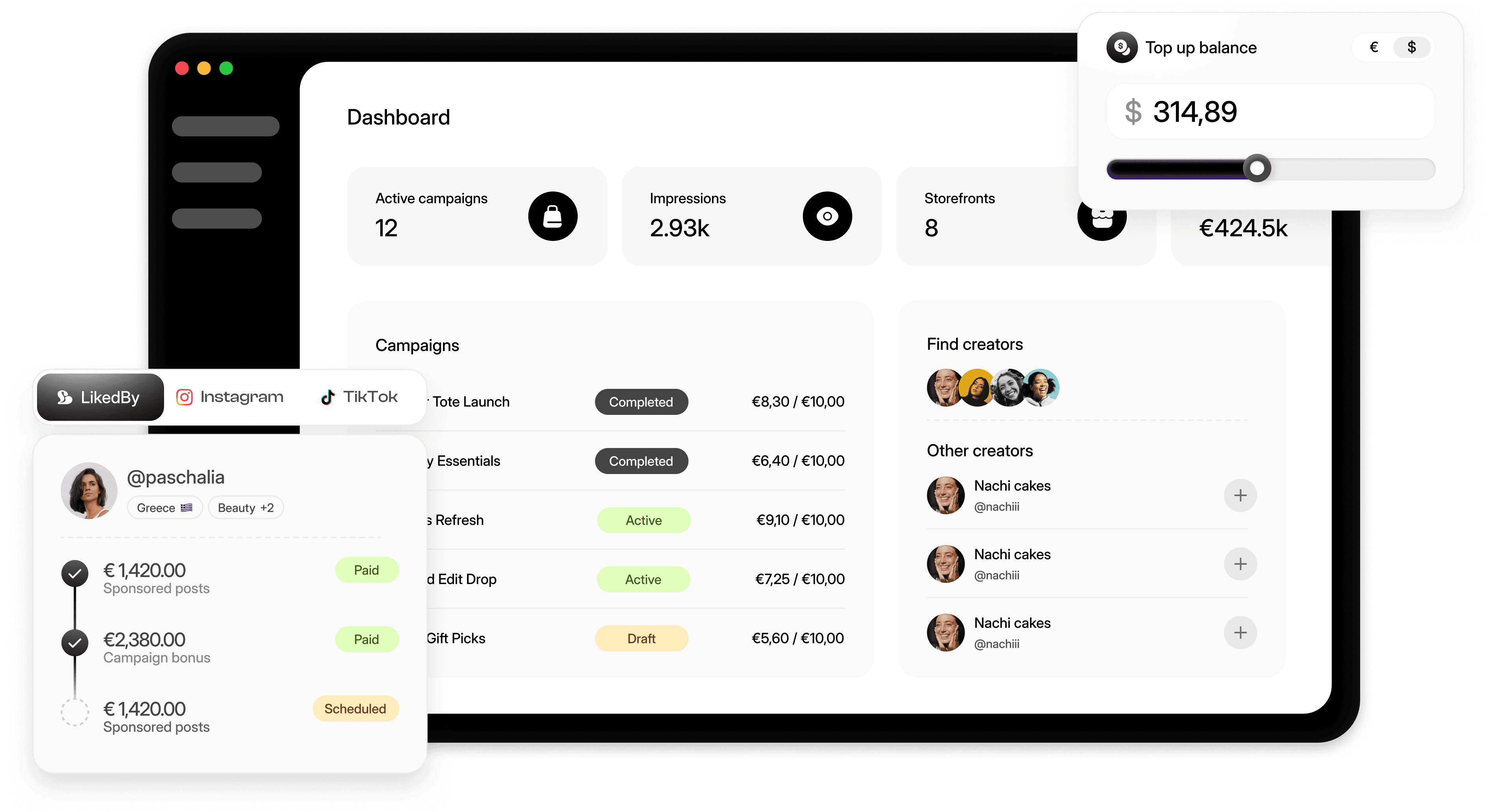
Scaling a creator storefront program on TikTok Shop introduces operational friction at every stage. These are the specific pain points that slow growth and erode margins.
1. Creator Onboarding Bottlenecks
TikTok Shop sellers often recruit 50–200+ creators per month through the affiliate marketplace, outbound outreach, and inbound applications. Without a structured onboarding pipeline, creators sit in limbo for days waiting for product samples, storefront setup instructions, and commission details. Every day of delay is lost revenue.
2. No Centralized View of Storefront Performance
TikTok Shop's native analytics are fragmented. Sellers cannot easily see which creator storefronts are generating the highest conversion rates, which products are moving through which creators, or where content quality is declining. Performance data lives in spreadsheets, TikTok Seller Center exports, and Slack threads.
3. Content Compliance and Brand Safety
Creators posting shoppable videos with incorrect product claims, outdated pricing, or off-brand messaging create real liability. TikTok Shop sellers need approval workflows that catch problems before content goes live, not after a customer complaint.
4. Commission Structure Complexity
Different creator tiers deserve different commission rates. Top performers earn higher percentages, new creators start at base rates, and seasonal campaigns may have bonus structures. Managing this manually across hundreds of creators leads to payment disputes and creator churn.
5. Product Catalog Sync Failures
When products go out of stock, prices change, or new SKUs launch, every creator storefront needs to reflect those updates. Manual updates across dozens of storefronts create inventory mismatches and customer experience problems.
6. Asset Chaos Across Creator Content
Shoppable videos, product photos, livestream clips, and UGC assets pile up without any organized system. Sellers cannot quickly find high-performing content to repurpose, and creators cannot access the brand assets they need to produce quality storefront content.
7. Difficulty Identifying and Retaining Top Creators
Without clear performance attribution, sellers cannot distinguish between creators who drive real purchases and those who generate views with no conversion. This makes retention strategies guesswork rather than data-driven decisions.
8. Scaling Beyond Manual Processes
What works with 20 creators breaks completely at 200. Spreadsheet tracking, manual DM communication, and ad-hoc content reviews cannot support the velocity that TikTok Shop demands during peak seasons like Black Friday, holiday campaigns, or viral product moments.
Why Traditional Tools Fail TikTok Shop Sellers
Influencer Marketing Platforms Were Not Built for Storefronts
Most influencer marketing software was designed for one-off sponsored posts on Instagram. They handle discovery and outreach reasonably well but have no concept of persistent creator storefronts, ongoing affiliate commission tracking, or product catalog management. TikTok Shop sellers need infrastructure for continuous commerce relationships, not campaign-by-campaign workflows.
Spreadsheets and Seller Center Are Not Scalable Infrastructure
TikTok Seller Center provides basic affiliate management, but it was not designed as a full operational system. Sellers end up exporting CSVs into Google Sheets, building manual dashboards, and losing hours each week reconciling data. There is no content approval pipeline, no creator CRM, and no asset management layer inside Seller Center.
Generic Project Management Tools Miss Commerce Context
Tools like Asana, Monday, or Notion can organize tasks, but they have no understanding of GMV, conversion rates, creator tiers, or product performance. Building a creator storefront program inside a project management tool means creating custom fields for every commerce metric and manually updating them from multiple data sources.
Disconnected Point Solutions Create Data Silos
Some sellers cobble together a CRM for creator relationships, a separate tool for content storage, another for analytics, and yet another for communication. Each tool holds a fragment of the picture. No single view exists to answer the question: which creators, selling which products, through which content, are driving the most profitable revenue?
How Socialscale Powers Creator Storefront Programs for TikTok Shop Sellers
Socialscale is the operating system for social commerce, purpose-built for brands and agencies that run creator programs at scale. For TikTok Shop sellers, it replaces the patchwork of spreadsheets, disconnected tools, and manual processes with a single platform that handles every stage of creator storefront management.
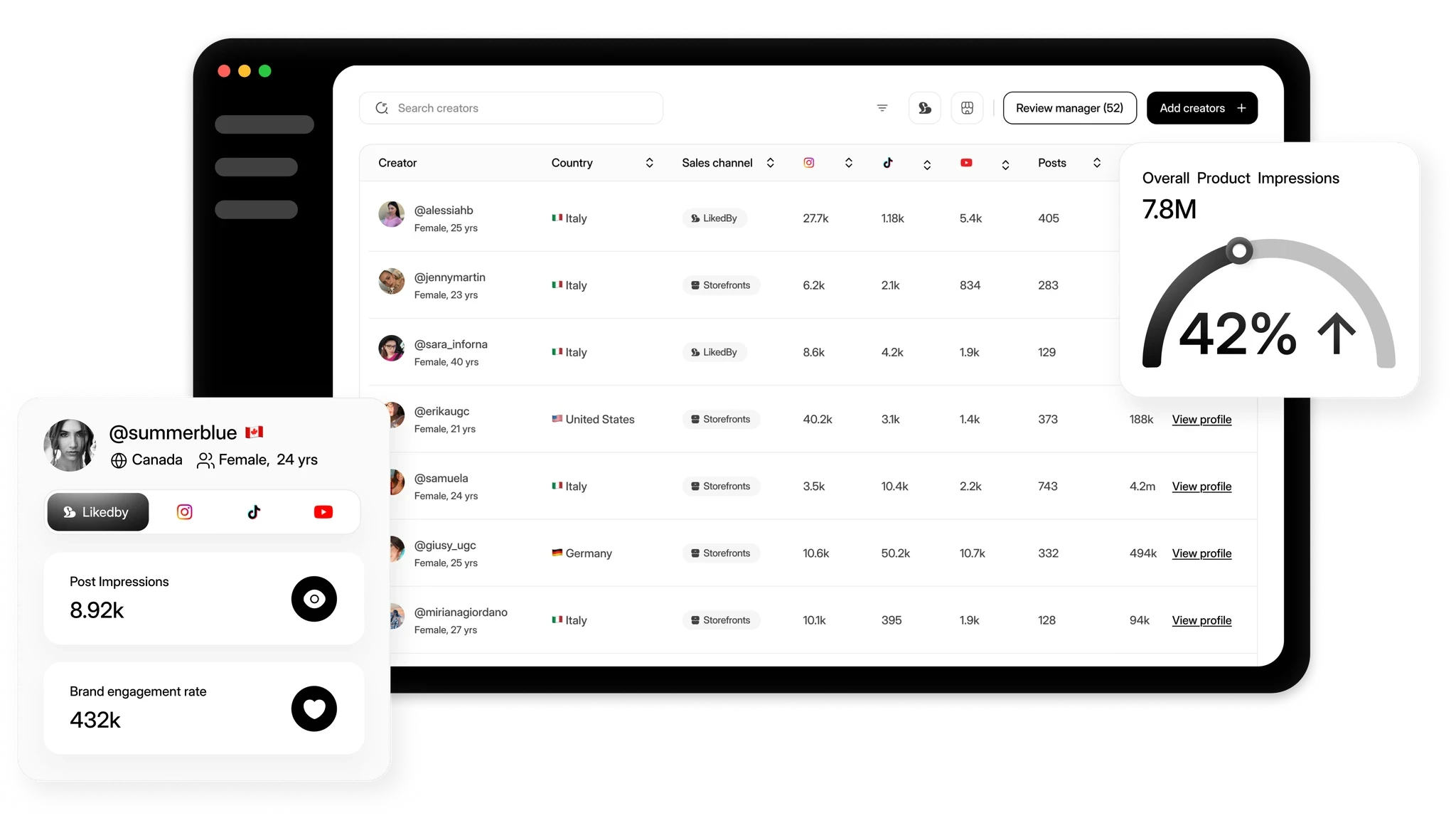
At the core, the creator CRM gives sellers a structured database of every creator in their program, complete with contact details, tier assignments, commission rates, product assignments, and full communication history. No more hunting through DMs or spreadsheets to find a creator's status.
Content is the engine of every TikTok Shop storefront, and Socialscale's creator content storage system organizes every video, image, and livestream clip with metadata tags for product, creator, campaign, and performance data. When a seller needs to find the top-converting shoppable video for a specific SKU, it takes seconds instead of hours.
The creator analytics dashboard consolidates performance data across all creator storefronts into a single view. Sellers can track GMV by creator, conversion rate by product, content output velocity, and commission costs in real time. This is the layer that transforms storefront management from reactive to strategic.
For teams managing creator collaborations across campaigns, product launches, and seasonal pushes, Socialscale's collaboration management tools keep every assignment, deadline, and deliverable organized. Sellers can run multiple concurrent campaigns without losing track of which creators are working on what.
Feature Breakdown: Creator Storefront Infrastructure
Creator Onboarding and Pipeline Management
Socialscale provides a structured onboarding pipeline that moves creators from application or outreach through vetting, approval, product assignment, and storefront activation. Each stage has configurable criteria, so sellers can auto-advance creators who meet minimum follower counts, engagement rates, or niche relevance. Onboarding templates include product sample shipping triggers, commission agreement collection, and storefront setup instructions delivered automatically.
Creator Relationship Management
Every creator has a detailed profile inside the CRM: their TikTok handle, storefront URL, product assignments, content history, performance metrics, communication log, and tier status. Sellers can segment creators by performance tier, product category, audience demographic, or campaign participation. This segmentation powers targeted outreach for new product launches or commission adjustments.
Content Approval Workflows
Before any shoppable video goes live, it passes through a configurable approval workflow. Reviewers can check for brand compliance, product claim accuracy, FTC disclosure requirements, and creative quality. Feedback is delivered directly to creators within the platform, eliminating back-and-forth across email and messaging apps. Approval timestamps create an audit trail for compliance documentation.
UGC Management and Asset Library
Every piece of creator content is stored, tagged, and searchable. Sellers can filter by product, creator, date, performance metrics, or content type. High-performing shoppable content can be flagged for repurposing across paid media, email marketing, or embedding on product pages using shoppable creator content widgets. Rights management tracking ensures sellers know which content they have permission to use beyond TikTok.
Performance Tracking and Attribution
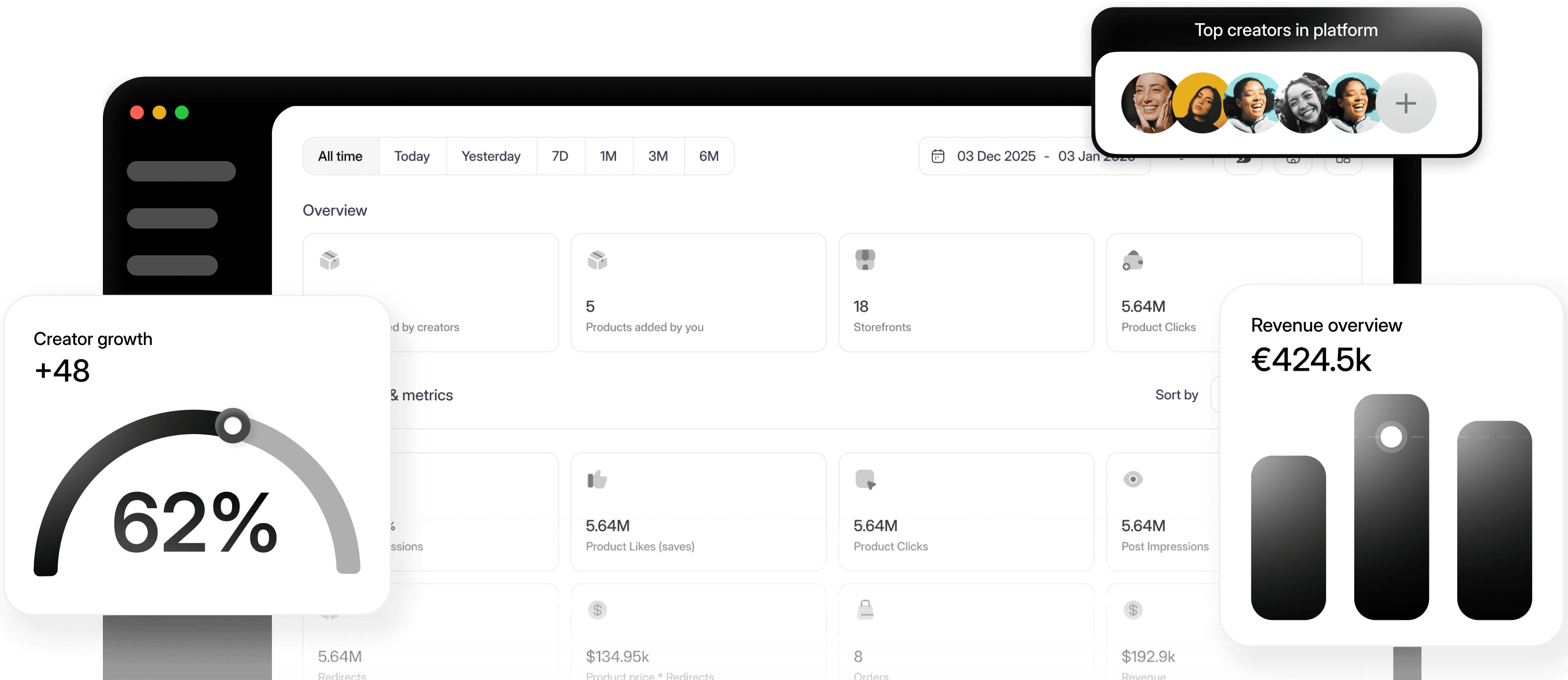
Storefront-level analytics show GMV, units sold, conversion rate, average order value, and commission cost per creator. Product-level views reveal which SKUs perform best through creator storefronts versus direct TikTok Shop listings. Time-series data helps sellers identify trends: which creators are accelerating, which are declining, and which products are gaining momentum through specific creator audiences.
Campaign and Collaboration Management
Sellers can create campaign briefs, assign them to specific creator segments, set deadlines, attach product samples, and track deliverable completion. Whether it is a new product launch requiring 50 creator videos in one week or an ongoing evergreen affiliate program, the creator collaborations system keeps everything organized and visible to the entire team.
Creator Communication Hub
Centralized messaging keeps all creator communication in one place, tied to the creator's profile and campaign assignments. Sellers can send bulk updates about new products, commission changes, or campaign briefs while maintaining individual conversation threads for specific issues. This eliminates the chaos of managing creator relationships across TikTok DMs, Instagram messages, email, and WhatsApp simultaneously.
Use Cases for TikTok Shop Seller Teams
Scaling a Beauty Brand's Affiliate Creator Network
A beauty brand selling through TikTok Shop recruits 300 micro-creators per quarter to feature products in their storefronts. Each creator receives a curated product selection based on their audience demographics and content style. The operations team uses tiered commission structures: 10% base for new creators, 15% for creators exceeding $5,000 monthly GMV, and 20% for top-tier creators who consistently drive $20,000+ per month. Weekly content reviews ensure every shoppable video meets brand guidelines before going live. Monthly performance reviews identify creators ready for tier upgrades and flag underperformers for re-engagement or removal.
Launching a New Product Through 100 Creator Storefronts Simultaneously
A consumer electronics seller prepares to launch a new product on TikTok Shop. The team selects 100 creators from their existing network based on past conversion rates for similar product categories. A campaign brief with product specs, key messaging points, and sample video formats is distributed two weeks before launch. Product samples ship with tracking integrated into the workflow. Content submissions are reviewed and approved in batches, with a target of having 80+ shoppable videos live within the first 48 hours of product availability. Real-time storefront analytics track which creators drive the fastest sell-through.
Agency Managing Creator Storefronts for Multiple TikTok Shop Clients
A social commerce agency manages TikTok Shop creator programs for eight different brands across fashion, beauty, home goods, and supplements. Each brand has its own creator roster, commission structure, content guidelines, and performance targets. The agency needs workspace separation so client data never crosses, while maintaining a unified operational view for their internal team. Campaign calendars, content approval queues, and performance reports are generated per client, with agency-level dashboards showing aggregate creator program health across the entire portfolio.
Seasonal Peak Preparation for a Fashion Seller
A fashion seller on TikTok Shop prepares for the holiday shopping season by expanding their creator storefront program from 80 to 250 active creators over six weeks. The recruitment pipeline processes inbound applications from the TikTok affiliate marketplace alongside targeted outbound outreach to creators who performed well for competing brands. Onboarding is accelerated with templated workflows that get creators from approval to first shoppable video in under five days. During peak weeks, the content team reviews 400+ video submissions, using batch approval tools to maintain quality without creating bottlenecks. Post-season analysis identifies which new creators earned permanent spots in the program.
Weekly and Monthly Operational Workflow for TikTok Shop Creator Storefronts
Running a high-performing creator storefront program requires consistent operational rhythms. Here is the workflow that top TikTok Shop sellers follow using dedicated creator storefront software.
Monday: Creator Pipeline Review
Review all pending creator applications and outreach responses from the previous week. Move qualified creators into the onboarding stage, trigger product sample shipments, and send storefront setup instructions. Update the creator CRM with new contact information, content niche tags, and initial tier assignments. Target: process all pending applications within 24 hours to minimize onboarding lag.
Tuesday–Wednesday: Content Review and Approval
Work through the content approval queue for all submitted shoppable videos and storefront updates. Check each piece against brand guidelines, product claim accuracy, and FTC disclosure requirements. Provide specific feedback to creators whose content needs revision. Approve compliant content for immediate publishing. Log all approved assets in the content library with appropriate tags for future repurposing.
Thursday: Performance Analysis and Creator Communication
Pull weekly storefront performance data: GMV by creator, conversion rates by product, content output per creator, and commission costs. Identify top performers for recognition messages and potential tier upgrades. Flag underperforming storefronts for targeted support, whether that means providing better product photos, suggesting content angles, or adjusting product assignments. Send weekly performance summaries to active creators.
Friday: Campaign Planning and Brief Distribution
Prepare campaign briefs for the following week's priorities: new product launches, restocked bestsellers, or seasonal promotions. Assign campaigns to appropriate creator segments based on audience fit and past performance. Distribute briefs with clear deadlines, content requirements, and any bonus commission incentives. Confirm product sample availability for new campaign assignments.
Bi-Weekly: Commission Reconciliation
Reconcile affiliate commission data from TikTok Seller Center against internal tracking. Verify that commission tier adjustments are reflected accurately. Process any bonus payments for campaign-specific incentives. Address creator payment inquiries within the communication hub to maintain trust and retention.
Monthly: Program Health Review
Conduct a comprehensive review of the entire creator storefront program. Analyze month-over-month trends in total GMV, active creator count, average content output per creator, conversion rate trends, and commission cost as a percentage of revenue. Identify creators who have gone inactive and decide on re-engagement or removal. Evaluate the onboarding pipeline conversion rate from application to first sale. Present findings to leadership with recommendations for the following month's creator recruitment targets and campaign strategy.
Monthly: Content Repurposing and Cross-Channel Distribution
Review the content library for top-performing shoppable videos and UGC assets. Select content for repurposing across paid social ads, email marketing campaigns, and on-site product page embeds. Confirm usage rights for each selected asset. Coordinate with the paid media team to test creator content in ad formats, tracking performance differences between creator-generated and brand-produced creative.
Quarterly: Creator Tier Restructuring
Evaluate the entire creator roster against tier criteria. Promote creators who have consistently exceeded performance thresholds. Adjust commission rates to reflect updated tier assignments. Communicate changes to affected creators with clear explanations and encouragement. Retire inactive creators from the program and open recruitment for replacement capacity.
Key Performance Metrics for Creator Storefront Programs
Tracking the right KPIs ensures TikTok Shop sellers can optimize their creator storefront programs for profitability and scale. These are the metrics that matter most.
Creator Activation Rate: Percentage of onboarded creators who publish their first shoppable video within 7 days of joining the program.
Content Approval Turnaround Time: Average hours from content submission to approval or feedback. Target: under 24 hours.
Content Output per Creator per Week: Number of shoppable videos published per active creator. Benchmark varies by tier, but 2–4 videos per week is a common target for mid-tier creators.
Storefront Conversion Rate (CVR): Percentage of storefront visitors who complete a purchase. Tracked per creator and per product to identify high-converting combinations.
Click-Through Rate (CTR) on Shoppable Content: Percentage of video viewers who click through to the product page or storefront. Indicates content quality and product-audience fit.
Gross Merchandise Value (GMV) per Creator: Total revenue generated through each creator's storefront. The primary metric for tier assignment and commission decisions.
Commission Cost as Percentage of GMV: Total affiliate commissions paid divided by total GMV. Healthy programs typically run between 10–20% depending on product margins.
Return on Ad Spend (ROAS) for Boosted Creator Content: When creator storefront content is used in paid amplification, ROAS measures the efficiency of that spend compared to brand-produced ad creative.
Cost per Acquisition (CPA) via Creator Storefronts: Total program cost (commissions + product samples + management overhead) divided by total new customers acquired through creator storefronts.
Creator Retention Rate: Percentage of creators who remain active in the program after 90 days. High retention indicates strong program management and fair compensation.
Content Repurpose Rate: Percentage of creator content that gets reused across paid media, email, or on-site embeds. Higher rates indicate better content quality and rights management processes.
Scenario: Mid-Size Supplements Brand Scaling TikTok Shop Creator Storefronts
A supplements brand generating $180,000 per month through TikTok Shop was managing 65 active creator storefronts using a combination of Google Sheets, TikTok Seller Center exports, and a shared Google Drive folder for content. The operations team of three people spent approximately 20 hours per week on manual data reconciliation, creator communication across four different messaging platforms, and content review via email attachments.
After implementing dedicated creator storefront software, the team restructured their operations around the workflows described above. Within the first 60 days, they achieved the following measurable results:
Creator onboarding time reduced from an average of 12 days (application to first shoppable video) to 4.5 days.
Active creator count scaled from 65 to 140 without adding headcount, as automated onboarding and centralized communication eliminated manual bottlenecks.
Content approval turnaround dropped from 72 hours average to under 18 hours, reducing creator frustration and increasing content velocity.
Monthly GMV from creator storefronts increased from $180,000 to $410,000 over 90 days, driven by faster creator activation, higher content output, and data-driven product assignment.
Commission cost as a percentage of GMV decreased from 17.5% to 14.2% as the team identified and invested more heavily in high-converting creators while reducing spend on low-performers.
The operations team reclaimed approximately 15 hours per week previously spent on manual tracking, redirecting that time toward creator relationship building and campaign strategy.
The brand also began repurposing top-performing creator storefront content in Meta paid ads, achieving a 2.4x higher ROAS compared to their in-house creative, further extending the value of their creator storefront program beyond TikTok.
Frequently Asked Questions
What is TikTok creator storefront software?
TikTok creator storefront software is a specialized platform that helps TikTok Shop sellers manage every aspect of their creator affiliate and storefront programs. This includes onboarding creators, assigning products, reviewing and approving shoppable content, tracking storefront performance and GMV, managing commissions, and organizing creator-generated content assets. It replaces the manual spreadsheet and multi-tool approach that most sellers outgrow once they pass 30–50 active creators.
How is this different from a standard influencer marketing platform?
Standard influencer marketing platforms focus on one-off sponsored post campaigns, primarily on Instagram and YouTube. They are built around campaign briefs, deliverable tracking, and flat-fee payments. TikTok creator storefront software is built for ongoing commerce relationships where creators maintain persistent storefronts, earn affiliate commissions on sales, and produce content continuously. The workflows, metrics, and data structures are fundamentally different because the business model is affiliate-driven social commerce, not sponsored content.
Can I manage creator storefronts for multiple TikTok Shop accounts?
Yes. Agencies and multi-brand sellers need workspace separation to keep creator rosters, product catalogs, content libraries, and performance data isolated between accounts. Purpose-built creator storefront software supports multi-account management with appropriate access controls so team members only see the brands they are responsible for.
What metrics should I prioritize when evaluating creator storefront performance?
Start with GMV per creator and storefront conversion rate as your primary indicators of revenue impact. Then layer in content output per creator per week to understand productivity, commission cost as a percentage of GMV to monitor profitability, and creator activation rate to evaluate your onboarding efficiency. As your program matures, add CPA via creator storefronts and content repurpose rate to understand the full economic value of your creator program.
How quickly can a TikTok Shop seller get started with Socialscale?
Most TikTok Shop sellers can have their existing creator roster imported, workflows configured, and team members onboarded within one to two weeks. The initial setup involves importing creator data from existing spreadsheets or CRM tools, configuring content approval workflows to match brand guidelines, and connecting data sources for performance tracking. Teams typically see operational efficiency gains within the first month. To explore how it works for your specific program, you can book a demo with the Socialscale team.