Shopify Creator Storefront Software Built for Brand-Led Social Commerce
Shopify brands are shifting from traditional influencer sponsorships to performance-driven creator storefronts that turn every creator into a branded sales channel. But launching and managing these storefronts at scale requires more than a basic affiliate link generator. You need dedicated Shopify creator storefront software that handles onboarding, content, attribution, and payouts in one place.
Social commerce is rewriting how Shopify merchants grow revenue. Instead of relying solely on paid ads and email, forward-thinking brands are equipping creators with personalized storefronts stocked with curated product selections, shoppable content, and unique discount codes. Each storefront becomes a mini brand experience that converts the creator's audience directly through your Shopify checkout.
Socialscale gives Shopify brands the infrastructure to run creator storefront programs end-to-end. From recruiting and vetting creators to embedding shoppable widgets on their storefronts and tracking every dollar of attributed revenue, the platform eliminates the spreadsheet chaos and disconnected tools that slow most programs down. If you manage more than a handful of creators, this is the operational layer your team has been missing.
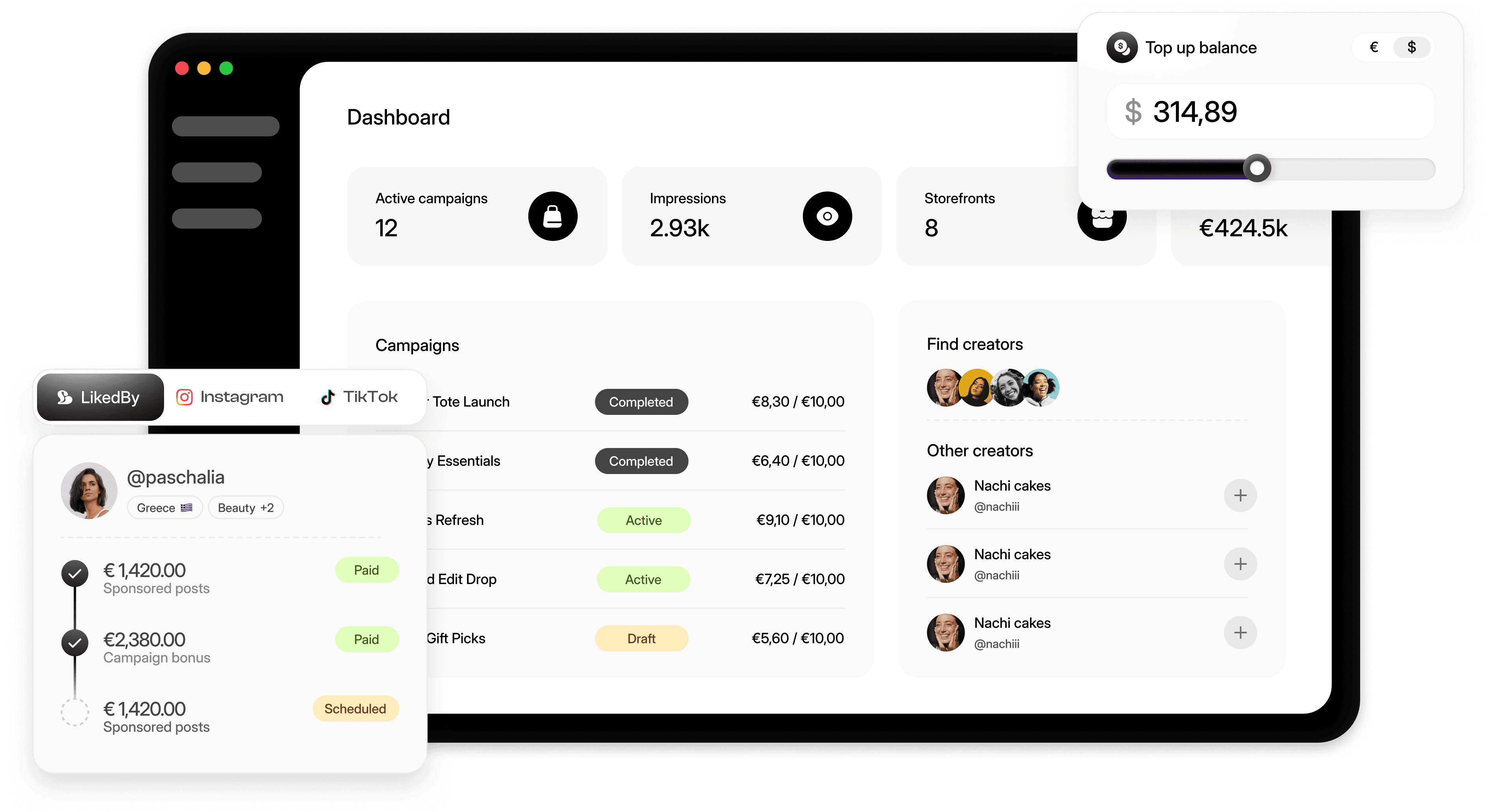
Core Challenges Shopify Brands Face with Creator Storefronts
Running a creator storefront program on Shopify sounds straightforward until you try to scale it past ten creators. Here are the operational pain points that surface quickly.
1. No Centralized Creator Management
Most Shopify brands track creator relationships across spreadsheets, email threads, and DMs. When you have 50 or 200 creators each with their own storefront, finding who has been activated, who needs product, and who is underperforming becomes a daily scavenger hunt.
2. Manual Storefront Setup and Product Curation
Creating individual storefronts or landing pages for each creator often involves duplicating Shopify pages, manually assigning product collections, and generating unique discount codes one by one. This process does not scale without dedicated tooling.
3. Content Approval Bottlenecks
Creators produce content to promote their storefronts, but reviewing, approving, and organizing that content across Instagram, TikTok, and YouTube submissions creates a backlog that delays campaigns by days or weeks.
4. Attribution Gaps Between Creator Activity and Shopify Revenue
Shopify's native analytics can tell you which discount code drove a sale, but it cannot connect that sale back to a specific creator's content performance, engagement rate, or storefront traffic in a unified view.
5. Inconsistent Creator Activation
Brands recruit creators in batches but struggle to keep them consistently posting and driving traffic to their storefronts. Without automated nudges and clear performance visibility, creator activity drops off after the first month.
6. Content Reuse Is an Afterthought
High-performing creator content sits buried in Google Drive folders or camera rolls. Repurposing that content as shoppable widgets on your Shopify store, in ads, or across email requires manual downloading, reformatting, and re-uploading.
7. Payouts and Commission Tracking Are Error-Prone
Calculating commissions across tiered rates, bonus thresholds, and product-specific payouts in spreadsheets leads to disputes and delayed payments that erode creator trust.
8. Scaling Beyond 20 Creators Feels Impossible
The combination of all the above means most Shopify brands plateau at a small creator roster, leaving significant revenue on the table from the long tail of micro and mid-tier creators who could be driving consistent storefront sales.
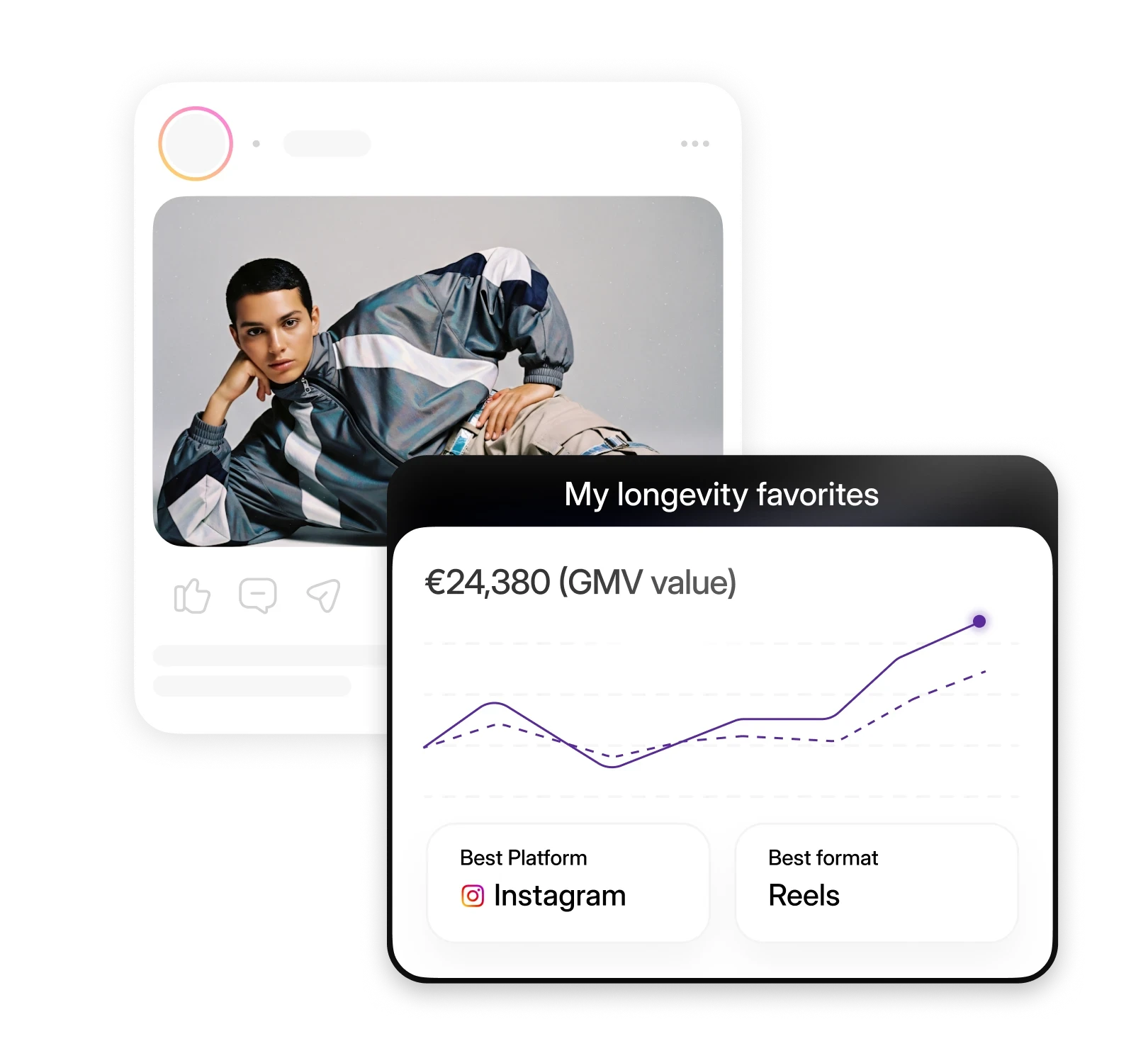
Why Traditional Tools Fall Short for Shopify Creator Storefronts
Affiliate Platforms Focus on Links, Not Storefronts
Tools like ShareASale or Refersion are built around generating affiliate links and tracking clicks. They do not provide a way to create branded storefront experiences, manage creator content, or embed shoppable UGC back on your Shopify store. You get attribution but miss the full commerce loop.
Influencer Marketing Platforms Stop at Discovery
Platforms like Grin or CreatorIQ excel at finding creators and managing outreach, but they were not designed to power ongoing storefront programs. They lack native Shopify storefront creation, real-time revenue dashboards tied to individual creator pages, and content asset management for repurposing UGC across channels.
Shopify Apps Are Too Narrow
Individual Shopify apps might handle discount code generation or landing page creation, but they operate in isolation. You end up stitching together five or six apps, none of which share data, and your team spends more time managing integrations than managing creators.
Project Management Tools Add Overhead Without Commerce Context
Notion boards and Asana projects can organize creator tasks, but they have zero awareness of Shopify order data, creator content performance, or storefront conversion rates. Your team ends up copying data between systems instead of acting on insights.
The Result: Fragmented Operations
When your creator storefront program runs across six disconnected tools, every operational step takes longer, data is always stale, and your team cannot answer basic questions like which creator storefront generated the most revenue this week without pulling reports from three different dashboards.
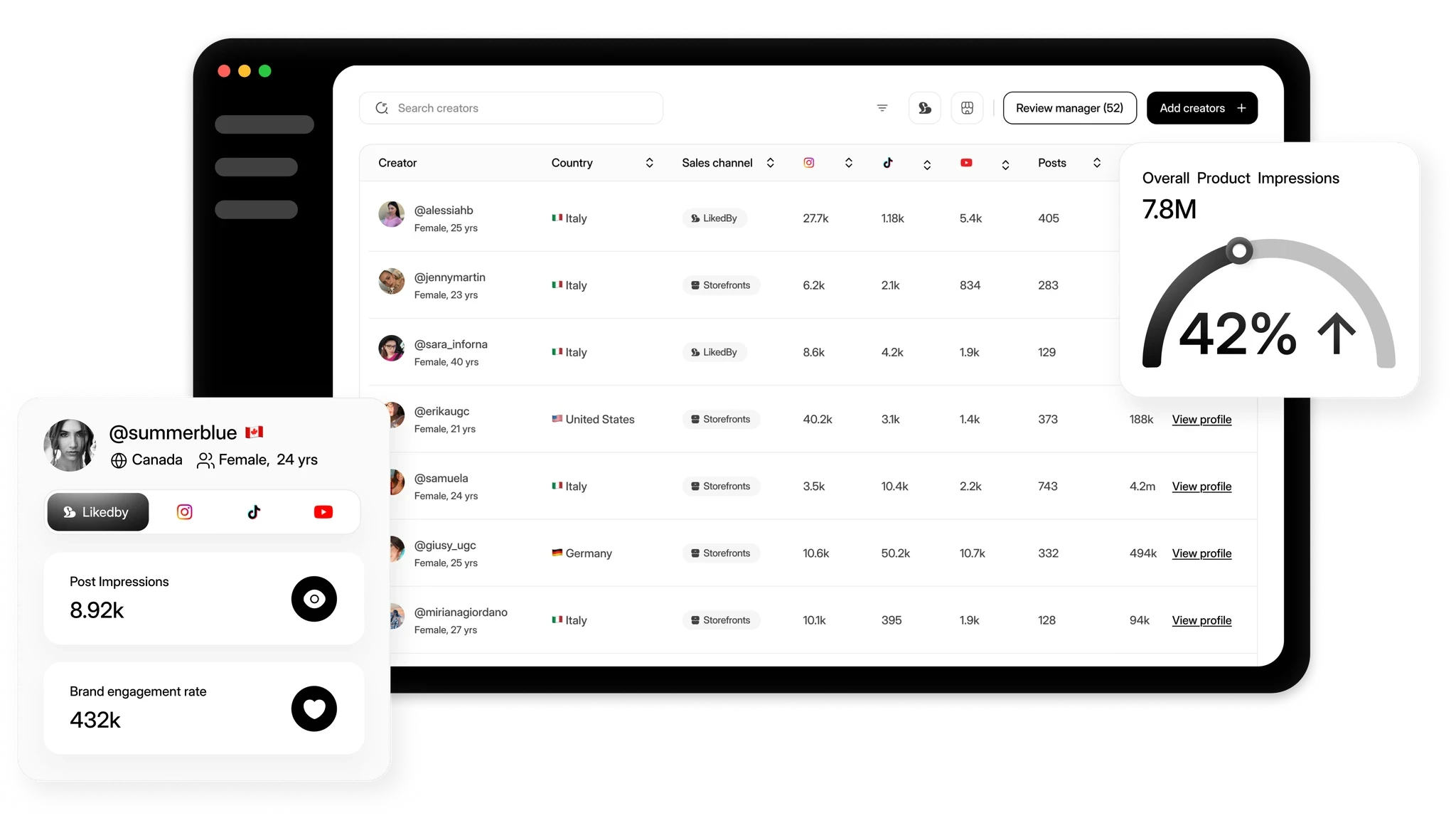
How Socialscale Powers Shopify Creator Storefronts at Scale
Socialscale is the operating system for social commerce, purpose-built for brands and agencies that need to run creator programs end-to-end. For Shopify brands specifically, it connects every stage of the creator storefront lifecycle into a single platform: recruiting creators, onboarding them into your program, managing their content, embedding shoppable creator experiences on your store, and tracking the revenue each creator drives.
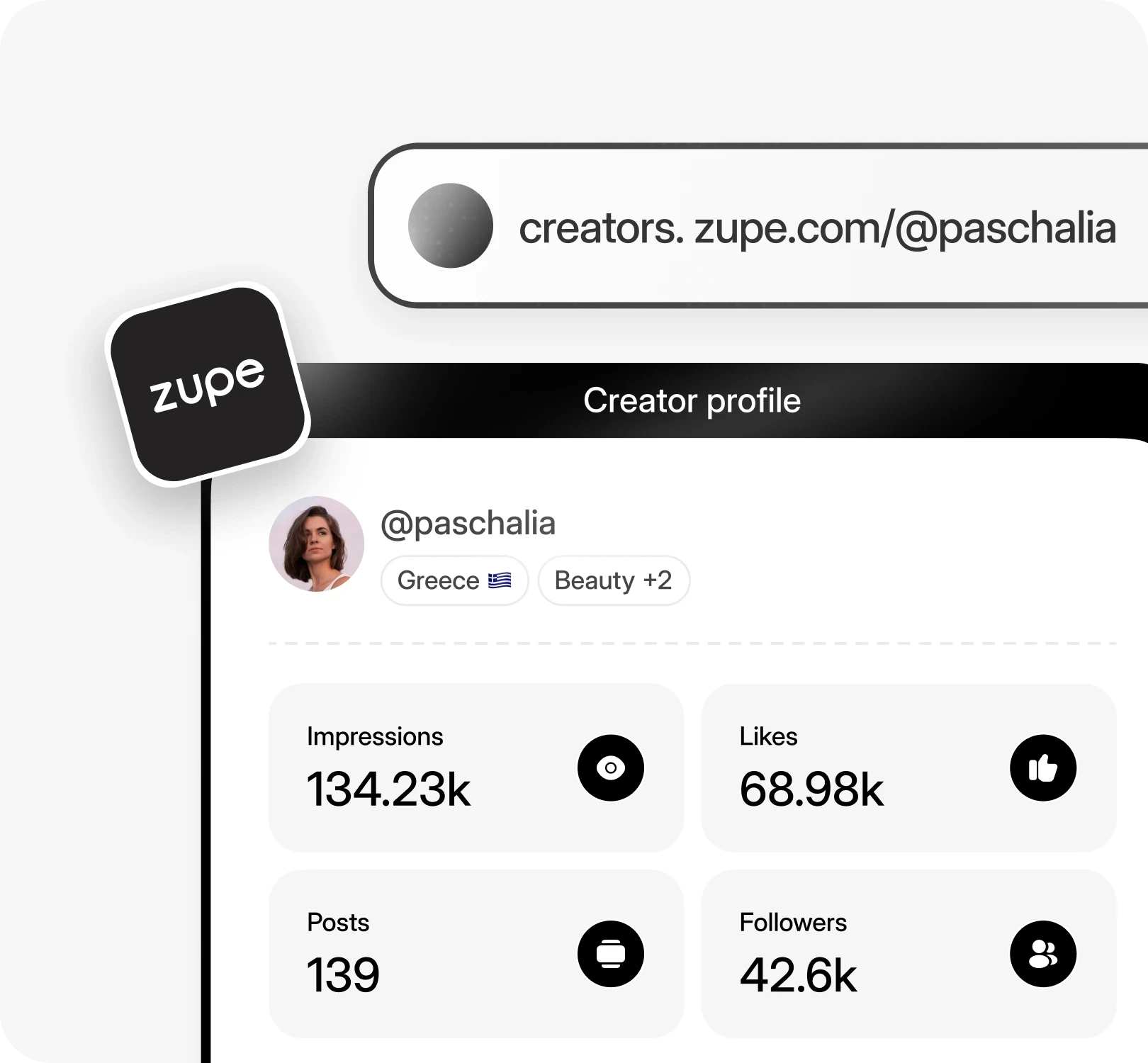
At the core of the platform is a creator CRM that replaces your spreadsheets with a structured database of every creator relationship, their storefront status, content submissions, and performance history. When a creator joins your program, their profile, storefront assignment, and communication history live in one place accessible to your entire team.
Content management is handled through a centralized creator content storage system where every piece of UGC submitted by creators is organized, tagged, and ready for approval or repurposing. Once approved, that content can be turned into shoppable widgets embedded directly on your Shopify storefront pages or product detail pages using creator widgets.
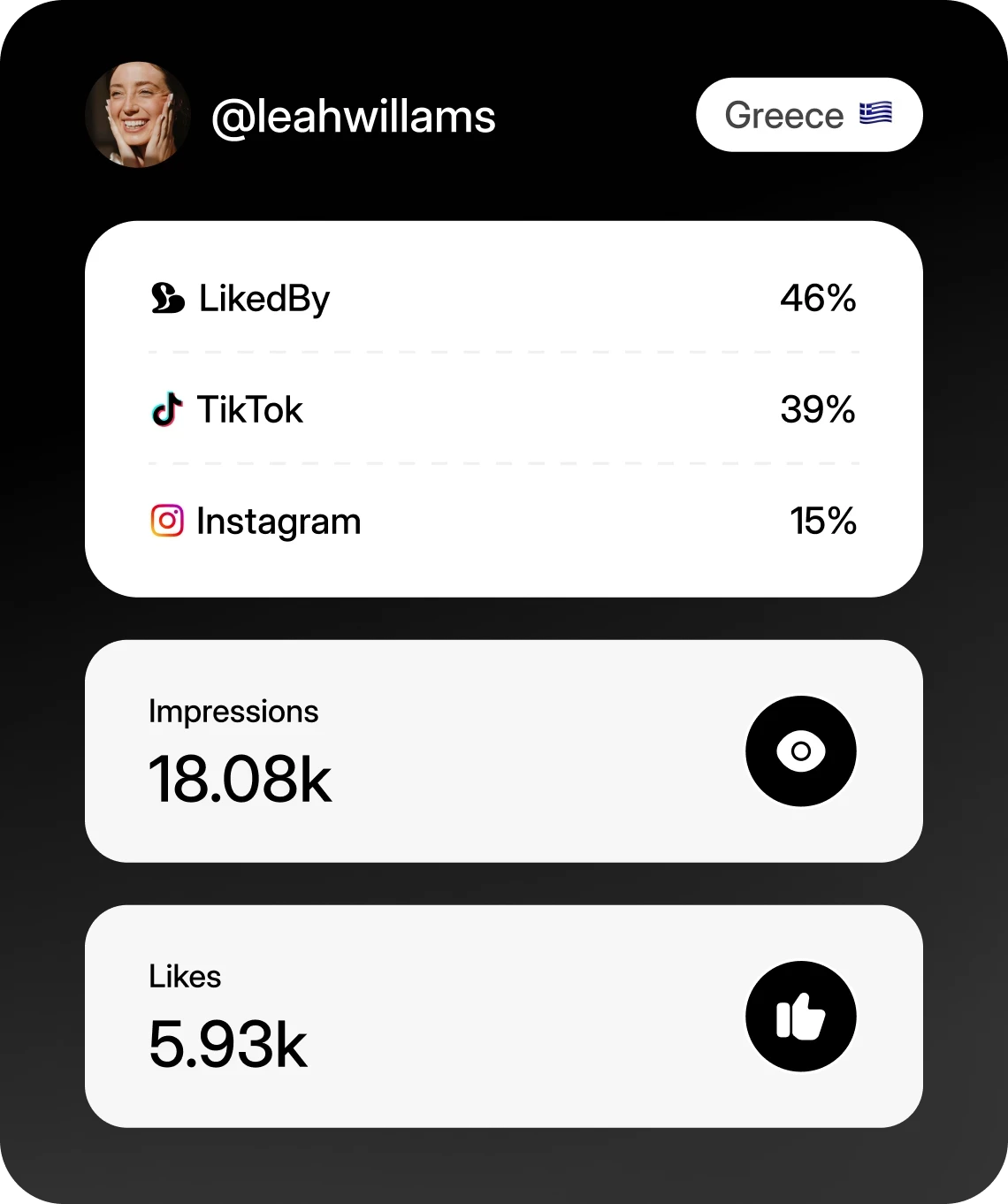
Performance tracking ties directly to your Shopify data, so you see not just impressions and engagement but actual orders, revenue, and conversion rates attributed to each creator's storefront. This closes the loop between creator activity and business outcomes, giving your team the data needed to optimize commission structures, identify top performers, and scale the program with confidence.
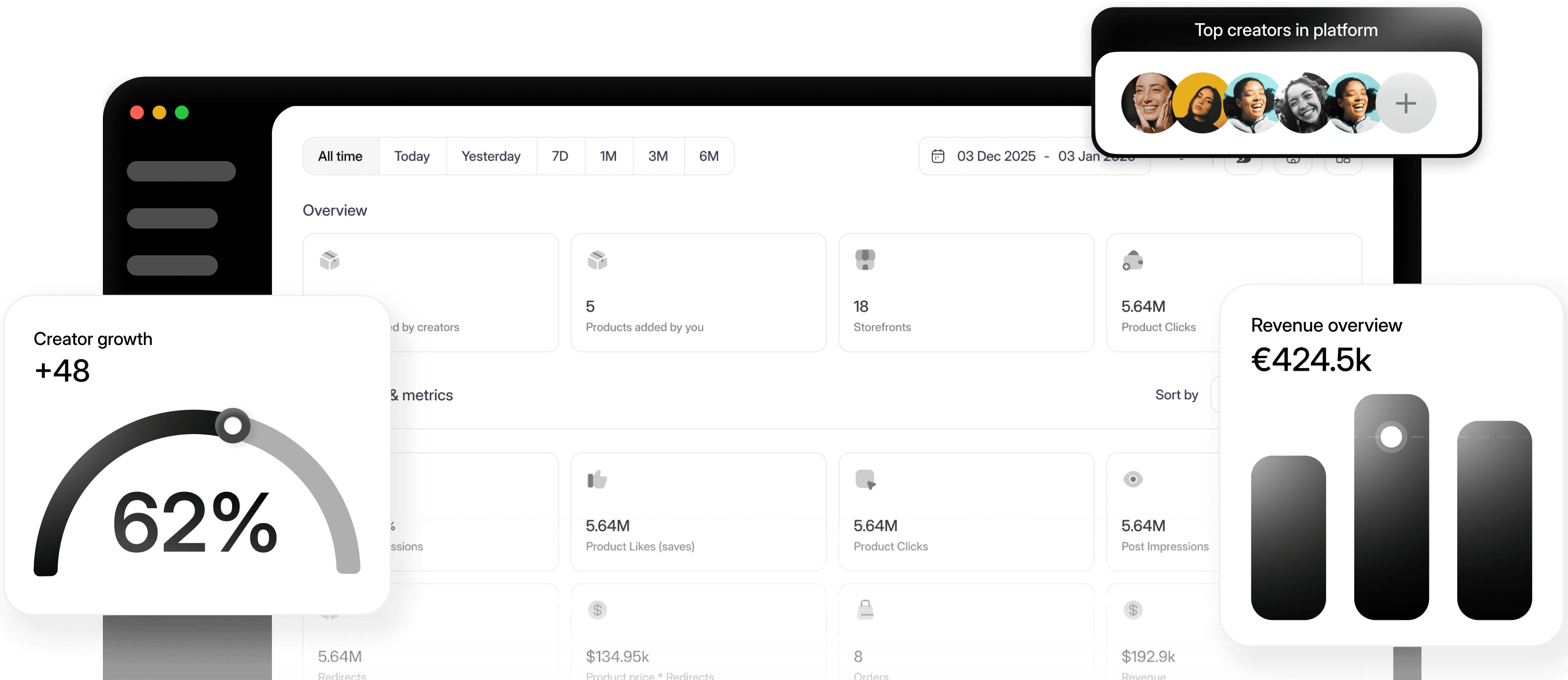
Feature Breakdown: Shopify Creator Storefront Capabilities
Each feature in Socialscale maps to a specific operational need that Shopify brand teams encounter when running creator storefront programs.
Creator Onboarding and Program Enrollment
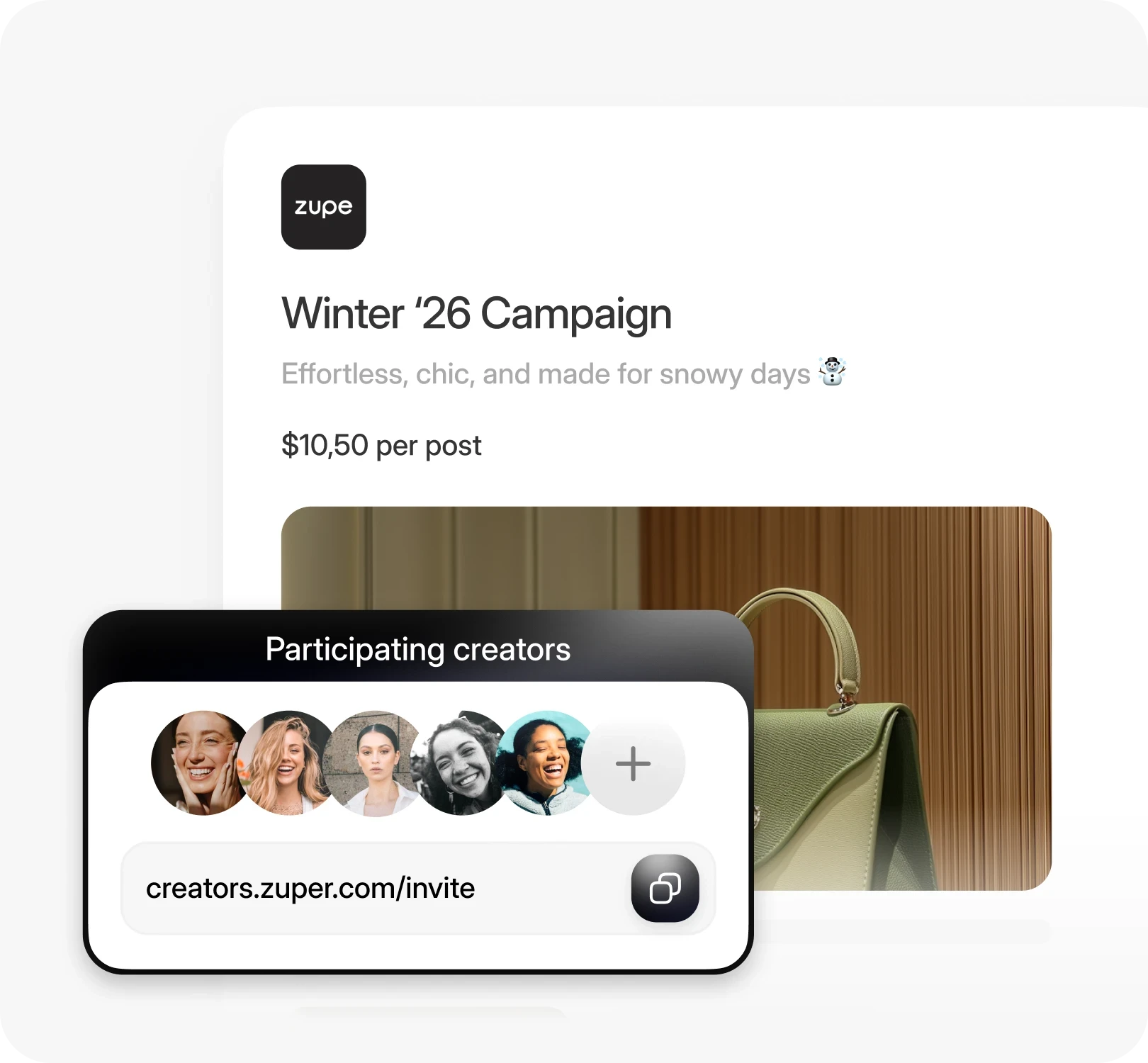
Branded application forms let creators apply to your storefront program directly. Applications flow into your creator CRM with all submitted information, social handles, audience data, and content samples organized automatically. You can set approval criteria, segment creators into tiers, and trigger onboarding sequences that include storefront setup instructions, brand guidelines, and product seeding details.
Storefront Assignment and Product Curation
Assign each creator a personalized storefront URL linked to your Shopify catalog. Curate which products appear on each storefront based on the creator's niche, audience demographics, or seasonal campaigns. Unique discount codes and attribution parameters are generated automatically and tied to the creator's profile.
Content Collaboration and Approval Workflows
Creators submit storefront promotional content, including Instagram Reels, TikTok videos, YouTube Shorts, and static imagery, directly into the platform. Your team reviews submissions in a visual feed, leaves feedback, requests revisions, or approves content for publishing. Approval status is tracked per creator and per campaign so nothing falls through the cracks.
Shoppable UGC Widgets for Shopify
Approved creator content becomes embeddable shoppable widgets that display on your Shopify homepage, collection pages, or individual product pages. Each widget links directly to the featured product's add-to-cart action, turning creator content into a conversion tool on your own store rather than relying solely on the creator's social channels.
Creator Performance Dashboards
Real-time dashboards show each creator's storefront traffic, conversion rate, total orders, revenue generated, and average order value. Compare creators side by side, identify which storefronts are outperforming, and spot creators whose activity has dropped off so you can re-engage them before revenue declines.
Campaign Management Across Multiple Storefronts
Run seasonal campaigns, product launches, or promotional pushes across your entire creator storefront roster. Assign campaign briefs, set deadlines, track content submissions, and measure campaign-level performance metrics all within the same interface where you manage individual creator relationships.
Centralized Asset Library
Every piece of creator content, whether used on a storefront, in a paid ad, or in an email campaign, lives in a searchable asset library. Filter by creator, product, content type, performance metrics, or usage rights. This eliminates the scattered Google Drive folders and Slack threads where UGC typically gets lost.
Use Cases: Creator Storefronts in Action for Shopify Brands
These scenarios illustrate how Shopify brands across different categories can leverage creator storefronts to drive measurable revenue.
DTC Skincare Brand Launches 100 Micro-Creator Storefronts for a New Product Line
A skincare brand launching a new SPF line recruits 100 micro-creators in the skincare and dermatology space. Each creator receives a personalized storefront featuring the new SPF products alongside best-selling serums. Creators post "shop my routine" content linking to their storefronts. The brand tracks which creator storefronts drive the highest conversion rates and reallocates product seeding budgets toward top performers for the next quarter.
Activewear Brand Runs a Seasonal Storefront Competition
An activewear Shopify brand creates a summer campaign where 50 fitness creators each have a storefront stocked with the new summer collection. The brand gamifies the program: the top five storefronts by revenue earn bonus commissions and early access to the fall line. Weekly leaderboard emails keep creators motivated, and the brand uses top-performing creator content as shoppable widgets on its own Shopify homepage throughout the season.
Home Goods Brand Equips Interior Designers with Curated Storefronts
A home goods brand partners with 30 interior designers and home decor creators, giving each a storefront curated around their aesthetic, whether minimalist, maximalist, or mid-century modern. Each storefront feels like a personalized shop-the-look experience. The brand embeds the highest-performing storefront content on relevant Shopify collection pages, increasing on-site conversion rates for organic traffic.
Supplement Brand Scales Affiliate Creator Program from 20 to 200 Creators
A supplement brand that previously managed 20 affiliate creators in spreadsheets moves to a structured storefront program. Each creator gets a storefront with their recommended stack of products, a unique discount code, and a commission structure that increases at revenue milestones. The brand uses automated onboarding sequences to bring on 15 to 20 new creators per month without adding headcount, reaching 200 active storefronts within a year while maintaining content quality through approval workflows.
Weekly and Monthly Operational Workflow for Shopify Creator Storefronts
Running a creator storefront program requires consistent operational cadence. Here is the workflow that high-performing Shopify brand teams follow using Socialscale.
Creator Recruitment and Application Review (Ongoing, Weekly) — Review incoming creator applications in your CRM. Evaluate each applicant's audience size, engagement rate, content quality, and niche fit. Approve qualified creators and trigger automated onboarding sequences that include brand guidelines, storefront setup instructions, and product seeding coordination.
Storefront Setup and Product Assignment (Upon Onboarding) — For each approved creator, generate a personalized storefront URL, assign a curated product collection, and create a unique discount code. Confirm the storefront is live and the creator has access to their performance dashboard link.
Campaign Brief Distribution (Bi-Weekly or Monthly) — Send campaign briefs to active creators with content requirements, posting deadlines, key messaging points, and any seasonal product focus. Briefs are distributed through the platform so creators can reference them alongside their storefront details.
Content Review and Approval (2–3 Times Per Week) — Review creator content submissions in the visual approval queue. Approve content that meets brand standards, request revisions where needed, and flag top-performing content for repurposing as shoppable widgets on your Shopify store.
Shoppable Widget Updates on Shopify (Weekly) — Refresh the shoppable creator content widgets on your Shopify homepage, collection pages, and product pages with newly approved high-performing content. Rotate featured creators to keep the on-site experience fresh and test which content drives the highest add-to-cart rates.
Performance Review and Creator Re-Engagement (Weekly) — Pull creator performance reports showing storefront revenue, conversion rates, and content output. Identify creators whose activity or revenue has declined and send re-engagement messages with updated briefs, bonus incentives, or new product drops to reignite their posting cadence.
Monthly Program Optimization — Analyze month-over-month trends across the entire storefront program. Adjust commission tiers based on performance data. Identify product collections that convert best through creator storefronts versus direct site traffic. Plan next month's campaign calendar and creator recruitment targets based on revenue goals.
Quarterly Program Scaling Review — Assess total program ROI including creator acquisition cost, average revenue per storefront, and content repurposing value. Decide whether to expand the roster, increase product seeding budgets, or test new creator segments like nano-creators or niche experts in adjacent categories.
Key Performance Metrics for Shopify Creator Storefront Programs
Tracking the right KPIs ensures your storefront program delivers measurable business results, not just vanity metrics. Here are the metrics that matter most.
Creator Activation Rate — Percentage of onboarded creators who have an active storefront and have posted at least one piece of promotional content within the first 14 days.
Content Approval Turnaround Time — Average number of hours between content submission and final approval. Target under 24 hours to keep creator momentum high.
Content Output Per Creator — Number of approved content pieces per creator per month. Indicates program engagement and helps forecast storefront traffic.
Storefront Click-Through Rate (CTR) — Percentage of creator content viewers who click through to the creator's storefront. Measures content effectiveness as a traffic driver.
Storefront Conversion Rate (CVR) — Percentage of storefront visitors who complete a purchase. Benchmark against your overall Shopify site conversion rate to assess storefront quality.
Revenue Per Creator Storefront — Total Shopify revenue attributed to each creator's storefront over a given period. The primary metric for identifying top performers and calculating ROI.
Gross Merchandise Value (GMV) from Creator Storefronts — Total revenue generated across all creator storefronts. Tracks program-level contribution to overall Shopify revenue.
Average Order Value (AOV) from Storefronts — Compares AOV from creator storefront traffic versus other channels to understand if creators attract higher or lower value customers.
Return on Creator Spend (ROAS) — Total storefront revenue divided by total creator program costs including commissions, product seeding, and platform fees.
Cost Per Acquisition (CPA) via Creator Storefronts — Total program cost divided by number of new customers acquired through creator storefronts. Compare against paid media CPA to justify budget allocation.
Widget Conversion Rate — Conversion rate of shoppable creator content widgets embedded on your Shopify store. Measures the value of repurposed UGC as an on-site sales tool.
Creator Retention Rate — Percentage of creators who remain active in the program after 90 days. High retention indicates strong program design and fair compensation.
Scenario: How a Shopify Wellness Brand Scaled Creator Storefronts to Drive 22% of Monthly Revenue
A mid-market Shopify wellness brand selling supplements and functional foods had been running a small affiliate program with 25 creators managed through spreadsheets and a basic Shopify affiliate app. Monthly revenue from the program was approximately $18,000, but the team knew there was significantly more potential if they could scale beyond the manual bottlenecks.
The brand migrated its creator program to Socialscale, starting by importing existing creator relationships into the creator CRM and setting up personalized storefronts for each of the 25 active creators. Within the first month, the content approval process that previously took 3 to 5 days was reduced to under 18 hours using the visual approval workflow.
Over the next 90 days, the brand recruited 85 additional creators using branded application forms promoted through Instagram Stories and email campaigns to existing customers who had strong social followings. Each new creator was onboarded through automated sequences and had a live storefront within 48 hours of approval.
The team began embedding top-performing creator content as shoppable widgets on the Shopify homepage and key product pages. These widgets generated a 3.8% conversion rate, outperforming the site's standard product imagery by 1.4 percentage points.
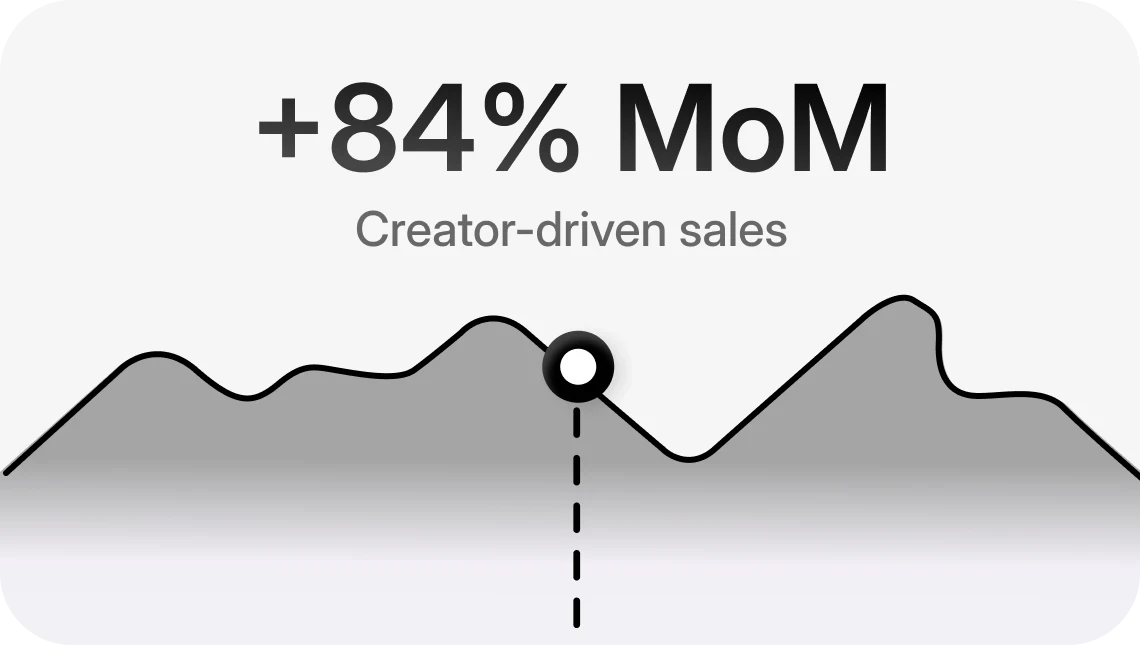
By month six, the program had 110 active creator storefronts generating a combined $67,000 in monthly revenue, representing 22% of the brand's total Shopify revenue. The average revenue per storefront was $609 per month, with the top 15 creators averaging $2,100 each. Creator program ROAS was 5.2x when accounting for commissions, product seeding costs, and platform fees. The team managed the entire program with two people, compared to the three-person team that had been required for the original 25-creator spreadsheet operation.
Frequently Asked Questions About Shopify Creator Storefront Software
How does a creator storefront differ from a standard affiliate link?
An affiliate link sends a customer to your existing Shopify store with a tracking parameter. A creator storefront is a dedicated, branded page featuring products curated for that specific creator's audience, often with the creator's content and recommendations displayed alongside the products. Storefronts create a more immersive shopping experience that typically converts at higher rates than a generic affiliate link because the customer feels they are shopping the creator's personal selection.
Can I control which products appear on each creator's storefront?
Yes. Socialscale allows you to assign specific product collections to each creator's storefront based on their niche, audience, or campaign focus. You can update product selections at any time, such as swapping in seasonal items or new launches, without requiring the creator to take any action.
How does Socialscale attribute Shopify sales to specific creator storefronts?
Attribution is handled through a combination of unique storefront URLs, creator-specific discount codes, and tracking parameters that sync with your Shopify order data. When a customer purchases through a creator's storefront or uses their discount code, the sale is automatically attributed to that creator in the performance dashboard with full order details pulled from Shopify.
What size Shopify brand is this built for?
Socialscale is designed for Shopify brands that are running or planning to run creator programs with 20 or more creators. If you are managing fewer than 10 creators and have no plans to scale, a simpler affiliate tool may suffice. But if you are planning to grow your creator storefront program as a meaningful revenue channel, the platform's onboarding automation, content management, and performance tracking become essential once you move past that threshold.
Can I repurpose creator storefront content for paid ads and email?
Absolutely. All approved creator content stored in the centralized asset library can be downloaded and repurposed for paid social ads, email campaigns, and other marketing channels, subject to the usage rights agreed upon with each creator. The asset library includes filtering by performance metrics so you can prioritize repurposing the content that has already proven to convert.