System for Global Creator Storefronts Built for Global Retailers
Global retailers face a unique operational challenge when scaling creator-led social commerce across dozens of markets, languages, and regulatory environments. A single influencer campaign in one region is manageable. Rolling out hundreds of creator storefronts across North America, Europe, and Asia-Pacific simultaneously is an entirely different discipline — one that demands purpose-built infrastructure.
The global creator storefront rollout is quickly becoming the centerpiece of modern retail social commerce strategy. Rather than treating creators as one-off promotional partners, leading retailers are equipping their top-performing creators with dedicated, shoppable storefronts that function as always-on revenue channels. Each storefront curates products the creator genuinely endorses, embeds shoppable content directly into the shopping experience, and attributes every sale back to the creator who drove it.
But without a unified system for global creator storefronts, retail teams drown in spreadsheets, disconnected tools, and inconsistent creator experiences across regions. This page breaks down exactly how global retailers can operationalize creator storefronts at scale — from onboarding and content management to performance tracking and regional compliance.
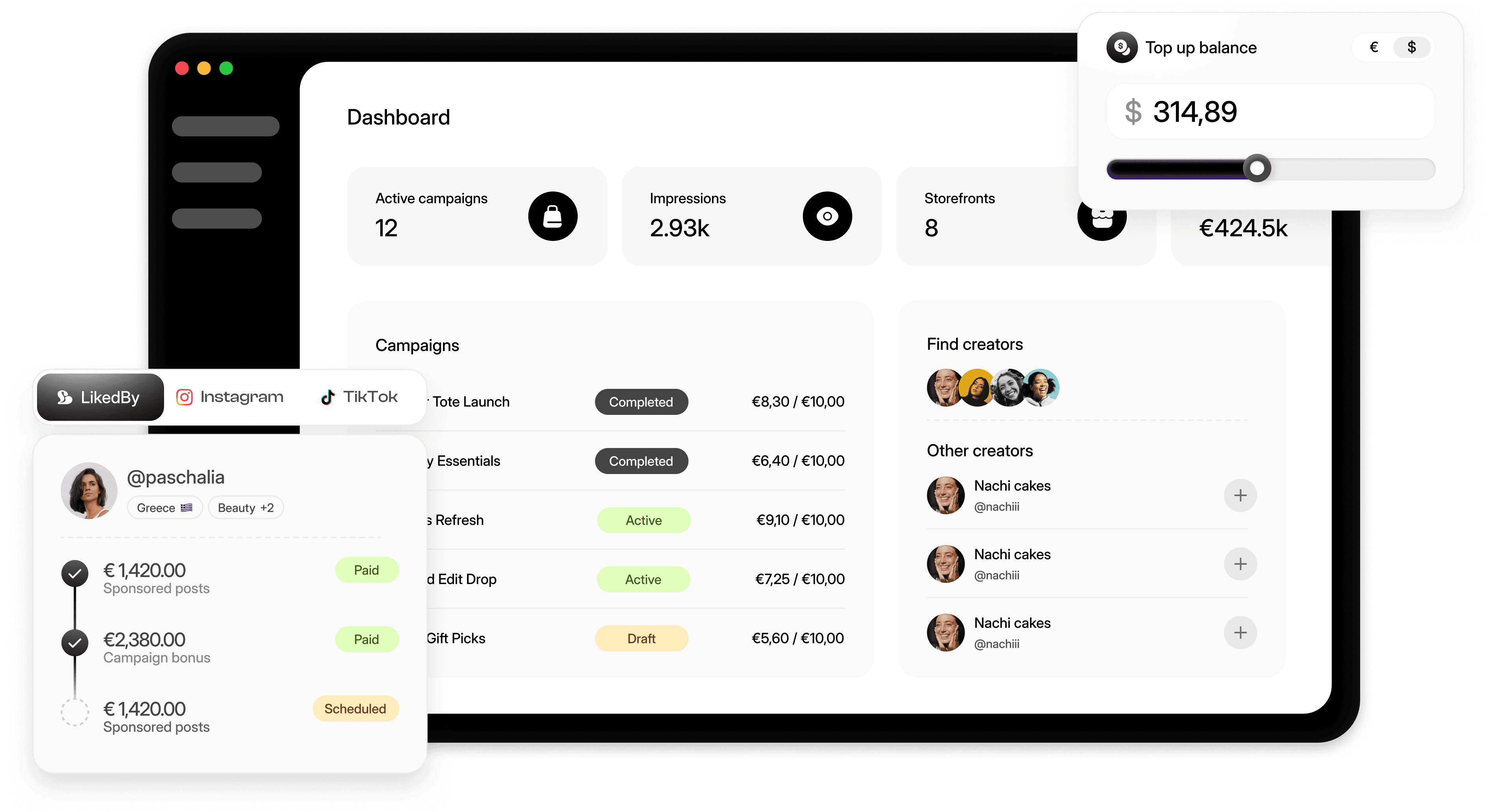
Managing Creator Programs Across Multiple Markets
Global retailers operate in 10, 30, or even 50+ markets. Each market has its own creator ecosystem, cultural nuances, and consumer behavior patterns. Coordinating creator storefront rollouts across these markets without a centralized system leads to fragmented execution and inconsistent brand representation.
Inconsistent Creator Onboarding at Scale
When onboarding hundreds or thousands of creators across regions, retailers often rely on manual processes — email chains, PDF contracts, and regional team handoffs. This creates bottlenecks, delays storefront launches, and results in uneven creator experiences that damage brand perception.
Content Localization and Compliance
Creator content must align with local advertising regulations, language requirements, and cultural expectations. Global retailers struggle to review, approve, and organize creator assets across markets without a centralized content management layer.
Attribution Across Channels and Regions
Tracking which creator storefront drove which sale — across Shopify instances, regional e-commerce platforms, and social channels — is notoriously difficult. Without unified attribution, retailers cannot calculate accurate ROAS or fairly compensate creators.
Creator Retention and Relationship Management
High-performing creators expect professional communication, timely payments, and clear performance data. Global retailers that lack a structured CRM for creators risk losing their best partners to competitors who offer a smoother experience.
Scaling Shoppable Content Deployment
Embedding creator-generated shoppable content across product pages, category pages, and regional microsites requires coordination between e-commerce, marketing, and merchandising teams. Most retailers lack the tooling to deploy this content systematically.
Balancing Global Consistency with Local Autonomy
Regional marketing teams need the flexibility to recruit local creators and tailor storefront experiences, but headquarters needs visibility and governance. Achieving this balance without a unified platform is operationally exhausting.
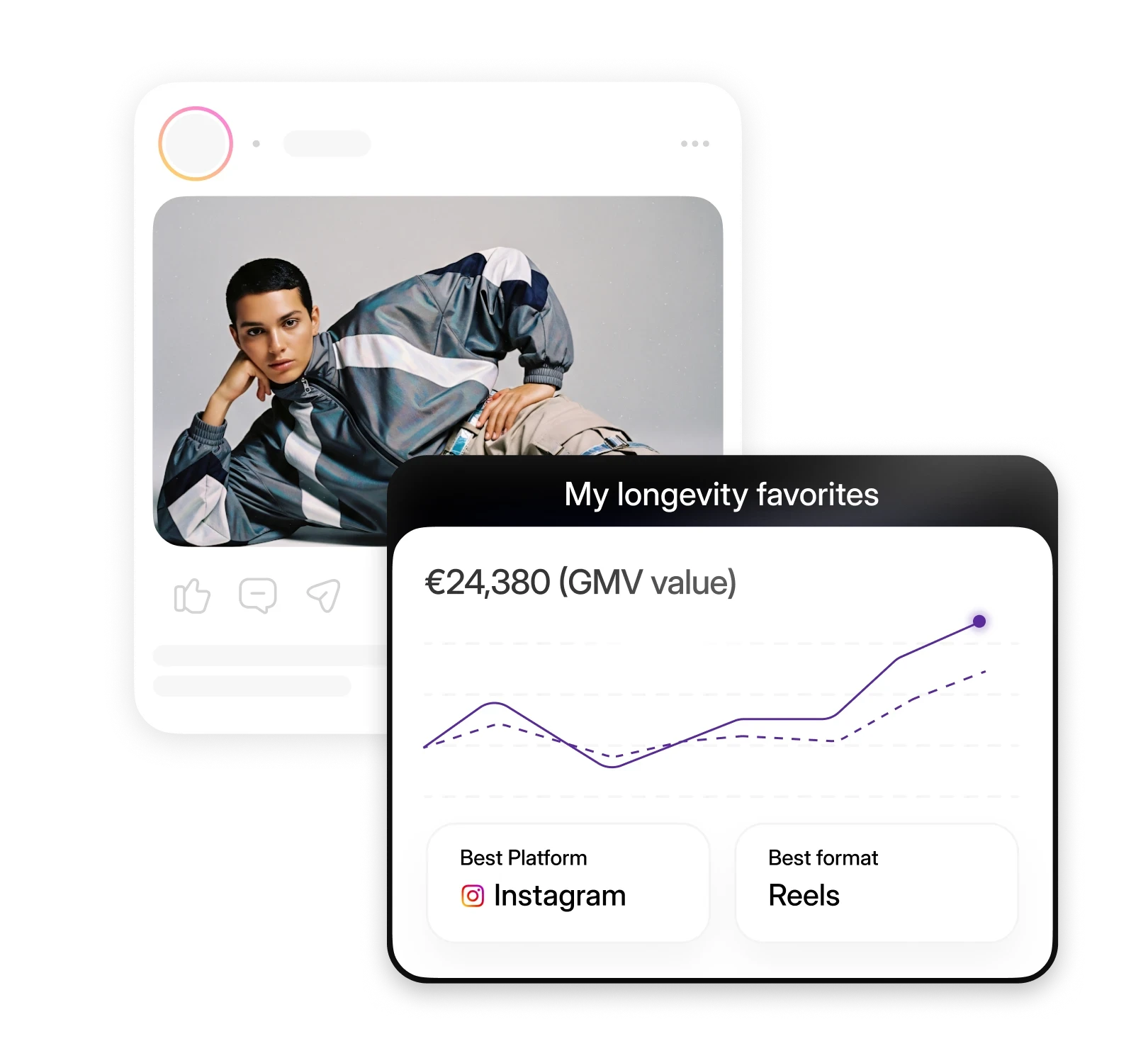
Spreadsheets and Email Cannot Scale Globally
Most global retailers begin their creator programs with spreadsheets tracking creator contacts, campaign briefs sent via email, and content shared through cloud drives. This approach collapses once the program spans more than a handful of markets. Version control issues, lost communications, and duplicated efforts become daily problems that consume team bandwidth without producing results.
Point Solutions Create Data Silos
Retailers often adopt separate tools for influencer discovery, content management, affiliate tracking, and analytics. Each tool holds a fragment of the picture. Regional teams may use entirely different stacks. The result is that no single person in the organization can answer basic questions like: How many active creator storefronts do we have globally? What is our average creator GMV contribution by market?
Generic Influencer Platforms Lack Commerce Depth
Traditional influencer marketing software was built for campaign-based sponsorships — not for operating always-on creator storefronts tied to e-commerce catalogs. These platforms typically lack native storefront creation, shoppable content embedding, product-level attribution, and the operational workflows that global retail teams need to run creator programs as a revenue channel rather than a brand awareness tactic.
No Unified View of Creator Lifecycle
Without a system that tracks the full creator lifecycle — from application and onboarding through content production, storefront performance, and long-term relationship management — retailers are flying blind. They cannot identify which creators to invest in, which markets are underperforming, or where operational bottlenecks exist.
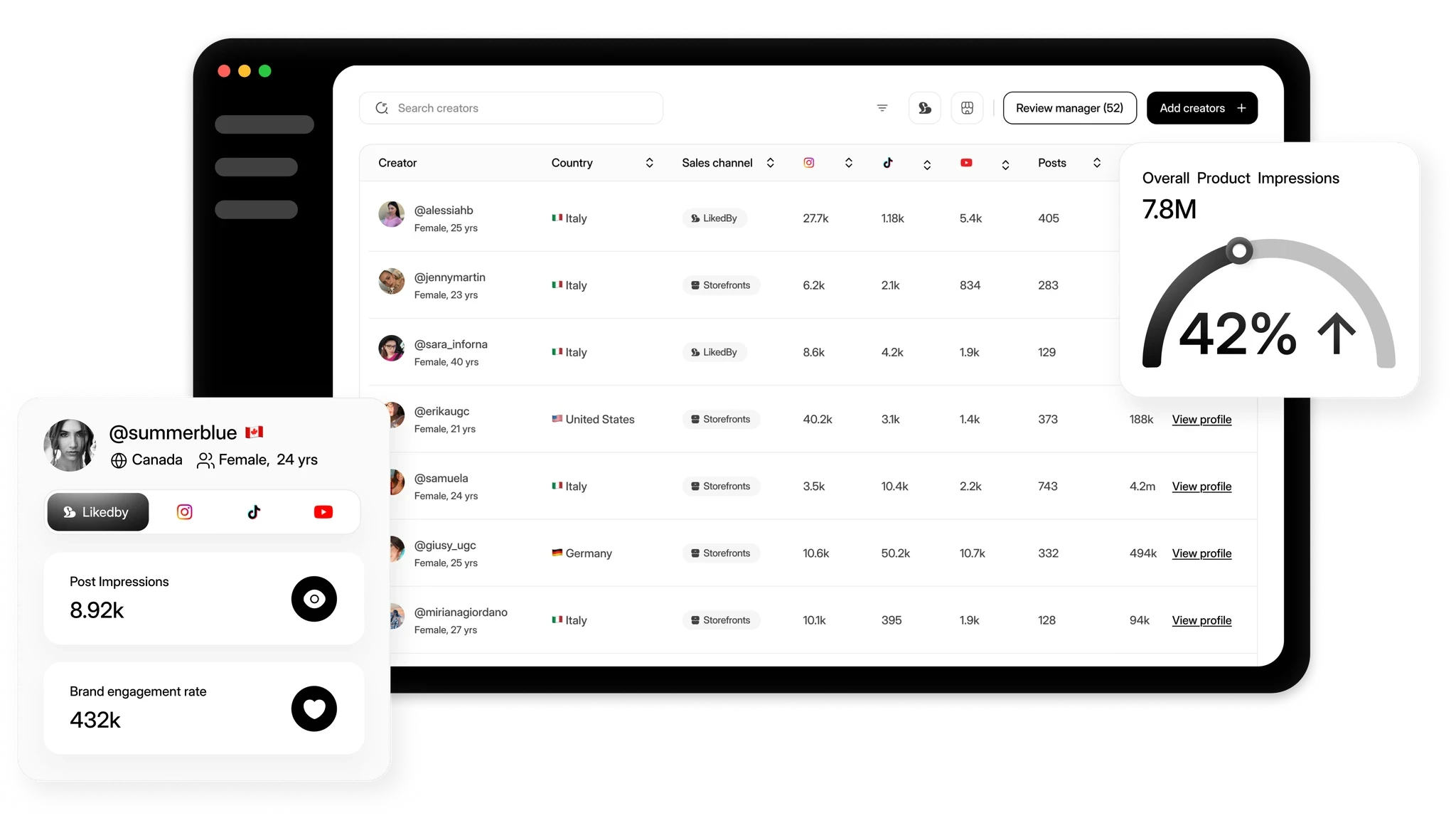
How Socialscale Powers Global Creator Storefront Rollouts
Socialscale is the operating system for social commerce, purpose-built for brands and agencies that need to run creator programs end-to-end across multiple markets. Rather than stitching together disconnected tools, Socialscale provides a single creator marketing platform that covers every stage of the creator storefront lifecycle — from recruitment and onboarding to content management, storefront deployment, and performance tracking.
For global retailers executing a creator storefront rollout, Socialscale eliminates the operational chaos that typically accompanies multi-market expansion. Regional teams can recruit and onboard local creators through standardized workflows while headquarters maintains full visibility through centralized dashboards. Every piece of creator content is stored, organized, and approved through Creator Drive, ensuring brand consistency and regulatory compliance across markets.
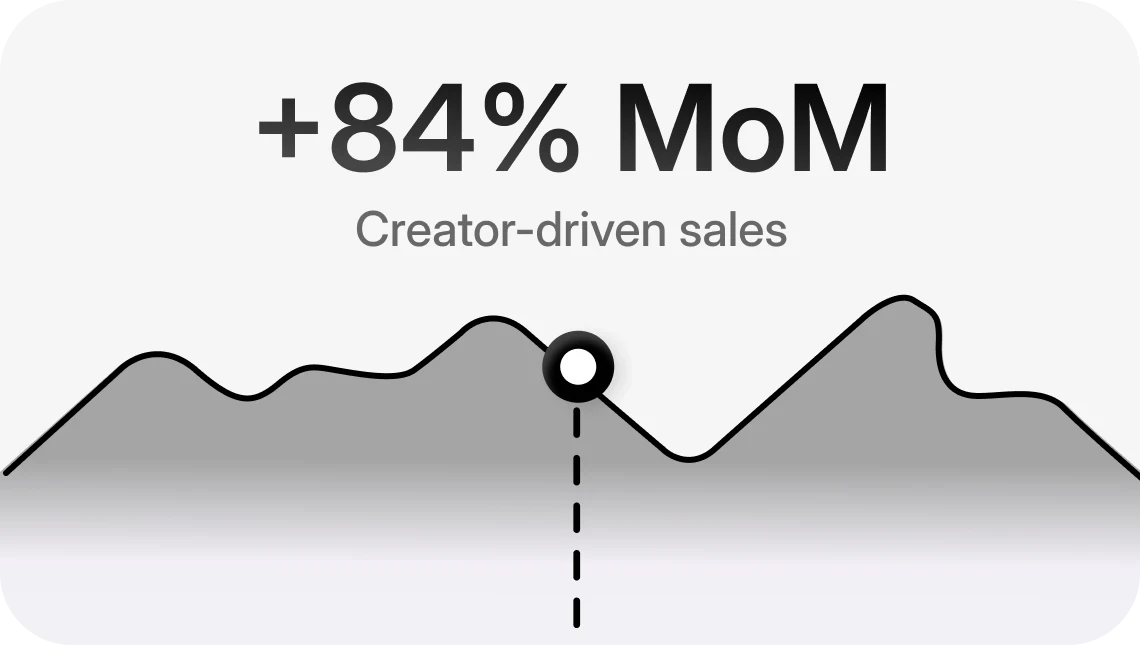
Performance data flows into a unified creator analytics dashboard that tracks storefront-level metrics — GMV contribution, conversion rates, content engagement, and creator activation rates — across every region. This gives e-commerce directors and social commerce leads the data they need to allocate budgets, optimize creator rosters, and demonstrate ROI to executive stakeholders.
Socialscale does not just help retailers manage creators. It gives them the infrastructure to turn creator storefronts into a scalable, measurable revenue channel that operates with the same rigor as any other retail sales channel.
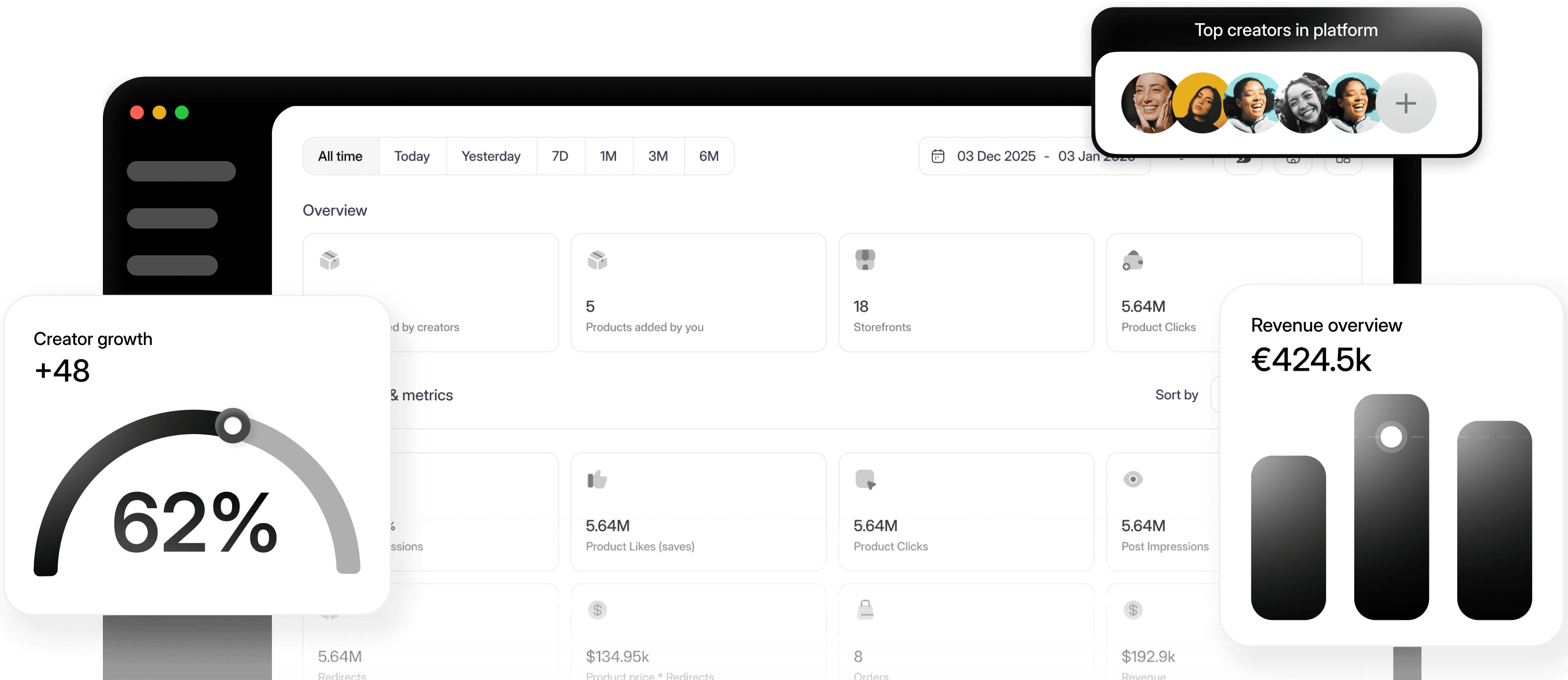
Feature Breakdown: What Global Retailers Get
Centralized Creator CRM for Multi-Market Programs
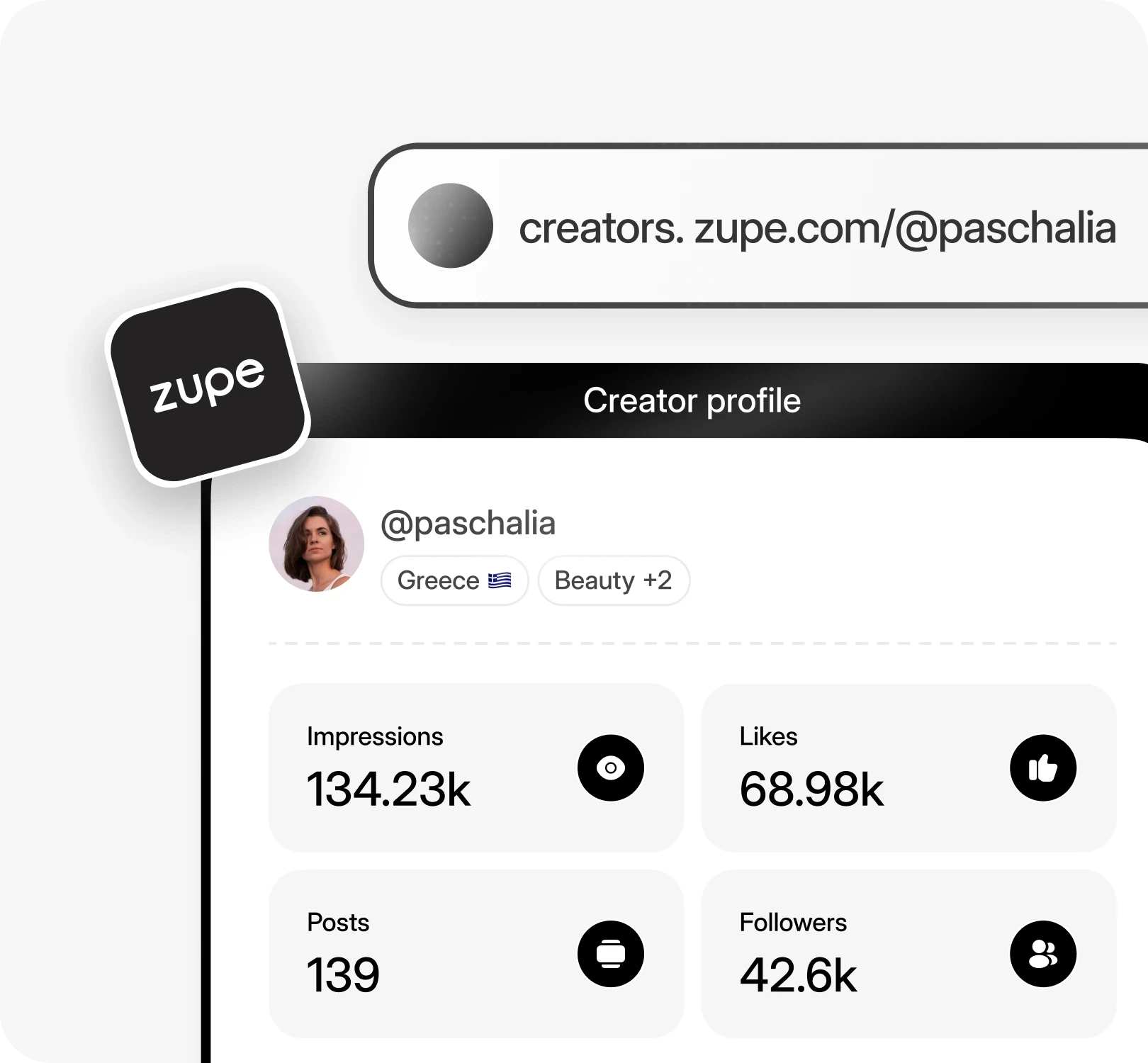
Socialscale's creator CRM gives global retail teams a single source of truth for every creator relationship. Each creator profile captures contact details, market assignment, contract status, content history, storefront performance, and communication logs. Regional managers can filter by market, tier, category, or performance metrics to quickly identify who to activate for upcoming campaigns or storefront expansions. No more cross-referencing spreadsheets across time zones.
Streamlined Creator Onboarding Workflows
Retailers can build standardized onboarding flows that guide creators through application, contract signing, brand guideline review, and storefront setup. These workflows can be customized by region to accommodate local legal requirements or language preferences while maintaining a consistent global structure. Automated status tracking ensures that no creator application sits in limbo.
Creator Storefront Configuration and Management
Each creator receives a dedicated storefront that curates products from the retailer's catalog. Merchandising teams can define which product categories or SKUs are available for creator storefronts, while creators can personalize their selections within those guardrails. Storefronts are designed to be shoppable, with direct purchase paths that attribute every transaction to the originating creator.
UGC Management and Content Approval
Creator content — photos, videos, reviews, unboxings — flows into Creator Drive where it is automatically organized by creator, campaign, market, and content type. Brand teams can review and approve content before it goes live on storefronts or is embedded on the retailer's own e-commerce pages. This centralized UGC management layer eliminates the chaos of content scattered across email attachments, Google Drives, and messaging apps.
Shoppable Content Widgets for E-Commerce
Approved creator content can be embedded directly on product detail pages, category pages, and landing pages using creator widgets. These widgets display authentic creator content alongside purchase CTAs, turning social proof into a direct conversion driver. Global retailers can deploy widgets across regional Shopify instances or other e-commerce platforms with minimal developer involvement.
Creator Collaboration and Campaign Management
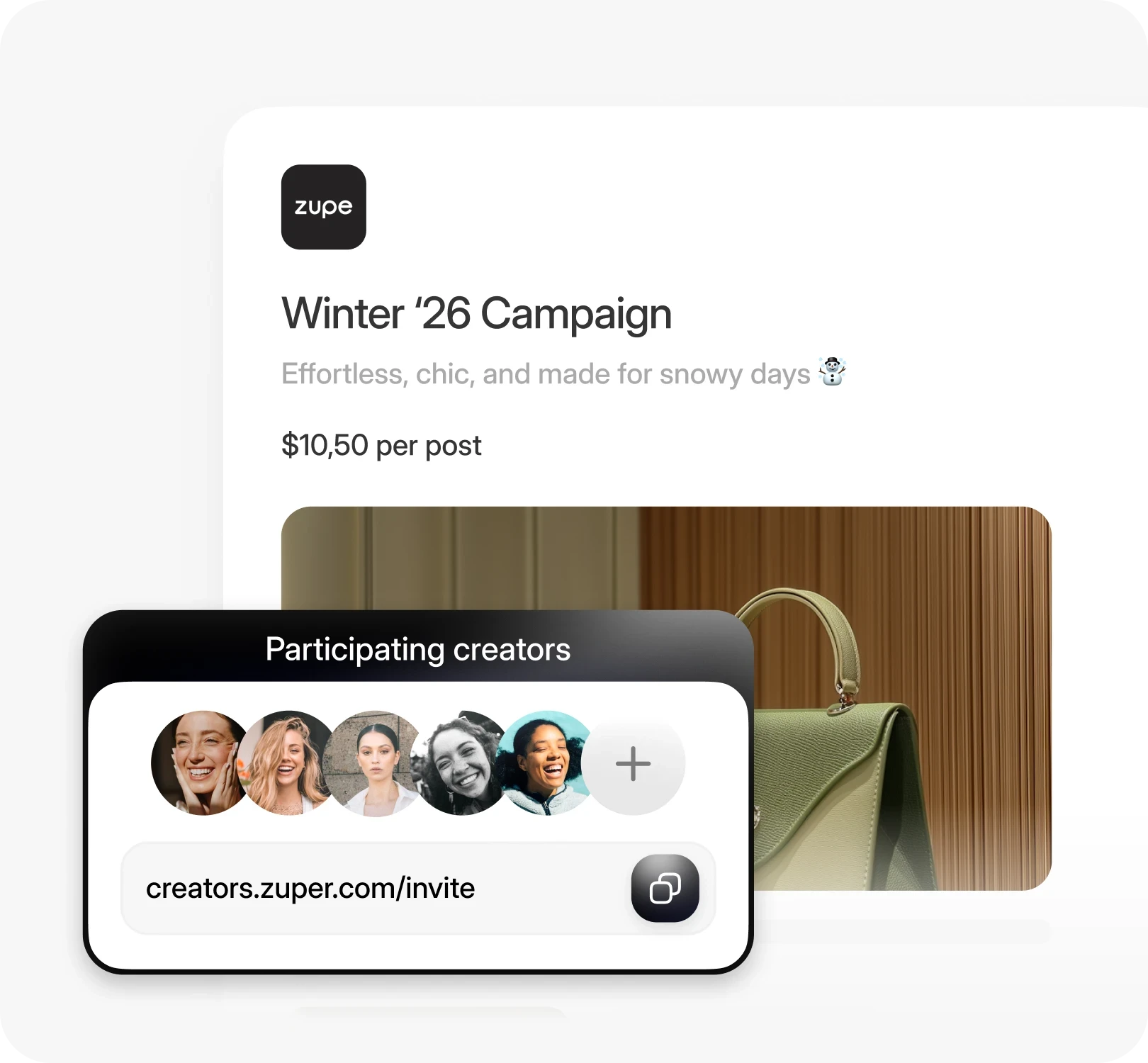
Beyond always-on storefronts, retailers frequently run seasonal campaigns, product launches, and market-specific promotions that require coordinated creator activations. Socialscale's creator collaborations module lets teams brief creators, set deliverables, track submissions, and measure campaign-specific performance — all within the same system that manages ongoing storefronts.
Performance Tracking and Revenue Attribution
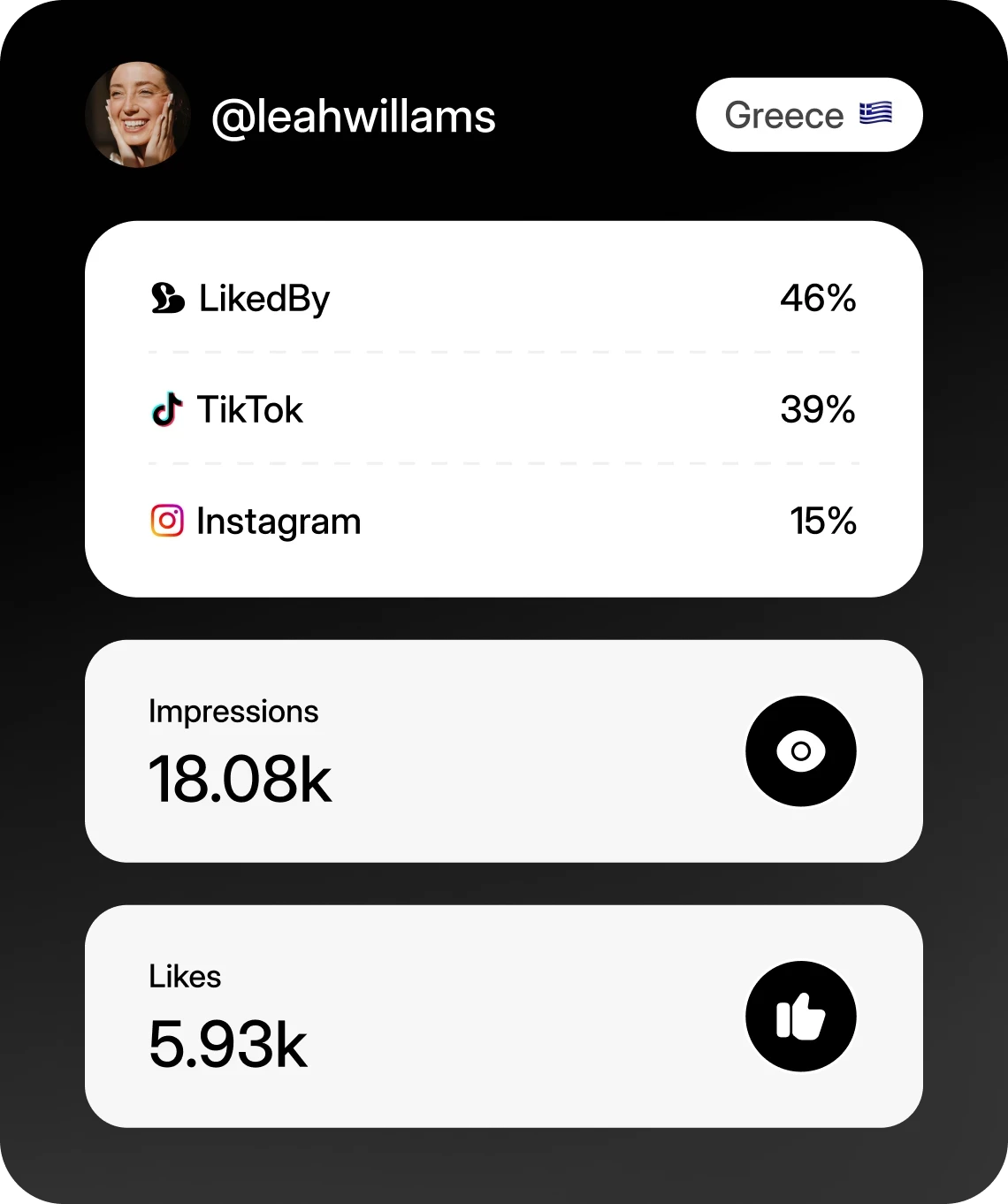
Every storefront generates granular performance data: visits, add-to-carts, conversions, revenue, average order value, and return rates. This data is aggregated at the creator level, market level, and program level, giving stakeholders at every tier the visibility they need. Attribution models connect social engagement to actual e-commerce transactions, enabling accurate ROAS calculations.
Use Cases for Global Retailers
1. Multi-Market Seasonal Storefront Launch
A global fashion retailer prepares for a coordinated fall/winter collection launch across 15 markets. Regional marketing teams each recruit 20–50 local fashion creators and onboard them through a standardized workflow. Each creator receives a storefront pre-loaded with the new collection's hero SKUs. Creators produce styling content that is reviewed, approved, and embedded on regional e-commerce sites within two weeks. Performance dashboards track which markets and which creators are driving the highest GMV during the first 30 days, enabling real-time budget reallocation to top-performing regions.
2. Always-On Affiliate Creator Storefront Program
A global home goods retailer launches a permanent affiliate creator program where interior designers, home renovation influencers, and lifestyle creators maintain year-round storefronts. Creators earn commission on every sale attributed to their storefront. The retailer uses creator performance data to tier creators — top performers receive early access to new products, higher commission rates, and featured placement on the retailer's homepage. Monthly performance reviews identify underperforming storefronts for optimization or deactivation.
3. Regional Product Launch with Localized Creator Content
A global beauty retailer launches a skincare line exclusively in Southeast Asian markets. The team recruits beauty creators in Thailand, Indonesia, the Philippines, and Vietnam. Each creator produces content in their local language, tailored to regional skincare concerns and beauty standards. Content is reviewed for regulatory compliance (ingredient claims, advertising disclosures) before being published on creator storefronts and embedded on regional product pages. The retailer measures sell-through rates by market and creator to inform future regional launch strategies.
4. Creator-Led Loyalty Program Integration
A global sportswear retailer integrates creator storefronts with its loyalty program. Customers who purchase through a creator's storefront earn bonus loyalty points. Creators who drive the most new loyalty sign-ups receive exclusive collaboration opportunities, such as co-designed limited-edition products. The program creates a flywheel where creators are incentivized to drive not just sales but long-term customer acquisition, and the retailer gains rich data on which creator audiences convert into repeat buyers.
Weekly and Monthly Operational Workflow
Running a global creator storefront program requires disciplined operational cadences. Below is a practical workflow that global retail teams can adopt using Socialscale.
Week 1: Creator Recruitment and Pipeline Review — Regional teams review creator applications in the CRM, evaluate candidates based on audience demographics, content quality, and category fit. Approved creators enter the onboarding workflow. Headquarters reviews the global pipeline to ensure balanced market coverage.
Week 1–2: Onboarding and Storefront Setup — New creators complete onboarding steps: contract signing, brand guideline acknowledgment, product catalog review, and storefront configuration. Merchandising teams verify that product assortments are correctly assigned to each creator's storefront based on market and category.
Week 2: Content Briefing and Production — Creators receive content briefs for initial storefront content or upcoming campaign activations. Briefs specify deliverables, format requirements, key messaging, and compliance guidelines. Creators begin producing content.
Week 3: Content Review and Approval — Submitted content flows into Creator Drive. Brand and legal teams review content for quality, brand alignment, and regulatory compliance. Approved content is tagged, organized, and queued for deployment on storefronts and e-commerce pages.
Week 3–4: Storefront and Widget Deployment — Approved creator content is published on storefronts. Shoppable widgets are embedded on relevant product and category pages across regional e-commerce sites. QA checks confirm that attribution tracking, purchase paths, and content display are functioning correctly.
Monthly: Performance Review and Optimization — Social commerce leads pull performance reports from the analytics dashboard. Key metrics reviewed include storefront GMV, creator activation rate, content conversion rate, and average order value. Underperforming storefronts are flagged for creator outreach or content refresh. Top performers are identified for tier upgrades or expanded product access.
Monthly: Creator Communication and Relationship Management — Account managers send performance summaries to creators, share upcoming campaign opportunities, and collect feedback. The CRM logs all communications to maintain relationship continuity even when team members change.
Quarterly: Program Strategy Review — E-commerce directors and brand marketing teams review program-level data: total creator-attributed revenue, market-by-market performance, creator retention rates, and content production velocity. Findings inform budget allocation, market expansion plans, and creator recruitment targets for the next quarter.
Key Performance Indicators for Global Creator Storefront Programs
Measuring the right KPIs ensures that global retail teams can optimize their creator storefront programs for sustained revenue growth. The following metrics should be tracked at the creator, market, and program levels.
Creator Activation Rate: Percentage of onboarded creators who have published at least one piece of content and have an active storefront within 30 days of onboarding.
Storefront GMV (Gross Merchandise Value): Total revenue generated through creator storefronts, tracked by creator, market, and product category.
Content Approval Time: Average number of days between content submission and final approval. Shorter approval cycles mean faster storefront launches.
Content Output per Creator: Number of approved content assets produced per creator per month, indicating creator engagement and program health.
Click-Through Rate (CTR): Percentage of storefront visitors or widget viewers who click through to a product page or add-to-cart action.
Conversion Rate (CVR): Percentage of storefront visitors who complete a purchase, measured at the creator and market level.
Average Order Value (AOV): Mean transaction value for orders placed through creator storefronts, compared against site-wide AOV to measure creator influence on basket size.
ROAS (Return on Ad Spend) / CPA (Cost per Acquisition): Total creator program cost (commissions, product seeding, management overhead) divided by total creator-attributed revenue or acquisitions.
Creator Retention Rate: Percentage of creators who remain active in the program after 90 and 180 days, indicating program satisfaction and long-term viability.
New Customer Acquisition via Creator Storefronts: Number of first-time buyers who entered through a creator storefront, measuring the program's contribution to customer base growth.
Scenario: Global Sportswear Retailer Rolls Out Creator Storefronts Across 12 Markets
A global sportswear retailer with 400+ stores across North America, Europe, and Asia-Pacific decided to launch a creator storefront program to complement its existing e-commerce and wholesale channels. The goal was to turn fitness influencers, athletes, and lifestyle creators into always-on sales partners with dedicated storefronts.
The Challenge
The retailer had previously run one-off influencer campaigns managed by regional agencies. Each agency used different tools, reported different metrics, and maintained separate creator databases. Headquarters had no visibility into total creator-attributed revenue, and creator relationships were lost whenever agency contracts changed. The team needed a unified system for global creator storefronts that could scale across markets while giving regional teams local flexibility.
The Approach
The retailer adopted Socialscale as its centralized creator marketing platform. Over 8 weeks, the team onboarded 600 creators across 12 markets using standardized onboarding workflows customized for local contract and compliance requirements. Each creator received a storefront featuring curated product selections from the retailer's seasonal catalog. Creator content was managed through a centralized content library with regional review and approval workflows. Shoppable widgets were deployed across 12 regional Shopify Plus storefronts.
Results After 6 Months
Creator-attributed GMV reached $4.2M across all markets, representing 8% of total e-commerce revenue.
Average creator activation rate hit 82% within the first 30 days of onboarding.
Content approval time dropped from 11 days (under the previous agency model) to 3.2 days.
Creator storefronts delivered a 14% higher conversion rate compared to non-creator product pages.
Top 50 creators (8% of total roster) generated 41% of total creator-attributed revenue, enabling the team to focus investment on proven performers.
Creator retention rate at 180 days was 74%, significantly above the industry average for affiliate programs.
The retailer now treats its creator storefront program as a core revenue channel with dedicated headcount, quarterly planning cycles, and executive-level reporting — the same operational rigor applied to its wholesale and direct-to-consumer channels.
Frequently Asked Questions
How does a system for global creator storefronts differ from a standard influencer marketing platform?
Standard influencer marketing software focuses on campaign-based activations — finding creators, sending briefs, and tracking sponsored posts. A system for global creator storefronts goes further by providing always-on storefront infrastructure, product catalog integration, shoppable content embedding, and revenue attribution at the SKU level. It treats creators as ongoing sales partners, not one-time campaign participants.
Can regional teams manage their own creator programs within the same system?
Yes. Socialscale supports multi-market program structures where regional teams have autonomy to recruit local creators, customize onboarding workflows, and manage content approvals for their markets. Headquarters maintains global visibility through centralized dashboards and can set guardrails around brand guidelines, product assortments, and compliance requirements.
How is creator-attributed revenue tracked across multiple Shopify stores?
Each creator storefront generates unique tracking links and attribution codes that connect purchases back to the originating creator, regardless of which regional Shopify instance processes the transaction. Performance data is aggregated in Socialscale's analytics layer, giving teams a unified view of creator-attributed GMV across all markets.
What types of creators work best for global retailer storefront programs?
The most effective creator storefronts are run by creators who have genuine affinity for the brand's product category and an engaged audience that trusts their recommendations. For global retailers, this typically includes micro and mid-tier creators (10K–500K followers) who have strong local relevance in their market. Nano creators can also be effective for niche product categories. The key is matching creator audience demographics with the retailer's target customer profile in each market.
How long does it take to roll out creator storefronts across multiple markets?
With a structured system in place, most global retailers can launch creator storefronts in their first 3–5 markets within 4–6 weeks, including creator recruitment, onboarding, content production, and storefront deployment. Subsequent market rollouts accelerate as teams refine their workflows and build reusable templates. A full 10–15 market rollout typically takes 8–12 weeks from program kickoff.