Enterprise Creator Drive Software Built for Enterprise Brands
Enterprise brands running creator programs at scale generate thousands of content assets every month. Product photos, unboxing videos, tutorial reels, testimonial clips, and shoppable UGC all flow in from dozens or hundreds of creators simultaneously. Without a purpose-built system, these assets scatter across email threads, shared drives, messaging apps, and agency folders, creating a content management crisis that slows down every team from social commerce to paid media.
Enterprise creator drive software solves this by centralizing every piece of creator content in a single, searchable, rights-managed repository designed specifically for influencer marketing workflows. Instead of chasing files or wondering whether usage rights have expired, brand teams can instantly locate, approve, repurpose, and deploy creator assets across channels.
For enterprise brands investing heavily in creator collaborations, affiliate creator programs, and UGC management, the content itself is the fuel. A disorganized asset library means slower campaign launches, compliance risks, and wasted spend on content that never gets used. The right creator drive platform turns content chaos into a competitive advantage, connecting asset management directly to creator performance tracking and social commerce revenue.
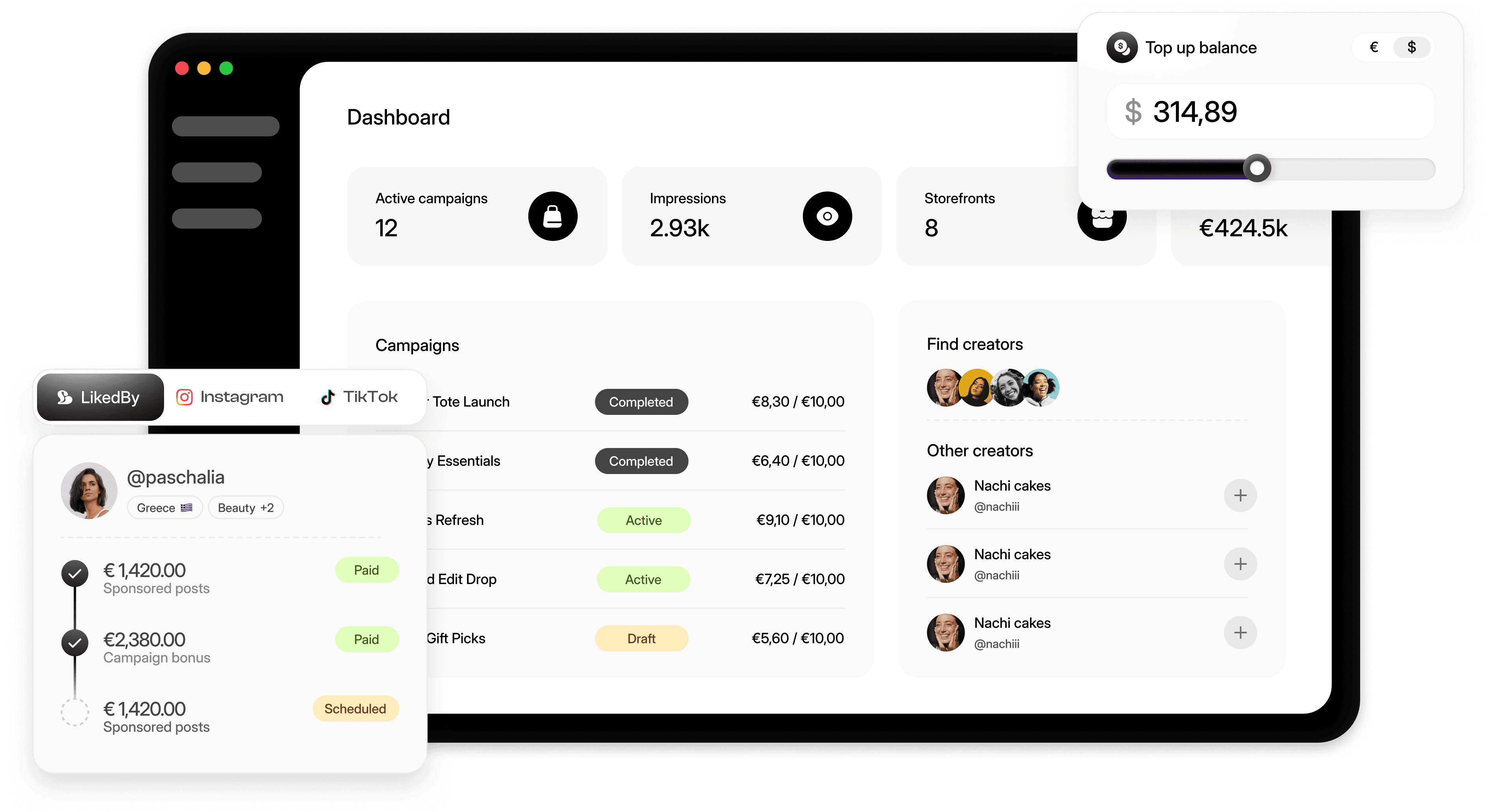
Content Volume Overwhelms Existing File Systems
Enterprise brands working with 200+ creators per quarter can easily accumulate 5,000 or more individual assets per campaign cycle. Standard cloud storage tools like Google Drive or Dropbox have no concept of creator metadata, campaign association, or usage rights, making retrieval painfully slow and error-prone.
Usage Rights and Licensing Gaps Create Legal Exposure
Every piece of creator content comes with specific usage terms: organic only, paid amplification allowed, 90-day window, perpetual rights. Enterprise legal and compliance teams need a system that tracks these terms at the asset level. Without it, brands risk running expired content in paid ads or violating creator agreements.
Cross-Functional Teams Cannot Access What They Need
The social team needs vertical video for TikTok. The e-commerce team needs lifestyle imagery for PDPs. The paid media team needs high-performing UGC for Meta ads. When assets live in a single person's inbox or an agency's internal folder, these teams either wait days for access or recreate content unnecessarily.
No Connection Between Assets and Performance Data
Enterprise brands need to know which creator assets actually drive clicks, conversions, and revenue. Traditional file storage has zero integration with analytics, so teams cannot identify top-performing content or make data-informed decisions about which creators to re-engage.
Campaign-Level Organization Is Manual and Fragile
Organizing assets by campaign, product line, season, or creator tier typically requires manual folder structures that break down as programs scale. Naming conventions drift, duplicates multiply, and institutional knowledge about what content exists disappears when team members leave.
Agency-Brand Handoffs Are Inefficient
Enterprise brands frequently work with multiple agencies managing different creator segments. Each agency has its own file-sharing workflow, creating fragmented asset pools that the brand cannot easily audit, search, or consolidate.
Repurposing Rates Remain Low Despite High Content Investment
Research consistently shows that 60–70% of brand content goes unused after its initial deployment. For enterprise brands spending six or seven figures annually on creator content, low repurposing rates represent a significant waste of budget and creative potential.
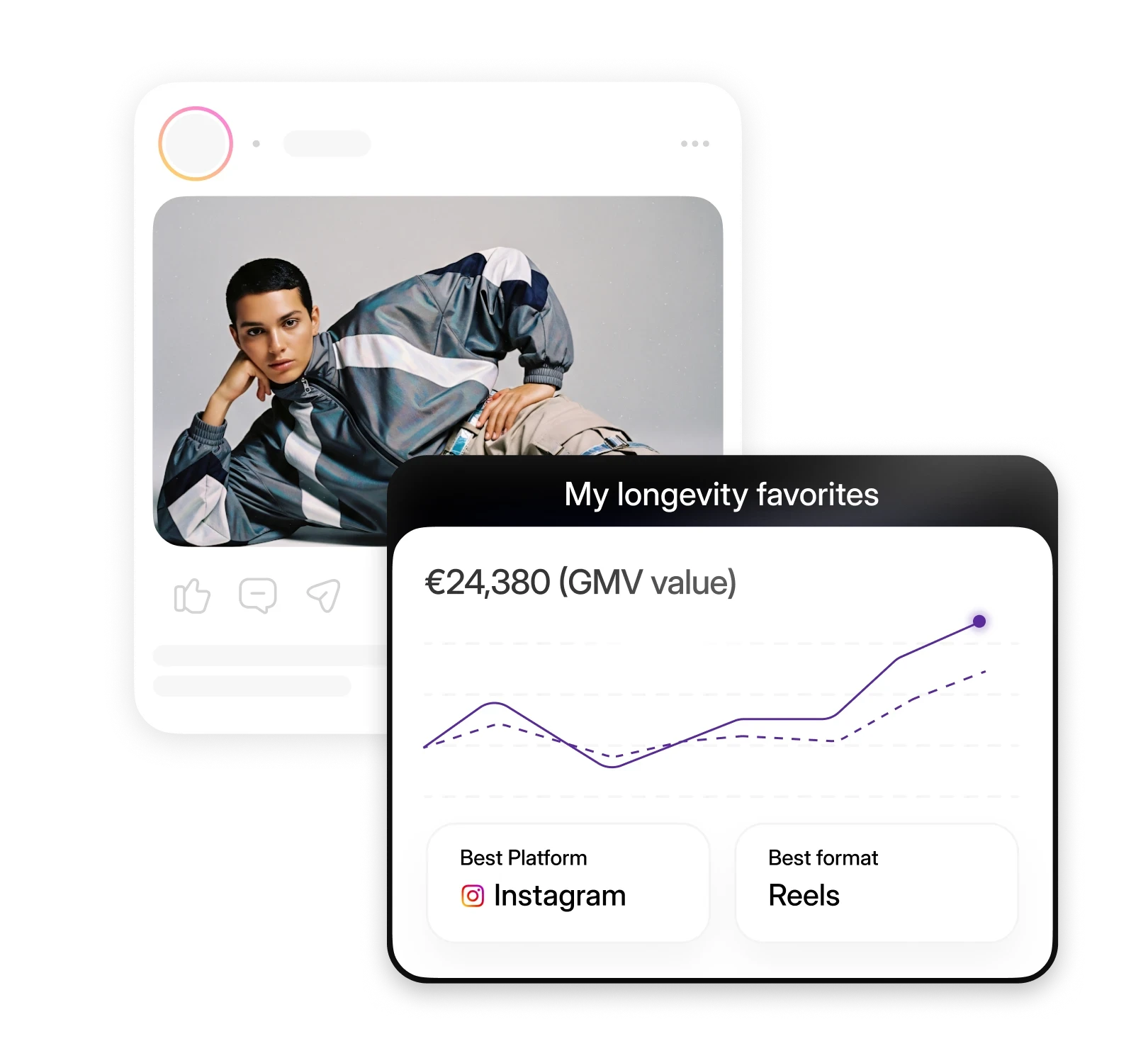
Generic Cloud Storage Lacks Creator Context
Tools like Google Drive, Dropbox, and Box were designed for general file collaboration, not creator asset management. They cannot tag files by creator name, campaign ID, content format, usage rights expiration, or performance metrics. Enterprise teams end up building elaborate workaround systems with spreadsheets and naming conventions that inevitably break at scale.
DAM Platforms Are Overbuilt and Disconnected
Traditional Digital Asset Management platforms like Bynder or Brandfolder serve brand asset needs but were not designed for the velocity and variability of creator content. They lack native integrations with influencer marketing software, creator CRM systems, or social commerce platforms. Onboarding creators into a DAM workflow adds friction that slows content delivery.
Project Management Tools Treat Content as an Afterthought
Platforms like Asana, Monday, or Notion can track campaign tasks but offer no native asset storage, rights management, or content preview capabilities. Teams end up linking out to external storage, creating a fragmented experience where context is lost between the task and the file.
Email and Messaging Create Unsearchable Content Graveyards
When creators submit content via email, WhatsApp, or DMs, those assets become nearly impossible to retrieve weeks or months later. Enterprise brands cannot build a scalable content library on top of communication tools that were never designed for asset management.
Spreadsheet-Based Rights Tracking Is a Compliance Liability
Many enterprise teams track usage rights in spreadsheets that are manually updated. This approach is inherently fragile: a single missed update can result in running a creator's content beyond its licensed window, exposing the brand to legal claims and damaged creator relationships.
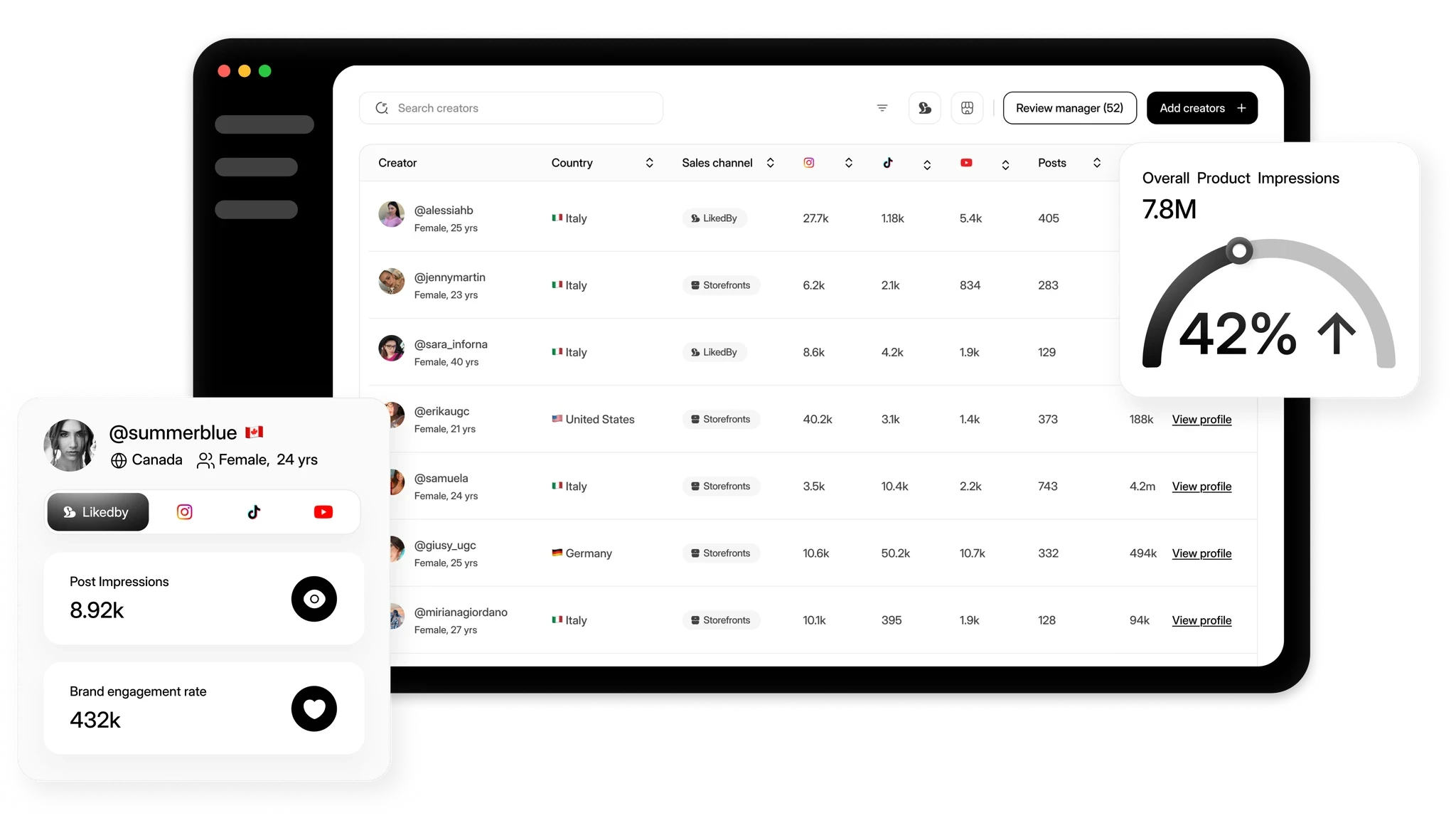
How Socialscale Creator Drive Solves Enterprise Asset Management
Socialscale's Creator Drive is purpose-built for the way enterprise brands actually produce, manage, and deploy creator content. Rather than forcing creator workflows into generic file storage, Creator Drive embeds asset management directly into the creator program lifecycle, from collaboration briefs to content approval to performance tracking.
Every asset uploaded to Creator Drive is automatically enriched with creator metadata, campaign association, content type classification, and usage rights information. This means any team member, whether on the social commerce team, paid media desk, or e-commerce division, can search and filter the entire content library by creator, campaign, product, format, rights status, or performance tier.
Because Creator Drive is natively connected to Socialscale's creator CRM and analytics dashboard, enterprise brands gain something no standalone storage tool can offer: the ability to see which assets drive revenue and which creators consistently produce high-converting content. This closed loop between content storage and performance data transforms the creator drive from a passive file repository into an active decision-making tool.
For enterprise brands managing multiple product lines, regional campaigns, and agency partnerships simultaneously, Creator Drive provides the organizational backbone that keeps content accessible, compliant, and actionable at scale.
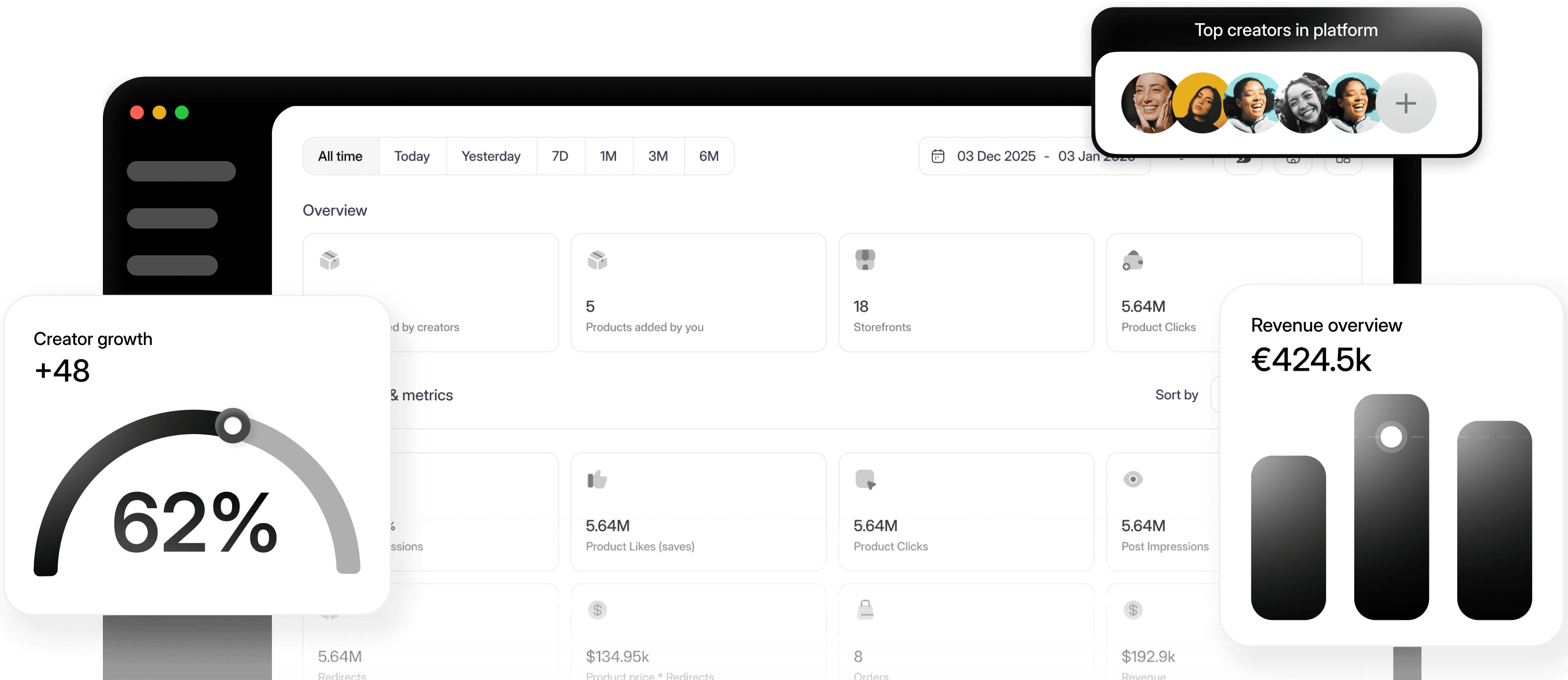
Enterprise Creator Drive Feature Breakdown
Automatic Creator and Campaign Tagging
Every asset ingested into Creator Drive is automatically tagged with the creator's profile, the associated campaign or collaboration brief, the product or SKU featured, and the content format (static image, vertical video, carousel, story, etc.). This eliminates manual tagging and ensures that the content library remains searchable from day one without requiring dedicated operations staff to maintain folder structures.
Usage Rights Management with Expiration Alerts
Each asset carries its own rights profile, specifying whether the content is cleared for organic use only, paid amplification, whitelisting, or perpetual usage. Rights expiration dates trigger automated alerts to the relevant team members, ensuring that paid media teams pull ads before rights lapse and that compliance teams have full audit trails of content usage history.
Multi-Format Preview and Download
Creator Drive supports preview and download for all standard creator content formats, including MP4, MOV, JPG, PNG, GIF, and PDF. Enterprise teams can preview video content directly in the browser without downloading, and export assets in the specific dimensions and formats required for each deployment channel, whether that is TikTok, Instagram, YouTube, or a Shopify product page.
Role-Based Access Controls
Enterprise organizations require granular permissions. Creator Drive allows administrators to set access by team, role, campaign, or brand division. An agency partner managing a specific creator segment can access only the assets from their campaigns, while the internal brand team retains full visibility across the entire library. This prevents unauthorized usage while maintaining operational speed.
Performance-Linked Asset Scoring
Assets stored in Creator Drive can be linked to downstream performance data, including click-through rates, conversion rates, and revenue attribution. This allows teams to filter the content library by performance tier, surfacing the highest-converting UGC for repurposing in paid campaigns, creator storefronts, or shoppable content widgets without manually cross-referencing analytics reports.
Bulk Upload and Creator Self-Submission
Creators can submit content directly into Creator Drive through dedicated upload portals tied to their collaboration briefs. This eliminates the email-and-download cycle entirely. For enterprise brands onboarding large creator cohorts, bulk upload capabilities allow operations teams to ingest hundreds of assets in a single action with batch tagging applied automatically.
Content Approval Workflows
Before assets enter the active library, they pass through configurable approval workflows. Brand managers, legal reviewers, and creative directors can review, comment on, request revisions, or approve content directly within Creator Drive. Approved assets are flagged as deployment-ready, while pending or rejected content remains in a separate queue to prevent premature usage.
Search and Filter Engine
The search engine within Creator Drive supports filtering by creator name, campaign name, date range, content type, rights status, approval status, performance score, product association, and custom tags. For enterprise brands with libraries exceeding 10,000 assets, this search capability reduces retrieval time from minutes to seconds.
Enterprise Brand Use Cases for Creator Drive
1. Global CPG Brand Scaling Seasonal Creator Campaigns
A consumer packaged goods company launches four major seasonal campaigns per year, each involving 150–300 creators across North America and Europe. Each campaign generates 2,000+ assets spanning recipe videos, product styling photos, and testimonial clips. With an enterprise creator drive, the brand marketing team organizes all assets by campaign, region, and product line. When the paid media team needs top-performing UGC for Meta and TikTok ads three weeks after the campaign launches, they filter by performance score and rights status to instantly surface deployment-ready content. The result is faster ad creative rotation and higher ROAS because the team consistently uses proven content rather than guessing which assets will perform.
2. Multi-Brand Retail Corporation Managing Cross-Brand Creator Programs
A retail holding company operates five distinct consumer brands, each with its own creator program. Without centralized asset management, each brand's marketing team maintains separate storage systems with no cross-visibility. An enterprise creator drive allows the corporate social commerce team to maintain brand-separated libraries under a single platform, enabling cross-brand content audits, shared learnings about top-performing content formats, and consolidated reporting on creator content ROI. Individual brand teams retain autonomy over their approval workflows while corporate leadership gains portfolio-level visibility.
3. DTC Fashion Brand Fueling Always-On Shoppable Content
A direct-to-consumer fashion brand runs an always-on affiliate creator program with 500+ active creators generating daily content. The e-commerce team needs a constant stream of fresh UGC for product detail pages, homepage galleries, and shoppable content widgets. The creator drive serves as the single source of truth, automatically surfacing newly approved assets tagged to specific SKUs. The e-commerce team pulls content weekly to refresh on-site experiences, while the social team repurposes the same assets for organic posting. Usage rights tracking ensures that content displayed on the website is always within its licensed window.
4. Enterprise Beauty Brand Coordinating Agency and In-House Teams
A major beauty brand works with three agencies: one managing macro influencers, one handling micro-creator seeding, and one running affiliate creator programs. Each agency submits content through its own process, creating a fragmented asset landscape. An enterprise creator drive provides a unified submission portal where all three agencies upload content with standardized tagging. The in-house brand team reviews and approves all assets in one place, maintains a single rights management system, and can compare content performance across agency-managed segments to inform future budget allocation.
Weekly and Monthly Operational Workflow for Enterprise Creator Drive
Enterprise brands benefit most from Creator Drive when it is embedded into recurring operational rhythms. The following workflow outlines how teams typically integrate asset management into their creator program operations.
Campaign Brief Distribution (Monthly) — The influencer marketing manager creates campaign briefs within the platform, specifying content requirements, format guidelines, product focus, and submission deadlines. These briefs are linked to Creator Drive folders so that all submitted content is automatically associated with the correct campaign.
Creator Content Submission (Ongoing) — Creators upload their content directly into Creator Drive through self-service submission portals. Each upload is auto-tagged with the creator's profile, campaign ID, and content format. The operations team receives notifications as new submissions arrive.
Content Review and Approval (Weekly) — The brand marketing team reviews submitted content in weekly approval sessions. Reviewers check for brand guideline compliance, visual quality, messaging accuracy, and legal requirements. Approved assets move to the active library; assets requiring revisions are sent back to creators with inline comments.
Rights Verification (Weekly) — The compliance or legal team audits newly approved assets to confirm that usage rights documentation is complete and accurate. Rights profiles are attached to each asset, including permitted channels, duration, and paid amplification clearance.
Asset Distribution to Cross-Functional Teams (Weekly) — The social commerce lead shares curated asset collections with the paid media team, e-commerce team, and organic social team. Each team filters the library by their specific needs: the paid team pulls high-CTR video content, the e-commerce team pulls product-tagged lifestyle imagery, and the social team pulls platform-optimized formats.
Performance Data Sync (Weekly) — Creator content performance data from social platforms and e-commerce channels flows back into Creator Drive, updating asset-level performance scores. This enables the team to identify which content is driving conversions and which creators are producing the most effective assets.
Content Repurposing Planning (Bi-Weekly) — The marketing team reviews the top-performing asset tier and plans repurposing actions: converting organic UGC into paid ad creative, embedding high-converting content into creator storefronts, or refreshing on-site shoppable galleries with proven performers.
Monthly Library Audit and Rights Expiration Review (Monthly) — The operations team runs a monthly audit to archive expired content, flag assets approaching rights expiration, and assess overall library health metrics including total assets, approval rates, repurposing rates, and storage utilization.
Key Performance Indicators for Enterprise Creator Drive
Enterprise brands should track the following KPIs to measure the effectiveness of their creator asset management operations and the impact of Creator Drive on overall program performance.
Content Submission Rate: Number of assets submitted per creator per campaign cycle, indicating creator activation and engagement levels.
Approval Rate: Percentage of submitted assets that pass review on first submission, reflecting brief clarity and creator quality.
Average Approval Time: Time from content submission to final approval, measuring operational efficiency of the review workflow.
Content Repurposing Rate: Percentage of approved assets deployed across two or more channels, indicating how effectively the brand leverages its content investment.
Asset Retrieval Time: Average time for a team member to locate and download a specific asset, benchmarking search and organization effectiveness.
Rights Compliance Rate: Percentage of deployed content that is within its licensed usage window, measuring legal and compliance risk exposure.
Content-Level CTR: Click-through rate attributed to individual creator assets when deployed in ads, emails, or on-site widgets.
Content-Level CVR: Conversion rate attributed to specific creator assets, identifying which content drives purchases.
GMV/Revenue per Asset: Gross merchandise value or revenue attributed to individual assets, enabling ROI calculation at the content level.
ROAS by Creator Asset: Return on ad spend when specific creator content is used in paid campaigns, informing creative optimization decisions.
CPA by Content Type: Cost per acquisition segmented by content format (video vs. static, tutorial vs. testimonial), guiding future content briefs.
Library Growth Rate: Month-over-month increase in total approved assets, tracking program scale and content pipeline health.
Enterprise Brand Scenario: Global Wellness Brand Transforms Creator Content Operations
A global wellness brand with annual revenue exceeding $500M operates creator programs across four product categories: supplements, skincare, fitness equipment, and apparel. The brand works with 400+ creators per quarter through a combination of in-house management and two external agencies.
Before implementing enterprise creator drive software, the brand's content operations were fragmented across three agency Dropbox accounts, an internal Google Drive with 47 nested folders, and thousands of email attachments. The social commerce team estimated that locating a specific creator asset took an average of 12 minutes. The paid media team reported that 30% of their ad creative requests went unfulfilled because they could not find suitable UGC in time for campaign deadlines. The legal team identified three instances in a single quarter where creator content was used in paid ads after usage rights had expired.
After deploying a centralized creator drive with automated tagging, rights management, and performance linking, the brand achieved measurable improvements within 90 days:
Average asset retrieval time dropped from 12 minutes to under 45 seconds.
Content repurposing rate increased from 22% to 61%, meaning nearly three times as many assets were deployed across multiple channels.
Rights compliance violations dropped to zero over the following two quarters.
The paid media team increased UGC-based ad creative rotation by 3x, contributing to a 28% improvement in ROAS on Meta campaigns.
The e-commerce team refreshed on-site shoppable content galleries weekly instead of monthly, correlating with a 15% increase in on-site conversion rate for pages featuring creator content.
Agency coordination time decreased by approximately 8 hours per week as all three teams submitted and accessed content through a single platform.
The brand's VP of Marketing noted that the creator drive became the connective tissue between their influencer marketing, e-commerce, and paid media functions, enabling each team to operate faster without duplicating effort or creating compliance risk.
Frequently Asked Questions
How does enterprise creator drive software differ from a standard Digital Asset Management platform?
Enterprise creator drive software is specifically designed for creator and influencer marketing workflows. Unlike general DAM platforms, it natively supports creator metadata tagging, campaign association, usage rights tracking with expiration alerts, creator self-submission portals, and integration with creator CRM and performance analytics systems. This means enterprise brands do not need to customize a generic DAM to fit creator program needs, reducing implementation time and ongoing maintenance.
Can Creator Drive handle content from hundreds of creators simultaneously?
Yes. Enterprise creator drive software is built for high-volume content ingestion. Creators submit content through dedicated upload portals linked to their collaboration briefs, and the system automatically tags each asset with the creator's profile, campaign ID, and content specifications. Bulk upload capabilities allow operations teams to ingest large batches of content with automated tagging, supporting programs with 500+ active creators without manual bottlenecks.
How does usage rights management work within Creator Drive?
Each asset in Creator Drive carries a rights profile that specifies permitted usage channels (organic, paid, whitelisting), duration (30 days, 90 days, perpetual), and geographic restrictions if applicable. The system sends automated alerts to relevant team members as rights expiration dates approach, and expired content is automatically flagged to prevent unauthorized deployment. This provides enterprise legal and compliance teams with a complete audit trail.
Can we connect Creator Drive performance data to our existing analytics stack?
Creator Drive integrates with social platform analytics and e-commerce platforms to sync performance data at the asset level. This includes metrics like click-through rate, conversion rate, and revenue attribution. For enterprise brands with existing BI tools or data warehouses, performance data can typically be exported or connected via API to feed into broader marketing analytics dashboards alongside other channel data.
How does Creator Drive support cross-functional team collaboration?
Role-based access controls allow administrators to grant specific permissions by team, role, campaign, or brand division. The paid media team can access only assets cleared for paid amplification. The e-commerce team can filter by product-tagged content. Agency partners see only their campaign assets. This ensures every team has fast access to the content they need without exposing sensitive assets or creating confusion across organizational boundaries.