Creator Storefront Platform for Fashion Brands
Fashion brands live and die by the speed of their product drops, and the creators who amplify them need more than a discount code and a prayer. Creator storefronts give your influencer roster a branded, shoppable destination where their audiences can browse curated collections, shop limited-edition releases, and convert in the moment of discovery. For fashion labels running seasonal capsules, weekly new arrivals, or collaborative designer drops, this changes the economics of social commerce entirely.
The challenge is that most fashion teams still cobble together affiliate links, spreadsheet tracking, and disconnected content libraries to power what should be a seamless storefront experience. The result is slow launches, inconsistent branding, lost attribution, and creators who lose enthusiasm because the buying experience they send followers to feels generic. Influencer storefronts for fashion product drops demand infrastructure that matches the pace and aesthetic standards of the industry.
Socialscale provides that infrastructure. As a creator storefront platform for fashion brands, it connects onboarding, content management, storefront deployment, and performance tracking into a single operating system, so your team spends less time wrangling tools and more time scaling what works.
Product Drop Velocity Outpaces Creator Coordination
Fashion brands often release new styles weekly or biweekly. Coordinating creator storefronts around each drop requires rapid product feed updates, fresh creative briefs, and real-time storefront configuration. Most teams cannot keep up manually, leading to stale storefronts that feature last month's inventory.
Brand Aesthetic Consistency Across Dozens of Creators
Your brand identity is non-negotiable. When creators host storefronts, the visual presentation, product imagery, and messaging must align with your seasonal campaign direction. Without centralized control, storefronts become a patchwork of off-brand layouts and outdated product shots.
Attribution Gaps Kill Budget Justification
Fashion marketing teams frequently struggle to connect storefront-driven revenue back to specific creators, campaigns, or product categories. When attribution is fuzzy, it becomes impossible to defend creator program budgets to leadership or reallocate spend toward top performers.
Creator Fatigue from Clunky Experiences
High-value fashion creators work with multiple brands. If your storefront setup process is slow, requires manual link generation, or lacks a polished consumer-facing experience, creators deprioritize your brand in favor of competitors with smoother workflows.
Inventory and Availability Mismatches
Limited-edition drops sell out fast. Storefronts that continue promoting sold-out SKUs damage both the creator's credibility and the brand's reputation. Real-time inventory sync is essential but rarely implemented well.
Scaling Beyond a Handful of Creators
Running storefronts for five creators is manageable. Running them for fifty or two hundred across multiple regions and product lines requires systematized onboarding, templated storefront configurations, and automated performance reporting. Most fashion teams hit a wall at scale.
Content Reuse and Rights Management
Creator-generated lookbook imagery, try-on videos, and styling content are valuable beyond the storefront itself. Without organized asset storage and clear usage rights, fashion teams lose the ability to repurpose high-performing content across paid media, email, and on-site merchandising.
Affiliate Networks Were Not Built for Storefronts
Traditional affiliate platforms generate tracking links and pay commissions. They do not create branded, curated shopping destinations. Fashion brands using affiliate networks for creator storefronts end up with generic link-in-bio pages that strip away the editorial quality their products demand.
Influencer Marketing Platforms Stop at Campaign Management
Most influencer marketing software handles discovery, outreach, and campaign briefs. But the moment a creator needs a live, shoppable storefront tied to a specific product drop, these platforms hand off to external tools. The data fractures, the workflow breaks, and the marketing team becomes the integration layer.
E-commerce Platforms Lack Creator-Specific Logic
Shopify and similar platforms power the transaction layer, but they do not natively support per-creator storefronts with individualized product curation, creator-specific analytics, and automated commission tracking. Building this in-house requires significant development resources that fashion brands rarely have available.
Spreadsheets and Manual Processes Cannot Scale
Many fashion teams still manage creator storefronts through a combination of spreadsheets for tracking, email for communication, and shared drives for content. This approach works for a pilot program but collapses under the weight of weekly drops, growing creator rosters, and multi-market campaigns.
Disconnected Analytics Create Blind Spots
When storefront data lives in one tool, content performance in another, and creator relationship history in a CRM or spreadsheet, no one on the team has a unified view of which creators, products, and content formats actually drive revenue. Decision-making becomes reactive instead of strategic.
How Socialscale Powers Creator Storefronts for Fashion Brands
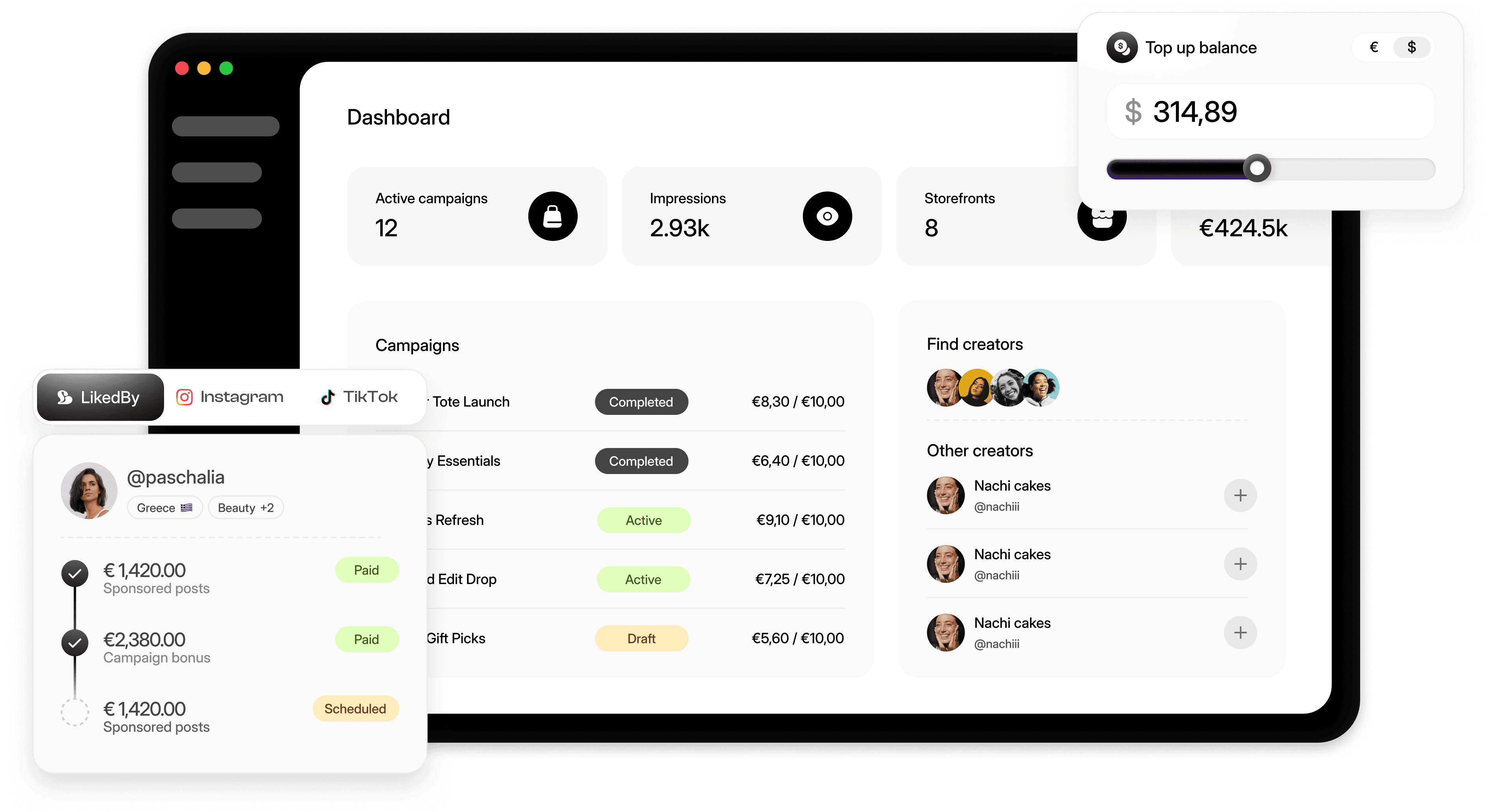
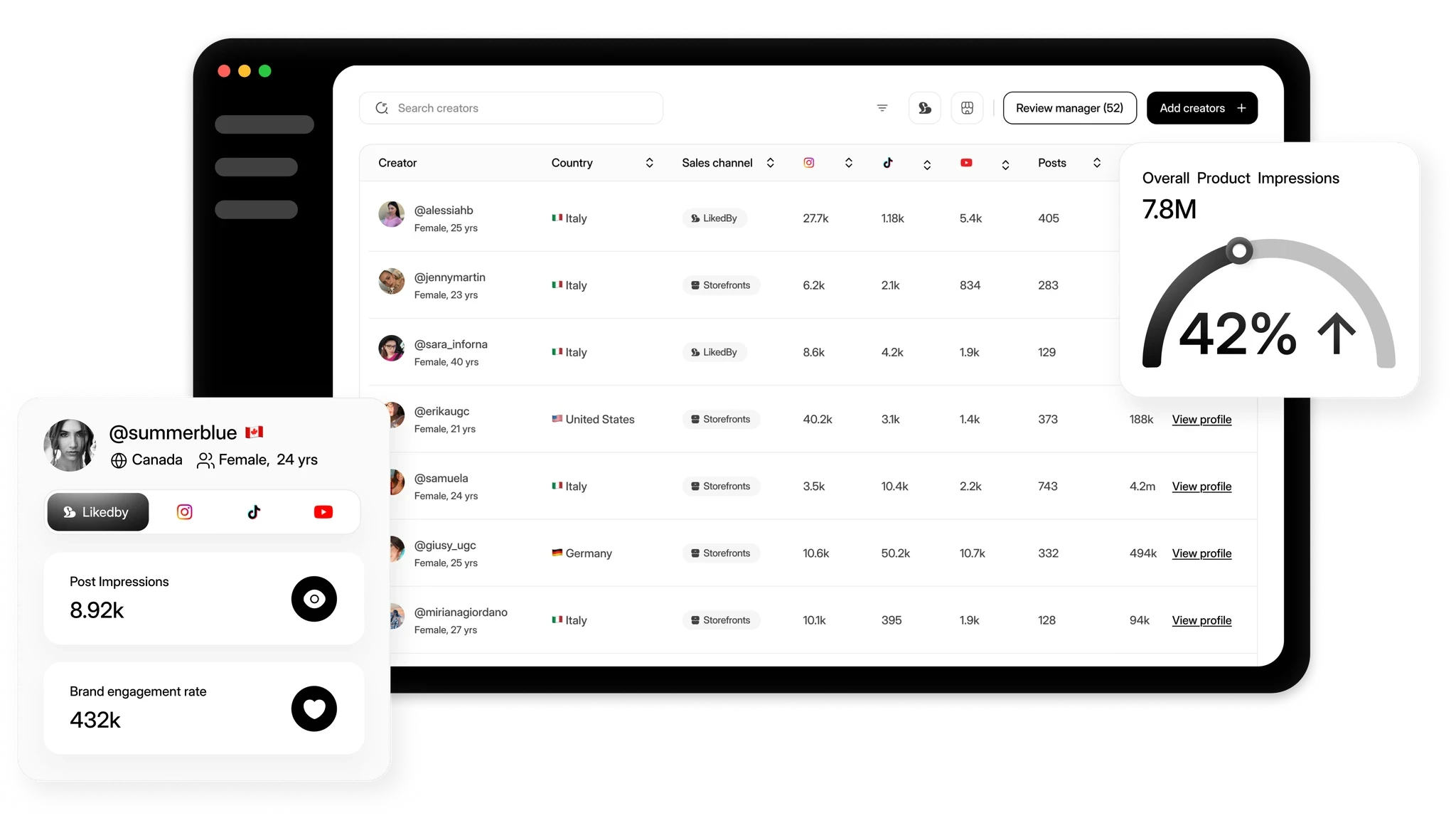
Socialscale is purpose-built as a creator marketing platform that unifies every stage of your creator storefront program. Rather than stitching together five or six disconnected tools, fashion brands use Socialscale to onboard creators, configure branded storefronts, manage product feeds, organize creator content, and track performance from a single dashboard.
The platform's storefront capabilities are designed around the realities of fashion commerce: fast product turnover, high visual standards, and the need for precise attribution at the creator and SKU level. Each creator gets a personalized, brand-controlled storefront that updates automatically as your product catalog changes. When a new drop goes live, storefronts reflect it immediately without manual intervention from your team or the creator.
Behind the storefronts, Socialscale's creator CRM maintains the full relationship history with every influencer, from initial outreach through ongoing collaboration performance. This means your team can segment creators by revenue contribution, content quality, audience demographics, or product category affinity and use those segments to decide who gets early access to upcoming drops.
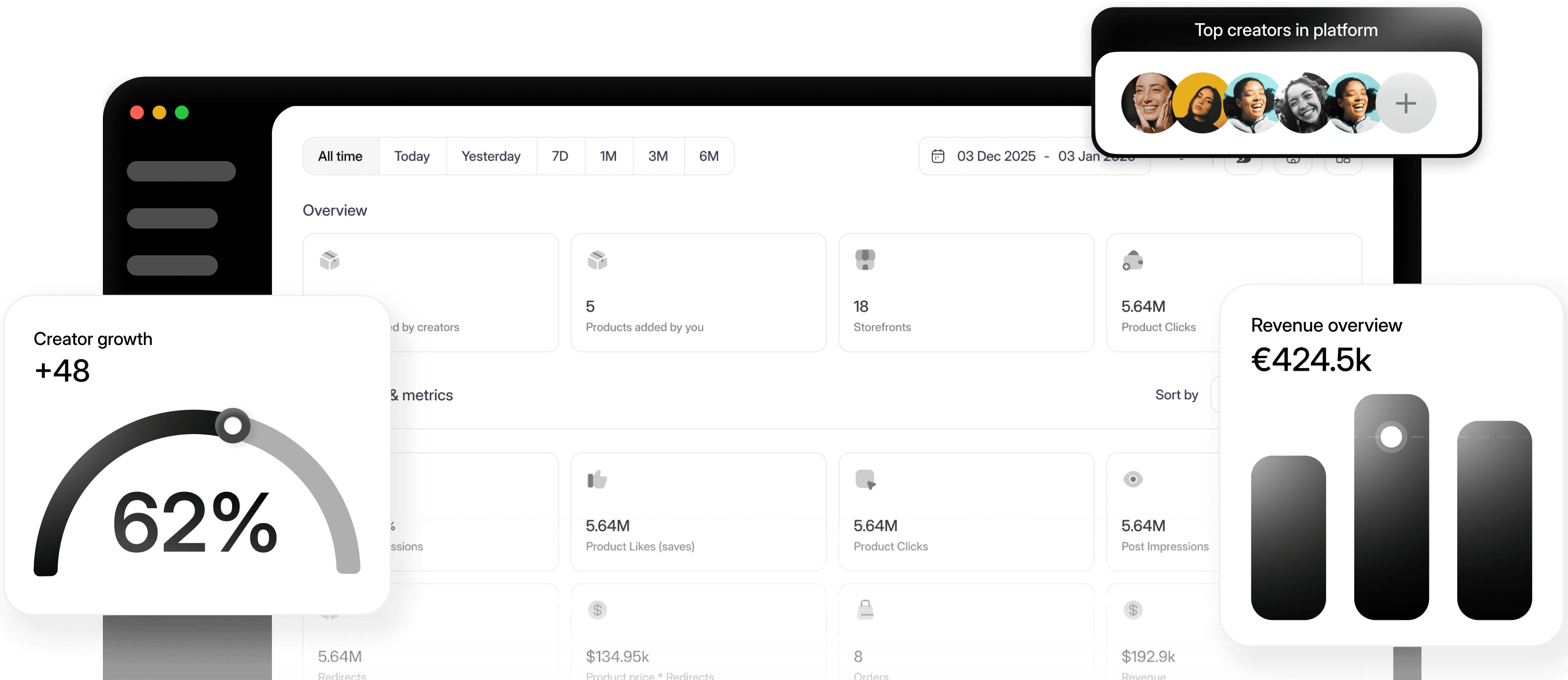
Content generated by creators flows directly into Socialscale's asset management system, where it can be tagged, approved, and redistributed. The creator analytics dashboard ties storefront clicks, conversions, and revenue back to individual creators and campaigns, giving your team the data needed to optimize spend and scale the program with confidence.
Feature Breakdown: Creator Storefronts for Fashion
Branded Storefront Builder
Each creator receives a personalized storefront that reflects your brand's visual identity. Fashion teams control the layout, color palette, typography, and product selection while allowing creators to add their own styling notes and recommendations. Storefronts are mobile-optimized by default, which matters when the majority of fashion social commerce traffic comes from Instagram Stories and TikTok bio links.
Dynamic Product Feed Integration
Storefronts pull directly from your product catalog, so when a new collection drops or a SKU sells out, the storefront updates in real time. Fashion brands running weekly new arrivals or limited-edition capsules no longer need to manually update creator pages. Product availability, pricing, and imagery stay current without intervention.
Creator-Level Attribution and Commission Tracking
Every storefront transaction is attributed to the specific creator, campaign, and product. Commission structures can be configured per creator or per campaign, supporting flat-rate payments, percentage-based commissions, tiered bonuses for hitting revenue thresholds, or hybrid models common in affiliate creator programs.
Shoppable Content Embedding
Creator content, including try-on videos, outfit-of-the-day posts, and styling reels, can be embedded directly within storefronts as shoppable content. This transforms the storefront from a static product grid into an editorial, content-rich shopping experience that mirrors how fashion consumers actually discover and decide to buy.
Creator Onboarding and Self-Service Portal
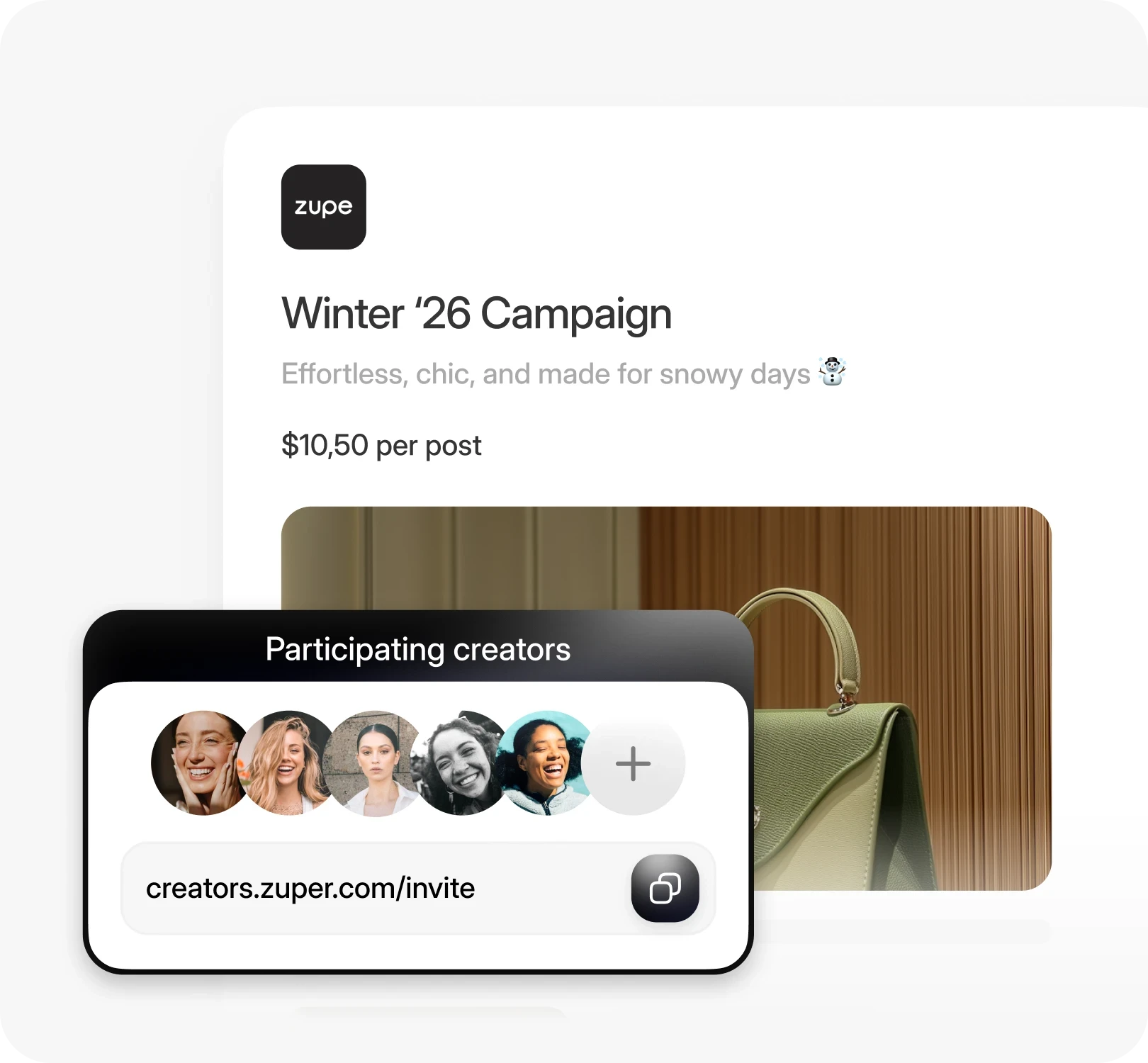
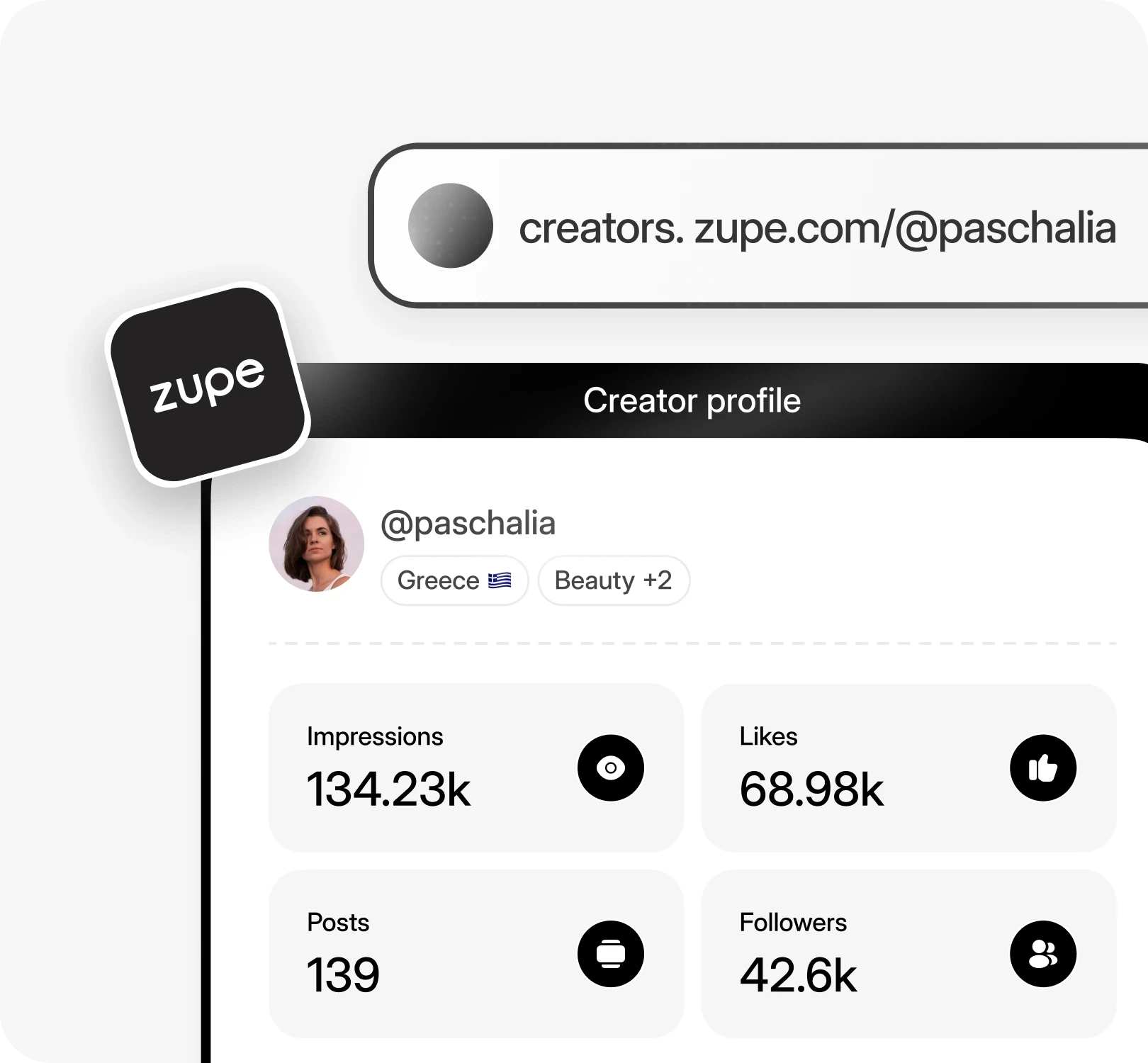
New creators receive an invitation link, complete their profile, agree to terms, and gain access to their storefront within minutes. The self-service portal lets creators view their performance metrics, access product information, download brand assets, and update their storefront curation without requiring back-and-forth emails with your team.
Content Collection and Asset Organization
As creators produce content for their storefronts and social channels, that content flows into a centralized library. Fashion teams can filter by product, creator, content type, or campaign. Approved assets can be repurposed for paid social, email marketing, or on-site UGC galleries, maximizing the return on every piece of creator content.
Campaign-Specific Storefront Configurations
For major seasonal launches, fashion brands can spin up campaign-specific storefronts that feature only the relevant collection. This keeps the consumer experience focused and allows your team to measure the performance of each drop independently rather than blending data across the entire product catalog.
Use Cases: Creator Storefronts in Fashion
Seasonal Collection Launch with Tiered Creator Access
A contemporary fashion label preparing a fall/winter collection launch segments its creator roster into three tiers based on past storefront performance. Top-tier creators receive early access to the collection two weeks before public launch, with exclusive storefronts featuring the full range. Mid-tier creators get access one week early with a curated selection. The remaining creators launch storefronts on the public drop date. This tiered approach rewards high performers, creates staggered buzz across social channels, and generates measurable revenue data at each tier to inform future allocation.
Limited-Edition Collaboration Drop
A streetwear brand partners with a designer on a 500-piece capsule collection. Twenty creators each receive a branded storefront featuring the capsule, with real-time inventory counters showing remaining stock. As items sell out, storefronts automatically update to reflect availability. The urgency of limited supply combined with creator-curated styling recommendations drives rapid sell-through. Post-drop, the brand analyzes which creators drove the highest conversion rates and fastest sell-through times to prioritize them for the next collaboration.
Always-On Affiliate Storefront Program
A direct-to-consumer fashion brand maintains an ongoing creator storefront program where 150 creators across lifestyle, fashion, and beauty verticals each have a permanent storefront. Product feeds update weekly as new arrivals land. Creators receive monthly performance summaries and quarterly bonuses based on cumulative revenue. The brand's social commerce team reviews storefront analytics every Monday to identify trending products, top-performing creators, and content formats that drive the highest average order value.
Regional Market Expansion via Local Creators
A European fashion brand expanding into the North American market recruits 40 US-based creators across key metro areas. Each creator's storefront is localized with USD pricing, US shipping information, and regionally relevant styling. The brand tracks storefront performance by region to understand which markets show the strongest organic demand, using that data to inform paid media spend and retail distribution decisions. Creator storefronts serve as both a revenue channel and a market research tool.
Weekly Operational Workflow for Fashion Creator Storefronts
Running a creator storefront program for fashion requires consistent, repeatable processes. Below is a practical weekly workflow that keeps storefronts current, creators engaged, and performance visible.
Monday: Performance Review and Creator Segmentation. Pull the previous week's storefront analytics, including revenue per creator, conversion rate by product category, and top-performing content. Segment creators into performance tiers and flag any storefronts with declining engagement for review.
Tuesday: Product Feed and Storefront Updates. Sync the latest product catalog updates, including new arrivals, restocks, and discontinued SKUs. Verify that all active storefronts reflect current inventory and pricing. For upcoming drops, configure campaign-specific storefront templates.
Wednesday: Creator Communication and Briefing. Send weekly updates to your creator roster with product highlights, styling suggestions, and any campaign-specific messaging. Use the creator CRM to personalize outreach based on each creator's product category strengths and audience demographics.
Thursday: Content Review and Approval. Review newly submitted creator content for brand alignment, product accuracy, and visual quality. Approve assets for storefront embedding and flag high-performing content for repurposing across paid channels and on-site UGC galleries.
Friday: New Creator Onboarding. Process pending creator applications, send storefront invitations, and ensure new creators have access to brand guidelines, product information, and their self-service portal. Set initial storefront configurations based on the creator's niche and audience profile.
Biweekly: Commission Processing and Creator Payouts. Calculate commissions based on storefront-attributed revenue, verify transaction data, and process payouts. Share individual performance summaries with creators to maintain transparency and motivation.
Monthly: Program Optimization and Reporting. Compile monthly program metrics including total storefront GMV, creator activation rate, average order value by storefront, and content output volume. Present findings to leadership with recommendations for roster adjustments, budget reallocation, and upcoming campaign planning.
Key Performance Metrics for Fashion Creator Storefronts
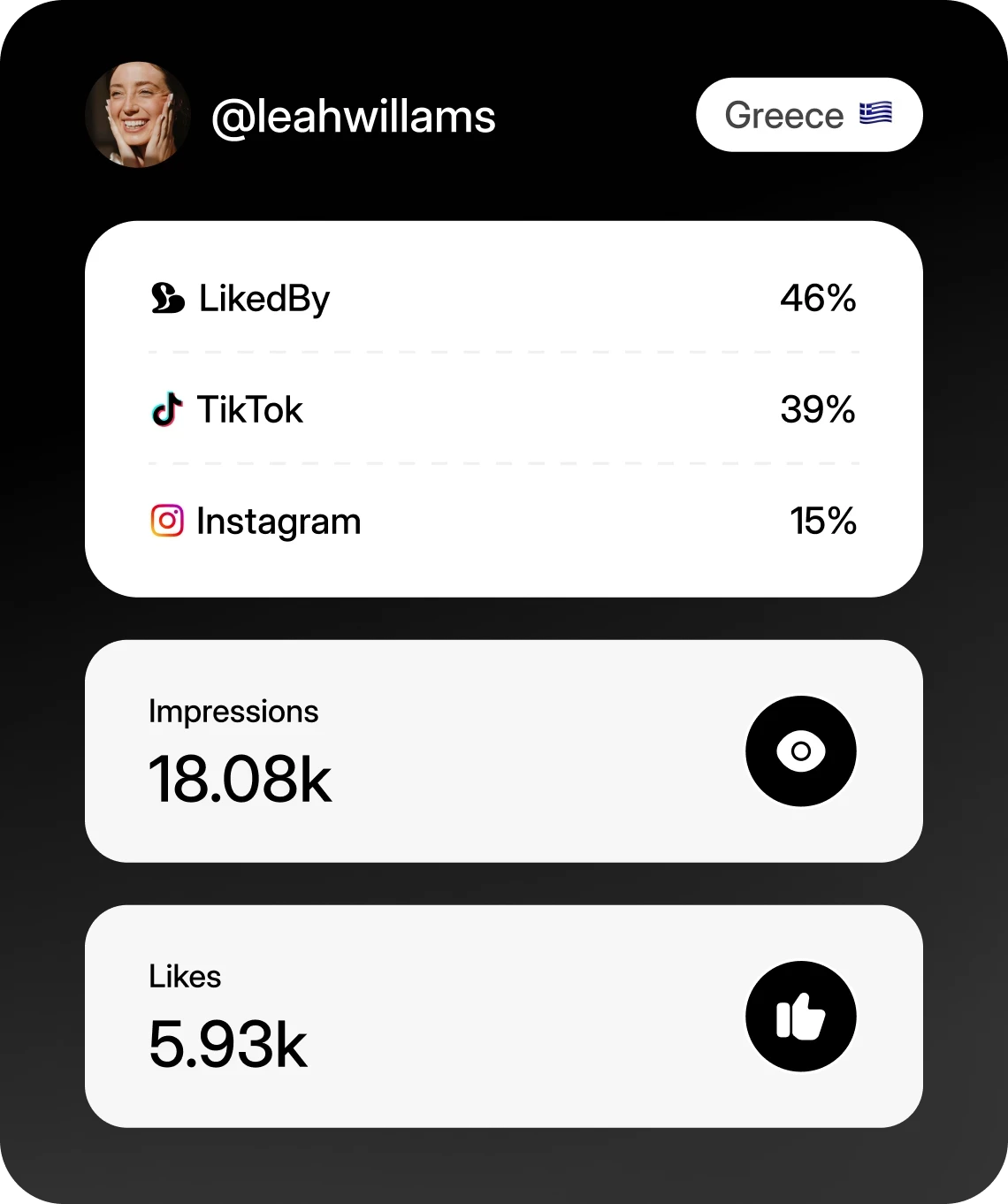
Tracking the right KPIs ensures your creator storefront program delivers measurable business outcomes. Fashion brands should monitor the following metrics consistently:
Creator Activation Rate: Percentage of onboarded creators who have an active, updated storefront with at least one transaction in the past 30 days.
Storefront Conversion Rate (CVR): Percentage of storefront visitors who complete a purchase, segmented by creator, product category, and traffic source.
Click-Through Rate (CTR): Rate at which creator social content drives clicks to storefronts, measured across Instagram, TikTok, and YouTube.
Gross Merchandise Value (GMV): Total revenue generated through creator storefronts, tracked at the program, campaign, and individual creator level.
Average Order Value (AOV): Mean transaction value per storefront order, useful for identifying creators who drive higher-value purchases.
Content Output Volume: Number of creator-generated assets produced per week or month, including photos, videos, and Stories, tied to storefront campaigns.
Content Approval Time: Average time from content submission to approval, a key operational efficiency metric that affects campaign velocity.
Return on Ad Spend (ROAS): When storefront content is amplified through paid media, ROAS measures the revenue generated per dollar spent on boosting creator content.
Cost Per Acquisition (CPA): Total creator program cost divided by the number of new customers acquired through storefronts.
Creator Retention Rate: Percentage of creators who remain active in the program quarter over quarter, indicating program health and creator satisfaction.
Sell-Through Rate by Drop: For limited-edition and seasonal drops, the percentage of allocated inventory sold through creator storefronts versus other channels.
Scenario: Mid-Size DTC Fashion Brand Scales Creator Storefronts
A direct-to-consumer women's fashion brand generating $12M in annual revenue wanted to move beyond one-off influencer campaigns and build a sustainable creator storefront program. The brand had previously worked with 25 creators on a seasonal basis, managing collaborations through email, tracking sales via UTM parameters in Google Analytics, and storing content across multiple shared Google Drive folders.
The team onboarded Socialscale and migrated their existing creator relationships into the platform's CRM. Within the first month, they configured branded storefronts for all 25 existing creators and recruited an additional 40 creators through the self-service application portal. Each storefront was connected to the brand's Shopify catalog with real-time inventory sync.
Over the first 90 days, the program produced measurable results:
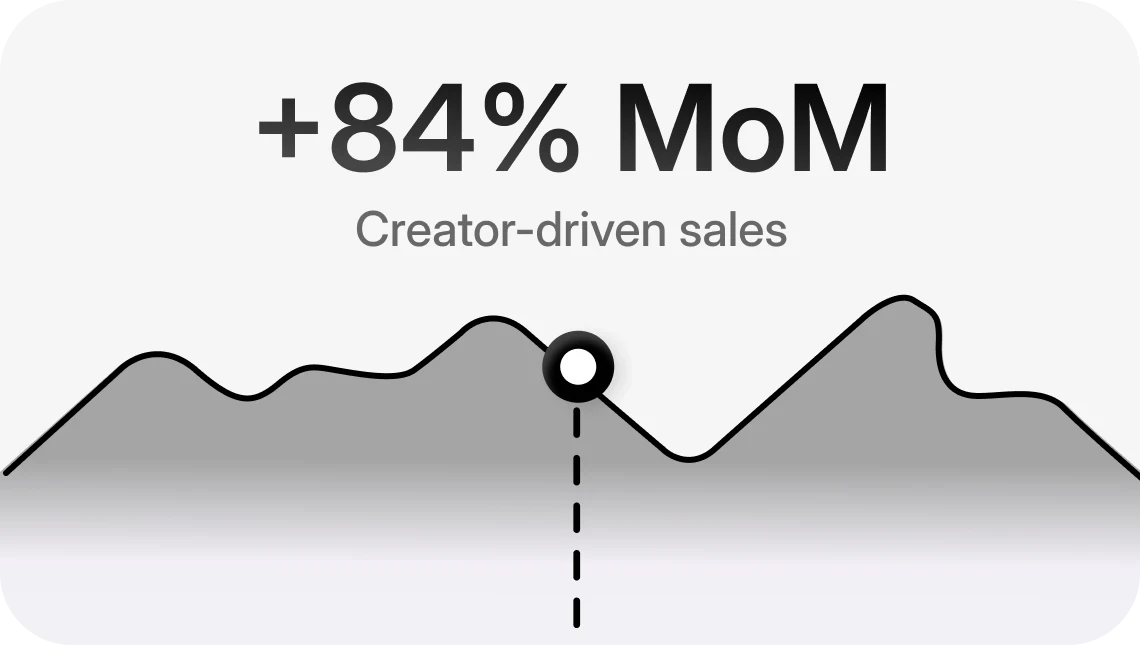
Storefront GMV reached $340,000, representing a 28% increase over the previous quarter's creator-attributed revenue tracked through UTM links.
Average storefront conversion rate was 4.2%, compared to the brand's site-wide average of 2.1%, indicating that creator-curated storefronts drove higher purchase intent.
Content output increased from approximately 60 assets per month to 185 assets per month, with a centralized library replacing the fragmented Google Drive system.
Creator activation rate held steady at 82%, meaning the vast majority of onboarded creators maintained active, revenue-generating storefronts throughout the quarter.
Content approval time dropped from an average of 3.5 days to under 24 hours, accelerating the pace at which new content appeared on storefronts and social channels.
The team identified their top 10 creators by revenue contribution and offered them exclusive early access to the next seasonal collection, which generated $95,000 in storefront revenue during the first 48 hours of the drop.
The brand's e-commerce director noted that the unified dashboard eliminated the need for weekly manual reporting, freeing approximately 8 hours per week of team capacity that was redirected toward creator relationship building and campaign strategy.
Frequently Asked Questions
How do creator storefronts differ from standard affiliate links for fashion brands?
Affiliate links send traffic to your existing product pages, where the creator has no control over the shopping experience. Creator storefronts provide a curated, branded destination where the creator's product selections, styling recommendations, and content are front and center. For fashion brands, this editorial layer significantly increases conversion rates because consumers trust the creator's curation. Storefronts also enable richer attribution, tracking not just clicks but browsing behavior, product interactions, and purchase patterns at the individual creator level.
Can storefronts be updated automatically when new fashion collections drop?
Yes. When your product catalog is synced with the storefront platform, new arrivals, price changes, and inventory updates are reflected on creator storefronts in real time. Fashion brands running weekly new arrivals or flash drops do not need to manually update each creator's page. Campaign-specific storefronts can also be pre-configured and scheduled to go live at a specific date and time, aligning with your broader launch calendar.
How do fashion brands maintain visual consistency across many creator storefronts?
The storefront builder allows your team to set brand-level design parameters including color schemes, typography, logo placement, and product image standards. Creators can personalize their storefronts within these guardrails, adding their own product selections and commentary, but the overall visual identity remains consistent. This is critical for fashion brands where aesthetic coherence directly impacts consumer perception and trust.
What commission structures work best for fashion creator storefronts?
Most fashion brands use a hybrid approach. A base commission percentage on all storefront sales, typically between 10% and 20%, provides consistent motivation. Layering in tiered bonuses for hitting monthly revenue thresholds encourages creators to actively promote their storefronts. For high-profile drops or collaborations, some brands offer flat-rate fees plus performance bonuses. The key is transparency: creators who can see their earnings in real time through a self-service portal stay more engaged than those waiting for monthly reports.
How long does it take to launch a creator storefront program for a fashion brand?
With an existing creator roster and a synced product catalog, most fashion brands can have their first storefronts live within one to two weeks. The initial setup involves configuring brand design templates, connecting your e-commerce platform, importing creator contacts, and setting commission structures. Scaling from a pilot group of 10 to 15 creators to a full program of 50 or more typically takes an additional four to six weeks as you refine workflows, onboarding materials, and performance benchmarks.