Creator Storefronts for Consumer Electronics Brands
Consumer electronics brands face a unique challenge during product launches: translating complex specs, features, and use cases into purchase decisions at scale. Traditional advertising can communicate what a product does, but creator storefronts bridge the gap between demonstration and conversion by letting trusted voices sell directly through curated, shoppable content experiences. This is social commerce at its most effective — turning authentic creator reviews, unboxings, and tutorials into revenue-generating storefronts.
For influencer marketing managers and e-commerce directors at consumer electronics companies, creator storefronts represent a fundamental shift in launch strategy. Instead of scattering affiliate links across disconnected platforms, each creator gets a branded, trackable storefront that houses their content, recommendations, and direct purchase paths. The result is a measurable channel that connects creator influence to actual sales data.
Whether you are launching a new pair of wireless earbuds, a smart home device, or a flagship smartphone accessory, creator storefronts give your launch campaign a persistent, shoppable presence that extends well beyond the initial hype cycle. This page breaks down how consumer electronics brands can operationalize creator storefronts — from onboarding tech reviewers to tracking per-creator revenue attribution across every SKU in your launch lineup.
Key Challenges Consumer Electronics Brands Face with Creator-Led Launches
Product launch campaigns in consumer electronics carry high stakes and compressed timelines. Here are the operational and strategic challenges that make creator storefront programs especially difficult to execute without purpose-built infrastructure.
1. High SKU Complexity and Variant Management
Consumer electronics launches often involve multiple SKUs — color options, storage tiers, bundle configurations. Creators need storefronts that reflect the right product variants with accurate pricing, and brands need attribution at the SKU level to understand which configurations drive the most revenue.
2. Short Launch Windows with Long Content Tails
Launch campaigns typically peak in a 2–4 week window, but creator content continues generating traffic for months. Most brands lack systems to keep creator storefronts active and optimized beyond the initial push, leaving significant long-tail revenue on the table.
3. Coordinating Dozens of Creators Across Tiers
A typical electronics launch might involve 10 macro tech reviewers, 30 mid-tier creators, and 50+ micro-influencers. Coordinating seeding, briefing, content approval, and storefront setup across these tiers without a centralized system leads to missed deadlines and inconsistent messaging.
4. Disconnected Content and Commerce
Creator content lives on YouTube, TikTok, and Instagram, but the purchase path lives on your DTC site or retail partner pages. Without shoppable creator storefronts, there is a conversion gap between the moment a viewer decides to buy and the moment they actually can.
5. Attribution Blind Spots
Consumer electronics brands often run creator programs alongside paid media, retail promotions, and PR. Isolating creator-driven revenue from other channels is nearly impossible without dedicated storefront tracking and per-creator analytics.
6. Content Rights and Asset Chaos
Tech reviewers produce high-value content — detailed comparisons, teardowns, lifestyle integrations. Brands need organized access to this content for repurposing across paid ads, PDPs, and retail media, but assets end up scattered across email threads, Google Drives, and DMs.
7. Proving ROI to Leadership
Consumer electronics margins are tight. CMOs and VP-level stakeholders demand clear ROAS data from creator programs, not vanity metrics. Without storefront-level revenue tracking, creator programs get deprioritized in favor of performance marketing channels with cleaner attribution.
Why Traditional Tools Fall Short for Electronics Creator Campaigns
Spreadsheets and Project Management Tools
Managing a 50-creator launch campaign in spreadsheets means manually tracking seeding shipments, content deadlines, approval statuses, storefront links, and performance data across disconnected tabs. One missed update cascades into delayed launches and lost attribution. Project management tools like Asana or Monday.com can track tasks but have zero commerce or content infrastructure built in.
Generic Influencer Marketplaces
Platforms focused on influencer discovery and outreach rarely offer storefront functionality. They help you find creators but leave you without the tools to give each creator a branded, shoppable destination. For consumer electronics brands that need product-specific storefronts with variant-level tracking, these platforms are fundamentally incomplete.
Standalone Affiliate Platforms
Affiliate networks provide tracking links and commission management, but they do not support curated storefronts, content embedding, or UGC management. Creators get a link, not a branded experience. There is no way to embed their review video alongside the product they are recommending, which is exactly what drives conversion in electronics.
Disconnected Analytics Stacks
When creator performance data lives in one tool, content assets in another, and commerce data in your Shopify dashboard, building a unified view of creator-driven revenue requires manual stitching. This is unsustainable at the pace of electronics launch cycles, where you need real-time visibility into which creators are driving pre-orders or first-week sales.
Email-Based Content Approvals
Reviewing technical product content via email — where accuracy of specs, compliance language, and brand guidelines must be verified — creates bottlenecks. Version control issues multiply when 30 creators are submitting content simultaneously during a launch window.
How Socialscale Powers Creator Storefronts for Consumer Electronics Launches
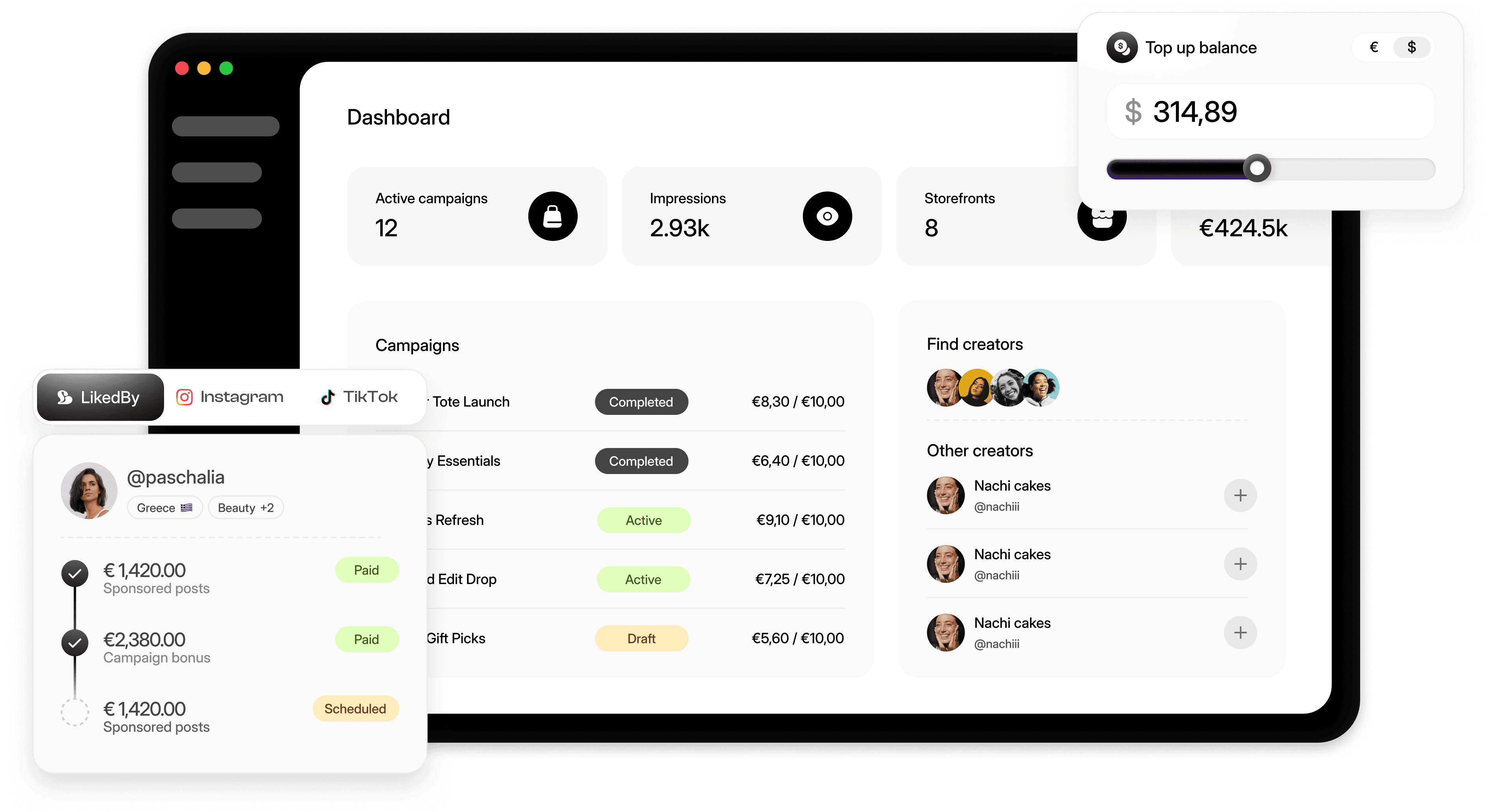
Socialscale is built as the operating system for social commerce, giving consumer electronics brands a single platform to run creator storefront programs from onboarding through revenue attribution. Rather than stitching together five different tools, your team manages the entire creator lifecycle — recruitment, collaboration, content, storefronts, and analytics — in one place.
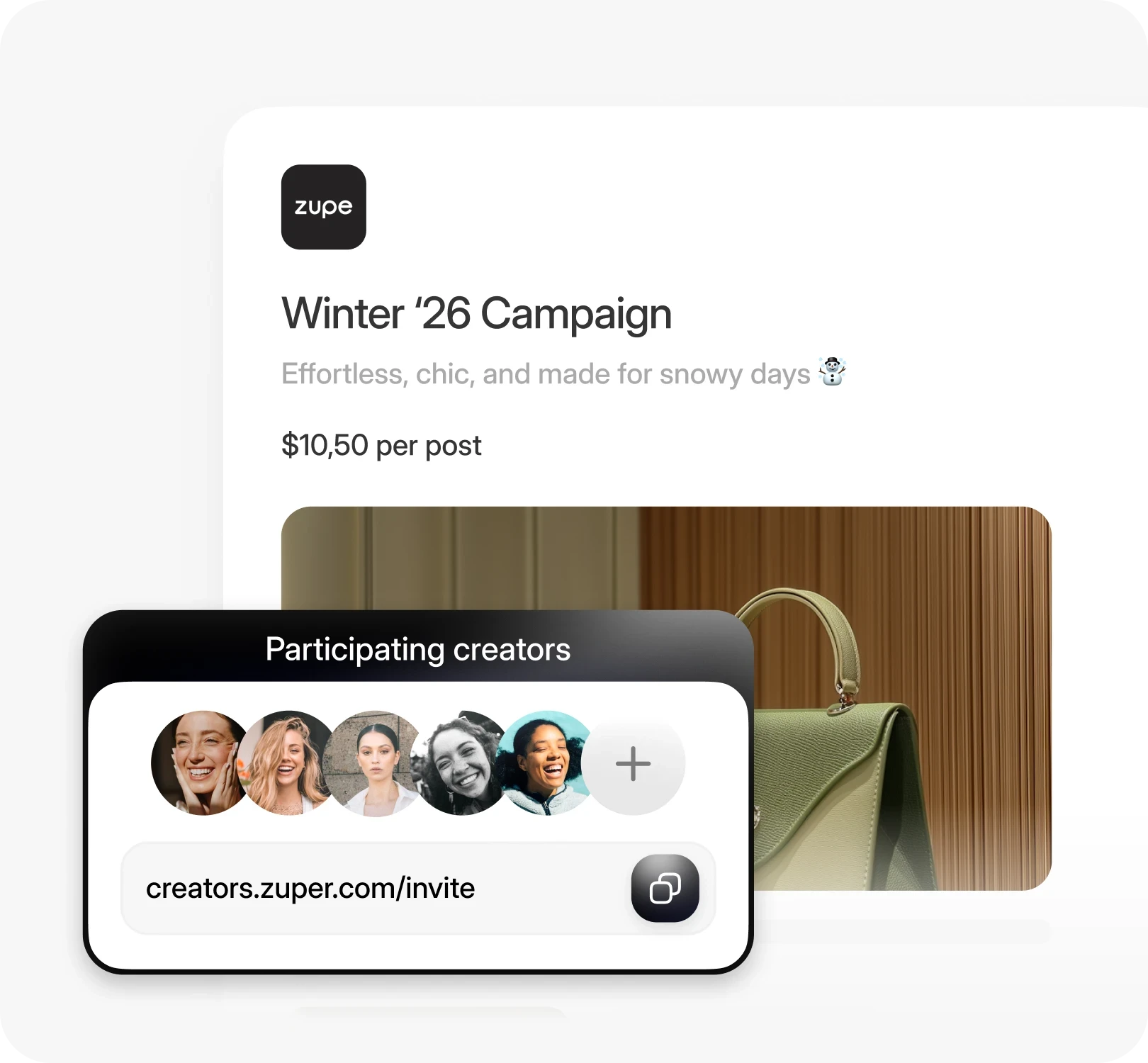
At the core is the ability to spin up dedicated creator storefronts that embed shoppable content directly on your brand's domain. Each storefront can feature a creator's review video, product photography, and curated product selections with direct add-to-cart functionality. For a headphone launch, this means a tech reviewer's YouTube comparison video sits alongside the exact SKUs they recommend, with real-time inventory and pricing pulled from your catalog. Explore how creator widgets make this shoppable embedding seamless across your site.
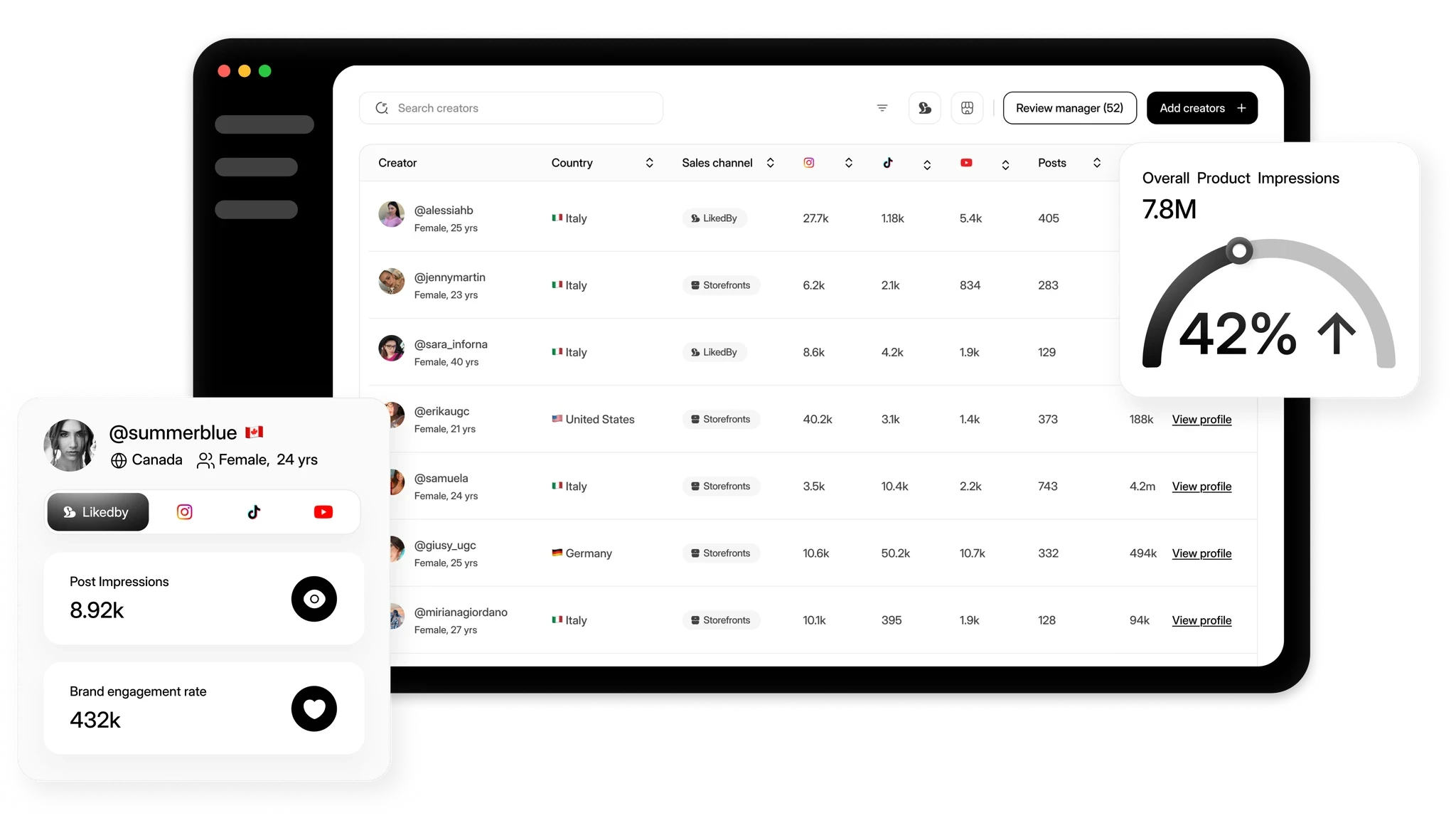
The creator CRM gives your team a centralized hub to manage relationships across tiers — from top-tier tech YouTubers to micro-influencers on TikTok. Track every interaction, contract, shipment, and deliverable without leaving the platform. When launch day arrives, you can see exactly which creators have published, which storefronts are live, and which are still pending content approval.
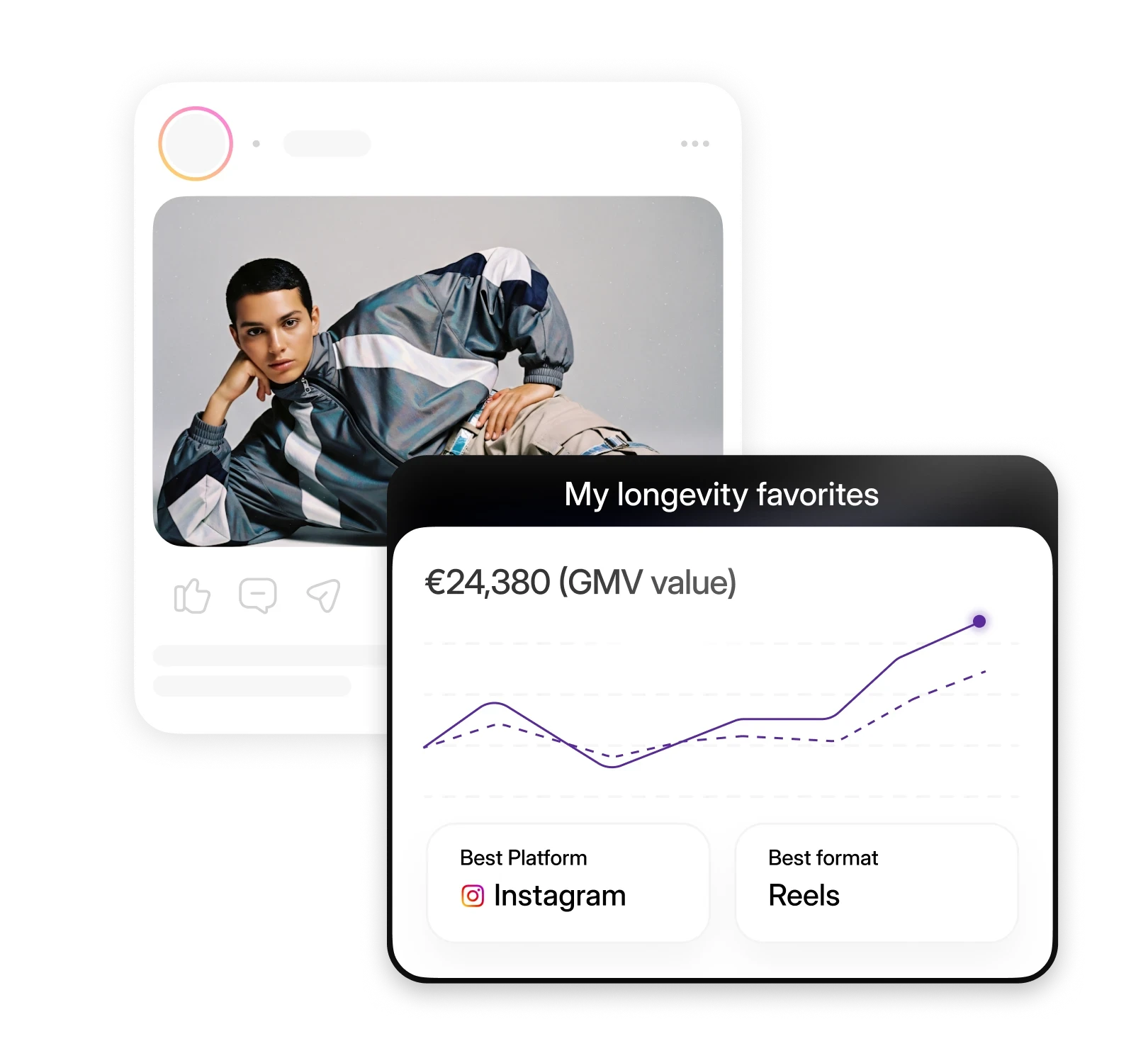
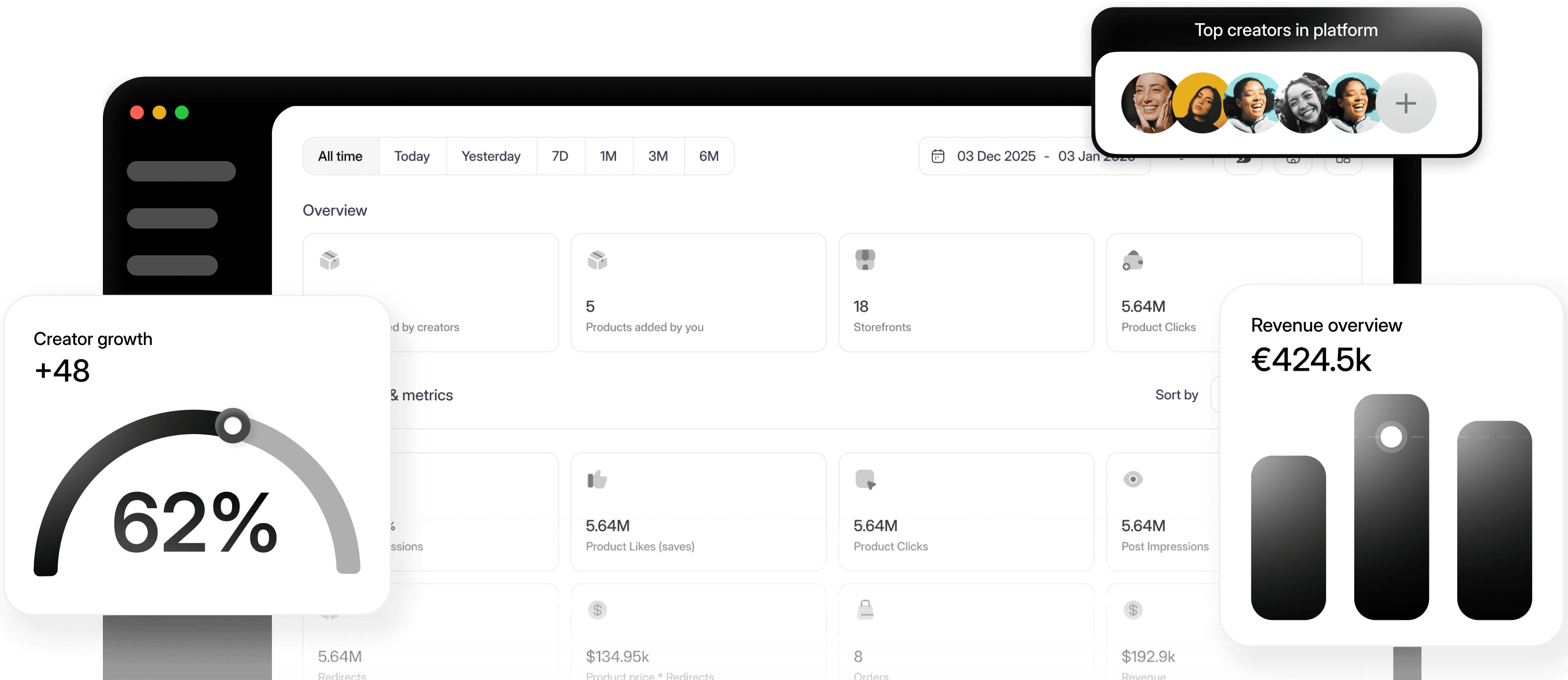
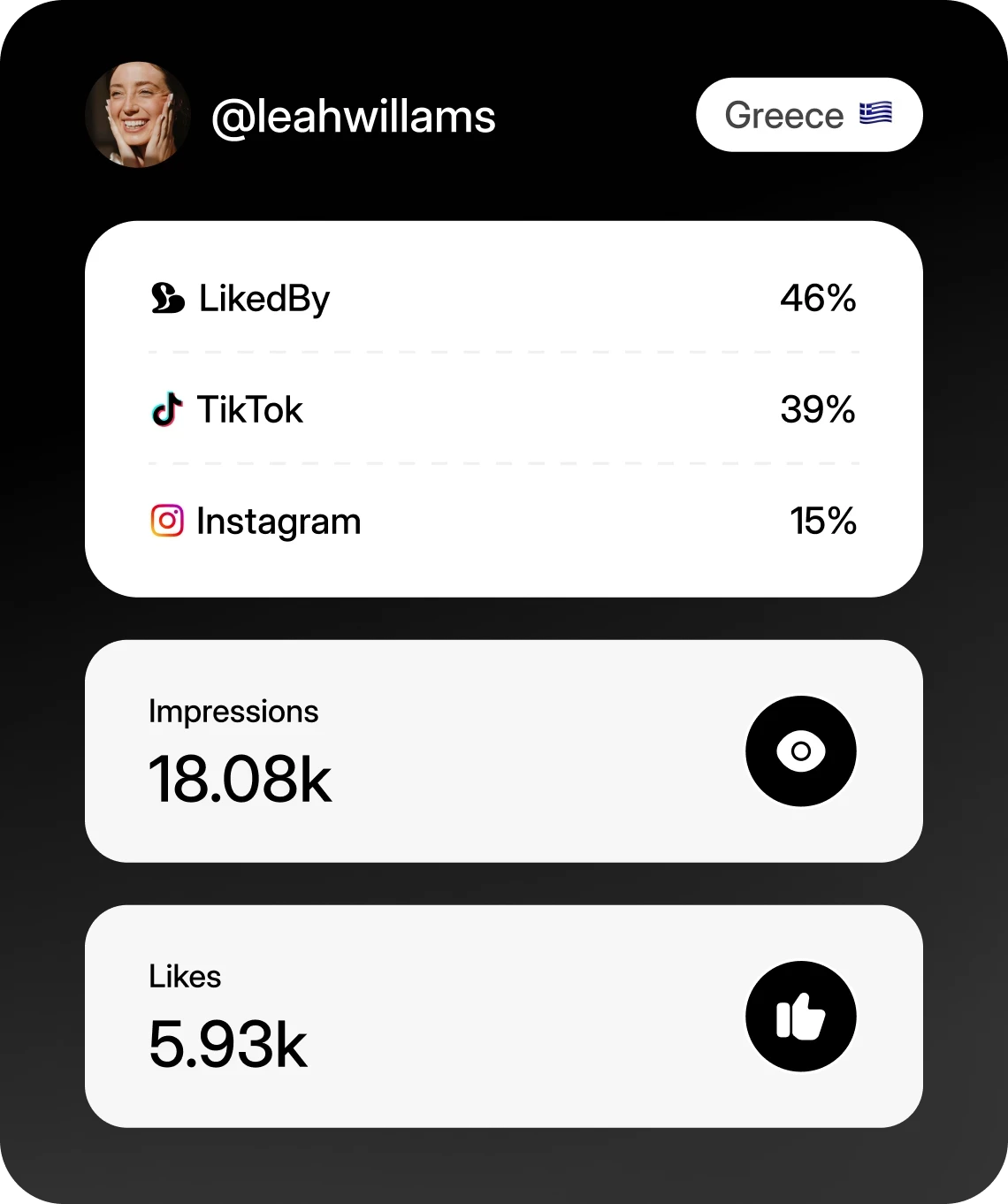
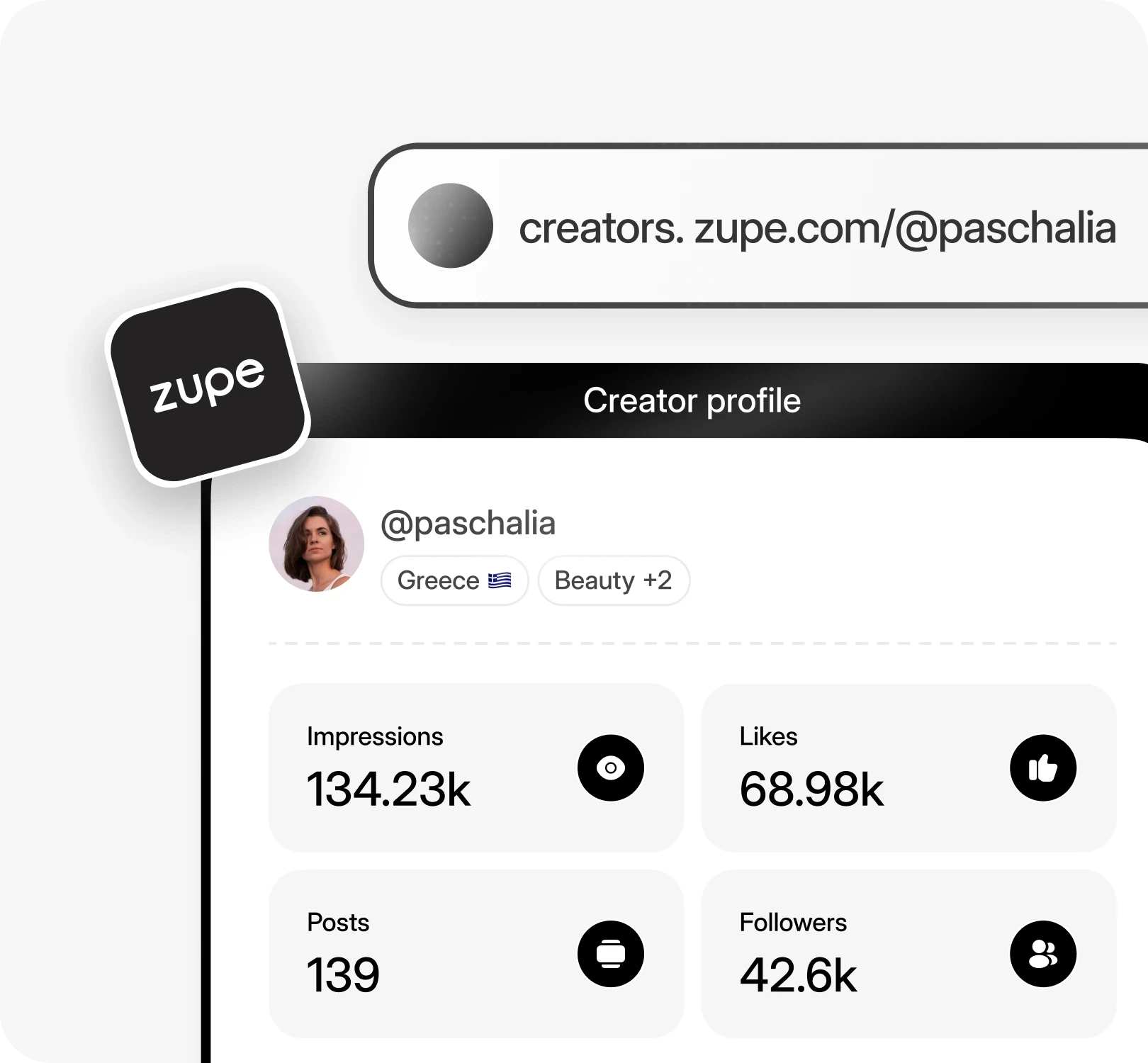
Performance tracking ties directly to each storefront. The creator analytics dashboard surfaces per-creator revenue, conversion rates, average order value, and content engagement metrics in real time. This is the data your leadership team needs to justify scaling creator investment for the next product cycle.
Feature Breakdown: Creator Storefronts Built for Electronics Brands
Branded Creator Storefronts with Product Variant Support
Each creator receives a unique storefront URL on your brand domain. Storefronts support multiple product variants — storage sizes, color options, bundle configurations — so creators can recommend specific configurations. Product data syncs from your catalog, ensuring pricing and availability are always accurate. Storefronts are mobile-optimized, which is critical since the majority of traffic from creator social posts arrives on mobile devices.
Shoppable Content Embedding
Embed creator videos, reels, and images directly within their storefront with native add-to-cart overlays. A creator's hands-on review of a new smartwatch can sit alongside the product listing, reducing the friction between consideration and purchase. This shoppable content can also be embedded on product detail pages, category pages, and dedicated landing pages using configurable widgets.
Creator Onboarding and Collaboration Management
Streamline the onboarding process with customizable intake forms, automated contract workflows, and product seeding coordination. For electronics launches where you are shipping pre-release hardware to creators under NDA, the creator collaborations module tracks every shipment, deadline, and deliverable. Assign briefs that include technical specifications, key messaging points, and compliance requirements specific to electronics marketing.
Centralized Content Storage and Rights Management
All creator-submitted content flows into a centralized asset library — organized by creator, campaign, product, and content type. Tag assets for usage rights (organic only, paid media approved, retail media cleared) so your team can repurpose high-performing creator content across channels without legal ambiguity. The creator content storage system replaces the chaos of scattered files and email attachments.
Per-Creator and Per-SKU Performance Analytics
Track clicks, conversions, revenue, and average order value at the individual creator and SKU level. Understand not just which creators drive the most traffic, but which ones drive the highest-converting traffic for specific product configurations. Compare performance across creator tiers, platforms, and content formats to optimize future campaigns.
Tiered Commission and Incentive Structures
Configure different commission rates for different creator tiers or campaign phases. Offer higher commissions during launch week to incentivize early publishing, then adjust to standard rates for the long tail. Track earned commissions in real time so creators have visibility into their performance, which improves retention and motivation.
Use Cases: Creator Storefronts in Consumer Electronics Campaigns
1. Flagship Product Launch with Tiered Creator Program
A consumer electronics brand preparing to launch a new noise-canceling headphone line recruits 80 creators across three tiers: 8 top-tier tech YouTubers for in-depth reviews, 25 mid-tier lifestyle creators for everyday-use content, and 47 micro-influencers for short-form unboxing content on TikTok and Instagram Reels. Each creator receives a personalized storefront featuring the three headphone color variants. The brand tracks first-week revenue by creator tier and discovers that mid-tier creators generate the highest conversion rate, while top-tier creators drive the most total traffic. This data shapes the allocation for the next product cycle.
2. Smart Home Ecosystem Cross-Sell Campaign
A smart home brand with an existing product ecosystem — smart speakers, cameras, thermostats, and lighting — uses creator storefronts to drive cross-sell during the holiday season. Each creator's storefront features a curated "starter kit" bundle alongside individual products. Creators produce content showing how the products work together in their own homes. Storefronts track which bundles convert best and which individual products get added most frequently, informing both merchandising and future creator briefing strategies.
3. Pre-Order Campaign with Embargo-Managed Content
A smartphone accessories brand coordinates a pre-order campaign where 40 creators receive products two weeks before public availability. Content is submitted for approval during the embargo period, and storefronts are configured but set to go live simultaneously on launch day at a specific time. The coordinated launch creates a surge of shoppable content across platforms, and the brand tracks pre-order volume attributed to each creator within the first 48 hours.
4. Always-On Affiliate Creator Program for Accessories
A brand selling phone cases, chargers, and cables runs a persistent creator storefront program with 200+ creators. Unlike campaign-based activations, these storefronts remain active year-round. Creators update their storefronts when new products drop, and the brand uses performance data to identify top performers for exclusive early access to new releases. Monthly performance reviews determine which creators receive increased commission rates or bonus incentives, creating a self-sustaining acquisition channel.
Operational Workflow: Running Creator Storefronts for an Electronics Launch
This workflow outlines the week-by-week operational cadence for a consumer electronics brand running a creator storefront program around a product launch. Each step maps to specific platform capabilities within Socialscale.
Weeks 6–5 Before Launch: Creator Recruitment and Vetting
Identify and recruit creators using your creator CRM. Filter by niche (tech reviewers, lifestyle tech, gaming), audience demographics, past performance data, and platform focus. Send onboarding forms that capture shipping addresses, content preferences, platform handles, and tax information. Aim to have all creators confirmed and contracted by end of week 5.
Weeks 4–3 Before Launch: Product Seeding and Brief Distribution
Ship pre-release products to all confirmed creators. Distribute detailed campaign briefs through the collaborations module, including key product specs, messaging guidelines, FTC disclosure requirements, content deadlines, and embargo dates. Track shipment delivery status and brief acknowledgment within the platform.
Weeks 2–1 Before Launch: Content Creation and Approval
Creators submit draft content for review. Your team checks for technical accuracy (correct specs, feature descriptions), brand guideline compliance, and proper disclosures. Use the centralized content review workflow to approve, request revisions, or flag issues. Approved content is tagged and stored in the asset library with usage rights noted.
Week 0: Storefront Activation and Coordinated Launch
Activate all creator storefronts simultaneously on launch day. Each storefront goes live with the creator's approved content embedded alongside shoppable product listings. Share storefront URLs with creators for promotion across their channels. Monitor real-time traffic and conversion data as content goes live across YouTube, TikTok, and Instagram.
Week 1 Post-Launch: Real-Time Performance Monitoring
Review daily performance dashboards showing per-creator clicks, conversions, revenue, and AOV. Identify top-performing creators and amplify their content through paid media or homepage features. Flag underperforming storefronts and work with those creators on additional content or promotional pushes.
Weeks 2–4 Post-Launch: Optimization and Content Repurposing
Analyze which content formats and platforms drive the highest conversion rates. Repurpose top-performing creator content for paid social ads, product detail pages, and email campaigns using assets from the content library. Adjust commission rates or offer bonuses to incentivize continued promotion from high performers.
Monthly Ongoing: Long-Tail Management and Reporting
Keep storefronts active for long-tail revenue capture. Run monthly performance reports showing cumulative creator-driven revenue, ROAS by creator tier, and content output metrics. Share executive summaries with leadership to secure budget for the next launch cycle. Use performance data to build a ranked creator roster for future campaigns.
Quarterly: Program Review and Creator Retention
Conduct quarterly reviews of the overall creator storefront program. Evaluate creator retention rates, identify creators who have gone inactive, and recruit replacements. Analyze seasonal trends in storefront performance to optimize launch timing. Update commission structures and incentive tiers based on cumulative data.
Key Performance Metrics for Creator Storefront Programs
Consumer electronics brands should track these KPIs to measure the effectiveness of their creator storefront programs and justify continued investment to leadership.
Creator Activation Rate: Percentage of onboarded creators who publish content and have active storefronts within the campaign window.
Content Approval Turnaround Time: Average time from content submission to approval, critical during compressed launch windows.
Content Output per Creator: Number of content pieces (videos, posts, stories) produced per creator per campaign.
Storefront Click-Through Rate (CTR): Percentage of storefront visitors who click on a product listing.
Storefront Conversion Rate (CVR): Percentage of storefront visitors who complete a purchase.
Per-Creator Revenue (GMV): Total gross merchandise value attributed to each creator's storefront.
Revenue per SKU per Creator: Granular attribution showing which product variants each creator drives most effectively.
Average Order Value (AOV): Average purchase value from storefront-driven transactions, useful for evaluating bundle and cross-sell effectiveness.
Creator ROAS: Return on ad spend calculated as creator-driven revenue divided by total creator program costs (product seeding, commissions, fees).
Cost per Acquisition (CPA): Total program cost divided by number of new customers acquired through creator storefronts.
Long-Tail Revenue Ratio: Percentage of total creator-driven revenue generated after the initial launch window (weeks 4+), measuring the persistent value of active storefronts.
Creator Retention Rate: Percentage of creators who participate in multiple campaigns, indicating program health and creator satisfaction.
Scenario: Wireless Earbuds Brand Launches with 60-Creator Storefront Program
A mid-market consumer electronics brand specializing in wireless audio products prepared to launch a new line of wireless earbuds with three variants: standard, active (sport), and pro (ANC). The brand's e-commerce team set up a creator storefront program targeting tech reviewers and fitness content creators.
Program Structure
The team recruited 60 creators: 5 top-tier tech YouTubers (500K+ subscribers), 20 mid-tier creators across YouTube and TikTok (50K–500K followers), and 35 micro-influencers on Instagram and TikTok (10K–50K followers). Each creator received all three earbud variants and a campaign brief with key differentiators, comparison talking points against competitors, and storefront setup instructions.
Execution
Storefronts were configured with all three variants, each with dedicated product imagery and spec sheets. Creators submitted content during a two-week embargo window. The team approved 142 content pieces — including 12 long-form YouTube reviews, 38 TikTok videos, and 92 Instagram Reels and Stories — within an average approval turnaround of 18 hours. All storefronts went live simultaneously on launch day.
Results Over 90 Days
Creator activation rate: 93% (56 of 60 creators published and had active storefronts)
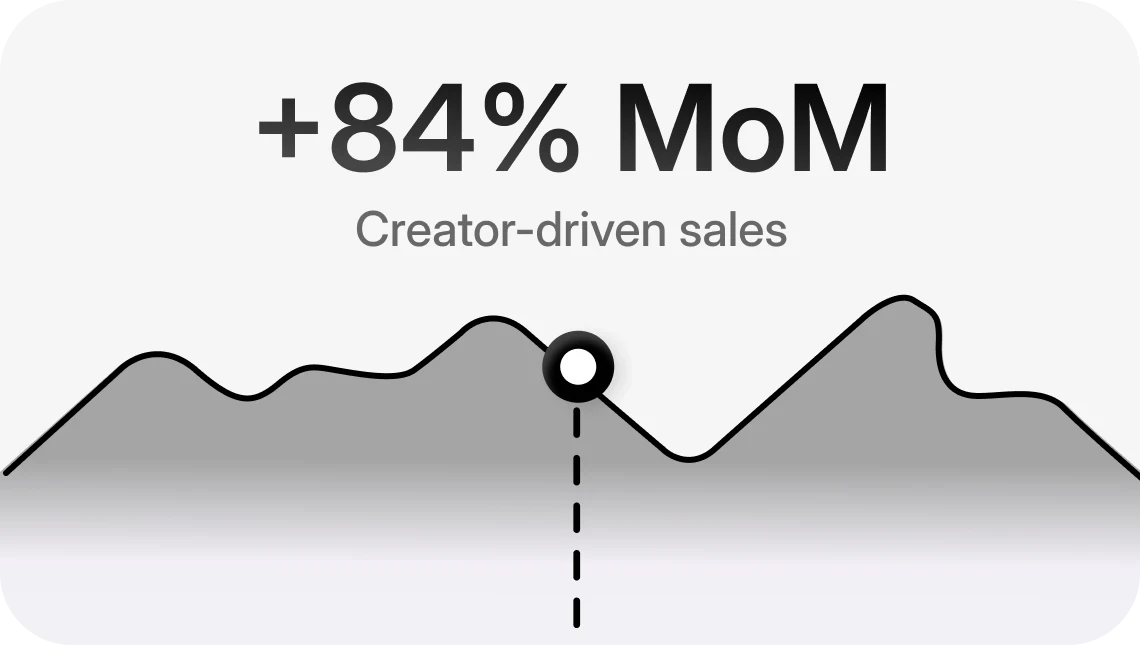
Total storefront-driven revenue: $412,000 in GMV
Top 5 creators generated 38% of total revenue
Mid-tier creators delivered the highest average CVR at 4.7%, compared to 2.9% for top-tier and 3.1% for micro-influencers
The "Pro" ANC variant accounted for 52% of storefront revenue despite being the highest-priced option, validating the brand's premium positioning strategy
Long-tail revenue (weeks 5–12) represented 41% of total GMV, demonstrating the persistent value of keeping storefronts active
Creator ROAS: 6.8x when factoring in product seeding costs, commissions, and platform fees
22 top-performing creator content pieces were repurposed for paid social ads, generating an additional $185,000 in attributed revenue at a 4.2x ROAS
The brand used these results to secure a 40% budget increase for creator storefront programs in the following fiscal year and expanded the program to cover their entire product catalog.
Frequently Asked Questions
How do creator storefronts differ from standard affiliate links for consumer electronics?
Affiliate links send traffic to a generic product page. Creator storefronts provide a branded, curated shopping experience that embeds the creator's own content — reviews, comparisons, tutorials — alongside shoppable product listings. For consumer electronics, where purchase decisions are research-heavy, this combination of trusted content and frictionless commerce significantly improves conversion rates compared to a bare affiliate link.
Can creator storefronts support products with multiple variants like storage sizes or color options?
Yes. Creator storefronts are designed to handle complex product catalogs with multiple variants. Each storefront can display all available configurations with accurate pricing and real-time inventory data synced from your e-commerce platform. Revenue attribution tracks down to the specific variant level, so you know exactly which configurations each creator drives.
How long does it take to set up a creator storefront program for a product launch?
For a typical consumer electronics launch with 30–80 creators, plan for a 4–6 week setup period. This includes creator recruitment and onboarding (weeks 1–2), product seeding and briefing (weeks 2–3), content creation and approval (weeks 3–5), and storefront configuration and testing (weeks 4–6). With an established creator roster and templates from previous launches, this timeline can compress to 2–3 weeks.
What happens to creator storefronts after the launch campaign ends?
Storefronts should remain active for long-tail revenue capture. Data consistently shows that 30–45% of total creator-driven revenue for electronics products comes after the initial launch window, as consumers continue discovering and referencing creator content during their research process. Storefronts can be updated with new products or seasonal promotions to maintain relevance.
How do you measure the ROI of a creator storefront program versus traditional influencer campaigns?
Creator storefronts provide direct revenue attribution that traditional influencer campaigns lack. Instead of relying on proxy metrics like impressions or engagement rate, you measure actual GMV, conversion rate, and ROAS per creator. This makes it straightforward to calculate program ROI by comparing total creator-driven revenue against program costs including product seeding, commissions, and platform fees.