Creator Storefront Tracking Software Built for Ad Agencies
Ad agencies managing influencer programs across multiple client accounts need a reliable way to attribute ad revenue to individual creator storefronts. Without precise tracking, it becomes impossible to justify spend, optimize campaigns, or prove ROI to clients during quarterly reviews. Creator storefront tracking software closes this gap by connecting every transaction back to the creator who drove it.
Social commerce has fundamentally changed how agencies deliver results. Consumers now discover, evaluate, and purchase products directly through creator-curated storefronts, bypassing traditional ad funnels entirely. For agencies, this shift means the old playbook of impressions and reach metrics no longer satisfies clients who want to see revenue impact. Attributing ad revenue to influencer storefronts requires purpose-built infrastructure that tracks the full journey from creator content to completed purchase.
Socialscale provides ad agencies with the operating system they need to run creator storefront programs end-to-end. From onboarding creators and managing collaborations to embedding shoppable content and tracking storefront performance, every step is centralized in one platform designed for multi-client, multi-campaign operations.
Attributing Revenue Across Multiple Client Storefronts
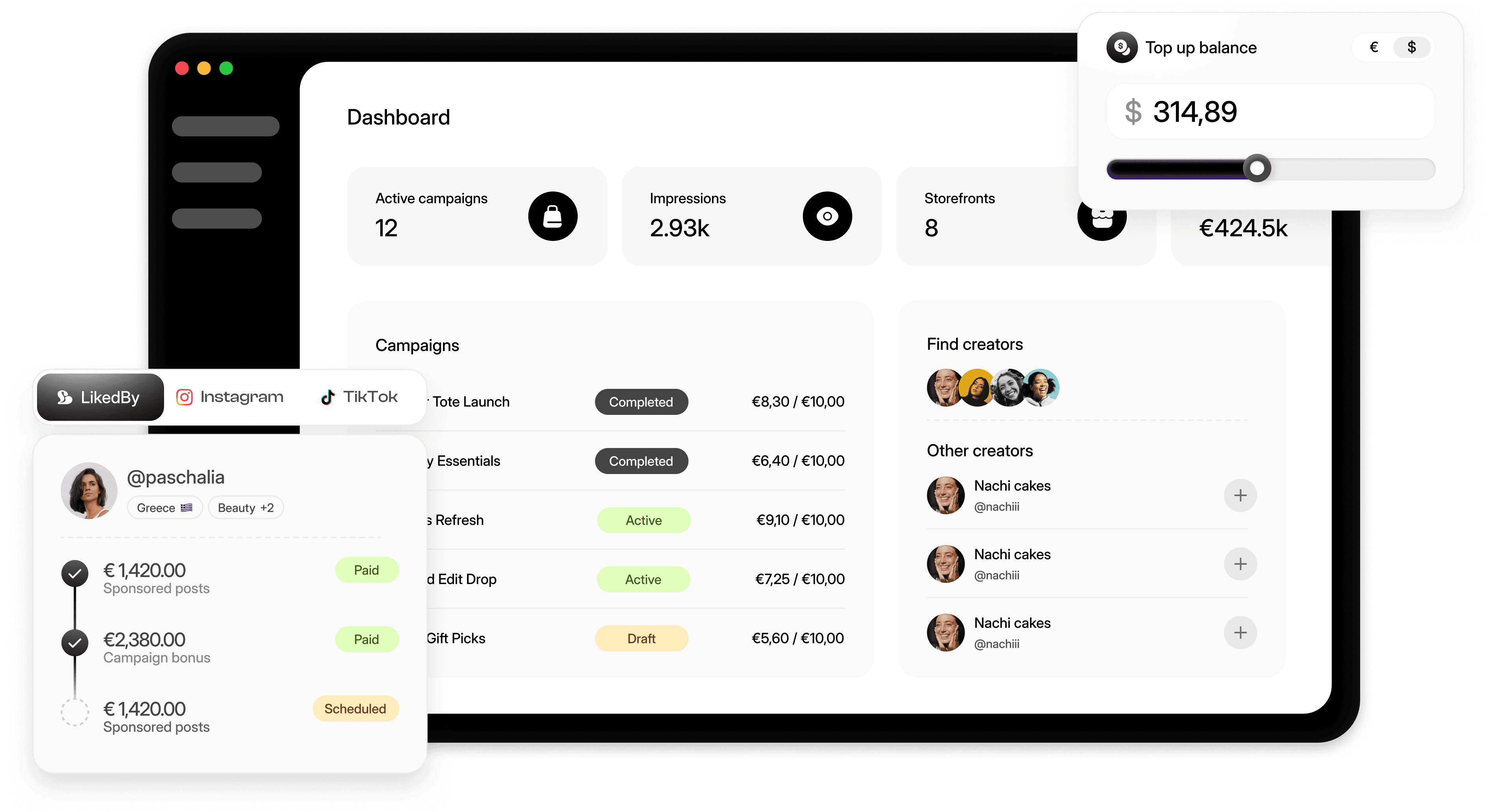
Ad agencies typically manage creator programs for several clients simultaneously. Each client may have dozens of creators with individual storefronts. Tracking which creator drove which sale, for which client, across which campaign becomes a tangled mess without dedicated creator storefront tracking software.
Fragmented Data Across Platforms
Creator storefronts live on Shopify, TikTok Shop, Instagram, and brand websites. Agencies end up pulling data from five or six dashboards, manually reconciling numbers in spreadsheets before they can report anything meaningful to clients. This wastes hours every week and introduces errors.
Proving Incremental Value of Creator Storefronts
Clients want to know whether creator storefronts are driving net-new revenue or simply cannibalizing existing channels. Without proper attribution, agencies cannot isolate the incremental lift that creator-driven social commerce delivers.
Commission and Payout Complexity
Different creators operate under different commission structures. Some earn flat fees, others earn percentage-based commissions, and some have hybrid arrangements. Tracking storefront revenue accurately is the prerequisite for calculating what each creator is owed, and errors damage agency-creator relationships.
Slow Reporting Cycles That Delay Optimization
When agencies rely on manual data pulls, performance reports arrive days or weeks after campaigns run. By the time underperforming storefronts are identified, budget has already been wasted on creators who are not converting.
Lack of Standardized Creator Onboarding
Each new client engagement means onboarding a fresh cohort of creators. Without a repeatable process, agencies spend excessive time on logistics instead of strategy, and creator activation rates suffer as a result.
Content Asset Disorganization
Creator-generated content for storefronts, including product photos, unboxing videos, and testimonials, gets scattered across email threads, Google Drives, and Slack channels. Finding the right asset for the right storefront at the right time becomes a daily frustration.
Generic Affiliate Platforms Lack Storefront-Level Granularity
Traditional affiliate tracking tools were built for link-based attribution. They can tell you a click came from a specific link, but they cannot map revenue to a curated creator storefront experience. When agencies need to show clients how a creator's entire storefront performed, not just a single link, these tools fall short.
Influencer Marketing Platforms Stop at Engagement Metrics
Most influencer marketing software focuses on reach, impressions, and engagement rates. These vanity metrics do not answer the question ad agency clients actually care about: how much revenue did each creator storefront generate? The gap between engagement data and commerce data leaves agencies without a complete picture.
Spreadsheet-Based Tracking Breaks at Scale
A small agency managing five creators for one client might survive on spreadsheets. An agency managing 200 creators across eight clients cannot. Manual tracking introduces lag, errors, and version-control nightmares that make it impossible to deliver timely, accurate reporting.
Disconnected Tool Stacks Create Blind Spots
When agencies use one tool for creator discovery, another for campaign management, a third for content storage, and a fourth for analytics, data gets siloed. No single tool has the full context needed to attribute storefront revenue accurately. The result is incomplete attribution and undervalued creator contributions.
Client Reporting Requires Too Much Manual Assembly
Agency account managers often spend entire days assembling client-facing reports from multiple data sources. Traditional tools do not offer multi-client dashboards or white-label reporting, forcing agencies to build custom presentations from scratch every reporting cycle.
How Socialscale Solves Creator Storefront Tracking for Ad Agencies
Socialscale is a creator marketing platform purpose-built for the operational complexity that ad agencies face. Instead of cobbling together five different tools, agencies get a single system that handles creator onboarding, campaign management, content organization, shoppable storefront embedding, and performance tracking in one place.
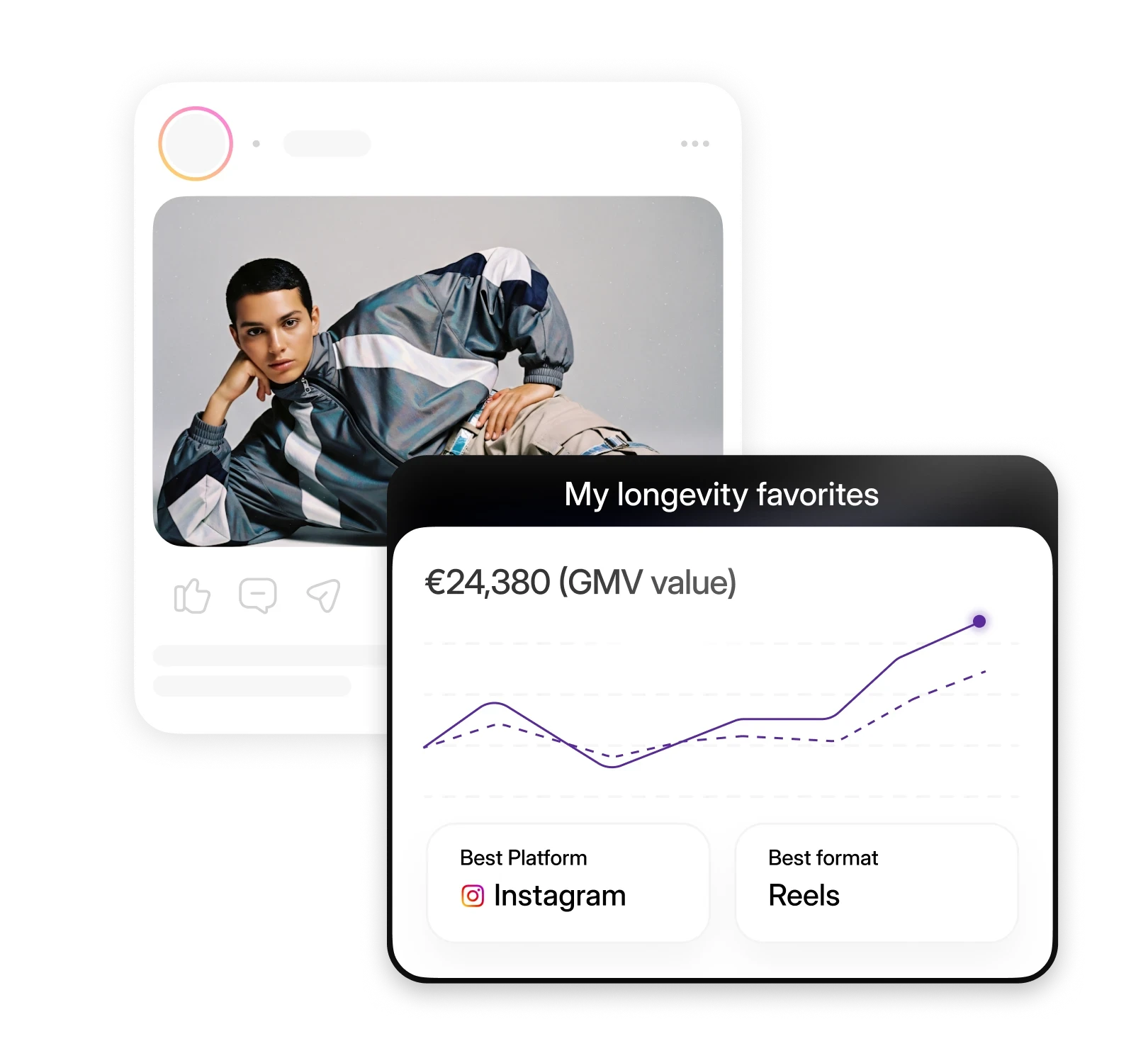
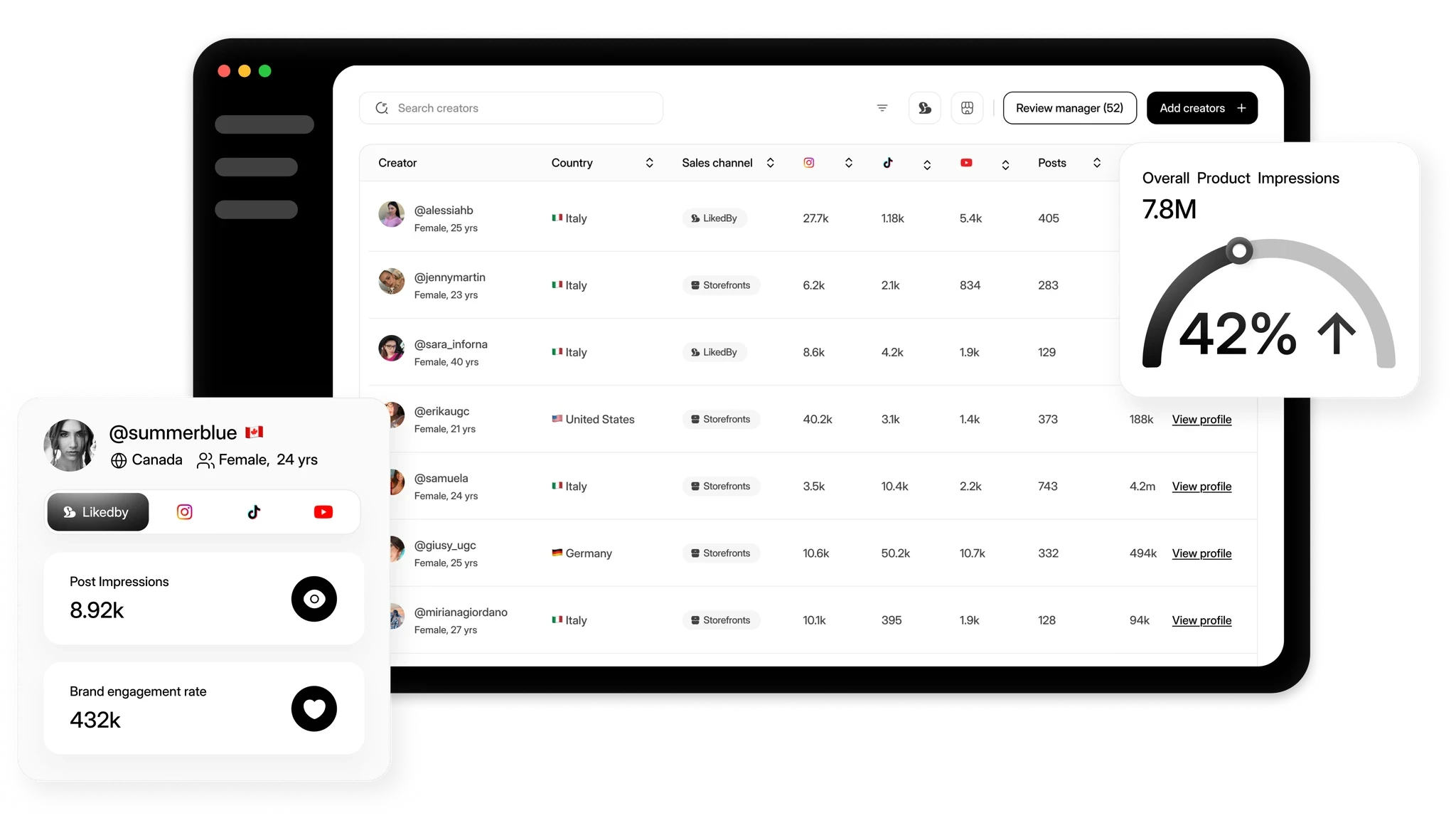
At the core of the platform is storefront-level attribution. Every creator storefront is tracked individually, with revenue, conversion rates, and average order values mapped back to specific creators, campaigns, and clients. This means agencies can walk into a client meeting and show exactly which creators are driving revenue through their storefronts, not just generating likes.
The platform's creator analytics dashboard gives agency teams real-time visibility into storefront performance across all client accounts. Instead of waiting for end-of-month data pulls, performance marketing managers can monitor daily trends, identify top-performing storefronts, and reallocate budget mid-campaign. Combined with the built-in creator CRM, agencies maintain a complete record of every creator relationship, including past performance data that informs future casting decisions.
For agencies running affiliate creator programs at scale, Socialscale eliminates the guesswork around commission calculations by tying payouts directly to verified storefront transactions. This transparency builds trust with creators and reduces disputes that drain account management time.
Feature Breakdown: Creator Storefront Tracking Capabilities
Multi-Client Storefront Attribution
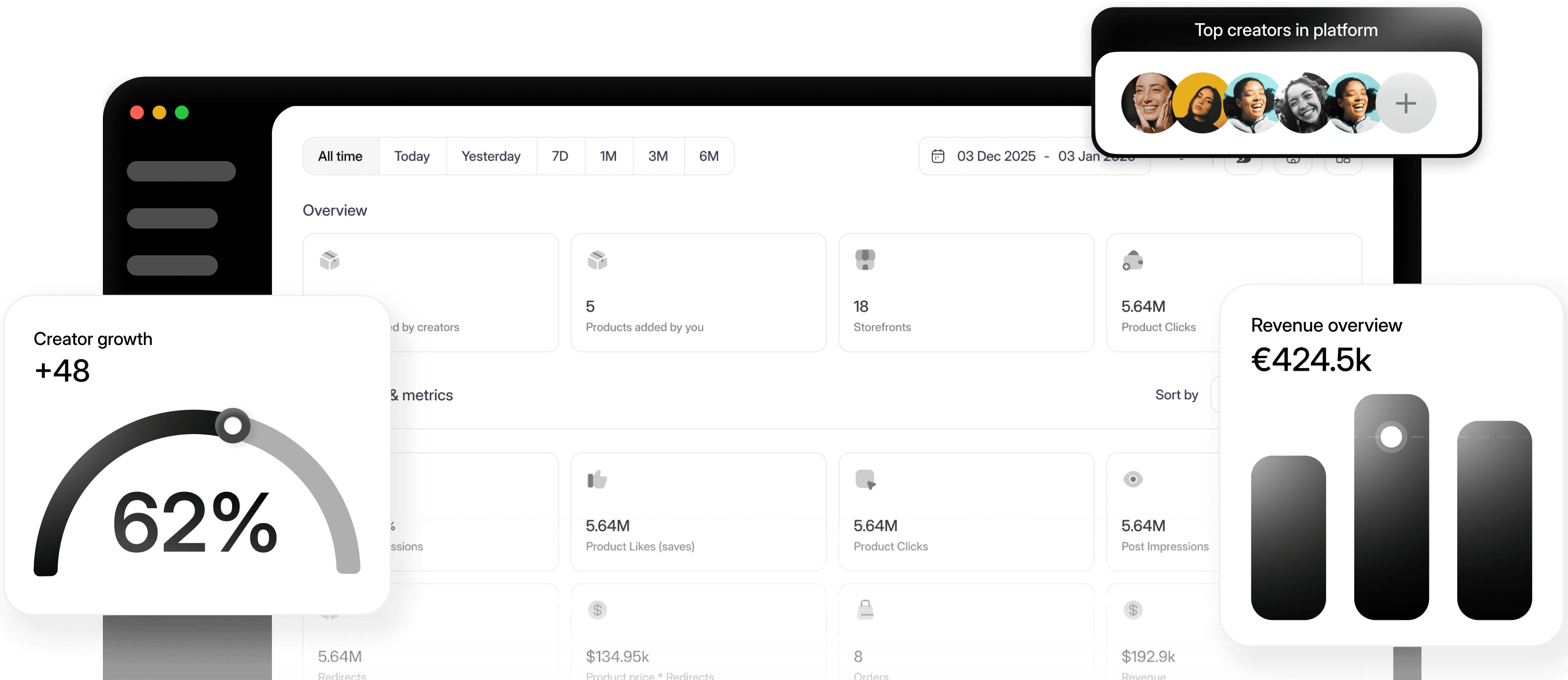
Agencies can track storefront performance across all client accounts from a unified dashboard. Each client's creator storefronts are segmented, so there is no data bleed between accounts. Revenue, orders, and conversion metrics are attributed at the individual creator level, giving agencies the granularity they need for accurate client reporting.
Real-Time Revenue and Conversion Tracking
Storefront transactions are tracked in near real-time, allowing agencies to monitor campaign performance as it unfolds. This is critical for agencies running time-sensitive promotions or product launches where mid-flight optimization can significantly impact results.
Creator Onboarding and Storefront Setup Workflows
Socialscale streamlines the process of onboarding new creators and setting up their storefronts. Agencies can send branded onboarding flows, collect creator information, assign storefront parameters, and activate creators in days rather than weeks. This repeatable process is essential for agencies that onboard new creator cohorts with every client engagement.
Shoppable Content Embedding via Creator Widgets
Creator-generated content can be embedded directly on client websites and landing pages using shoppable creator widgets. These widgets connect storefront products to the content that features them, creating a seamless path from inspiration to purchase. Every transaction through an embedded widget is attributed back to the originating creator.
Centralized UGC Management and Content Storage
All creator content, from product photos to video reviews, is stored in a centralized content drive. Agency teams can organize assets by client, campaign, creator, or content type. When it is time to refresh a storefront or build a client presentation, every asset is searchable and accessible without digging through email threads.
Creator Performance Scoring and Benchmarking
The platform calculates performance scores for each creator based on storefront revenue, conversion rate, content output, and engagement quality. Agencies can benchmark creators against each other within a client's program or across the agency's entire roster, making it straightforward to identify who deserves expanded partnerships and who should be phased out.
Campaign-Level and Storefront-Level Reporting
Reports can be generated at the campaign level, the storefront level, or the individual creator level. Agencies can export client-ready reports that show exactly how creator storefronts contributed to overall campaign performance, including revenue attribution, return on ad spend, and cost per acquisition.

Use Cases: Creator Storefront Tracking in Action for Ad Agencies
Scaling a DTC Beauty Brand's Creator Storefront Program
A mid-size ad agency manages the influencer program for a direct-to-consumer beauty brand. The brand wants to expand from 15 creator storefronts to 80 over the next quarter. The agency needs to onboard creators quickly, assign each one a personalized storefront, and track which storefronts are generating the highest revenue per visitor. Weekly performance reviews allow the agency to identify the top 20% of creators and allocate additional paid amplification budget behind their storefront content, while pausing investment in underperformers.
Attributing Holiday Campaign Revenue Across 12 Client Accounts
During Q4, a large agency runs holiday campaigns for 12 e-commerce clients simultaneously. Each client has between 10 and 50 creators with active storefronts. The agency needs to attribute every storefront transaction to the correct creator, campaign, and client without any cross-contamination of data. Daily dashboards allow account directors to provide clients with real-time revenue updates, and end-of-campaign reports break down exactly how much incremental revenue each creator storefront delivered compared to non-creator channels.
Proving ROI for a CPG Brand's First Influencer Storefront Test
A consumer packaged goods brand hires an agency to run a pilot creator storefront program with 10 micro-influencers. The brand's CMO is skeptical about social commerce and wants hard revenue data before approving a larger budget. The agency uses storefront tracking to capture every transaction, calculate blended ROAS across all 10 storefronts, and present a clear comparison of creator storefront performance versus the brand's existing paid social campaigns. The data shows creator storefronts delivered a 40% lower cost per acquisition, securing budget approval for a full-scale rollout.
Optimizing an Apparel Brand's Affiliate Creator Program
An agency runs an ongoing affiliate creator program for a fashion brand with 120 active creators. Each creator earns commission based on storefront sales. The agency uses weekly storefront performance data to tier creators into performance brackets, adjusting commission rates to incentivize top performers and re-engage mid-tier creators with exclusive product drops. Monthly reviews surface trends in product category performance by storefront, helping the brand's merchandising team decide which products to feature in upcoming creator collections.
Weekly Operational Workflow for Ad Agencies Using Creator Storefront Tracking
Running a creator storefront program for agency clients requires a disciplined operational cadence. The following workflow outlines how agency teams can use Socialscale to manage storefront tracking on a weekly and monthly basis.
Monday: Review Storefront Performance Dashboards — Start each week by reviewing the creator analytics dashboard for every active client account. Identify storefronts with declining conversion rates, flag creators who have not posted new content, and note any revenue anomalies that need investigation.
Tuesday: Creator Communication and Content Requests — Use the creator CRM to send performance summaries to active creators. Share their individual storefront metrics, including revenue generated and conversion rates. Request new content from creators whose storefronts need refreshed assets, and set deadlines for content delivery.
Wednesday: Content Review and Storefront Updates — Review incoming creator content submissions. Approve assets that meet client brand guidelines, request revisions where needed, and upload approved content to the centralized content drive. Update storefront product selections and featured content based on current inventory and promotional priorities.
Thursday: Mid-Week Optimization — Analyze mid-week storefront data to identify optimization opportunities. If a creator's storefront is converting well but receiving low traffic, coordinate with the paid media team to allocate amplification budget. If a storefront has high traffic but low conversion, review the product mix and content quality for potential improvements.
Friday: Client Reporting and Internal Sync — Generate weekly storefront performance reports for each client. Include revenue attribution by creator, top-performing storefronts, and recommendations for the following week. Share reports with client stakeholders and hold an internal agency sync to align on priorities for the next week.
Monthly: Creator Roster Evaluation — At the end of each month, conduct a comprehensive review of every creator in the program. Use performance scoring to rank creators by storefront revenue, content quality, and engagement. Make decisions about creator renewals, commission adjustments, and new creator recruitment based on data rather than gut feel.
Monthly: Commission Reconciliation and Payout — Reconcile storefront revenue data with commission structures for each creator. Verify transaction counts, apply any bonus thresholds, and process payouts. Having all data in one system eliminates the manual reconciliation that typically consumes hours of agency operations time.
Quarterly: Strategic Review with Clients — Compile quarterly performance reports that show cumulative storefront revenue, creator program growth, and ROI benchmarks. Present strategic recommendations for the next quarter, including proposed changes to creator mix, storefront design, and promotional calendar.
Key Performance Indicators for Creator Storefront Tracking
Ad agencies need to track specific KPIs to demonstrate the value of creator storefront programs to their clients. The following metrics are available through Socialscale's reporting tools.
Creator Activation Rate: Percentage of onboarded creators who have an active, revenue-generating storefront within the first 14 days of program launch.
Storefront Revenue by Creator: Total gross merchandise value (GMV) attributed to each individual creator's storefront over a given period.
Storefront Conversion Rate (CVR): Percentage of storefront visitors who complete a purchase, tracked at the creator level to identify high-converting talent.
Click-Through Rate (CTR) on Shoppable Content: Percentage of users who click through from embedded creator widgets or social content to a creator storefront.
Average Order Value (AOV) by Storefront: Average transaction size per creator storefront, useful for identifying creators who drive higher-value purchases.
Return on Ad Spend (ROAS): Revenue generated through creator storefronts divided by total investment in the creator program, including fees, commissions, and paid amplification.
Cost Per Acquisition (CPA): Total program cost divided by the number of new customers acquired through creator storefronts.
Content Output per Creator: Number of approved content assets produced per creator per month, indicating creator engagement and program health.
Content Approval Turnaround Time: Average number of hours between content submission and agency approval, a key operational efficiency metric.
Creator Retention Rate: Percentage of creators who remain active in the program after 90 days, reflecting program attractiveness and agency management quality.
Incremental Revenue Lift: Revenue attributed to creator storefronts that cannot be attributed to other marketing channels, isolating the true incremental impact of the program.
Scenario: Full-Service Agency Scales Creator Storefronts for a Wellness Brand
A full-service ad agency based in New York was hired by a mid-market wellness brand to launch and manage a creator storefront program. The brand had previously worked with influencers on a campaign-by-campaign basis but had no ongoing storefront infrastructure and no way to attribute revenue to individual creators.
The Challenge
The brand wanted to launch 50 creator storefronts within 60 days and needed weekly revenue attribution reports broken down by creator. The agency's existing workflow involved manual UTM tracking in spreadsheets, which had already proven unreliable during a smaller pilot program. Commission disputes with creators were common because revenue data was inconsistent.
The Approach
The agency implemented Socialscale as the central operating system for the program. During the first two weeks, the team used the platform's onboarding workflows to recruit and activate 50 creators, each with a personalized storefront linked to the brand's Shopify store. Creator content was collected, reviewed, and stored in the centralized content drive, and approved assets were embedded on the brand's website using shoppable widgets.
The Operational Cadence
Every Monday, the agency's performance marketing manager reviewed storefront dashboards to identify the top 10 and bottom 10 creators by revenue. Mid-week, the team coordinated content refreshes for underperforming storefronts and allocated paid amplification budget behind high-converting creator content. Friday reports were generated directly from the platform and shared with the brand's marketing director.
Results After 90 Days
The program generated $340,000 in attributable storefront revenue across 50 creators. The top 15% of creators accounted for 52% of total revenue, which informed the agency's recommendation to increase commission rates for top performers. Content approval turnaround time dropped from an average of 4 days to 18 hours. Creator activation rate hit 92%, meaning 46 of 50 onboarded creators had revenue-generating storefronts within two weeks. The blended ROAS across the program was 5.2x, compared to the brand's existing paid social ROAS of 3.1x. Commission disputes dropped to zero because all payout calculations were tied directly to verified storefront transaction data.
Frequently Asked Questions
How does creator storefront tracking software differ from standard affiliate tracking?
Standard affiliate tracking attributes conversions to individual links or coupon codes. Creator storefront tracking software goes further by attributing revenue to an entire curated storefront experience, including all products within that storefront, the content driving traffic to it, and the creator who manages it. This gives agencies a complete view of each creator's commercial impact rather than just isolated link clicks.
Can agencies manage multiple client accounts within a single platform?
Yes. Socialscale is designed for multi-client operations. Each client account is segmented with its own creator roster, storefront data, content library, and reporting. Agency teams can switch between client accounts without any data overlap, and permissions can be configured so that client stakeholders only see their own program data.
How quickly can a new creator storefront program be launched?
Most agencies can go from initial setup to live creator storefronts within two to three weeks. The onboarding workflow handles creator recruitment, contract collection, storefront configuration, and content submission in a structured sequence. Agencies that have an existing creator roster can often activate storefronts even faster since the creator relationship management infrastructure is already in place.
What level of revenue attribution granularity is available?
Revenue can be attributed at the program level, campaign level, creator level, storefront level, and individual product level. Agencies can drill down from a high-level client overview to see exactly which product in which creator's storefront generated a specific transaction. This granularity is essential for optimizing product assortments and identifying which creator-product combinations drive the highest returns.
How does the platform handle creator commission calculations?
Commission structures are configured per creator or per program tier. The platform automatically calculates commissions based on verified storefront transactions, applying the correct rate for each creator. Agencies can set flat-rate commissions, percentage-based commissions, or tiered structures with bonus thresholds. Monthly reconciliation reports show exactly how each commission amount was calculated, eliminating disputes and reducing administrative overhead.