Creator Storefront Software Built for Social Media Agencies
Social media agencies managing creator programs across multiple clients need more than spreadsheets and scattered dashboards. As social commerce matures, the ability to embed shoppable creator storefronts directly into conversion funnels has become a core operational requirement — not a nice-to-have. Agencies that can activate creator storefronts at scale unlock measurable revenue attribution for every collaboration they run.
The challenge is that most influencer marketing software was designed for brand-side teams managing a single roster. Social media agencies operate differently: they juggle dozens of client accounts, hundreds of creators, and thousands of content assets simultaneously. Creator storefront software purpose-built for this reality lets agencies move from campaign-level thinking to always-on social commerce infrastructure.
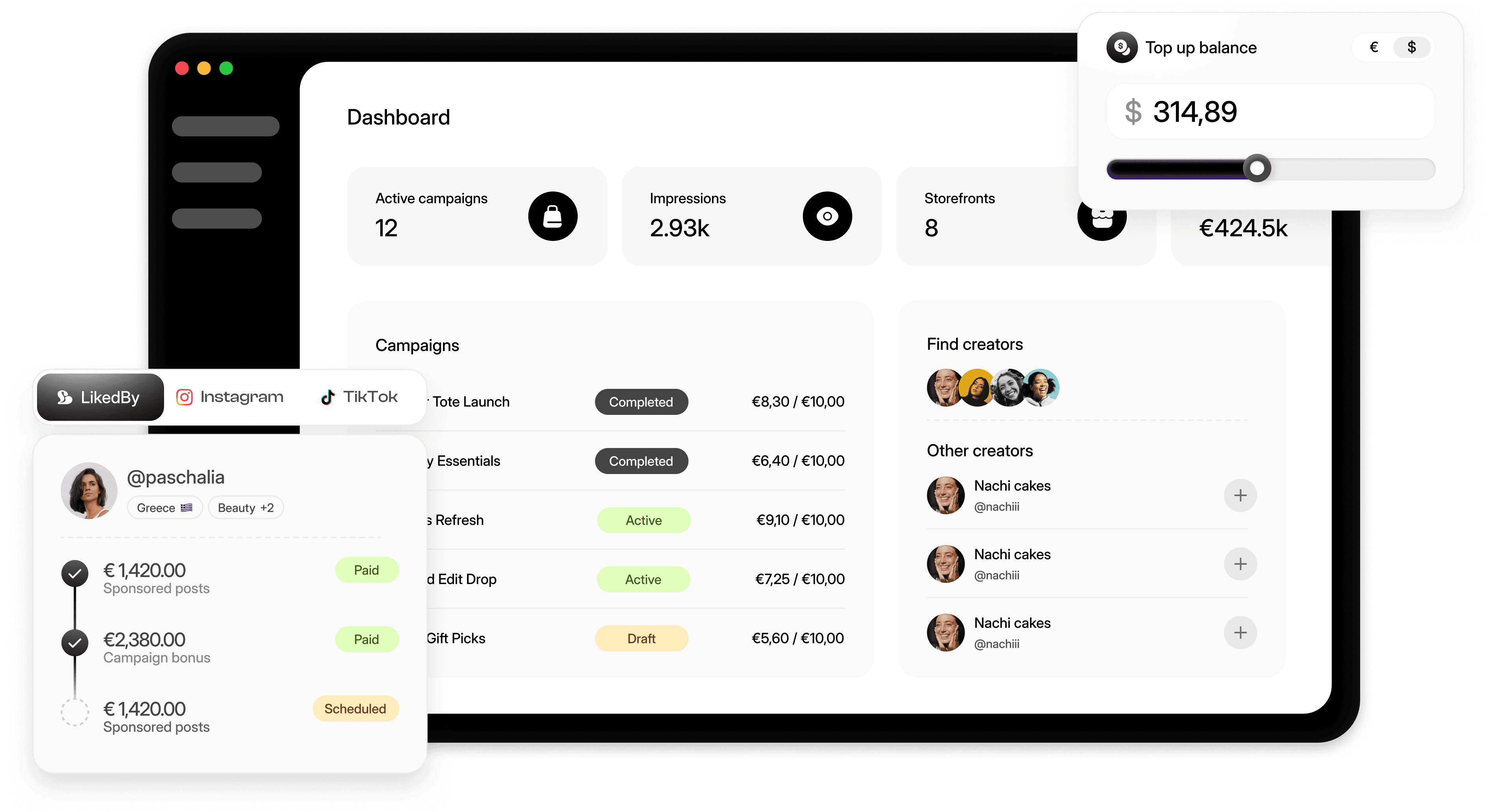
Socialscale gives social media agencies the operating system they need to onboard creators, launch storefronts, embed shoppable content across client properties, and track performance from impression to purchase — all without stitching together five different tools. The result is faster activation, cleaner reporting, and revenue outcomes that justify retainer fees.
Managing Creator Programs Across Multiple Client Accounts
Social media agencies rarely work with a single brand. Managing separate creator rosters, storefront configurations, and performance dashboards for each client creates operational overhead that compounds with every new account. Without a unified creator marketing platform, teams waste hours switching between tools and reconciling data.
Lack of Revenue Attribution from Creator Content
Agencies are under constant pressure to prove ROI. When creator content lives on social platforms but storefronts are disconnected from the funnel, attribution breaks down. Clients see engagement metrics but not the revenue signals that justify continued investment in creator collaborations.
Slow Creator Onboarding and Activation
Onboarding creators for affiliate creator programs often involves manual contracts, back-and-forth emails, and delayed storefront setup. For agencies running campaigns with tight timelines, every day of delay is lost revenue and eroded client trust.
Content Asset Chaos
UGC management becomes a nightmare when assets are scattered across Google Drive folders, Slack threads, and email attachments. Agencies need centralized creator content storage that connects assets directly to storefronts and campaigns.
Inconsistent Storefront Experiences Across Clients
Each client brand has different visual guidelines, product catalogs, and conversion goals. Agencies need storefront software that supports white-labeled, brand-specific configurations without requiring custom development for every account.
Difficulty Scaling Affiliate and Commission Structures
Different clients use different commission models — flat fees, percentage-based, tiered bonuses. Agencies need flexible infrastructure to manage these variations without building custom spreadsheets for each program.
Reporting That Satisfies Both Internal Teams and Clients
Agency account managers need one view of performance. Clients need another. Creator performance tracking tools must support multi-layered reporting without requiring analysts to manually build decks every week.

Influencer Platforms Built for Brand-Side Teams
Most influencer marketing software assumes a single brand with a single creator roster. They lack multi-tenant architecture, meaning agencies must create workarounds — separate logins, duplicate workflows, fragmented data — to serve multiple clients. This slows everything from creator onboarding to performance reporting.
E-commerce Platforms Without Creator Infrastructure
Shopify and similar platforms handle product catalogs and checkout, but they were not designed to manage creator storefronts, track creator-attributed revenue, or embed shoppable content into social commerce funnels. Agencies end up bolting on third-party apps that rarely integrate cleanly.
Social Media Management Tools That Stop at Publishing
Scheduling and publishing tools cover the top of the funnel. They help agencies post content but offer zero infrastructure for converting that content into shoppable experiences. The gap between content publication and commerce conversion is where agencies lose attribution and revenue visibility.
Spreadsheet-Based Affiliate Tracking
Many agencies still track creator commissions, storefront links, and performance data in spreadsheets. This approach breaks at scale — formulas fail, data gets stale, and no one trusts the numbers when it matters most during client QBRs.
Disconnected Point Solutions
Using one tool for creator discovery, another for content approval, a third for storefront embedding, and a fourth for analytics creates data silos. Agencies spend more time reconciling information across platforms than actually optimizing campaigns.

How Socialscale Solves Storefront Embedding for Social Media Agencies
Socialscale is the creator marketing platform designed for the operational complexity that social media agencies face daily. Rather than forcing agencies to adapt brand-side tools to multi-client workflows, Socialscale provides the infrastructure to run creator storefront programs end-to-end — from onboarding to revenue attribution.
At the core, Socialscale connects creator management with commerce. Agencies use the creator CRM to organize rosters by client, campaign, and performance tier. From there, storefronts are configured per brand with unique product feeds, commission structures, and visual templates. Shoppable creator content is embedded directly into client websites, landing pages, and social commerce funnels using customizable creator widgets — no developer required.
The result is a closed loop: creators produce content, content populates storefronts, storefronts are embedded into conversion funnels, and every click and purchase is tracked back to the creator who drove it. Agencies get the attribution data they need to prove value, optimize programs, and grow client accounts.
Feature Breakdown: Creator Storefront Software for Agencies
Multi-Client Creator CRM
Organize creators by client account, campaign, content vertical, and performance tier. Tag creators with custom attributes, track communication history, and manage contracts from a single interface. Unlike generic CRMs, Socialscale's creator CRM is built around the relationships and workflows that drive social commerce — not just contact management.
Branded Storefront Configuration
Each client gets a distinct storefront environment. Agencies configure product feeds, visual layouts, and commission rules per brand without touching code. Storefronts pull directly from connected product catalogs, ensuring pricing and inventory stay current. Creators receive unique storefront URLs that track every interaction.
Shoppable Content Embedding
Creator content — videos, images, reviews — becomes shoppable through embeddable widgets. Agencies place these widgets on client websites, product pages, blog posts, and landing pages. Each widget is tied to a specific creator and product set, enabling granular attribution. This is where social commerce funnels gain their conversion power: authentic creator content paired with frictionless purchasing.
Centralized Content Library
Every piece of creator content is stored, organized, and tagged in a centralized drive. Agencies can filter by client, campaign, content type, approval status, and usage rights. This eliminates the chaos of scattered assets and ensures that approved content flows directly into storefronts and paid media campaigns without manual file transfers.
Campaign and Collaboration Management
Run creator collaborations from brief to delivery inside a single workflow. Assign creators to campaigns, set deliverables and deadlines, manage revisions, and approve final assets — all within the platform. Completed content automatically becomes available for storefront embedding and performance tracking.
Creator Performance Analytics
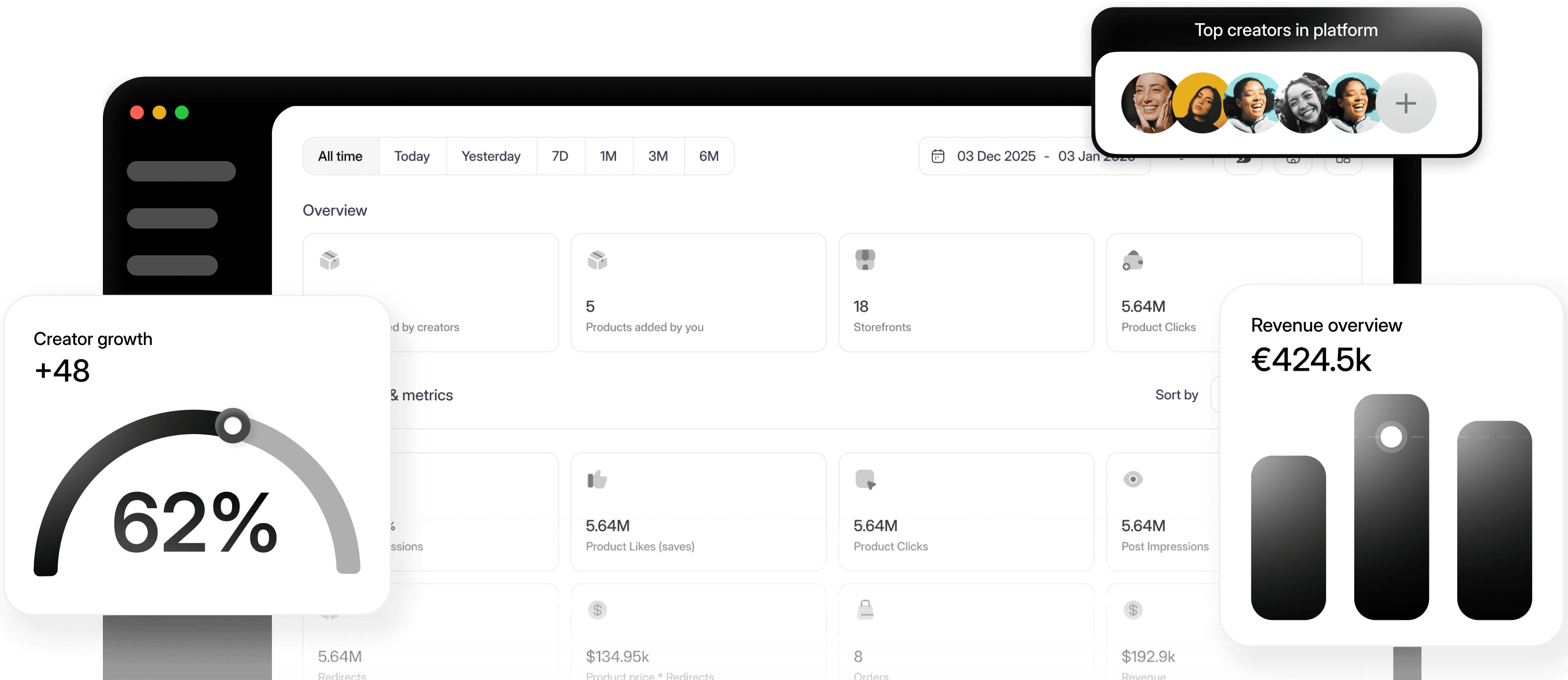
Track every creator's contribution from content output through storefront clicks to attributed revenue. Dashboards surface metrics at the creator, campaign, and client level. Agencies can identify top performers, flag underperforming partnerships, and reallocate budgets based on actual commerce outcomes rather than vanity metrics.
Affiliate Commission Management
Configure commission structures per client program — percentage of sale, flat fee per conversion, tiered bonuses based on volume. The platform calculates payouts automatically and provides transparent reporting for both agency teams and creators, reducing disputes and administrative overhead.

Use Cases: How Social Media Agencies Embed Storefronts into Commerce Funnels
1. Always-On Affiliate Storefront Program for a DTC Beauty Brand
A social media agency managing a DTC beauty brand recruits 150 micro-creators and assigns each a personalized storefront featuring curated product collections. Creator content — tutorials, reviews, hauls — is embedded as shoppable widgets on the brand's homepage, product detail pages, and a dedicated "Shop by Creator" landing page. The agency monitors weekly storefront performance, identifies the top 20 creators driving the highest conversion rates, and allocates additional product seeding and bonus commissions to accelerate their output. Over a quarter, the always-on program generates consistent attributed revenue that supplements the brand's paid media spend.
2. Seasonal Campaign Storefront Activation for a Fashion Retailer
An agency launches a spring collection campaign for a fashion retailer by activating 40 mid-tier creators with seasonal storefronts. Each storefront features the new collection with creator-curated outfit pairings. The agency embeds shoppable content into the retailer's email marketing landing pages and social media bio links. Campaign performance is tracked daily during the two-week activation window, with real-time adjustments to featured creators based on click-through and conversion data. Post-campaign reporting breaks down revenue by creator, product category, and traffic source.
3. Multi-Brand Storefront Management for a Portfolio Agency
A social media agency managing eight consumer brands simultaneously uses creator storefronts to run parallel affiliate programs. Each brand has its own creator roster, product catalog, commission structure, and storefront design. The agency's operations team manages all eight programs from a single platform, using client-level filters to switch between accounts. Weekly performance reviews surface cross-brand insights — for example, identifying creators who perform well across multiple verticals and expanding their partnerships accordingly.
4. UGC-to-Storefront Pipeline for a Food and Beverage Brand
An agency running a creator program for a food and beverage brand collects recipe videos and product reviews from 80 creators. Approved content is tagged by product SKU and stored in the centralized content library. The agency then embeds this content as shoppable widgets on the brand's recipe blog and product pages, turning organic UGC into a direct commerce channel. Monthly reporting shows which content formats — short-form video vs. photo carousels vs. long-form reviews — drive the highest average order value through storefronts.
Weekly Operational Workflow for Agencies Using Creator Storefronts
Running creator storefronts effectively requires consistent operational rhythms. Below is a practical weekly workflow that social media agencies can adopt to keep programs running smoothly across client accounts.
Monday — Creator Pipeline Review: Review new creator applications and inbound interest across all client programs. Use the creator CRM to evaluate fit based on audience demographics, content quality, and past performance. Approve or decline applications and trigger onboarding sequences for accepted creators.
Tuesday — Storefront Configuration and Updates: Update product feeds for any client catalog changes (new launches, discontinued SKUs, price adjustments). Configure storefronts for newly onboarded creators. Ensure all storefront links are active and tracking correctly.
Wednesday — Content Review and Approval: Review submitted creator content for active campaigns. Approve assets that meet brand guidelines and request revisions where needed. Approved content is tagged and moved to the content library for storefront embedding.
Thursday — Storefront Embedding and Widget Deployment: Embed newly approved shoppable content into client websites, landing pages, and social commerce funnels. Test widget functionality across devices. Coordinate with client teams on any placement changes or A/B tests.
Friday — Performance Analysis and Optimization: Pull weekly performance data at the creator, storefront, and campaign level. Identify top-performing creators and content formats. Flag underperforming storefronts for review. Prepare client-facing performance summaries.
Bi-Weekly — Commission Reconciliation: Calculate creator commissions based on attributed sales. Review payout accuracy and resolve any discrepancies. Send commission summaries to creators and process payments.
Monthly — Program Strategy Review: Conduct a monthly review of each client's creator storefront program. Analyze trends in creator activation rates, content output, storefront conversion rates, and attributed revenue. Present findings to clients with recommendations for the upcoming month — roster adjustments, commission structure changes, new embedding placements, or expanded creator recruitment.
Key Performance Indicators for Creator Storefront Programs
Social media agencies need to track metrics that connect creator activity to commerce outcomes. The following KPIs provide the visibility required to optimize programs and demonstrate value to clients.
Creator Activation Rate: Percentage of onboarded creators who have set up their storefronts and published at least one piece of shoppable content within the first 14 days.
Content Approval Time: Average number of hours between content submission and final approval. Shorter approval cycles mean faster storefront updates and more timely content.
Content Output per Creator: Number of approved assets produced per creator per month. Tracks creator engagement and program health.
Storefront Click-Through Rate (CTR): Percentage of storefront visitors who click on a product. Indicates how effectively creator curation drives product interest.
Storefront Conversion Rate (CVR): Percentage of storefront clicks that result in a completed purchase. The core commerce metric for evaluating storefront effectiveness.
Attributed GMV (Gross Merchandise Value): Total revenue generated through creator storefronts, broken down by creator, campaign, and client.
Average Order Value (AOV): Average purchase amount through creator storefronts. Helps agencies understand which creators drive higher-value transactions.
ROAS (Return on Ad Spend) for Boosted Creator Content: When agencies amplify creator storefront content through paid media, ROAS measures the return on that incremental investment.
CPA (Cost per Acquisition): Total program cost divided by the number of conversions attributed to creator storefronts. Critical for comparing creator commerce against other acquisition channels.
Creator Retention Rate: Percentage of creators who remain active in the program after 90 days. High retention indicates program health and creator satisfaction.
Scenario: Mid-Size Social Media Agency Scales Creator Storefronts Across Five Client Brands
A 25-person social media agency based in Los Angeles manages creator programs for five consumer brands spanning beauty, wellness, fashion, home goods, and pet products. Before adopting creator storefront software, the agency relied on a combination of spreadsheets, a generic influencer platform, and manual link tracking to manage affiliate programs. Each client program operated in isolation, and the agency spent an estimated 15 hours per week per client on administrative tasks — onboarding, content collection, link management, and reporting.
After implementing a centralized creator storefront platform, the agency restructured its operations. All five client programs were consolidated into a single system with client-level segmentation. Creator onboarding time dropped from an average of 5 days to 1.5 days. The centralized content library eliminated the need for separate asset folders, saving the content team approximately 8 hours per week across all accounts.
Within the first quarter, the agency activated 320 creators across all five brands. Shoppable creator widgets were embedded on client websites, generating a combined 12,400 storefront sessions per month. The average storefront conversion rate reached 4.2%, compared to the 1.8% site-wide average for these brands. Attributed GMV through creator storefronts totaled $187,000 in the first 90 days.
The agency used creator performance data to identify the top 15% of creators driving 62% of storefront revenue. These high-performers received increased commission rates and priority access to new product launches, further incentivizing output. Monthly client reporting — previously a two-day manual process — was reduced to a 30-minute dashboard review with exportable summaries.
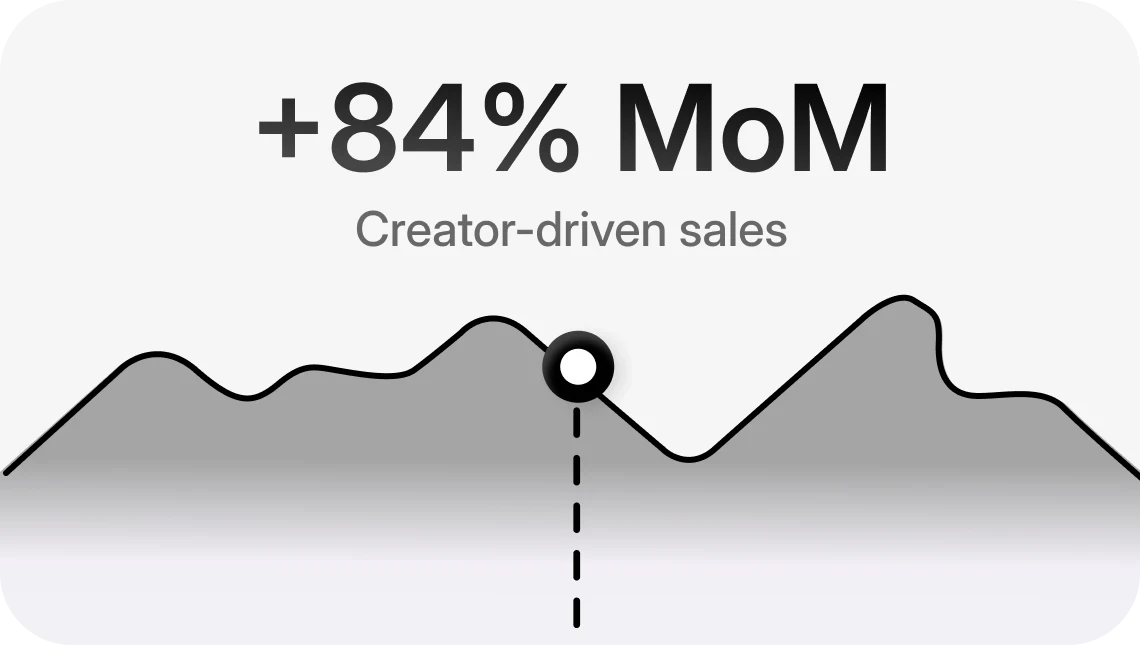
By the end of the second quarter, two clients expanded their creator programs based on the demonstrated ROI, increasing the agency's retainer revenue by 18%. The agency also used cross-brand performance insights to pitch creator storefront programs to three prospective clients, winning two new accounts.
Frequently Asked Questions
How does creator storefront software differ from a standard affiliate link platform?
Standard affiliate link platforms track clicks and conversions through URLs, but they do not provide the infrastructure to create branded storefronts, embed shoppable content on websites, or manage creator relationships end-to-end. Creator storefront software combines commerce, content, and creator management into a single workflow — giving agencies full control over the shopping experience and granular attribution data that link-only tools cannot provide.
Can agencies manage multiple client brands from a single platform?
Yes. Socialscale is built for multi-client operations. Each client brand has its own creator roster, product catalog, storefront configuration, commission structure, and performance dashboard. Agency teams switch between client accounts without logging into separate tools, and cross-client reporting surfaces insights that help agencies optimize programs at scale.
How are creator storefronts embedded into existing client websites?
Storefronts and shoppable content are embedded through lightweight widgets that agencies place on client websites using simple embed codes. No custom development is required. Widgets can be configured to match client brand guidelines and placed on homepages, product pages, landing pages, blog posts, or dedicated creator shopping sections.
What commission models are supported for affiliate creator programs?
The platform supports percentage-of-sale commissions, flat fees per conversion, tiered bonus structures based on volume thresholds, and hybrid models that combine multiple approaches. Agencies configure commission rules per client program, and the platform calculates payouts automatically based on attributed sales data.
How quickly can an agency launch a creator storefront program for a new client?
With product catalog integration and creator onboarding workflows already in place, agencies can typically launch a new client's creator storefront program within one to two weeks. This includes product feed setup, storefront configuration, initial creator recruitment, and widget embedding. Agencies with established creator rosters can activate even faster by reassigning existing creators to new client programs.