Creator Storefront Software Built for Digital Agencies
Digital agencies managing multiple ecommerce clients need more than scattered spreadsheets and one-off influencer deals. Creator storefronts give your agency a repeatable, scalable model for driving measurable revenue through the creators you recruit, onboard, and manage on behalf of your clients. When every creator has a dedicated, shoppable storefront tied to a specific client brand, attribution becomes clear, content becomes commerce, and your agency proves ROI in dollars rather than impressions.
Social commerce is reshaping how consumers discover and buy products. For agencies, this shift creates both an opportunity and an operational challenge. You need infrastructure that lets you spin up creator storefront programs across multiple client accounts without duplicating effort or losing visibility into performance. The right creator storefront software centralizes onboarding, content management, storefront deployment, and analytics into a single workspace your team actually uses every day.
This page breaks down exactly how Socialscale helps digital agencies launch and manage creator storefront programs that drive ecommerce client growth, from the first creator invite to the monthly performance report you send to your client.
Managing Creator Programs Across Multiple Client Accounts
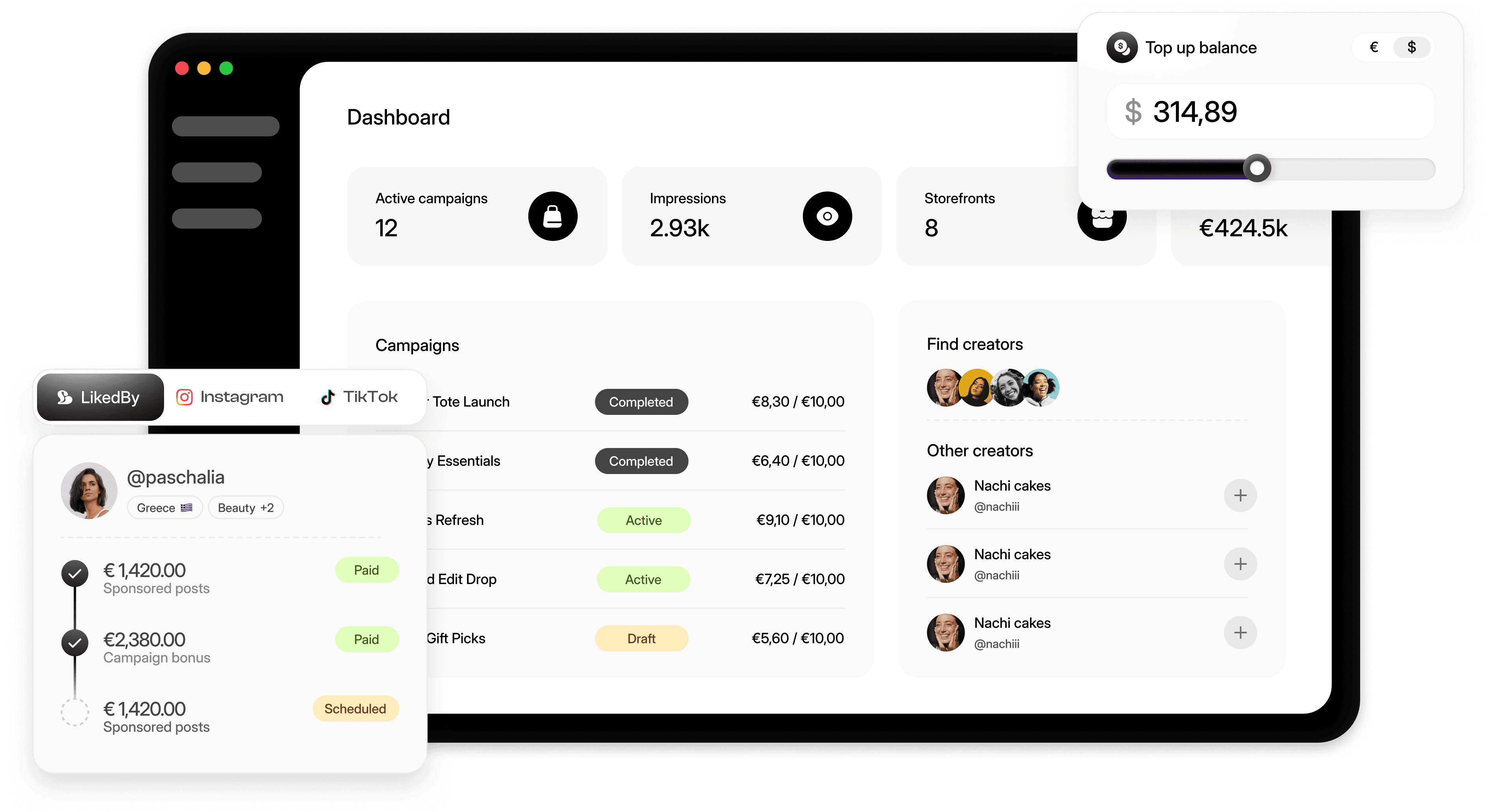
Agencies rarely run a single creator program. You might manage storefronts for a DTC skincare brand, a home goods retailer, and a supplement company simultaneously. Each client has different brand guidelines, product catalogs, commission structures, and approval workflows. Without purpose-built software, your team ends up context-switching between tools and losing hours to manual coordination.
Proving Revenue Attribution to Clients
Clients want to see the direct line from creator activity to revenue. When storefronts, affiliate links, and content are managed in disconnected systems, building that attribution story requires painful manual data stitching every reporting cycle.
Creator Onboarding at Scale
Recruiting 15 creators for one client is manageable. Recruiting 50 creators across four clients in the same quarter is a different problem entirely. Agencies need standardized onboarding flows that still allow per-client customization for brand guidelines, product seeding, and storefront setup.
Content Approval Bottlenecks
Every piece of creator content needs client approval before it goes live on a storefront. When approvals happen over email threads and Slack messages, assets get lost, feedback is fragmented, and launch timelines slip.
Inconsistent Creator Performance Tracking
Without centralized analytics, your team cobbles together data from affiliate platforms, social media native analytics, and ecommerce dashboards. This makes it nearly impossible to identify which creators are actually driving conversions versus just generating vanity metrics.
Content Asset Disorganization
Creator photos, videos, and UGC pile up across Google Drive folders, email attachments, and DMs. When a client asks for their top-performing creator assets for a paid media campaign, your team scrambles to locate and organize them.
Scaling Affiliate Creator Programs Without Dedicated Headcount
Most agencies cannot hire a dedicated creator operations manager for every client account. The team running paid media or social strategy is often the same team managing creator storefronts, which means operational efficiency is not optional.
Generic Influencer Platforms Focus on Discovery, Not Operations
Most influencer marketing software is built around creator discovery and outreach. They help you find creators, but they do not help you manage ongoing storefront programs, organize content libraries, or embed shoppable content on client ecommerce sites. For agencies running always-on creator storefront programs, discovery is only the first step.
Affiliate Networks Lack Content and Collaboration Tools
Affiliate platforms like ShareASale or Impact handle link tracking and commissions, but they have no concept of content approval workflows, UGC management, or storefront customization. Your team ends up running a parallel content management process outside the affiliate tool, which doubles the operational load.
Project Management Tools Were Not Built for Creator Workflows
Agencies often try to adapt Asana, Monday, or Notion to manage creator programs. These tools can track tasks, but they cannot render shoppable storefronts, store and tag creator assets, calculate per-creator revenue attribution, or provide the specialized workflows that creator commerce demands.
Spreadsheets Break at Multi-Client Scale
A spreadsheet might work for tracking 10 creators for one client. It collapses when you are managing 80 creators across five clients with different commission tiers, content deadlines, and product catalogs. Errors multiply, version control disappears, and your team spends more time maintaining the spreadsheet than managing creators.
Disconnected Tool Stacks Create Reporting Nightmares
When your agency uses one tool for outreach, another for content storage, a third for affiliate tracking, and a fourth for analytics, the monthly client report becomes a multi-hour data aggregation project. This is unsustainable and introduces errors that erode client trust.
How Socialscale Powers Creator Storefronts for Digital Agencies
Socialscale is the operating system for social commerce, built specifically for the workflows that agencies and brands use to run creator programs end-to-end. Rather than forcing your team to stitch together five different tools, Socialscale consolidates creator onboarding, collaboration management, content storage, storefront deployment, and performance tracking into a single platform your entire team can operate from.
For agencies managing multiple ecommerce clients, Socialscale provides the structure to run distinct creator storefront programs per client without duplicating effort. Your creator CRM organizes every creator relationship by client account, campaign, and performance tier. Content approvals, briefs, and deliverables flow through creator collaborations workflows that keep both your internal team and your client stakeholders aligned. And when it is time to prove results, the creator analytics dashboard surfaces revenue attribution, conversion rates, and content performance at the creator, campaign, and client level.
The result is an agency that can take on more creator storefront accounts without proportionally increasing headcount, because the operational infrastructure scales with you.
Multi-Client Creator CRM
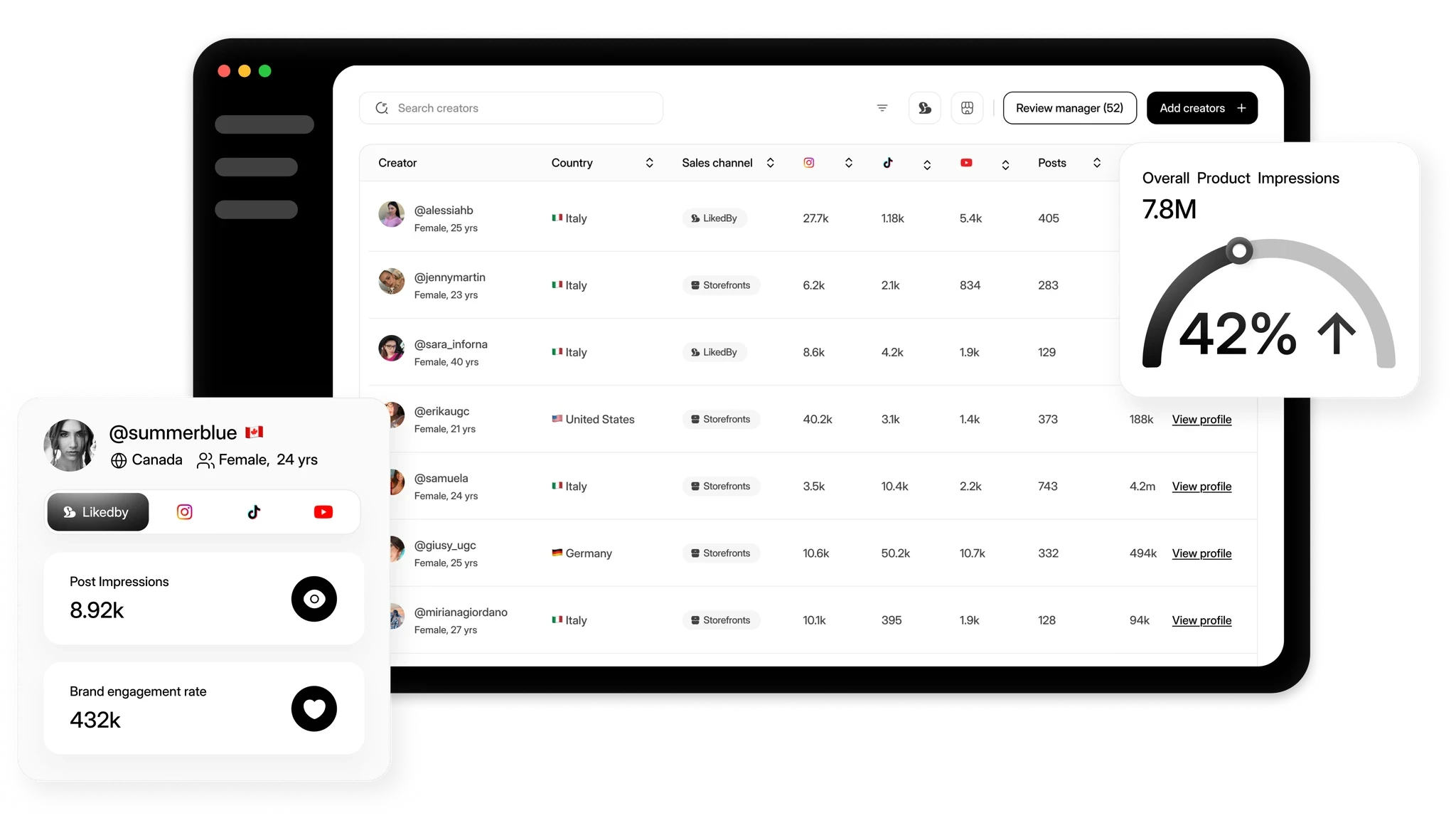
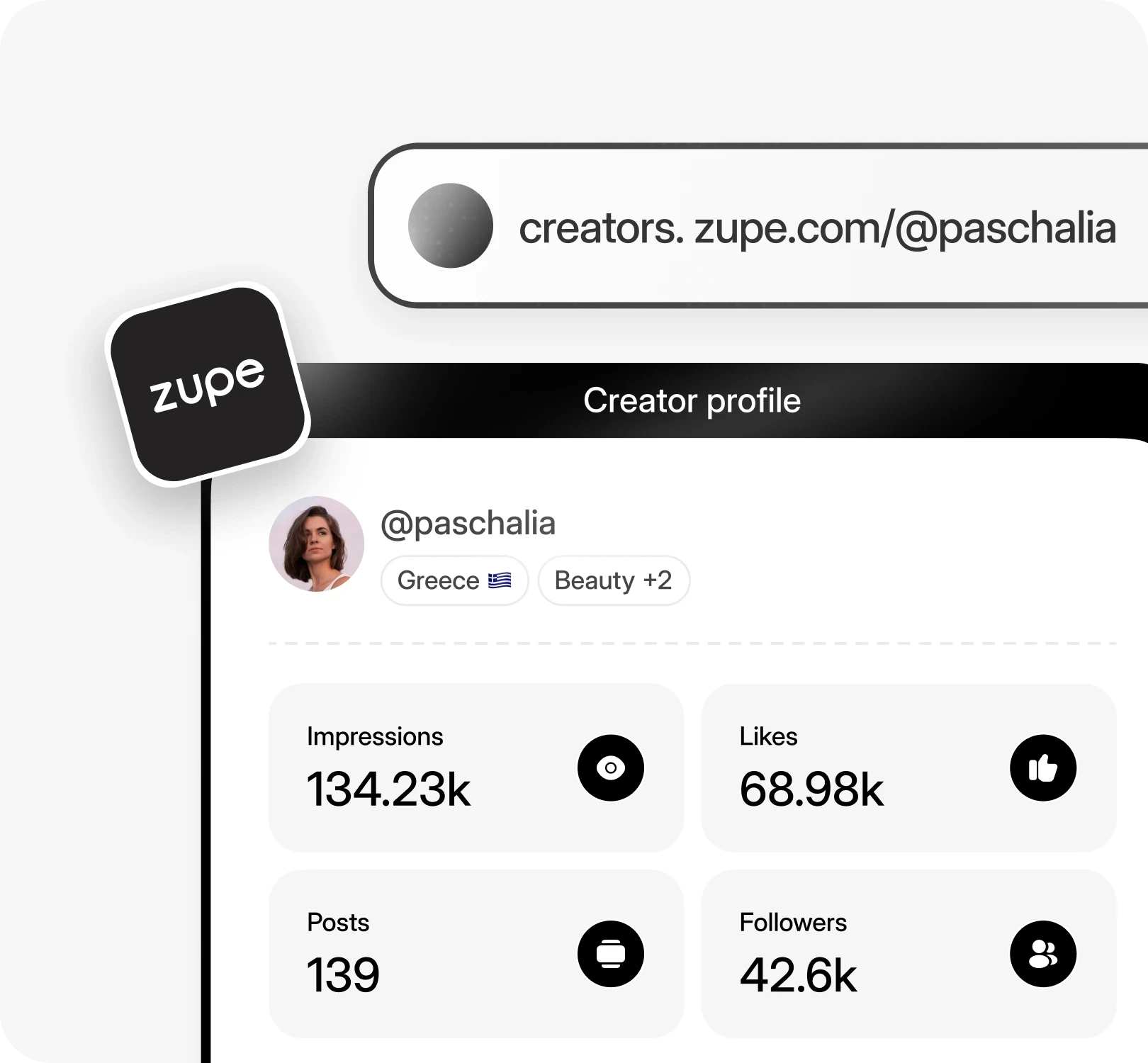
Every creator your agency works with lives in a centralized CRM, segmented by client account, campaign, product category, content type, and performance tier. When you onboard a new creator for a client, their profile captures contact details, social handles, content preferences, commission terms, and storefront status. Your team can filter and search across the entire creator roster or drill into a single client account in seconds. This eliminates the scattered spreadsheets and tribal knowledge that slow agencies down.
Storefront Deployment and Shoppable Content Embedding
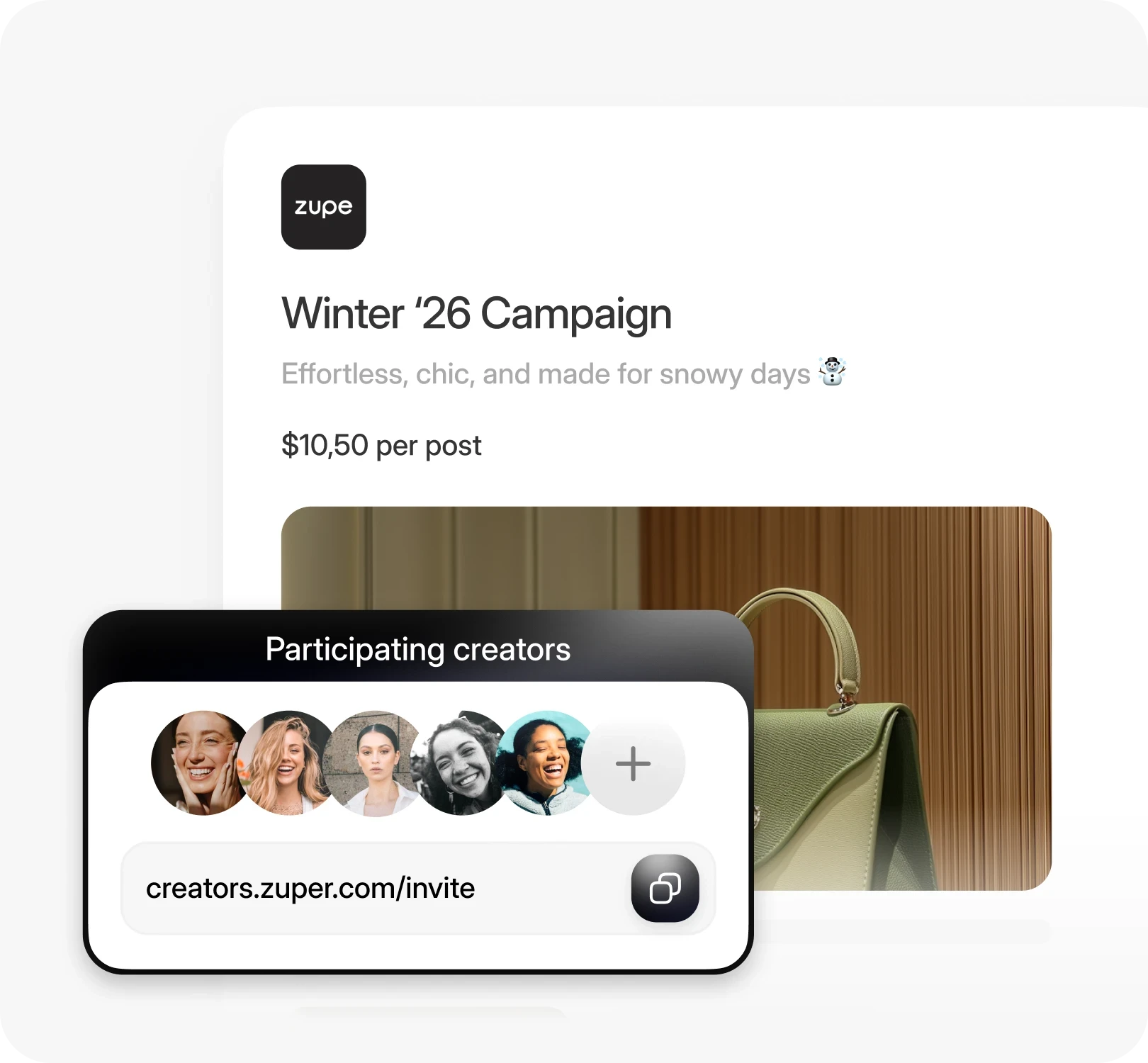
Socialscale lets your team create dedicated creator storefronts that live on your client's ecommerce site. Each storefront showcases the creator's curated product picks, shoppable content, and personalized recommendations. Embedding is handled through creator widgets that integrate directly with your client's Shopify or ecommerce theme, so there is no custom development required. This turns creator content from a social media asset into a direct revenue channel on the client's own domain.
Content Collaboration and Approval Workflows
Every creator deliverable, whether it is a product review video, a lifestyle photo set, or a storefront banner, moves through a structured collaboration workflow. Your agency team can create briefs, set deadlines, review submissions, request revisions, and get client sign-off within the platform. No more chasing approvals across email, Slack, and text messages. This workflow is especially critical for agencies where the client brand team needs to approve content before it appears on a storefront.
Creator Content Storage and Asset Library
All creator-generated content is automatically organized in Creator Drive, tagged by client, campaign, creator, product, and content type. When your client's paid media team requests top-performing UGC for ad creative, you can pull the exact assets in minutes. This centralized content storage also ensures that usage rights and licensing terms are tracked alongside every asset, which protects both your agency and your client.
Performance Tracking and Revenue Attribution
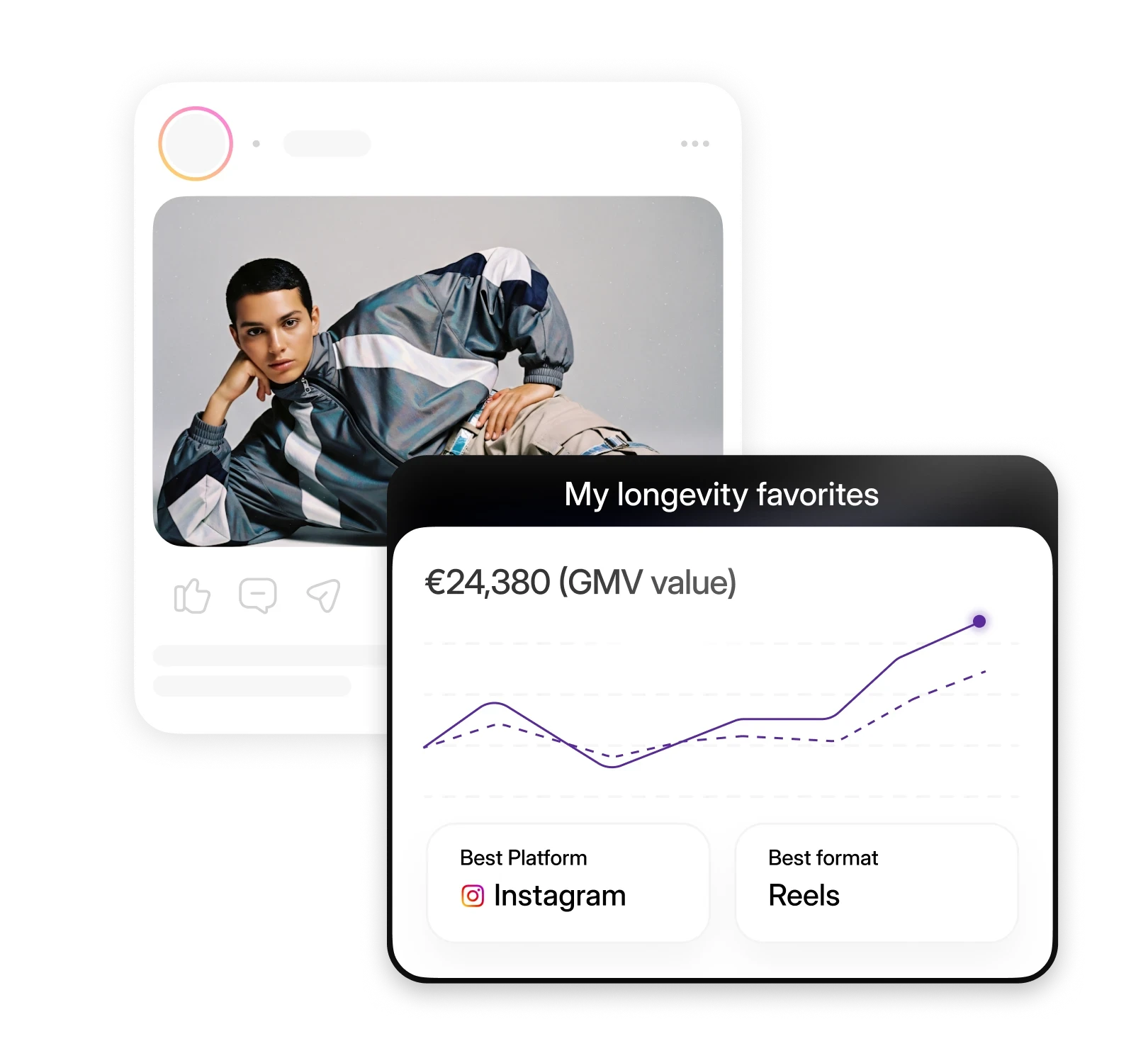
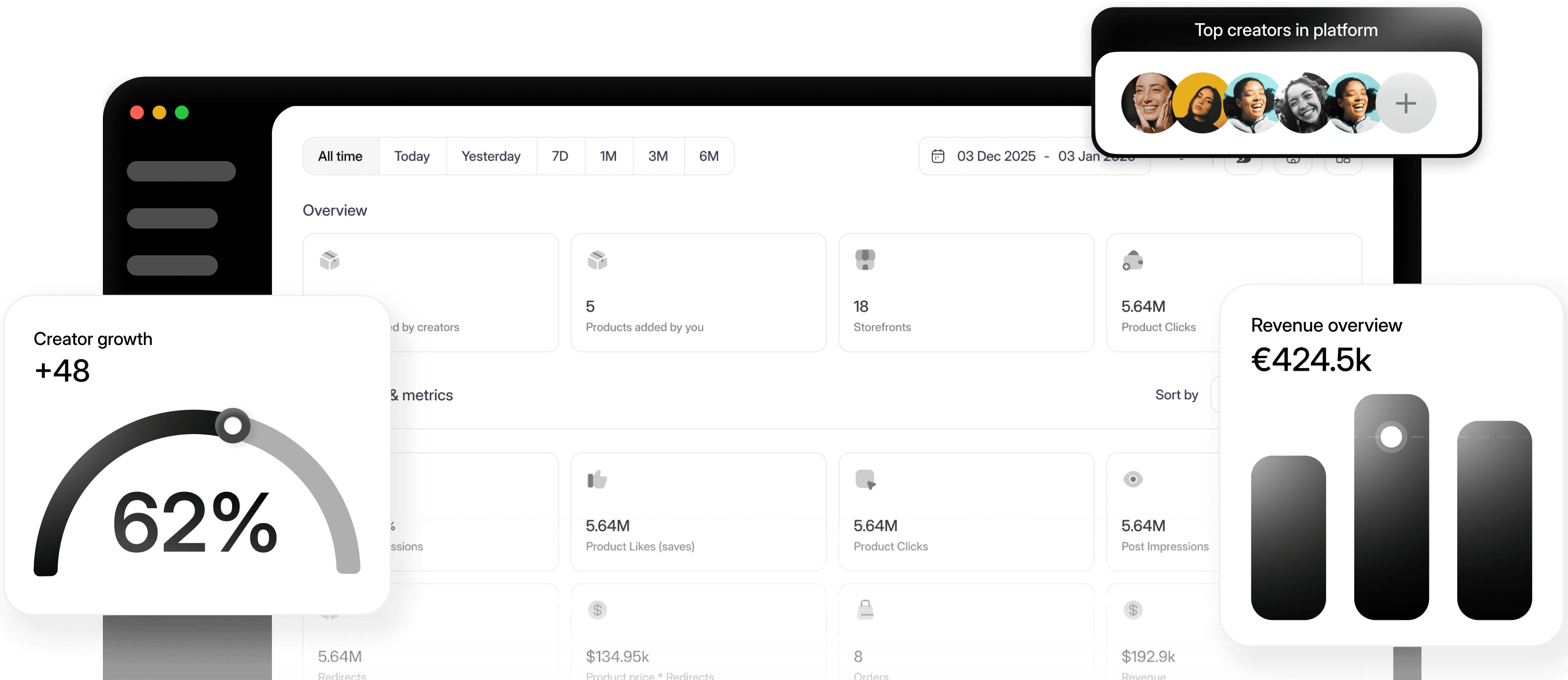
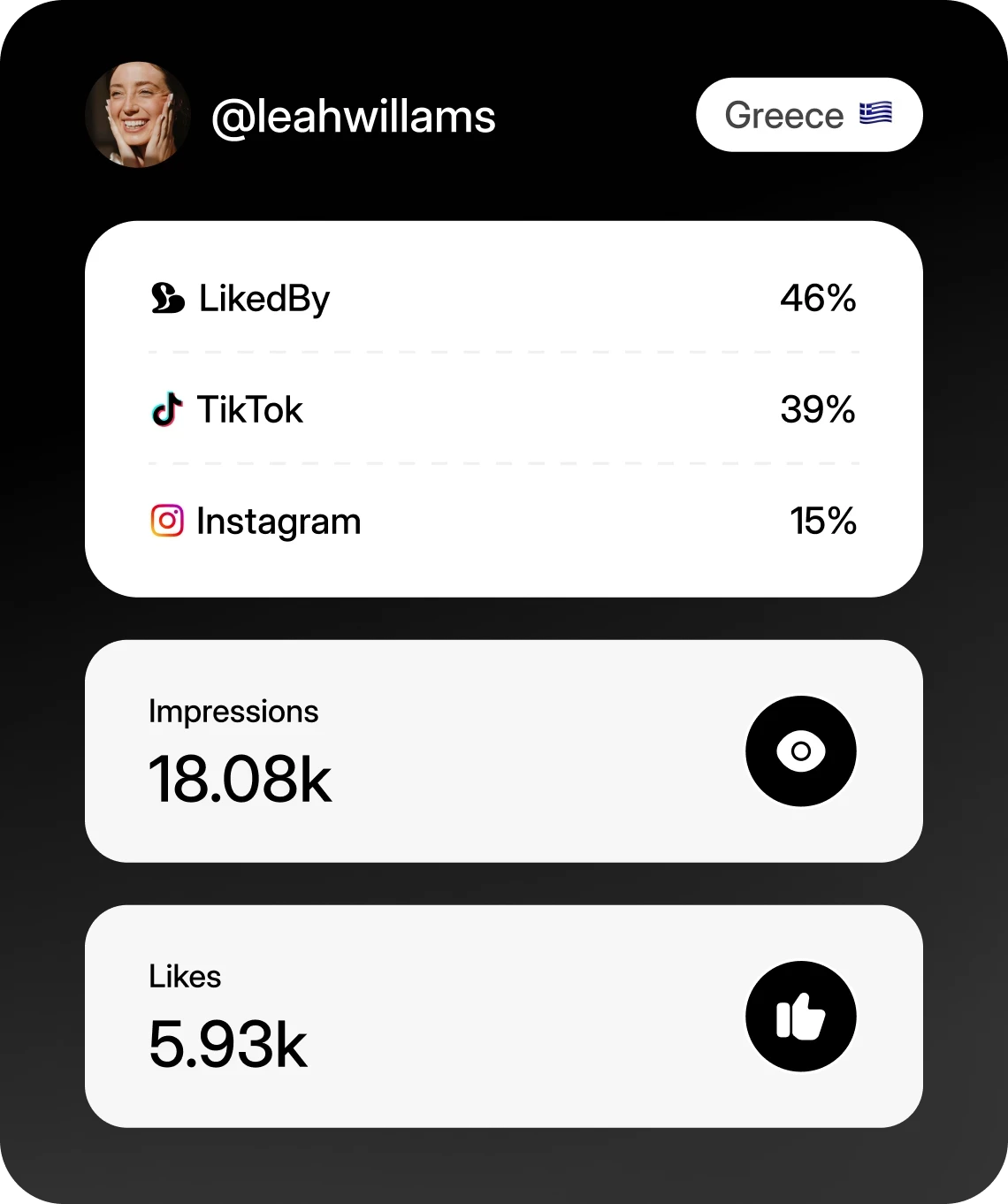
Socialscale tracks every storefront visit, click, add-to-cart, and purchase back to the individual creator. Your team sees real-time dashboards showing which creators are driving revenue, which storefronts have the highest conversion rates, and which content formats perform best. This data feeds directly into the monthly and quarterly reports you deliver to clients, replacing hours of manual data aggregation with automated, accurate attribution.
Creator Onboarding Automation
For each client account, your agency can set up standardized onboarding sequences that include welcome messages, brand guideline documents, product seeding instructions, storefront setup steps, and commission structure details. When you recruit a new batch of creators for a client campaign, onboarding happens through a consistent, branded flow rather than ad hoc emails and DMs.
Creator Storefront Use Cases for Digital Agencies
Seasonal Campaign Storefronts for a Fashion Ecommerce Client
A digital agency managing a mid-market fashion brand launches seasonal creator storefront campaigns for spring/summer and fall/winter collections. For each season, the agency recruits 30 fashion and lifestyle creators, provides them with curated product selections, and deploys individual storefronts on the brand's Shopify site. Each storefront features the creator's styled looks with shoppable product links. The agency tracks which creators drive the most revenue per season and uses that data to negotiate higher-tier partnerships for top performers in subsequent campaigns.
Always-On Affiliate Storefront Program for a Wellness Brand
An agency running the social commerce strategy for a wellness supplement brand builds an always-on creator storefront program. Rather than campaign-based bursts, the agency continuously recruits micro-influencers in the fitness and nutrition space, onboards them with product education materials, and gives each creator a persistent storefront on the brand's site. Creators earn commissions on every sale through their storefront, and the agency monitors weekly performance to identify creators who need re-engagement or additional product seeding to maintain momentum.
Multi-Brand Storefront Management for a Holding Company
A digital agency serves a consumer goods holding company with four distinct brands across beauty, home, pet care, and food. The agency manages separate creator storefront programs for each brand, with different creator pools, brand guidelines, product catalogs, and commission structures. Operational efficiency depends on having a single platform where the agency team can switch between brand accounts, manage creator relationships, and report on performance without maintaining four separate tool stacks.
UGC-to-Storefront Pipeline for a DTC Electronics Brand
An agency working with a DTC electronics brand uses creator storefronts as the conversion layer for a UGC-first strategy. The agency recruits tech reviewers and unboxing creators, manages content production through structured briefs and approval workflows, and then publishes approved content directly to each creator's storefront on the brand's site. The storefront becomes the landing page for the creator's social posts, turning content engagement into tracked, attributable purchases. The agency uses storefront conversion data to optimize which content formats and creator profiles to prioritize in future recruitment.
Weekly and Monthly Operational Workflow for Agency Teams
Running creator storefront programs for ecommerce clients requires consistent operational rhythms. Here is the workflow that high-performing agency teams follow using Socialscale.
Creator Recruitment and Vetting (Weekly) — Your team identifies and evaluates potential creators for each client account. Candidates are assessed based on audience alignment, content quality, engagement rates, and brand fit. Approved creators are added to the client-specific CRM segment with relevant tags and notes.
Onboarding and Storefront Setup (Per Cohort) — New creators receive automated onboarding sequences that include brand guidelines, product catalogs, commission terms, and storefront setup instructions. Each creator's storefront is configured with their curated product selections and personalized branding elements before going live on the client's ecommerce site.
Content Briefing and Production Management (Weekly) — Your team sends content briefs to active creators with specific deliverables, product focus areas, and deadlines. Creators submit content through the collaboration workflow, where your team reviews quality, brand compliance, and messaging accuracy before routing to the client for final approval.
Storefront Content Publishing and Refresh (Bi-Weekly) — Approved content is published to creator storefronts and embedded across relevant pages on the client's site using shoppable widgets. Storefronts are refreshed with new products and seasonal content to keep them relevant and conversion-optimized.
Performance Monitoring and Creator Communication (Weekly) — Your team reviews storefront analytics to identify top-performing creators, underperforming storefronts, and content that is driving the highest conversion rates. Creators who are lagging receive re-engagement messages with product suggestions or content ideas. Top performers are flagged for expanded partnerships or bonus incentives.
Client Reporting and Strategy Adjustment (Monthly) — At the end of each month, your team pulls performance reports from the analytics dashboard showing creator-level revenue attribution, storefront traffic, conversion rates, and content output. These reports are delivered to the client with strategic recommendations for the following month, including creator roster changes, product focus shifts, and content format experiments.
Asset Library Curation and Repurposing (Monthly) — Your team reviews the content library to identify high-performing UGC that can be repurposed for the client's paid media, email marketing, or product detail pages. Assets are tagged, organized, and shared with the client's broader marketing team through the centralized content storage system.
Quarterly Program Review and Scaling (Quarterly) — Every quarter, your agency conducts a comprehensive review of each client's creator storefront program. This includes analyzing creator retention rates, program-level ROAS, content production velocity, and storefront conversion trends. The review informs decisions about scaling the creator roster, adjusting commission structures, or expanding to new creator segments.
Key Performance Indicators for Creator Storefront Programs
Agency teams managing creator storefronts should track these KPIs to demonstrate value to clients and optimize program performance over time.
Creator Activation Rate — Percentage of onboarded creators who publish their first piece of storefront content within the target timeframe. Benchmark: 70% or higher within 14 days of onboarding.
Content Approval Turnaround Time — Average number of hours or days from content submission to final client approval. Target: under 48 hours for standard deliverables.
Content Output per Creator per Month — Number of approved content pieces each creator produces monthly. Tracks creator engagement and program health.
Storefront Click-Through Rate (CTR) — Percentage of storefront visitors who click on a product. Indicates storefront design effectiveness and product-creator alignment.
Storefront Conversion Rate (CVR) — Percentage of storefront clicks that result in a completed purchase. The most direct measure of storefront revenue effectiveness.
Gross Merchandise Value (GMV) per Creator — Total revenue generated through each creator's storefront. Used to tier creators and allocate resources to top performers.
Program-Level ROAS — Total revenue generated by the creator storefront program divided by total program costs (creator payments, product seeding, platform fees, agency labor). The metric clients care about most.
Cost per Acquisition (CPA) via Storefronts — Average cost to acquire a new customer through creator storefronts. Compared against paid media CPA to demonstrate the efficiency of creator-driven commerce.
Creator Retention Rate — Percentage of creators who remain active in the program after 90 days. Low retention signals onboarding or compensation issues.
Content Repurposing Rate — Percentage of creator content that gets repurposed for paid ads, email, or PDPs. Measures the extended value of creator content beyond the storefront.
Scenario: Mid-Size Agency Scales Creator Storefronts Across Three Ecommerce Clients
A 25-person digital agency based in Austin manages social commerce and influencer marketing for three ecommerce clients: a DTC skincare brand, a pet accessories company, and a home fragrance label. Before adopting creator storefront software, the agency managed creator relationships through a combination of spreadsheets, a generic influencer discovery tool, email-based content approvals, and manual affiliate link tracking through a third-party network.
The operational cost was significant. The two-person creator team spent approximately 12 hours per week on manual data entry, content file management, and report building across the three accounts. Content approval cycles averaged 5 business days because assets were shared over email and feedback was scattered across threads. The agency could not clearly attribute revenue to individual creators, which made it difficult to justify program expansion to clients.
After implementing Socialscale, the agency consolidated all three client programs into a single platform. Each client had its own workspace with dedicated creator segments, brand guidelines, product catalogs, and storefront configurations. The results over the first 90 days were measurable:
Creator onboarding time dropped from an average of 7 days to 2 days per creator, thanks to automated onboarding sequences.
Content approval turnaround improved from 5 business days to 1.5 business days using structured collaboration workflows with client stakeholder access.
The agency recruited and activated 85 creators across the three accounts, up from 40 in the previous quarter.
Storefront conversion rates averaged 4.2% across all three clients, compared to 1.8% on standard product pages.
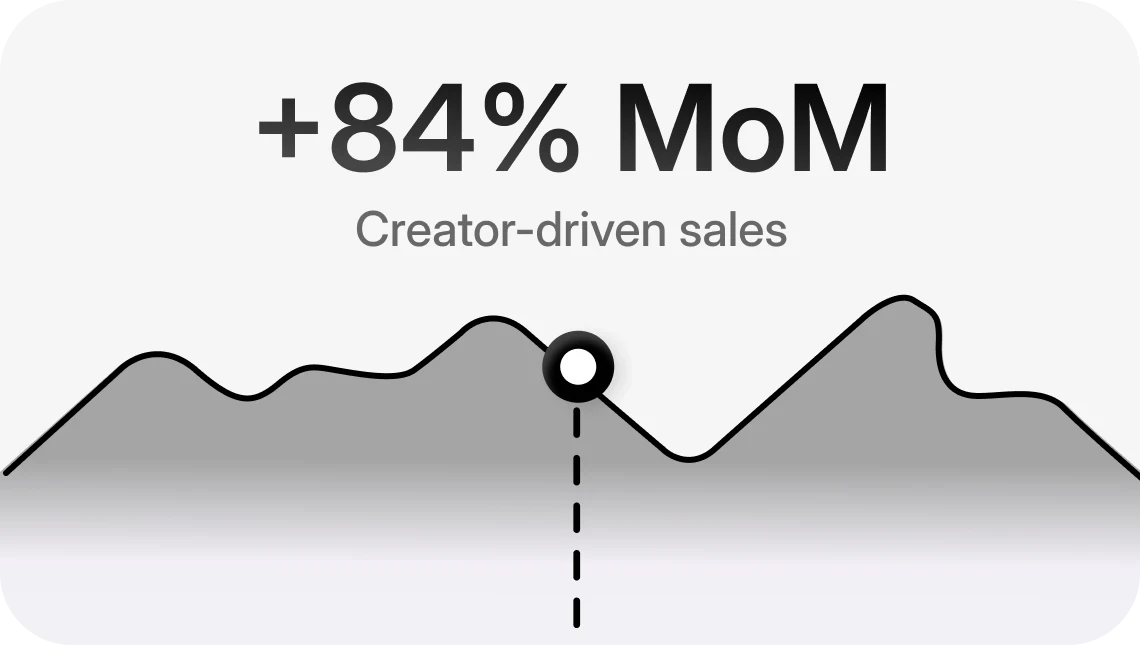
Combined GMV attributed to creator storefronts reached $127,000 in the first quarter, with a program-level ROAS of 5.3x.
The creator team reclaimed approximately 9 hours per week previously spent on manual operations, which was redirected to creator recruitment and content strategy.
The skincare client expanded their creator storefront budget by 40% for the following quarter based on the attribution data the agency provided. The agency used this case to pitch creator storefront programs to two prospective clients, winning both accounts within 60 days.
What makes creator storefront software different from a standard affiliate platform?
Affiliate platforms track links and commissions but do not manage the full creator lifecycle. Creator storefront software like Socialscale handles onboarding, content collaboration, asset storage, storefront deployment on ecommerce sites, and performance analytics in one system. For agencies, this means you manage the entire creator-to-commerce workflow without stitching together multiple disconnected tools.
Can agencies manage multiple client accounts within Socialscale?
Yes. Socialscale is designed for multi-account management. Each client has its own workspace with separate creator rosters, brand guidelines, product catalogs, commission structures, and analytics dashboards. Your agency team can switch between client accounts without cross-contamination of data or workflows.
How do creator storefronts integrate with a client's Shopify store?
Creator storefronts are deployed directly on the client's Shopify store through embeddable widgets. Product catalogs sync automatically, and every purchase made through a creator storefront is tracked with full attribution back to the individual creator. There is no custom development required from the client's engineering team.
How long does it take to launch a creator storefront program for a new client?
Most agencies can have a fully operational creator storefront program running within two to three weeks. This includes setting up the client workspace, configuring storefront templates, onboarding the initial creator cohort, and deploying storefronts on the client's ecommerce site. The timeline depends primarily on how quickly the client provides brand assets and product catalog access.
What types of creators work best for storefront programs?
Micro-influencers and mid-tier creators with engaged, niche audiences tend to drive the highest storefront conversion rates. They have authentic relationships with their followers and their product recommendations carry trust. For agencies, this means recruiting 20 to 50 micro-influencers often outperforms partnering with two or three macro-influencers for storefront-driven revenue goals.