Creator Storefront Software for Ecommerce Brands
Ecommerce brands are shifting significant portions of their marketing budgets toward creator-led selling, and for good reason. Creator storefronts turn authentic product recommendations into direct revenue channels, giving every creator in your program a personalized, shoppable destination that converts their audience into your customers. This is social commerce at its most operationally efficient.
But launching creator storefronts at scale is not as simple as handing out affiliate links. You need infrastructure to onboard creators, curate product selections per storefront, embed shoppable content, track attribution down to the SKU level, and manage payouts — all without drowning your team in spreadsheets. Most ecommerce teams discover that their existing tech stack was never designed for this workflow.
This page breaks down exactly how to launch creator storefronts for ecommerce sales, what to look for in creator storefront software, and how Socialscale gives ecommerce brands the operational backbone to run storefront programs that actually scale beyond a handful of creators.
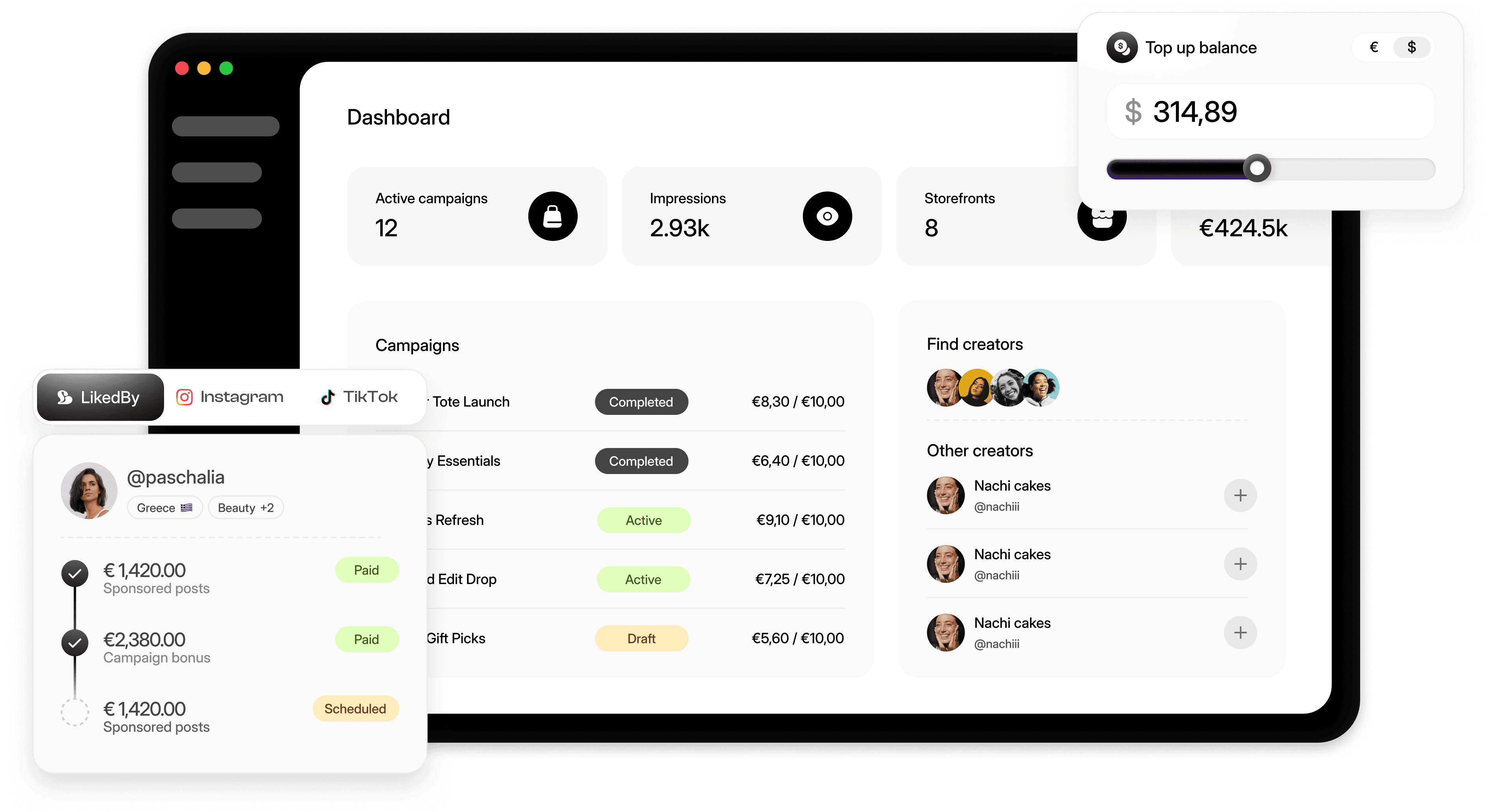
Core Challenges Ecommerce Brands Face with Creator Storefronts
Running a creator storefront program introduces operational complexity that most ecommerce teams underestimate. Here are the specific pain points that surface once you move past pilot stage.
1. Creator Onboarding Bottlenecks
Getting creators set up with storefronts requires collecting tax information, agreeing on commission structures, assigning product catalogs, and generating unique tracking links. Without a centralized system, onboarding a single creator can take days of back-and-forth emails.
2. Product Catalog Management Per Creator
Not every creator should sell your entire catalog. Skincare creators need different SKU access than lifestyle creators. Manually curating product selections for each storefront becomes unmanageable past 20–30 creators.
3. Content Quality Control at Scale
Creator storefronts live or die on the quality of the content displayed. Brands need a way to review, approve, and organize creator assets before they go live — without creating a bottleneck that frustrates creators and delays launches.
4. Attribution and Revenue Tracking Gaps
Most ecommerce analytics tools were built for paid media attribution, not creator-driven commerce. Brands struggle to connect storefront visits to actual purchases, especially when customers browse on mobile and convert later on desktop.
5. Commission and Payout Complexity
Different creators earn different rates. Some earn flat fees plus commission, others are pure affiliate. Tracking what is owed to whom — and reconciling returns — requires purpose-built infrastructure.
6. Scaling Beyond a Pilot Program
Many brands successfully run storefront programs with 10–15 creators using manual processes. The moment they try to scale to 50, 100, or 500 creators, everything breaks: communication, content review, performance tracking, and payouts.
7. Disconnected Creator Relationships
Without a creator CRM, relationship history is scattered across DMs, email threads, and spreadsheets. Teams lose track of who has been contacted, who is active, and who is underperforming.
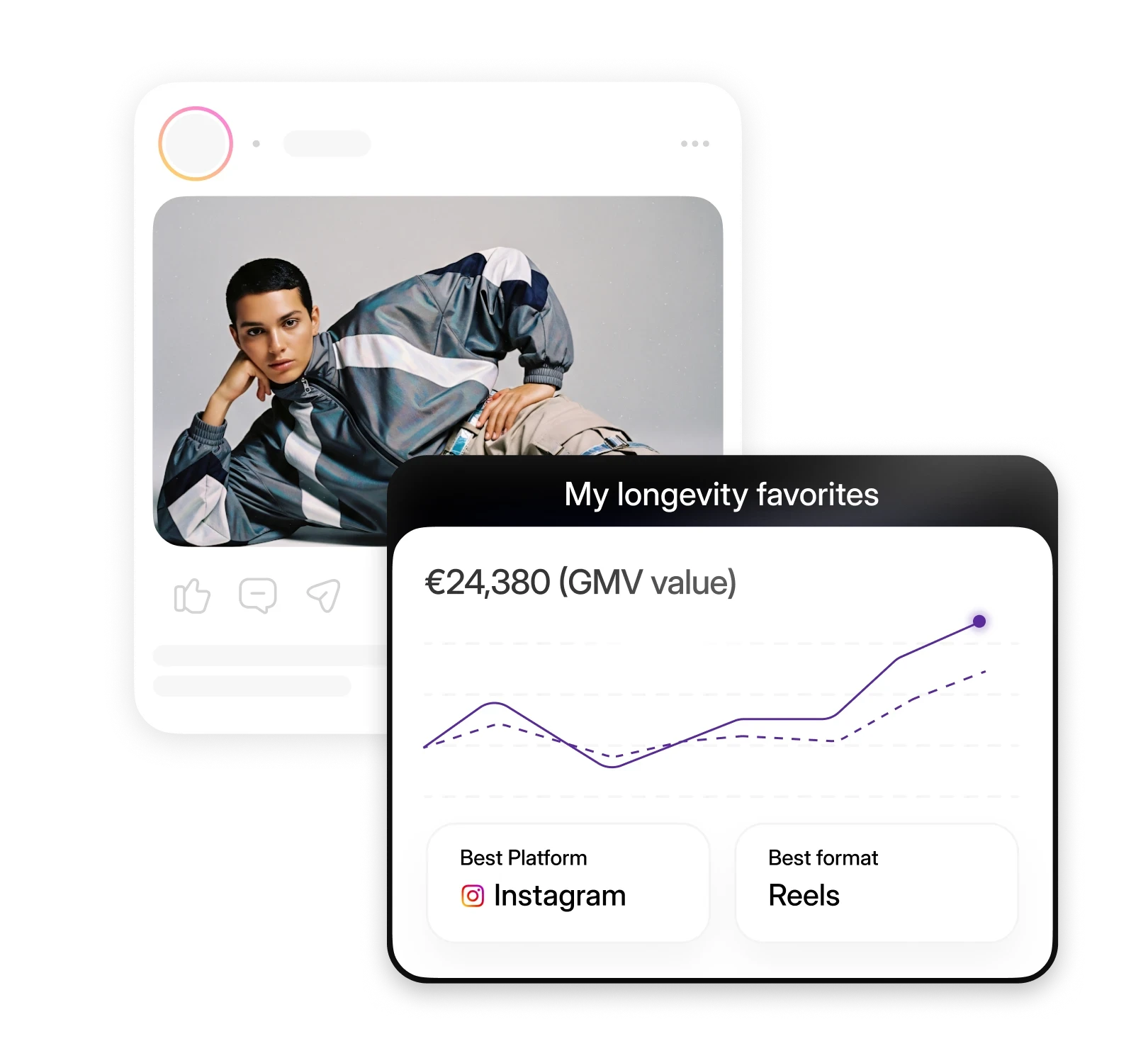
Why Traditional Ecommerce and Marketing Tools Fall Short
Affiliate Platforms Lack Content Infrastructure
Traditional affiliate networks like ShareASale or CJ handle link tracking and payouts, but they have zero capability for managing creator content, reviewing assets, or embedding shoppable UGC on your site. You end up bolting on three or four additional tools to fill the gaps.
Influencer Marketing Platforms Stop at Campaign Delivery
Most influencer marketing software is designed for one-off sponsored posts, not ongoing storefront programs. They help you find creators and manage a campaign brief, but they do not support the continuous content flow, storefront curation, and long-term performance tracking that a storefront model demands.
Ecommerce Platforms Treat Creators as an Afterthought
Shopify, WooCommerce, and BigCommerce have robust storefront capabilities for your brand, but they were not designed to spin up individual creator-facing storefronts with unique product selections, embedded creator content, and per-creator analytics. Customizing them for this purpose requires expensive development work.
Spreadsheets and Manual Processes Create Invisible Costs
The most common "tool" for managing creator storefronts is a combination of Google Sheets, Slack channels, and shared Dropbox folders. This approach works for a small pilot but introduces errors, delays, and significant labor costs as the program grows. The real cost is not the tools — it is the hours your team spends on tasks that should be automated.
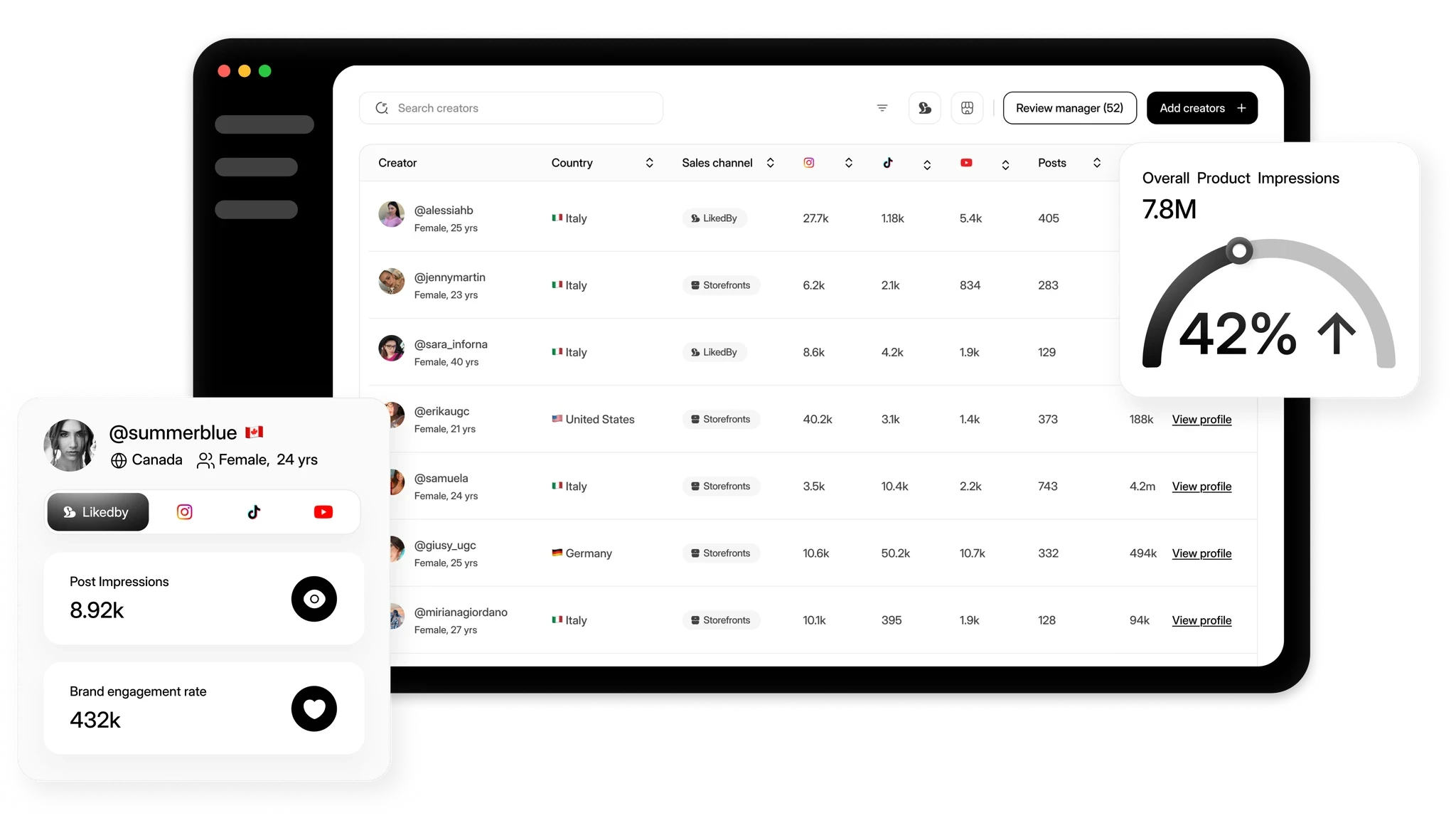
How Socialscale Powers Creator Storefronts for Ecommerce Brands
Socialscale is purpose-built as a creator marketing platform that gives ecommerce brands the end-to-end infrastructure to launch, manage, and scale creator storefront programs. Rather than stitching together affiliate software, a DAM tool, a project management app, and a spreadsheet, your team operates from a single system designed for social commerce workflows.
At the core, Socialscale connects creator onboarding, content management, storefront deployment, and performance tracking into one operational layer. Your creator CRM holds every relationship, contract detail, and communication history. Your content review and approval process runs through a centralized asset library. And your analytics tie every storefront interaction back to revenue.
For ecommerce teams specifically, this means you can onboard a new creator, assign them a curated product catalog, review their initial content, launch their storefront, and start tracking sales — all within the same platform. The result is a storefront program that scales from 10 creators to 500 without requiring a proportional increase in headcount. Book a demo to see how this works with your product catalog and creator roster.
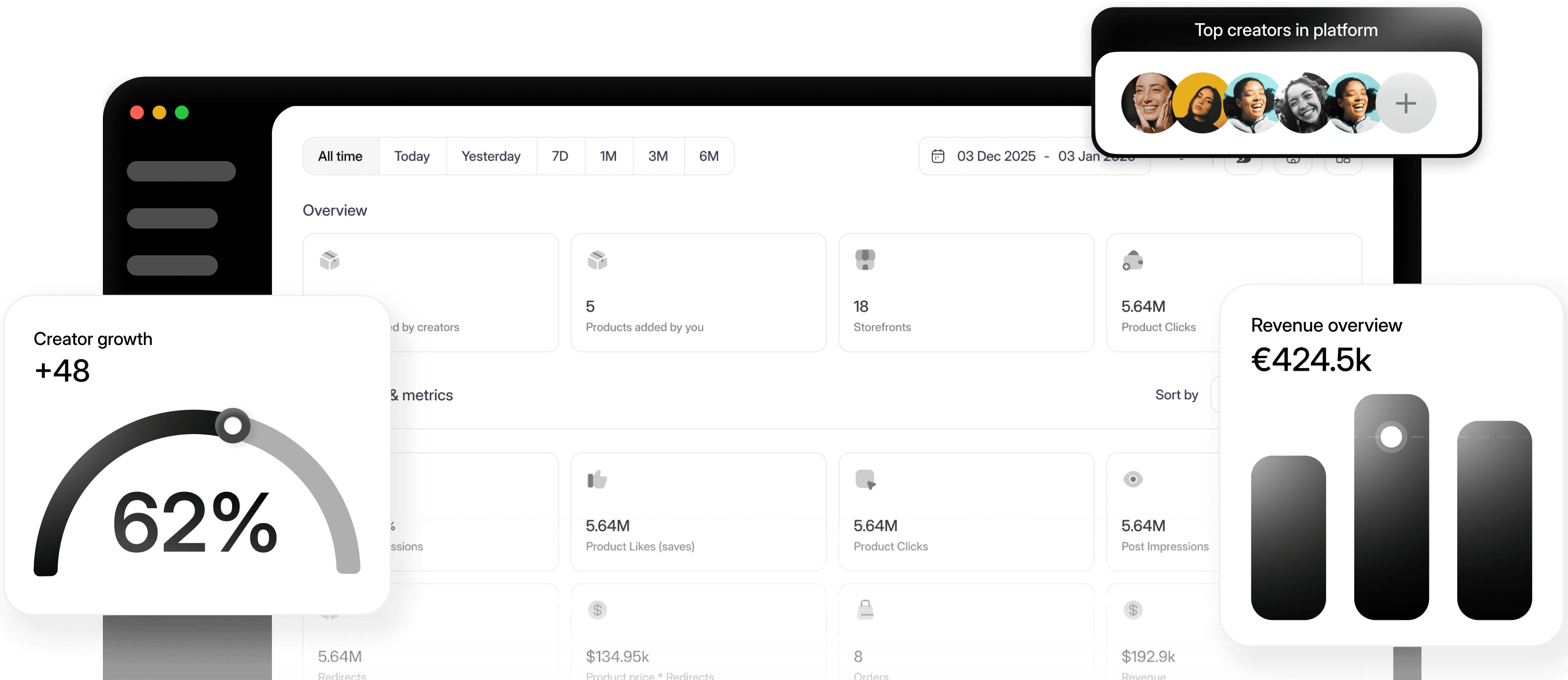
Feature Breakdown: What Creator Storefront Software Actually Needs to Do
Creator Onboarding and CRM
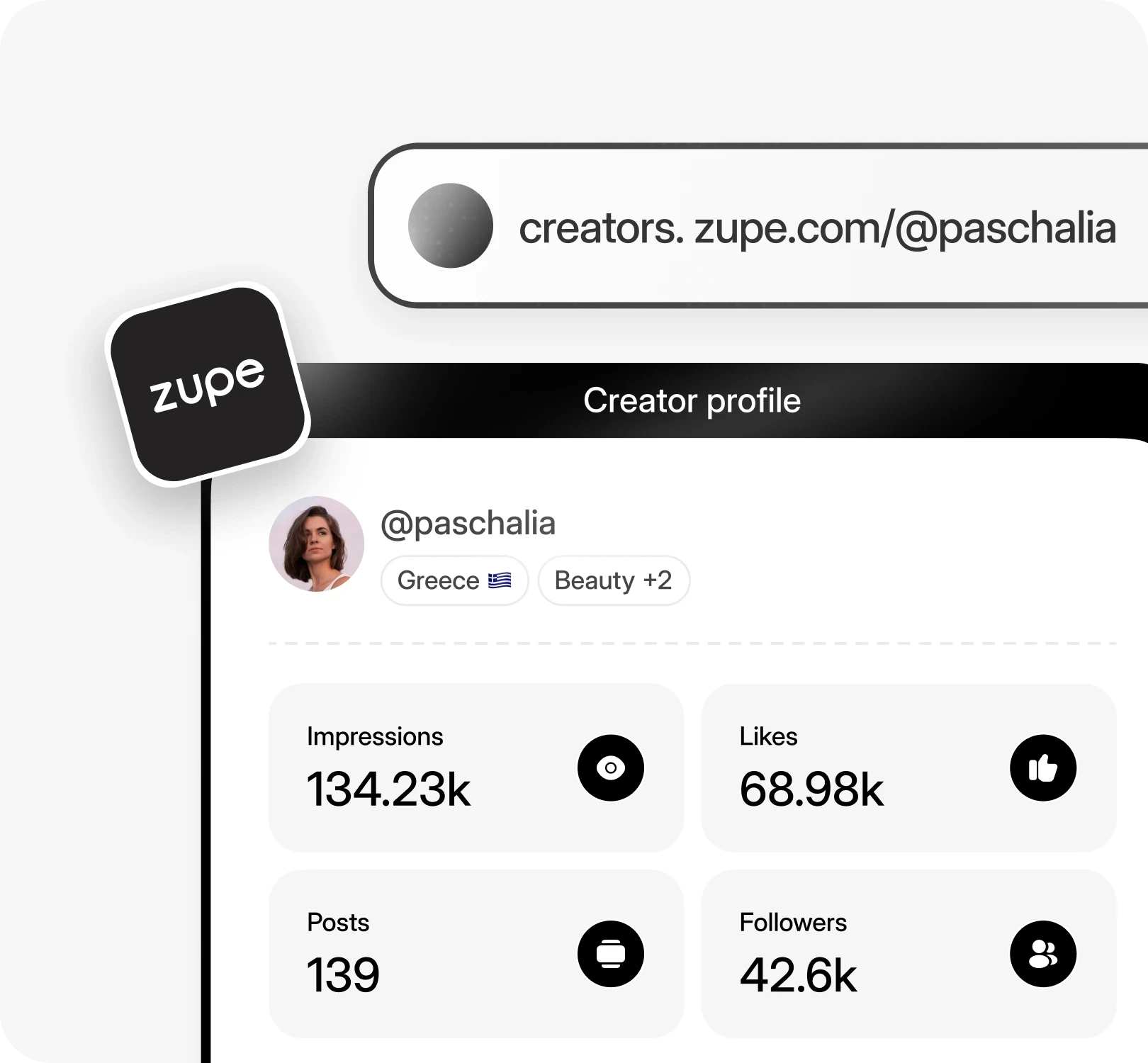
Every storefront program starts with getting creators into your system efficiently. Socialscale provides customizable onboarding flows that collect creator details, social handles, content preferences, and contractual agreements in one step. Once onboarded, each creator lives in your CRM with a complete profile: past collaborations, content history, performance data, and communication logs. This eliminates the scattered DM-and-spreadsheet approach that causes dropped balls during scaling.
Product Catalog Assignment and Storefront Curation
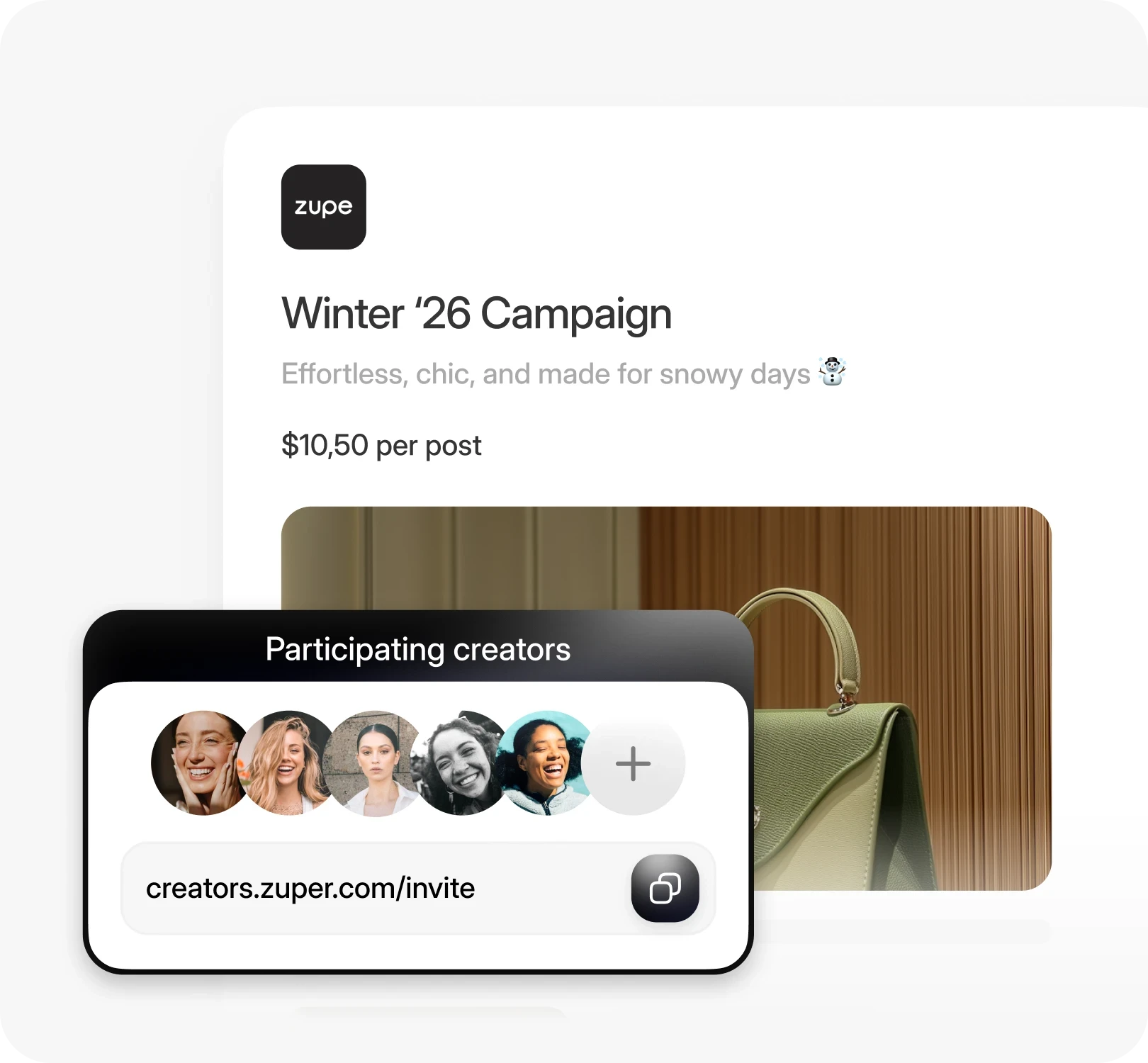
Not every creator should represent every product. Socialscale lets you assign specific product collections to individual creators or creator tiers. A fitness creator gets your activewear line; a home decor creator gets your kitchen collection. This curation ensures that each storefront feels authentic to the creator's audience, which directly impacts conversion rates.
Content Review, Approval, and Storage
Creator storefronts need fresh, high-quality content to convert. Socialscale's content storage and organization system gives your team a centralized library where creators upload assets, your team reviews and approves them, and approved content flows directly into storefront displays. No more hunting through email attachments or shared drives for the latest product photos.
Shoppable Content Embedding
The bridge between creator content and ecommerce revenue is shoppable content. Socialscale enables you to embed creator videos, images, and reviews directly on product pages, landing pages, or dedicated storefront pages — with each piece of content linked to purchasable SKUs. This turns passive browsing into active buying without redirecting customers away from your site.
Creator Collaboration Management
Running storefronts means ongoing collaboration, not one-off campaigns. Socialscale's creator collaboration tools let you manage briefs, content calendars, revision requests, and approval workflows in a structured way. Your team always knows which creators have pending deliverables, which storefronts need content refreshes, and which collaborations are overdue.
Performance Tracking and Revenue Attribution
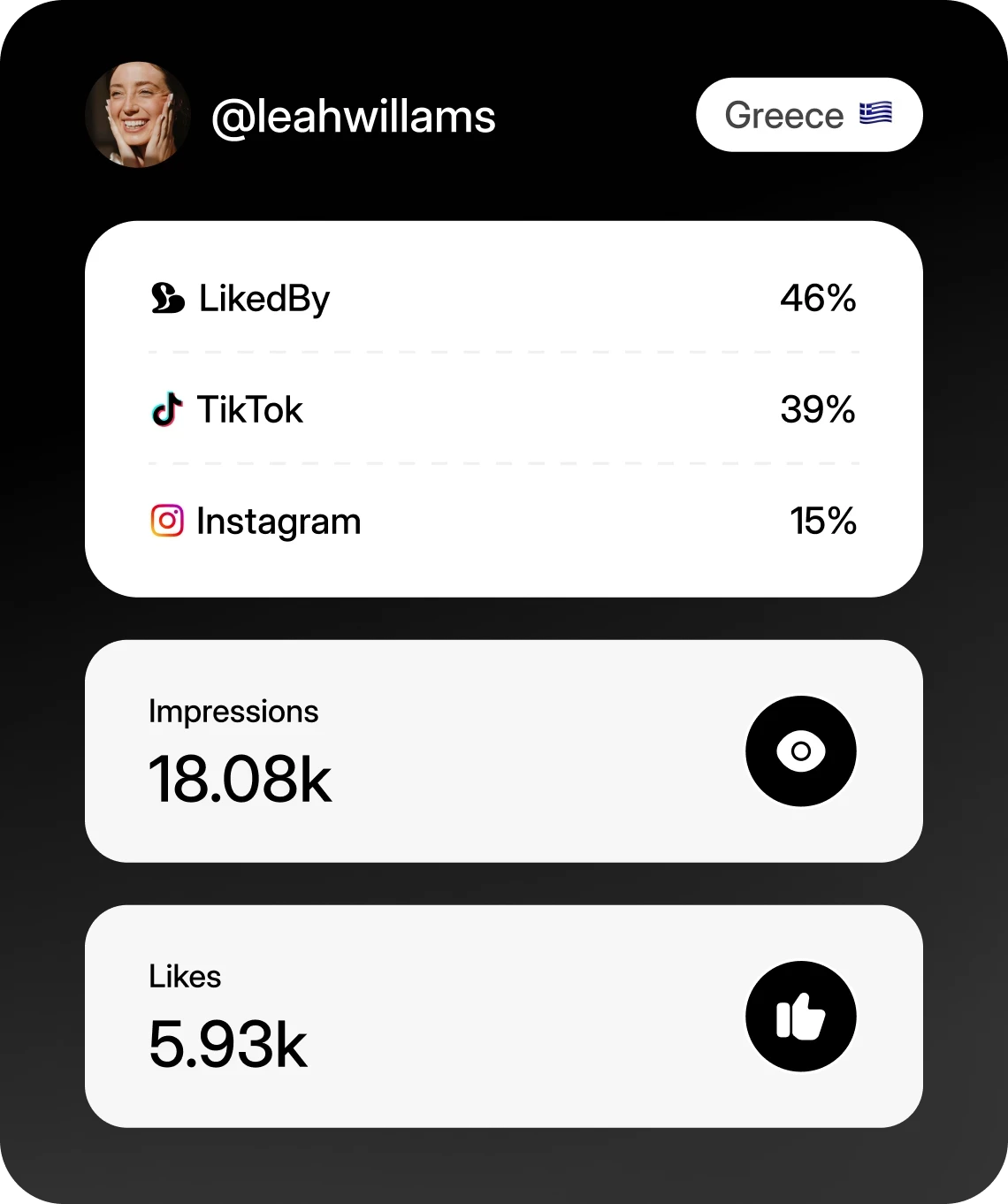
Every storefront generates data: visits, clicks, add-to-carts, conversions, and revenue. Socialscale's analytics layer tracks these metrics per creator, per storefront, and per product — giving your team the granularity needed to identify top performers, optimize underperforming storefronts, and make informed decisions about commission structures and creator investments.
Use Cases: Creator Storefronts in Action for Ecommerce Brands
These scenarios illustrate how ecommerce teams across different verticals can operationalize creator storefronts to drive measurable sales outcomes.
1. DTC Beauty Brand Running a Tiered Creator Storefront Program
A direct-to-consumer skincare brand segments its creator roster into three tiers: ambassadors (top 10 creators with exclusive product access), core creators (50 mid-tier creators with standard catalog access), and affiliate creators (200+ micro-creators with bestseller-only storefronts). Each tier has different commission rates, content requirements, and storefront templates. The brand refreshes storefront content monthly, with ambassadors receiving new product drops two weeks before general availability. This tiered approach lets the brand reward top performers while still capturing long-tail sales from micro-creators.
2. Fashion Ecommerce Company Launching Seasonal Creator Collections
A mid-market fashion brand launches seasonal creator collections where 30 selected creators each curate a "picks" storefront featuring their favorite items from the upcoming season. Each creator produces try-on content that is embedded directly in their storefront. The brand promotes these storefronts through email marketing and paid social, driving traffic to creator-curated pages rather than generic category pages. Conversion rates on creator-curated pages consistently outperform standard collection pages because the content carries social proof and personal recommendation.
3. Home Goods Brand Activating Micro-Creators for Affiliate Storefronts
A home goods brand with a broad product catalog recruits 150 micro-creators in the home decor and DIY space. Each creator receives a storefront pre-populated with products relevant to their content niche — kitchen organization, bedroom styling, or outdoor living. Creators earn commission on every sale through their storefront and are incentivized with bonus payouts when they hit monthly revenue thresholds. The brand uses weekly performance reports to identify which creators and product categories are generating the highest return, then reallocates marketing support accordingly.
4. Supplement Brand Using Creator Storefronts to Replace Discount Code Programs
A health and wellness supplement brand transitions from a traditional discount code affiliate program to creator storefronts. Instead of giving creators a 15%-off code to share in their bio, each creator gets a branded storefront page with their photo, their story about using the products, embedded video testimonials, and direct purchase buttons. The brand finds that storefronts generate higher average order values than discount codes because the shopping experience feels curated rather than transactional. Customers who enter through a creator storefront also show higher repeat purchase rates.
Operational Workflow: Launching and Managing Creator Storefronts
This step-by-step workflow reflects how ecommerce teams typically operationalize a creator storefront program using dedicated software. Each step maps to a weekly or monthly cadence depending on program size.
Recruit and Onboard Creators
Identify potential creators through your CRM, inbound applications, or social listening. Send onboarding forms that capture social profiles, audience demographics, content style preferences, and contractual terms. Aim to batch onboarding in cohorts of 10–25 creators to maintain quality control. Weekly cadence: review new applications every Monday, onboard approved creators by Wednesday.
Assign Product Catalogs and Commission Structures
Based on each creator's niche and audience, assign a curated product catalog to their storefront. Set commission rates — flat percentage, tiered based on volume, or hybrid models with flat fees plus commission. Document everything in the creator's CRM profile so there is a single source of truth.
Brief Creators on Content Requirements
Send each creator a content brief specifying the types of assets needed for their storefront: product photography, short-form video reviews, unboxing content, or styled lifestyle shots. Include brand guidelines, required disclosures, and deadlines. Use collaboration tools to track brief delivery and creator acknowledgment.
Review and Approve Creator Content
As creators submit content, your team reviews each asset against brand guidelines and quality standards. Approve, request revisions, or reject with specific feedback. Store all approved assets in your centralized content library, tagged by creator, product, and content type for easy retrieval.
Build and Launch Storefronts
Using approved content and assigned product catalogs, build each creator's storefront. Embed shoppable content — videos with product tags, image carousels linked to SKUs, and creator testimonials with purchase buttons. QA each storefront on mobile and desktop before going live.
Promote Storefronts Across Channels
Share storefront links with creators for distribution across their social channels. Simultaneously, feature top creator storefronts in your brand's email campaigns, on your homepage, and in paid social ads. This dual promotion strategy drives traffic from both the creator's audience and your existing customer base.
Monitor Performance Weekly
Every week, pull storefront performance data: visits, click-through rates, conversion rates, revenue generated, and average order value per creator. Identify top performers for increased investment and underperformers for optimization or content refreshes. Share performance summaries with creators to keep them engaged and motivated.
Optimize and Scale Monthly
At the end of each month, conduct a program review. Refresh storefront content for seasonal relevance. Adjust commission structures based on performance data. Onboard the next cohort of creators. Retire inactive storefronts. This monthly cadence ensures the program stays fresh and continues to grow without operational debt accumulating.
Key Performance Metrics for Creator Storefront Programs
Tracking the right KPIs ensures your storefront program delivers measurable ROI. These are the metrics ecommerce teams should monitor at the creator, storefront, and program level.
Creator Activation Rate: Percentage of onboarded creators who have launched a live storefront with approved content within 14 days of onboarding.
Content Approval Time: Average number of days between content submission and final approval. Target: under 48 hours to maintain creator momentum.
Content Output Per Creator: Number of approved assets produced per creator per month. Indicates creator engagement and content pipeline health.
Storefront Click-Through Rate (CTR): Percentage of storefront visitors who click on a product. Benchmark varies by vertical but aim for 15–25% on well-curated storefronts.
Storefront Conversion Rate (CVR): Percentage of storefront visitors who complete a purchase. Ecommerce benchmarks for creator storefronts typically range from 3–8%, significantly higher than standard paid social landing pages.
Average Order Value (AOV) via Storefronts: Compare AOV from creator storefronts against other acquisition channels. Creator-curated shopping experiences often drive higher AOV due to bundled recommendations.
Gross Merchandise Value (GMV) Per Creator: Total revenue generated through each creator's storefront. The primary metric for evaluating individual creator ROI.
Program-Level Revenue Attribution: Total revenue attributable to the creator storefront program as a percentage of overall ecommerce revenue.
Return on Creator Spend (ROCS): Total storefront revenue divided by total creator costs (commissions, product seeding, management overhead). The creator-commerce equivalent of ROAS.
Creator Retention Rate: Percentage of creators who remain active in the program after 90 days. High retention indicates a well-managed program with fair compensation and good operational support.
Cost Per Acquisition (CPA) via Storefronts: Total program costs divided by number of new customers acquired through creator storefronts. Compare against paid media CPA to quantify the efficiency advantage.
Scenario: Mid-Market Skincare Brand Scales Creator Storefronts from 12 to 120 Creators
A DTC skincare brand generating $8M in annual ecommerce revenue had been running a small creator storefront program with 12 hand-picked beauty influencers. The program was managed through a combination of Shopify Collabs, Google Sheets for tracking, and a shared Google Drive for content. Results were promising — the 12 creators generated roughly $45,000 in monthly revenue — but the brand's ecommerce director knew the program could not scale with existing processes.
The team was spending 25+ hours per week on manual tasks: chasing creators for content via DMs, manually updating product links when inventory changed, reconciling sales data across multiple platforms, and calculating commission payouts in spreadsheets. Onboarding a single new creator took an average of 8 business days.
After implementing dedicated creator storefront software, the brand restructured its program over 90 days. Onboarding time dropped from 8 days to 2 days per creator. Content review and approval moved from scattered email threads to a centralized workflow, reducing approval time from 5 days to 36 hours on average. Product catalog syncing with Shopify eliminated the manual link-updating problem entirely.
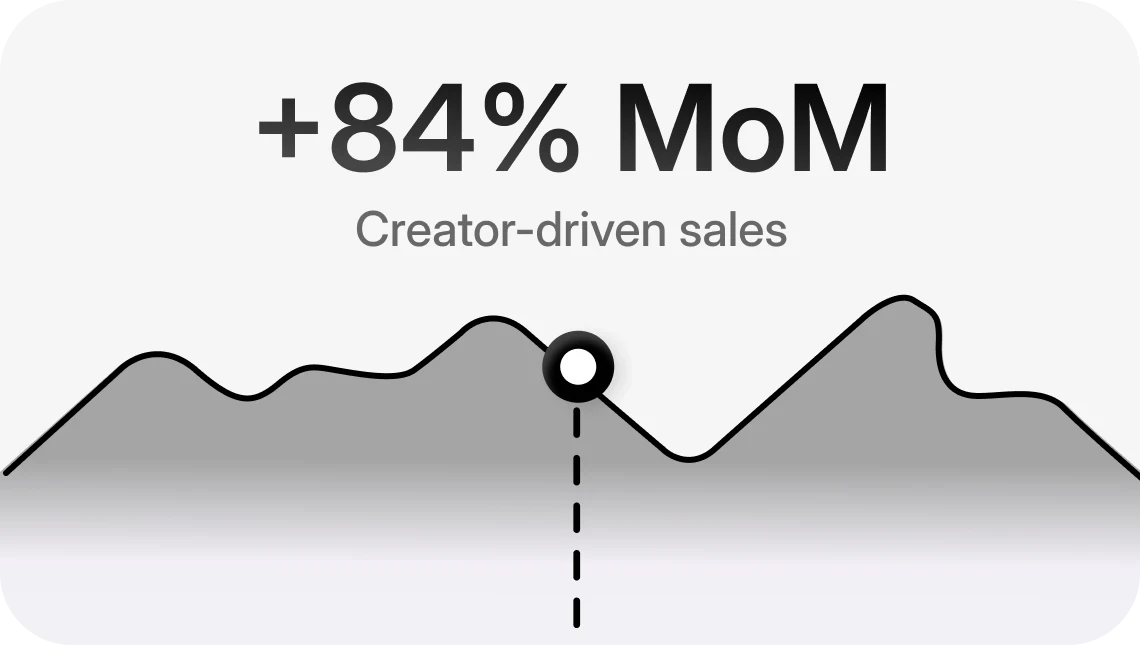
Within six months, the brand scaled from 12 to 120 active creator storefronts. Monthly storefront revenue grew from $45,000 to $310,000. The team's weekly operational hours on the program actually decreased from 25 to 18 hours despite managing 10x more creators, because automated workflows replaced manual processes. Storefront conversion rates averaged 5.2%, compared to 1.8% on the brand's standard paid social landing pages. Creator retention at 90 days was 78%, well above the industry average of roughly 50% for affiliate programs. The cost per acquisition through creator storefronts was $14, compared to $38 through Meta ads.
Frequently Asked Questions
What is creator storefront software and how does it differ from affiliate platforms?
Creator storefront software provides the full infrastructure for launching personalized, shoppable pages for each creator in your program — including content management, product catalog curation, storefront design, and performance analytics. Traditional affiliate platforms focus narrowly on link tracking and commission payouts but lack content workflows, asset storage, and the ability to embed shoppable creator content on your ecommerce site. Creator storefront software is built for ongoing creator relationships, not one-off link sharing.
How many creators do I need to make a storefront program worthwhile?
Most ecommerce brands see meaningful results starting with 15–25 active creators, provided those creators are well-matched to your product catalog and audience. The real value of dedicated software emerges when you scale beyond 30 creators, because that is when manual processes start consuming disproportionate team hours. Brands running 100+ creator storefronts typically see storefront revenue represent 8–15% of total ecommerce revenue.
How long does it take to launch a creator storefront program?
With the right software in place, most ecommerce brands can launch their first cohort of creator storefronts within 2–3 weeks. This includes platform setup, product catalog configuration, onboarding the initial creator cohort, reviewing first-round content, and going live. Ongoing scaling — adding new creators, refreshing content, optimizing storefronts — becomes a continuous operational cadence rather than a one-time project.
Can creator storefronts work alongside our existing affiliate program?
Yes. Many ecommerce brands run creator storefronts as a premium tier within their broader affiliate ecosystem. Standard affiliates continue using traditional links and discount codes, while top-performing or strategically important creators receive full storefronts with curated product access and embedded content. This tiered approach lets you reward your best creators with a richer experience while maintaining a broad affiliate base.
How do I measure whether creator storefronts are outperforming other acquisition channels?
Compare three metrics across channels: cost per acquisition (CPA), conversion rate, and customer lifetime value (LTV). Creator storefronts typically deliver lower CPA and higher conversion rates than paid social because the traffic arrives with built-in trust from the creator's recommendation. Track these metrics weekly using your analytics dashboard and run monthly comparisons against Meta, Google, and email acquisition costs to quantify the storefront program's relative efficiency.