Creator Storefront Platform for Online Marketplaces
Online marketplaces thrive when they connect buyers with the right products through trusted voices. Creator storefronts transform that connection into a scalable revenue channel by giving influencers and affiliates their own branded shopping destinations within your marketplace ecosystem. For multi-vendor platforms, this means each creator can curate and promote products from multiple sellers, driving discovery and conversion simultaneously.
Social commerce is reshaping how online marketplaces compete. Buyers increasingly trust creator recommendations over traditional advertising, and marketplaces that embed shoppable creator content directly into the shopping experience see measurably higher engagement and average order values. But managing hundreds or thousands of creator storefronts across dozens of vendors requires infrastructure that most marketplace teams simply do not have.
This page breaks down how a purpose-built creator storefront platform helps online marketplace teams operationalize influencer programs at scale — from onboarding creators and assigning vendor catalogs to tracking storefront performance and attributing revenue across your multi-vendor ecosystem.
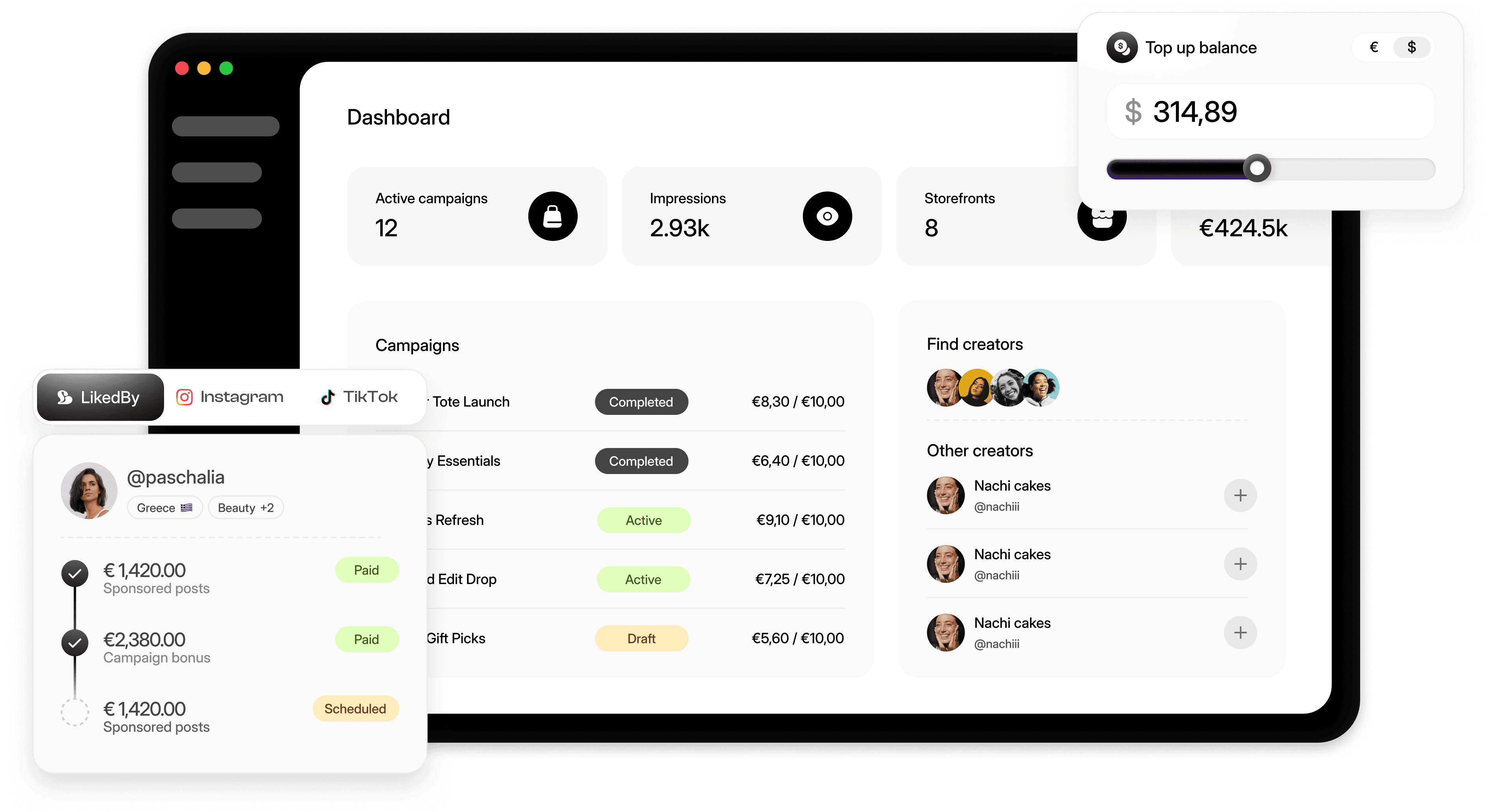
Core Challenges Facing Online Marketplace Teams
Running creator programs on a multi-vendor marketplace introduces operational complexity that single-brand stores never encounter. Here are the most pressing challenges marketplace teams face when scaling creator storefronts.
1. Multi-Vendor Attribution Complexity
When a creator promotes products from five different vendors in a single storefront, attributing sales accurately to the right vendor, the right creator, and the right campaign becomes a data nightmare. Most tools were built for single-brand attribution and break down in multi-vendor environments.
2. Creator Onboarding at Scale
Marketplaces need to recruit and onboard creators across diverse product categories — fashion, electronics, home goods, beauty — each with different vendor requirements, commission structures, and content guidelines. Manual onboarding processes collapse past 50 creators.
3. Catalog Curation and Product Assignment
Each creator storefront needs a curated product feed that reflects the creator's niche and audience. Assigning products from multiple vendors to the right creators, keeping feeds updated as inventory changes, and managing vendor approvals creates constant operational overhead.
4. Content Quality Control Across Vendors
Vendors have different brand guidelines, product photography standards, and messaging requirements. Marketplace teams must ensure creator content meets each vendor's standards without creating bottlenecks that slow down campaign launches.
5. Commission and Payout Management
Different vendors offer different commission rates. Different creators negotiate different terms. Tracking earned commissions across hundreds of storefronts with variable rates per vendor per product category is error-prone without dedicated tooling.
6. Fragmented Performance Data
Marketplace teams often pull data from affiliate networks, social platforms, vendor dashboards, and internal analytics separately. Without a unified view, it is impossible to identify which creators drive real GMV versus vanity metrics.
7. Storefront Freshness and Relevance
Creator storefronts that go stale — featuring out-of-stock products, outdated pricing, or irrelevant seasonal items — erode buyer trust. Keeping storefronts dynamically updated across a multi-vendor catalog requires automation most teams lack.
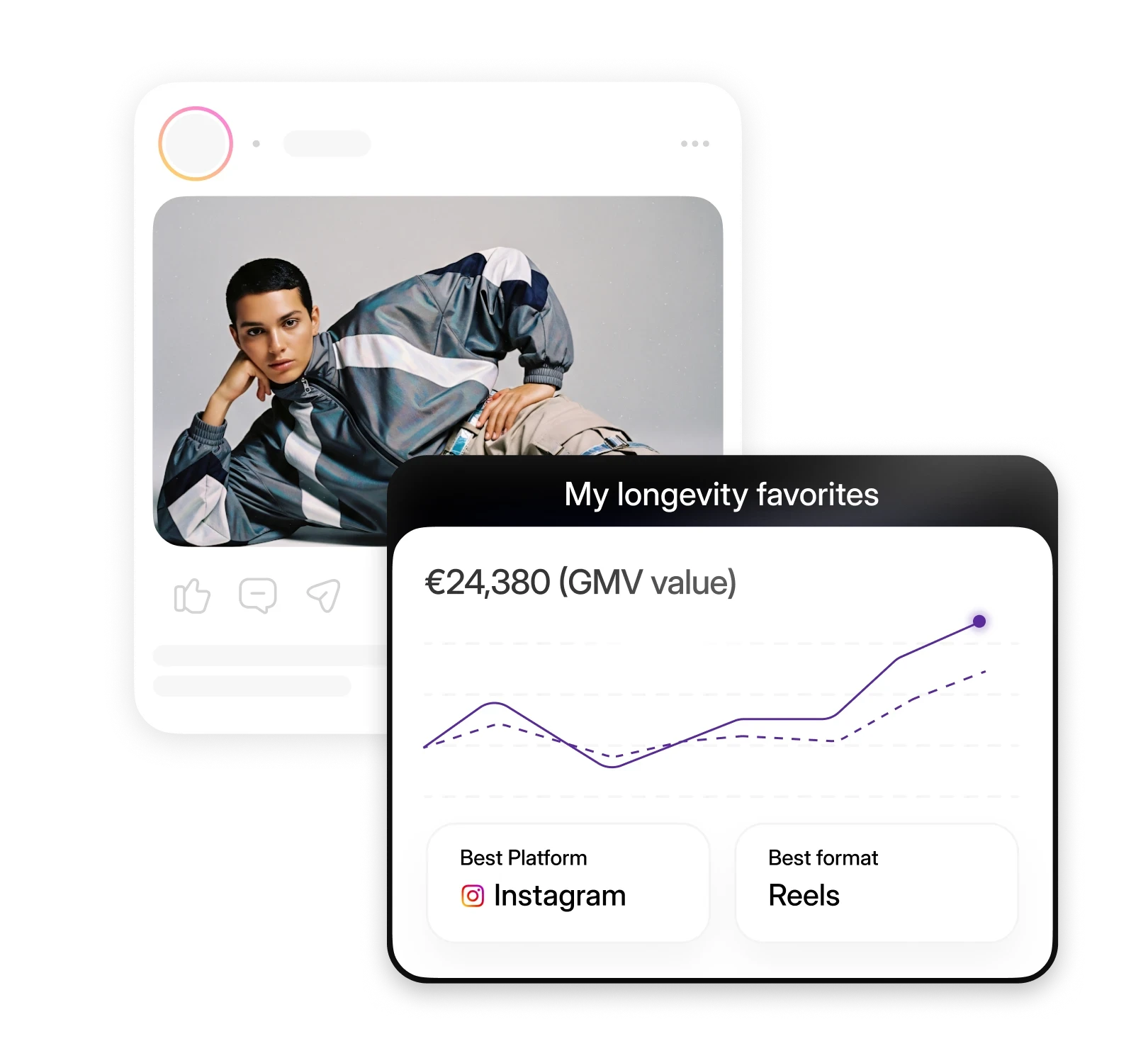
Why Traditional Tools Fail for Marketplace Creator Programs
Affiliate Networks Were Not Built for Storefronts
Traditional affiliate platforms like ShareASale or CJ track clicks and conversions through links, but they do not provide creators with dedicated, branded storefront experiences. They treat creators as link distributors, not as curated shopping destinations. For marketplaces that want to embed creator-driven shopping experiences, affiliate link tracking alone is insufficient.
Influencer Marketing Platforms Focus on Campaigns, Not Commerce
Tools like AspireIQ or Grin manage campaign workflows — briefs, contracts, content approvals — but they stop at the point of content delivery. They do not generate shoppable storefronts, sync with multi-vendor product catalogs, or track storefront-level GMV. The gap between content creation and commerce conversion remains unaddressed.
E-commerce Platforms Lack Creator Infrastructure
Shopify, WooCommerce, and marketplace platforms like Mirakl handle product listings and transactions but have no native concept of a creator storefront. Building custom storefront pages for each creator requires engineering resources that most marketplace operations teams cannot justify.
Spreadsheets and Manual Processes Do Not Scale
Many marketplace teams start by managing creator relationships in spreadsheets, tracking commissions in Google Sheets, and organizing content in shared drives. This works for 10 creators. At 100 or 500 creators across multiple vendors, manual processes generate errors, delays, and lost revenue opportunities that compound weekly.
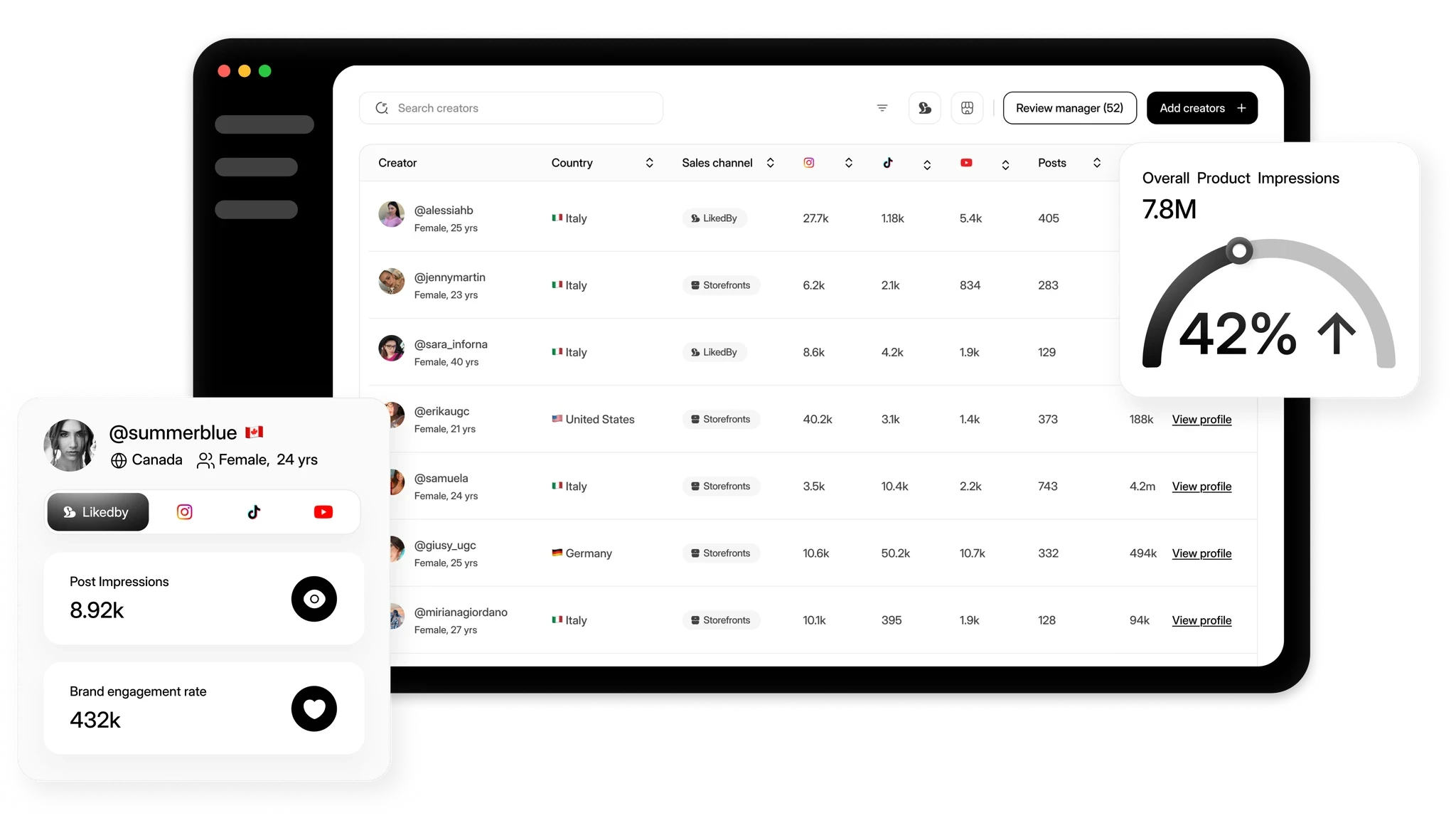
How Socialscale Powers Creator Storefronts for Online Marketplaces
Socialscale is the operating system for social commerce, purpose-built to help marketplace teams run creator programs end-to-end. Rather than stitching together affiliate trackers, content management tools, and analytics dashboards, Socialscale unifies creator onboarding, storefront management, content organization, and performance tracking in a single creator platform.
For online marketplaces, this means you can launch multi-vendor influencer storefront integrations without custom engineering. Each creator gets a personalized storefront populated with curated products from your vendor catalog. Content flows through structured approval workflows, and every click, add-to-cart, and purchase is attributed back to the creator, the vendor, and the campaign that drove it.
The platform's creator CRM lets marketplace teams segment creators by category, audience demographics, performance tier, and vendor affiliation — so you always know which creators to activate for which vendor campaigns. Meanwhile, creator analytics surfaces storefront-level metrics including conversion rate, average order value, and GMV contribution per creator, giving your team the data needed to optimize commission structures and double down on top performers.
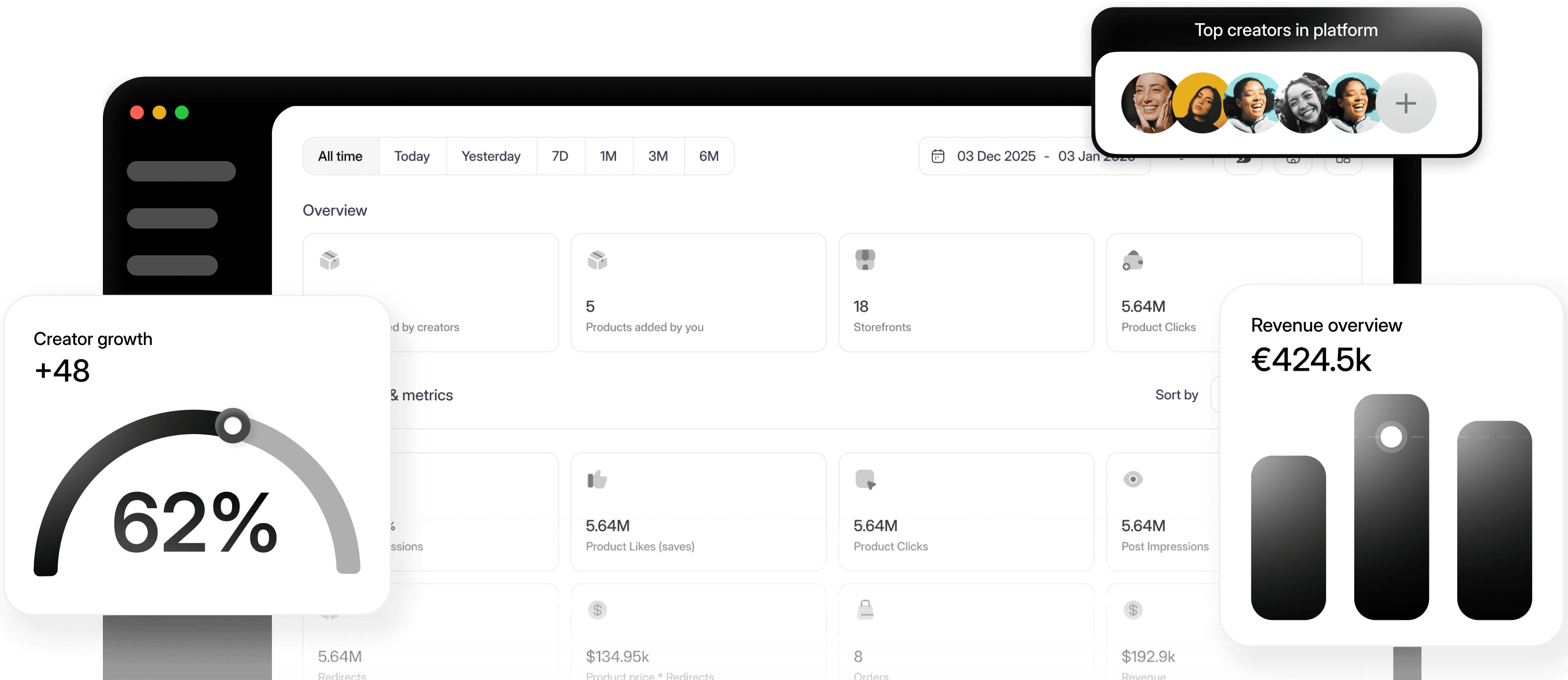
Feature Breakdown: Creator Storefronts for Marketplaces
Personalized Creator Storefronts
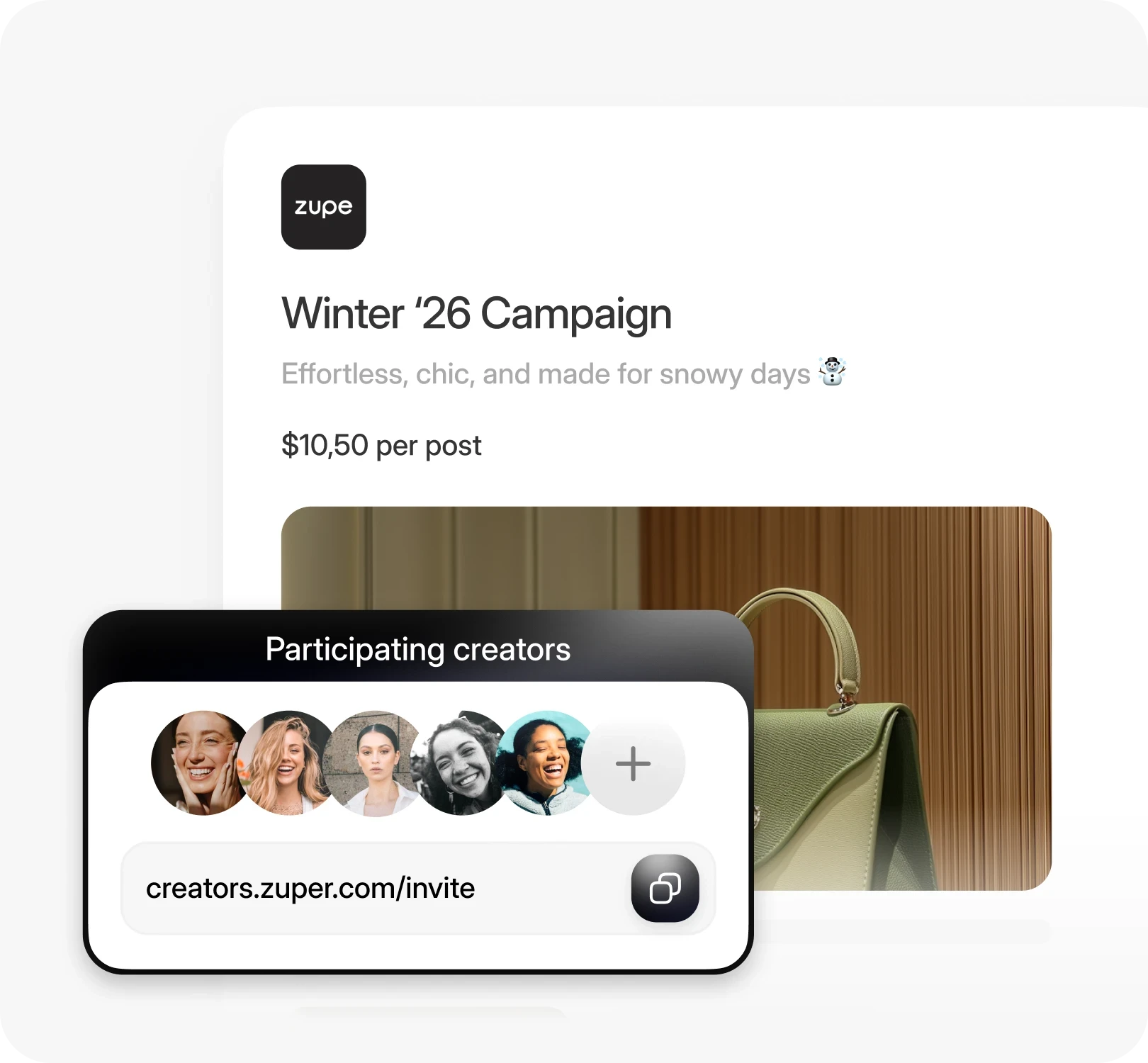
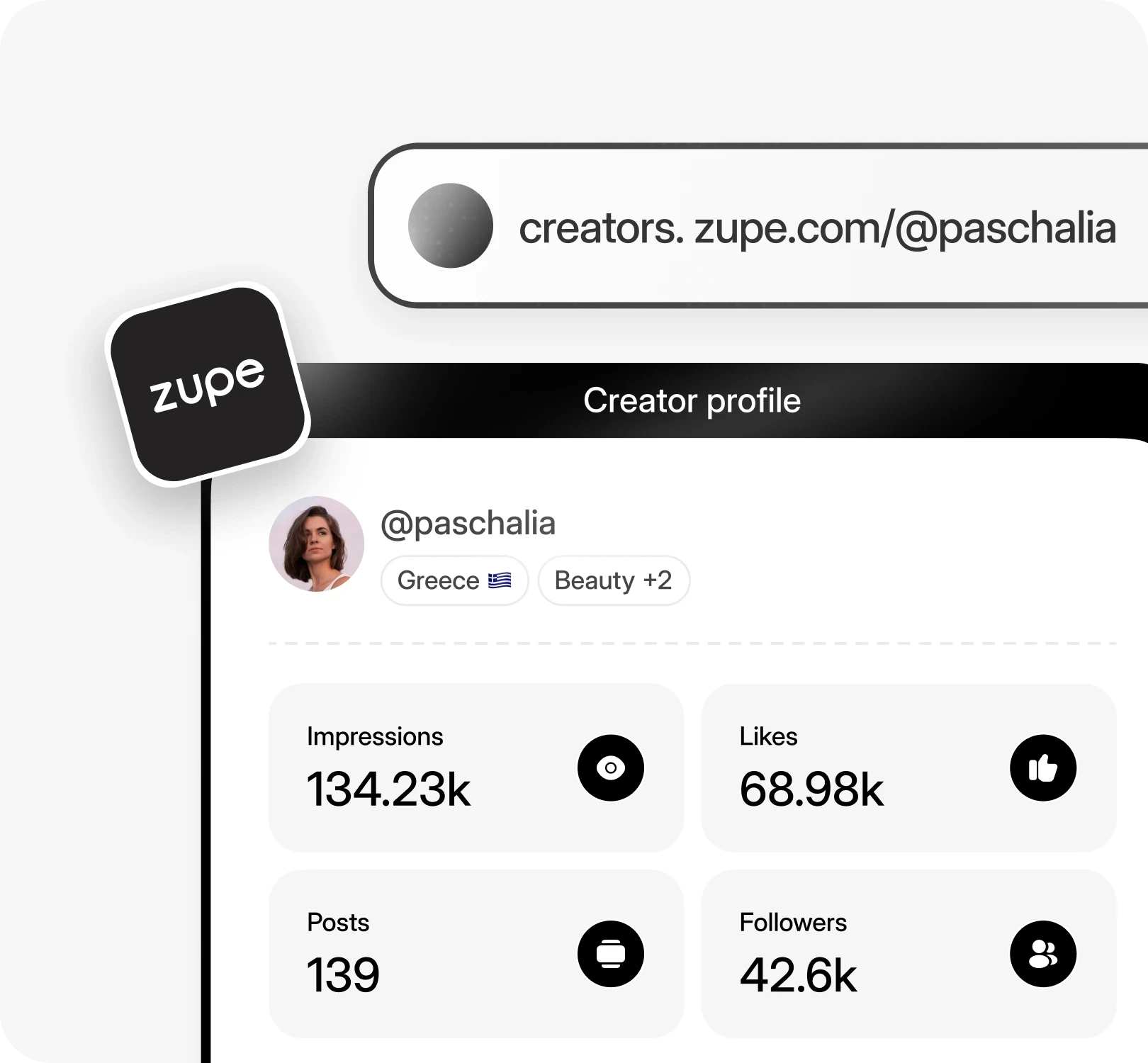
Each creator receives a dedicated storefront page that can be customized with their branding, bio, and curated product selections from your multi-vendor catalog. Storefronts update dynamically as inventory, pricing, and product availability change across vendors, ensuring buyers always see accurate, shoppable content.
Multi-Vendor Product Assignment
Marketplace teams can assign products from specific vendors to specific creators based on category fit, audience alignment, or campaign objectives. Bulk assignment tools let you populate storefronts for dozens of creators simultaneously when launching vendor-specific promotions or seasonal campaigns.
Shoppable Content Embedding
Creator-generated content — product reviews, styling videos, unboxing reels — can be embedded directly into storefront pages as shoppable widgets. Buyers browse creator content and purchase without leaving the storefront experience, shortening the path from discovery to checkout. These creator widgets can also be deployed across your marketplace's category pages, homepage, and product detail pages.
Creator Onboarding and Segmentation
Structured onboarding flows capture creator details, social profiles, audience demographics, content preferences, and vendor affiliations. Creators are automatically segmented within the CRM, making it easy to filter and activate the right creators for vendor-specific or category-specific campaigns.
Content Approval Workflows
Before content goes live on a storefront or gets embedded on marketplace pages, it passes through configurable approval workflows. Vendor-specific guidelines can be attached to approval steps, ensuring that content meets each seller's brand standards without requiring vendors to manage creators directly.
Centralized Content Storage
All creator assets — photos, videos, captions, usage rights documentation — are stored in a centralized content drive organized by creator, vendor, campaign, and content type. Marketplace teams can search, filter, and repurpose approved assets across marketing channels without hunting through email threads or cloud folders.
Performance Attribution and Reporting
Every storefront interaction is tracked: page views, product clicks, add-to-carts, completed purchases, and revenue generated. Attribution flows through to the vendor level, so marketplace teams can report back to sellers on exactly how much GMV each creator storefront drove for their products.
Commission Tracking
Variable commission structures — per vendor, per product category, per creator tier — are configured within the platform. Earned commissions are calculated automatically based on attributed sales, reducing manual reconciliation and payout errors.
Use Cases: Creator Storefronts in Online Marketplaces
1. Vendor-Sponsored Creator Campaigns
A fashion marketplace runs a spring collection launch where five apparel vendors each sponsor a set of creators. Each creator's storefront features curated looks from the sponsoring vendor alongside complementary products from other sellers. The marketplace team tracks which vendor-creator pairings generate the highest conversion rates and uses that data to structure future sponsorship packages. Vendors receive detailed performance reports showing storefront-attributed revenue, giving them confidence to reinvest in creator partnerships.
2. Category-Specific Affiliate Creator Programs
A home goods marketplace recruits interior design influencers to build storefronts organized by room type — kitchen, living room, bedroom, bathroom. Each storefront pulls products from multiple vendors within the relevant category. Creators earn tiered commissions based on monthly GMV thresholds, incentivizing them to actively promote their storefronts. The marketplace team monitors storefront freshness weekly, swapping out discontinued products and featuring new vendor arrivals to keep content relevant.
3. Seasonal Marketplace Events with Creator Storefronts
During Black Friday and holiday shopping events, a multi-vendor electronics marketplace activates 200 tech creators with pre-built storefronts featuring the best deals across vendors. Each creator receives a unique storefront URL to share across their social channels. The marketplace team embeds top-performing creator content on the homepage and category landing pages as shoppable galleries, turning creator recommendations into high-converting on-site merchandising. Post-event analysis reveals which creators drove the most new customer acquisitions versus repeat purchases.
4. Micro-Creator Storefront Program for Long-Tail Growth
A beauty marketplace launches a self-serve storefront program targeting micro-creators with 5,000 to 50,000 followers. Creators apply through a branded landing page, complete an automated onboarding flow, and receive a storefront pre-populated with trending products in their beauty subcategory. The marketplace team reviews and approves storefronts in batches weekly, using performance data from the first 30 days to identify breakout creators worth upgrading to higher commission tiers and deeper collaboration opportunities.
Weekly and Monthly Operational Workflow
Running creator storefronts on a multi-vendor marketplace requires consistent operational cadences. Here is a practical workflow that marketplace teams can follow to keep programs running smoothly.
Creator Recruitment and Onboarding (Ongoing / Weekly) — Review inbound creator applications and proactively recruit creators aligned with underperforming or newly onboarded vendor categories. Run new creators through the onboarding flow to capture social profiles, audience data, content samples, and category preferences. Segment creators in the CRM by vendor affiliation and content type.
Storefront Setup and Product Curation (Weekly) — Build storefronts for newly onboarded creators by assigning relevant products from the multi-vendor catalog. For existing storefronts, swap out discontinued or out-of-stock products and feature new vendor arrivals or promotional items. Ensure each storefront reflects current inventory and pricing.
Campaign Briefing and Content Requests (Bi-Weekly) — Send campaign briefs to activated creators through creator collaborations workflows. Include vendor-specific guidelines, key messaging points, product highlights, and content format requirements. Set deadlines aligned with vendor promotional calendars.
Content Review and Approval (Weekly) — Review submitted creator content against vendor brand guidelines. Approve, request revisions, or reject content through the approval workflow. Approved content is automatically published to creator storefronts and made available for embedding across marketplace pages.
Storefront Performance Monitoring (Weekly) — Pull storefront-level performance reports: page views, click-through rates, conversion rates, and attributed GMV per creator and per vendor. Identify underperforming storefronts and flag them for content refresh or creator re-engagement.
Commission Reconciliation and Payout Preparation (Monthly) — Review earned commissions across all creators, verify attribution accuracy, and reconcile against vendor-reported sales data. Prepare payout summaries for finance and communicate earnings to creators.
Vendor Reporting and Program Optimization (Monthly) — Generate vendor-facing reports showing creator-attributed GMV, top-performing storefronts, and content engagement metrics. Use insights to recommend vendor investment in specific creators, adjust commission structures, and plan next month's campaign calendar.
Creator Tier Review and Program Expansion (Monthly) — Evaluate creator performance against tier thresholds. Promote high-performing creators to higher commission tiers or exclusive collaboration opportunities. Identify new vendor categories that need creator coverage and initiate targeted recruitment.
Key Performance Metrics for Creator Storefront Programs
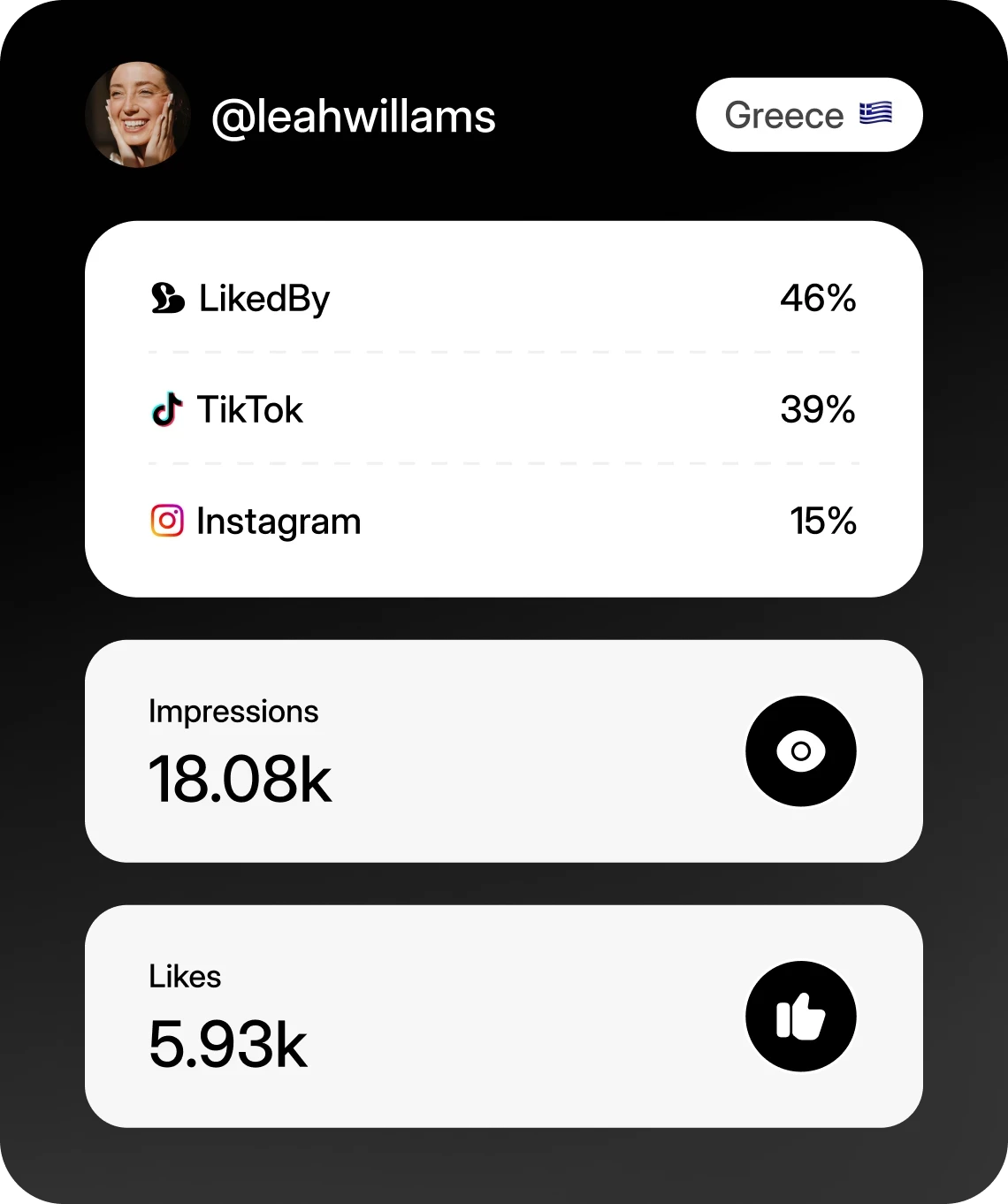
Marketplace teams should track these KPIs to measure the health and ROI of their creator storefront programs.
Creator Activation Rate — Percentage of onboarded creators who have published and actively promoted their storefronts within the first 30 days.
Content Approval Turnaround Time — Average number of business days between content submission and final approval. Target under 48 hours to maintain creator momentum.
Content Output per Creator — Number of approved content pieces (photos, videos, posts) produced per creator per month. Benchmark against program tier expectations.
Storefront Click-Through Rate (CTR) — Percentage of storefront visitors who click on a product. Indicates how well creators curate and present products.
Storefront Conversion Rate (CVR) — Percentage of storefront product clicks that result in a completed purchase. Measures the quality of creator-audience-product fit.
Gross Merchandise Value (GMV) per Creator — Total attributed revenue generated through each creator's storefront. The primary metric for evaluating creator ROI.
GMV per Vendor via Creator Storefronts — Revenue attributed to each vendor through creator storefronts. Essential for vendor reporting and sponsorship pricing.
Return on Ad Spend (ROAS) for Sponsored Storefronts — For vendor-sponsored creator campaigns, measure revenue generated relative to sponsorship fees and commission payouts.
Cost per Acquisition (CPA) via Creator Storefronts — Total program cost (commissions, content production, platform fees) divided by new customers acquired through storefronts.
Average Order Value (AOV) from Creator Storefronts — Compare AOV from creator storefront traffic versus organic marketplace traffic to quantify the uplift creators provide.
Storefront Freshness Score — Percentage of storefront products that are in-stock, correctly priced, and updated within the last 7 days. Target 95% or above.
Scenario: Multi-Vendor Fashion Marketplace Scales Creator Storefronts
A mid-size online fashion marketplace with 120 vendors and approximately 15,000 SKUs wanted to launch a creator storefront program to compete with larger platforms investing heavily in social commerce. Their team consisted of two influencer marketing managers and one social commerce lead.
Starting Point
The team had been managing 35 affiliate creators through a combination of an affiliate network for link tracking, Google Sheets for commission calculations, Dropbox for content storage, and email for communication. Onboarding a new creator took an average of 8 business days. Content approval cycles averaged 5 days due to back-and-forth with vendors over email. There were no dedicated creator storefronts — creators simply shared affiliate links on social media.
Implementation
The team migrated their creator program onto a centralized creator storefront platform. They onboarded all 35 existing creators within the first week and launched 20 new creator storefronts targeting underserved categories (accessories, sustainable fashion, plus-size). Each storefront was populated with curated products from 3–8 relevant vendors. Content approval workflows were configured with vendor-specific guidelines pre-loaded, eliminating the need for email-based reviews.
Results After 90 Days
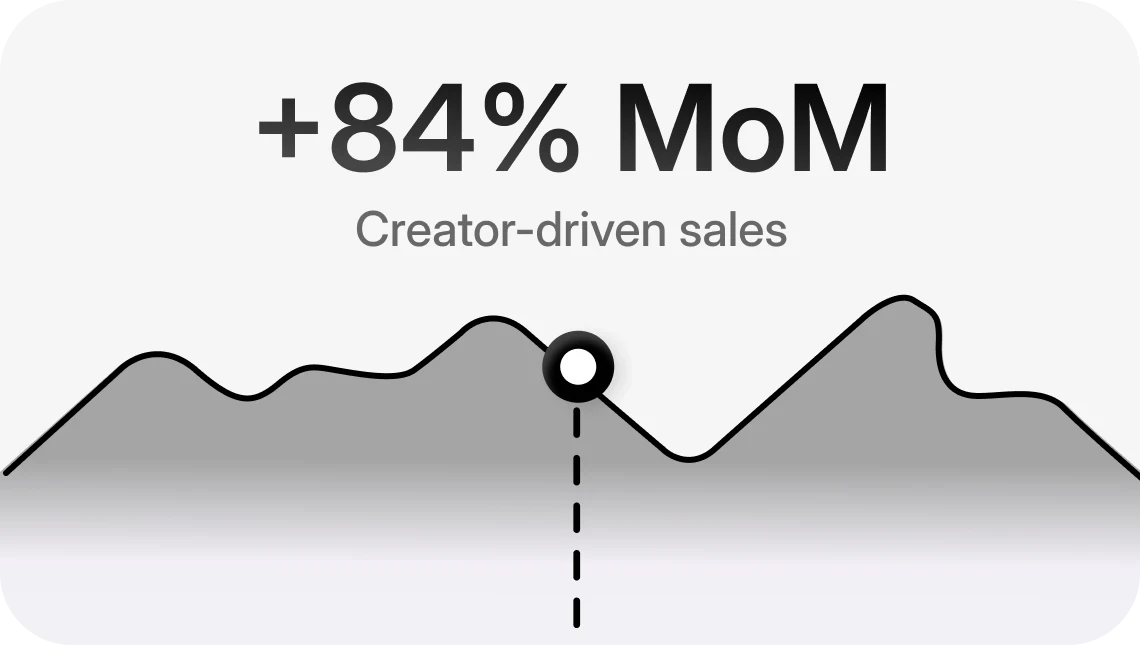
The marketplace scaled from 35 to 82 active creators. Average onboarding time dropped from 8 days to 1.5 days. Content approval turnaround decreased from 5 days to 1.2 days. Creator storefronts generated 14% of total marketplace GMV, up from 4% when using affiliate links alone. Average order value from storefront traffic was 22% higher than organic marketplace traffic. Three vendors signed quarterly sponsorship deals to fund dedicated creator storefronts for their brands, generating an additional revenue stream for the marketplace. The team identified their top 10 creators by GMV contribution and upgraded them to an exclusive tier with higher commissions and early access to new vendor collections, resulting in a 31% increase in content output from that cohort.
Frequently Asked Questions
How does a creator storefront differ from a standard affiliate link program?
An affiliate link program gives creators a trackable URL to share. A creator storefront gives each creator a dedicated, branded shopping page with curated products, embedded shoppable content, and a browsing experience that mirrors the creator's personal brand. Storefronts keep buyers within your marketplace ecosystem rather than sending them to a generic product page, which typically results in higher conversion rates and average order values compared to bare affiliate links.
Can creator storefronts work with a multi-vendor catalog where different vendors have different commission rates?
Yes. A properly built creator storefront platform supports variable commission structures at the vendor level, category level, and even individual product level. When a buyer purchases through a creator's storefront, the system attributes the sale to the correct vendor and calculates the creator's commission based on the applicable rate for that specific product and vendor combination.
How do marketplace teams keep creator storefronts updated as vendor inventory changes?
Storefronts are connected to the marketplace's product catalog via API or direct integration. When a vendor marks a product as out of stock, updates pricing, or adds new SKUs, the storefront reflects those changes automatically. Marketplace teams can also manually curate storefronts on a weekly basis to feature seasonal items, promotional products, or new vendor arrivals.
What kind of content can be embedded in creator storefronts?
Creator storefronts can feature product photos, short-form videos (Reels, TikToks), long-form YouTube reviews, written product descriptions, and styled lookbook images. All content can be made shoppable, meaning buyers can click on items within the content and add them to cart directly. The content is stored centrally and can be repurposed across marketplace category pages, email campaigns, and paid media.
How long does it take to launch a creator storefront program on a marketplace?
For a marketplace with an existing vendor catalog and a pool of creator relationships, initial setup — including platform configuration, catalog sync, and onboarding the first cohort of creators — typically takes two to four weeks. Teams that already have creator contact lists and content guidelines in place can move faster. The first storefronts can be live and generating traffic within the first month.