Creator Storefronts for Performance Agencies
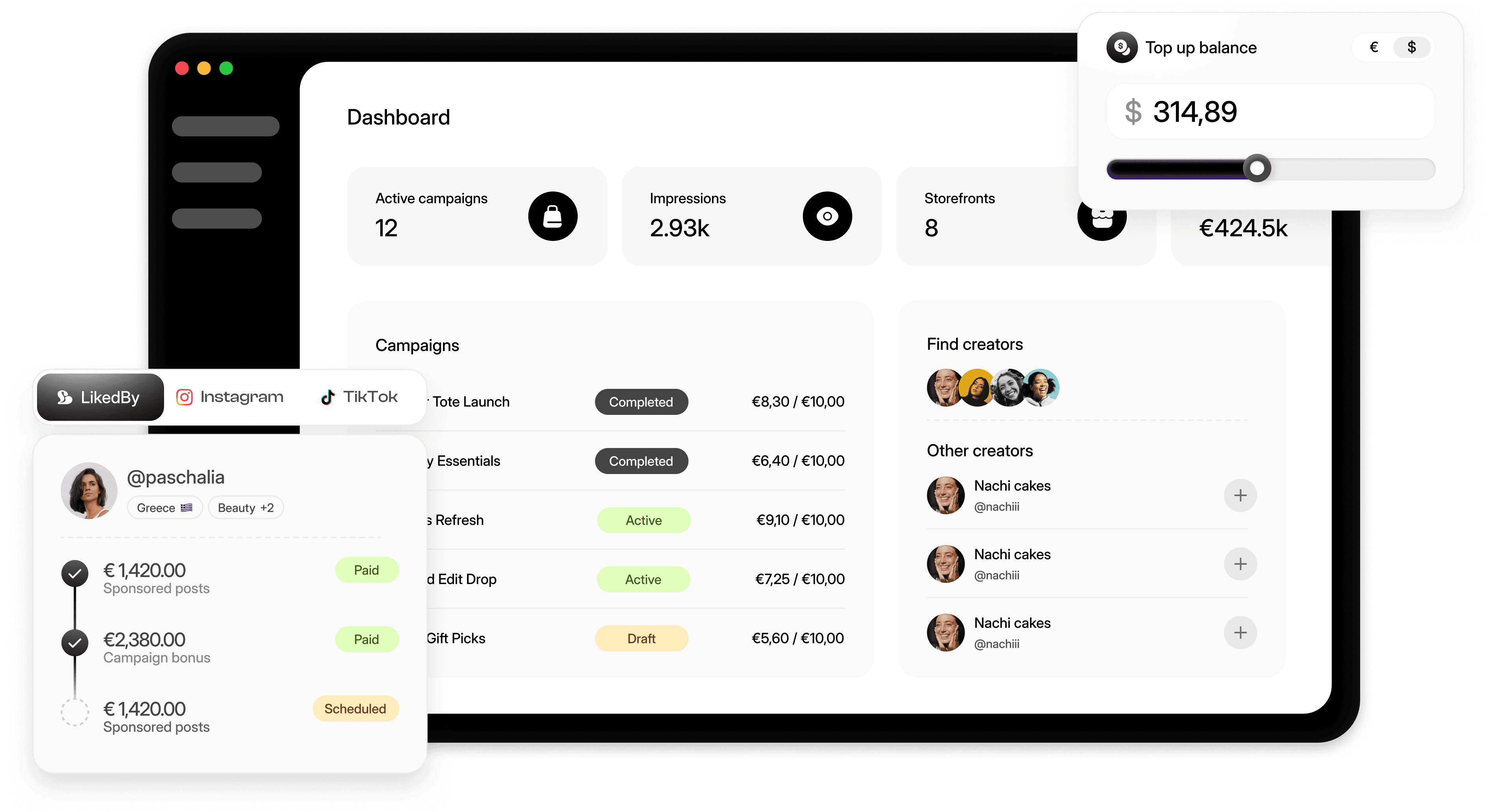
Performance agencies live and die by measurable outcomes. Every dollar spent on creator partnerships needs to trace back to clicks, conversions, and revenue. Yet most agencies still manage creator storefronts through a patchwork of affiliate links, manual landing pages, and disconnected tracking — losing attribution data and leaving money on the table.
A creator storefront for performance agencies changes this equation entirely. Instead of routing traffic to generic product pages, each creator gets a dedicated, shoppable destination that captures purchase intent at the moment of highest engagement. This is the infrastructure layer that turns social commerce from a brand-awareness play into a measurable revenue channel with clear cost-per-acquisition and return-on-ad-spend metrics.
For agencies managing dozens or hundreds of creators across multiple brand clients, the operational challenge is enormous. You need storefronts that deploy fast, update dynamically with product feeds, attribute every sale accurately, and report performance in real time — all without requiring engineering resources from your clients. That is exactly the gap a purpose-built creator storefront system is designed to fill.
Attribution Breaks Across Creator Touchpoints
Performance agencies depend on clean attribution. When a creator posts a story, links to a bio page, and the customer eventually purchases through a retargeting ad, most storefront setups lose the original creator touchpoint. Agencies end up unable to prove which creators actually drove revenue, undermining client confidence and commission accuracy.
Manual Storefront Setup Does Not Scale
Building individual landing pages or curated product collections for each creator is labor-intensive. When an agency manages 50+ creators per brand client, and each creator needs a personalized storefront with specific product selections, the manual workload becomes unsustainable without dedicated dev resources.
Product Catalog Sync Issues
Creators promote products that go out of stock, change price, or get discontinued. Without real-time catalog sync, storefronts display outdated information that damages conversion rates and creates customer service headaches for the brand client.
Inconsistent Creator Experience
When every brand client uses a different storefront tool, creators face a fragmented experience — different login portals, different link formats, different commission dashboards. This friction slows activation and increases creator churn across the agency's roster.
Lack of Real-Time Performance Visibility
Agencies need to report weekly or even daily on creator-driven revenue. Most storefront solutions batch-process sales data with 24–72 hour delays, making it impossible to optimize campaigns in flight or reallocate budget to top-performing creators mid-campaign.
No Connection Between Content and Commerce
The content a creator produces and the storefront they drive traffic to exist in separate systems. Agencies cannot easily see which specific piece of content — a TikTok video, an Instagram Reel, a YouTube mention — drove traffic to which storefront and resulted in which purchases.
Commission and Payout Complexity
Different creators negotiate different commission structures. Some earn flat fees plus performance bonuses, others earn tiered commissions. Managing these varied payout models across dozens of creators and multiple brand clients without a centralized system leads to errors and disputes.
Affiliate Networks Were Not Built for Creator Commerce
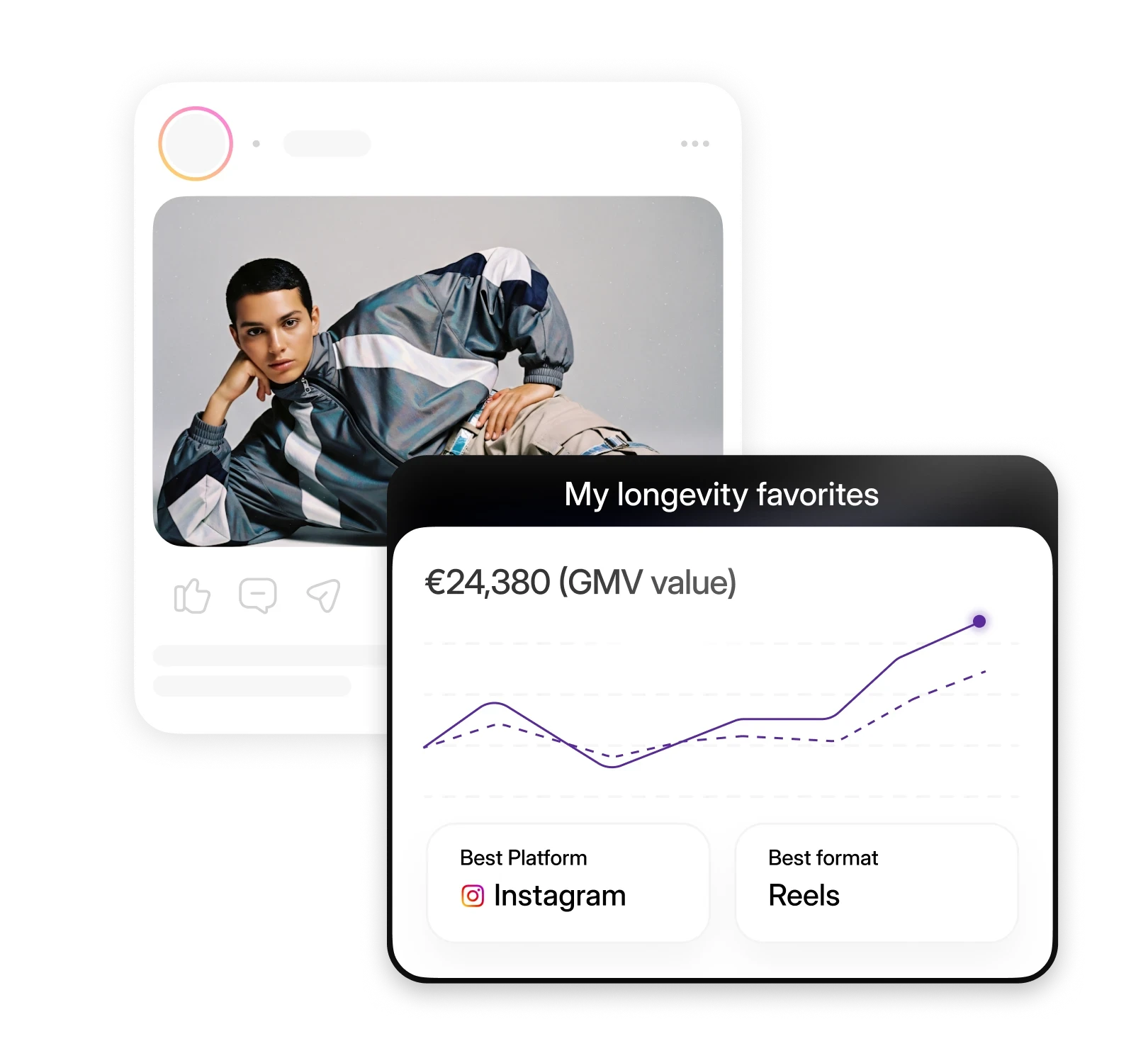
Traditional affiliate platforms like CJ, ShareASale, or Impact treat creators the same as coupon sites and deal bloggers. They provide tracking links but no branded storefront experience. The creator's audience lands on a generic product page with no personalization, no curated collection, and no visual connection to the creator who sent them there. For performance agencies trying to maximize conversion rates, this is a fundamental limitation.
E-commerce Platforms Lack Creator-Level Granularity
Shopify and similar platforms can create collections, but they were not designed to generate and manage hundreds of creator-specific storefronts with individual tracking, commission logic, and performance dashboards. Agencies end up building custom workarounds that break with every platform update.
Influencer Marketing Platforms Stop at the Link
Most influencer marketing software focuses on discovery, outreach, and campaign management. They generate a trackable link or discount code but offer no actual storefront infrastructure. The moment a customer clicks through, the agency loses control of the experience and often the attribution data as well.
Spreadsheets and Manual Reporting Create Bottlenecks
Without a unified system, performance data lives in spreadsheets maintained by different team members. Weekly reporting becomes a multi-hour exercise of pulling data from affiliate dashboards, Google Analytics, and platform-native insights, then manually reconciling numbers that rarely match. This is not a reporting workflow — it is a liability.
Point Solutions Create Integration Debt
Agencies often cobble together a link management tool, a content approval platform, a CRM, and a separate analytics dashboard. Each tool solves one problem but creates new ones: data silos, duplicate creator records, conflicting metrics, and a growing stack of monthly SaaS costs that eat into agency margins.
How Socialscale Powers Creator Storefronts for Performance Agencies
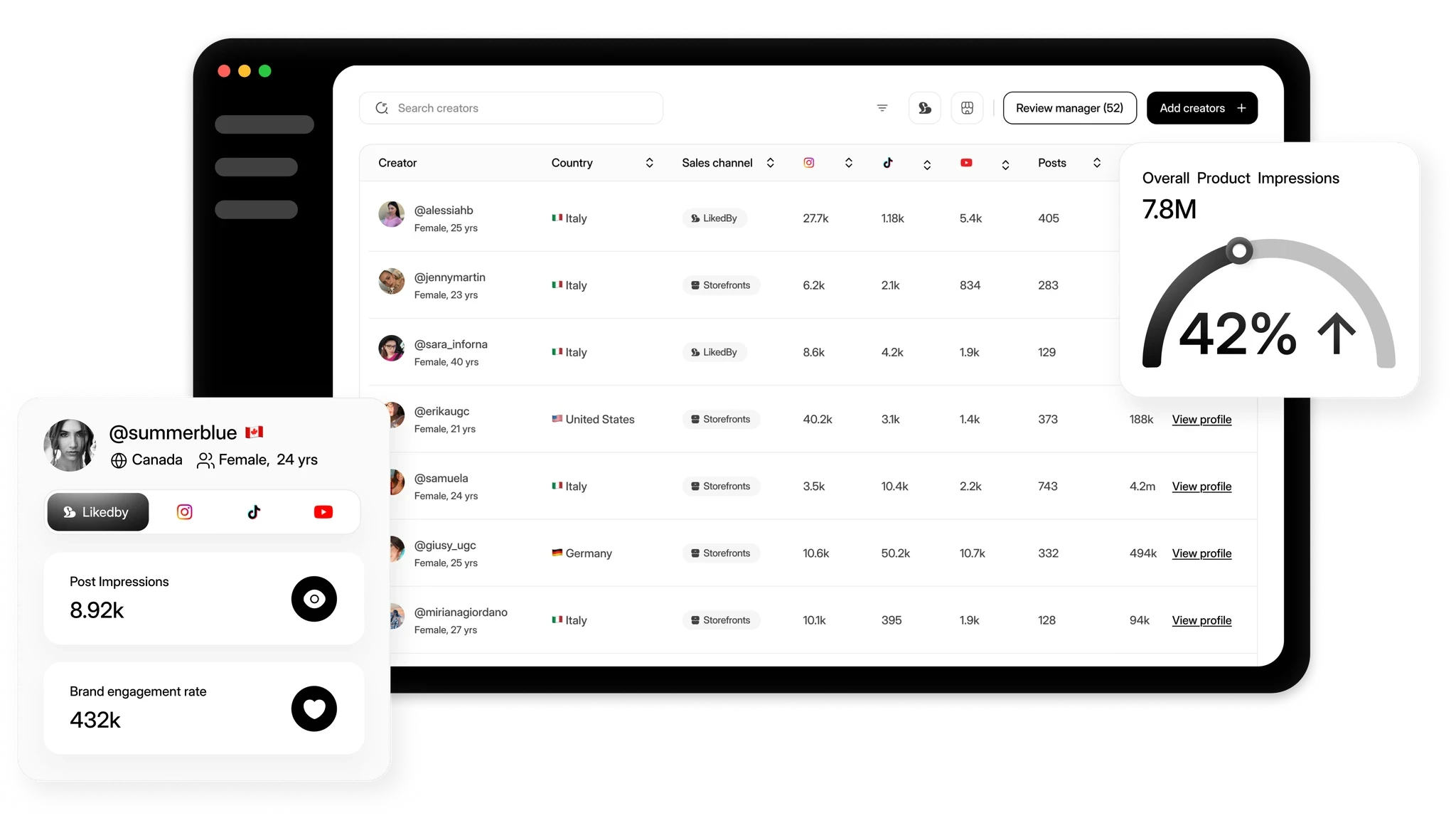
Socialscale provides the end-to-end infrastructure that performance agencies need to launch, manage, and optimize creator storefronts at scale. Rather than stitching together affiliate links, landing page builders, and analytics tools, agencies get a single creator marketing platform that connects creator onboarding, content management, storefront deployment, and performance tracking in one system.
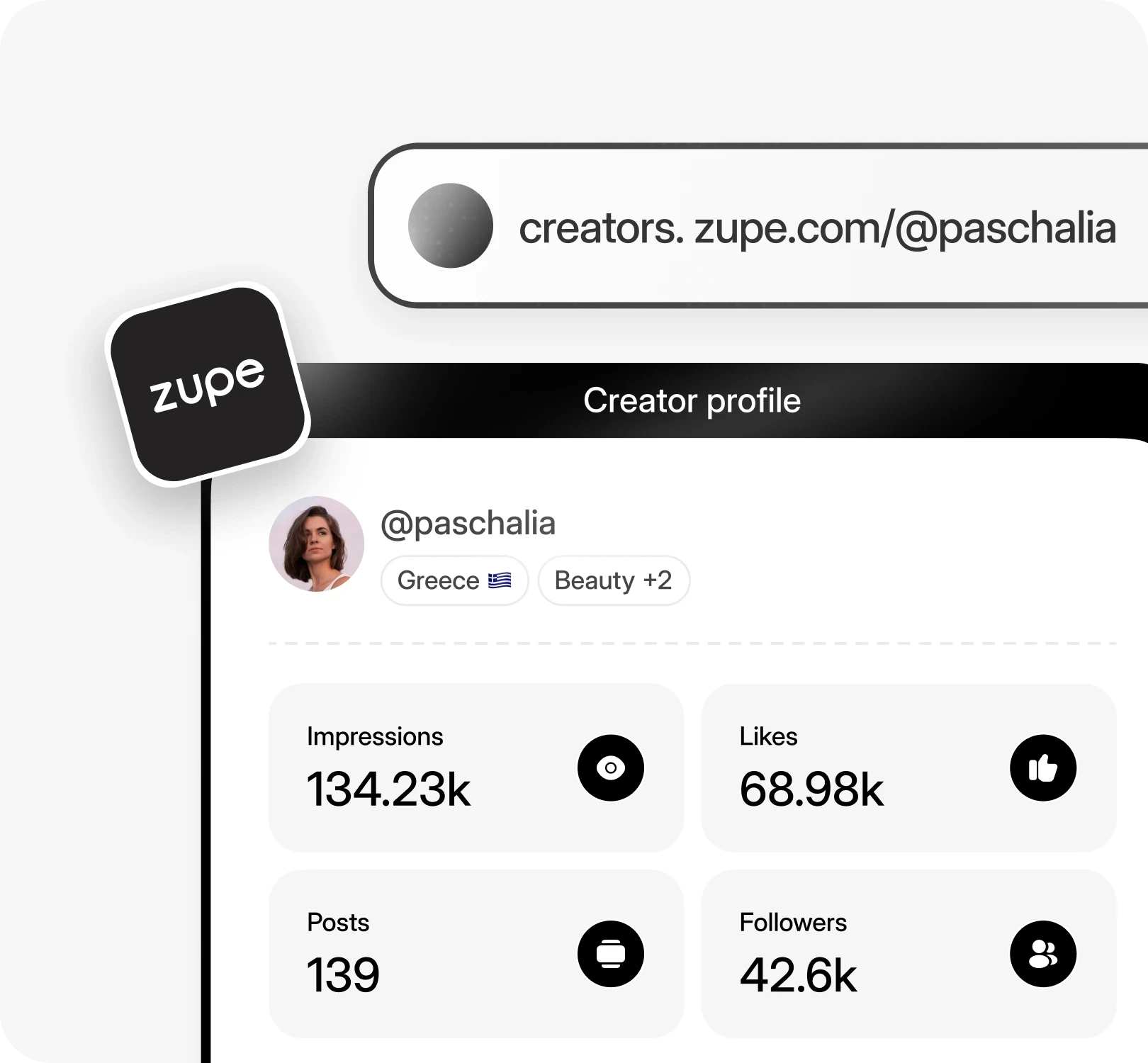
Each creator in your program gets a branded, shoppable storefront populated with curated product selections. These storefronts sync directly with your client's product catalog, so pricing, availability, and imagery stay current without manual updates. When a creator shares their storefront link across TikTok, Instagram, YouTube, or any other channel, every click and purchase is attributed back to that specific creator in real time.
For agencies managing multiple brand clients, Socialscale's creator CRM keeps your entire roster organized with client-specific tags, commission tiers, and activation status. You can see at a glance which creators are active, which storefronts are generating revenue, and which partnerships need attention — across every client account.
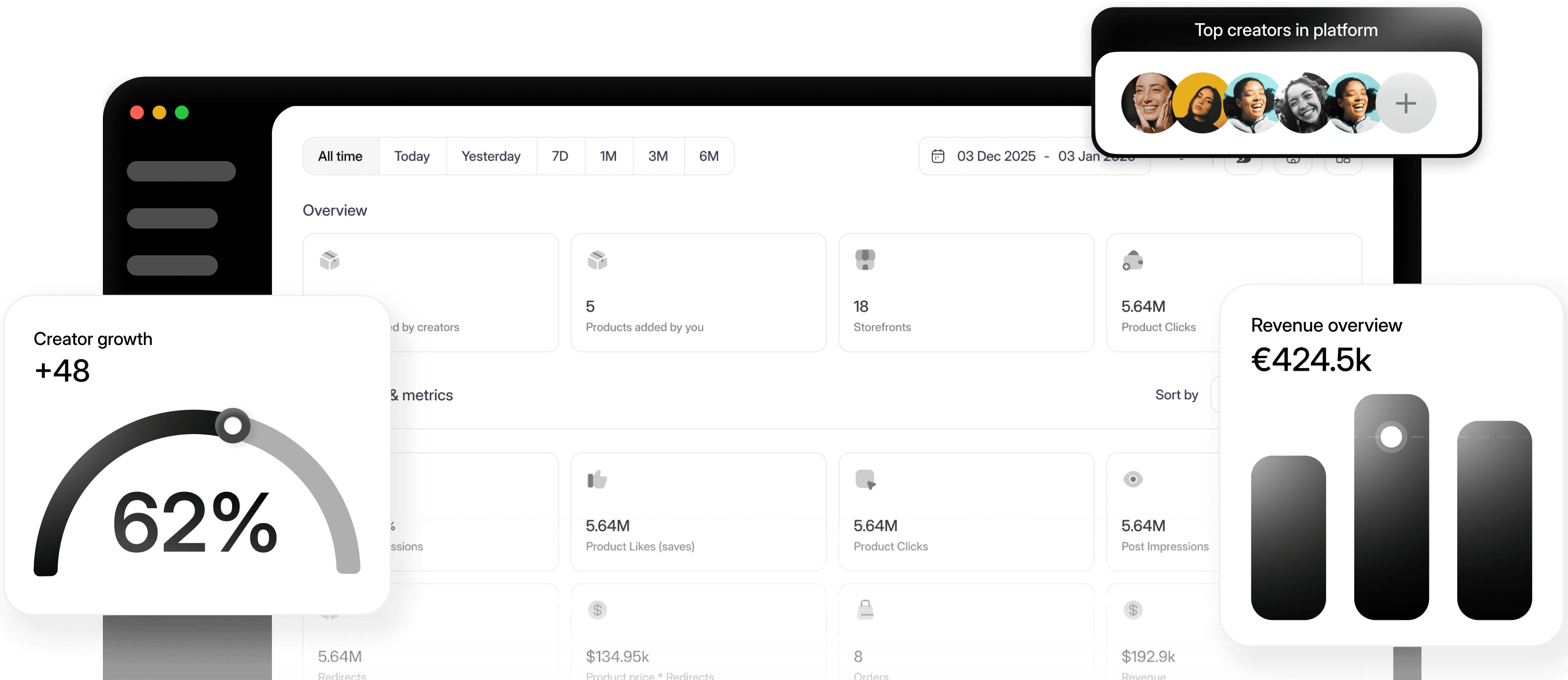
Performance data flows into a centralized creator analytics dashboard where agency teams can track clicks, conversions, average order value, and revenue by creator, by campaign, and by brand client. This eliminates the weekly reporting scramble and gives your team the data they need to optimize in real time.
Feature Breakdown: Creator Storefront Capabilities for Agencies
Automated Storefront Generation
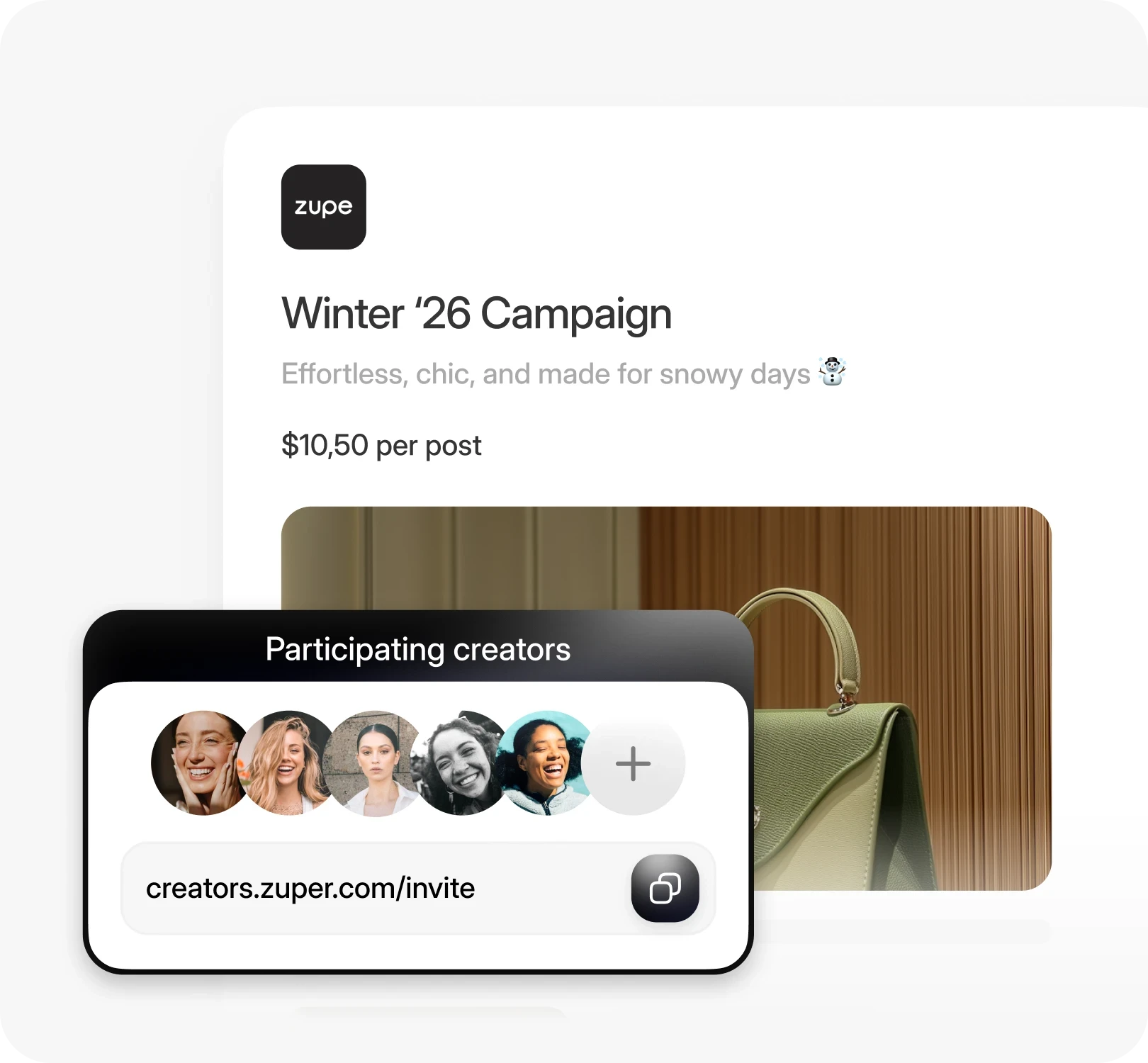
Create personalized storefronts for each creator in minutes, not hours. Select products from your client's synced catalog, apply the creator's branding elements, and generate a unique storefront URL. When you onboard a new creator, their storefront can be live before the kickoff call ends. For agencies running affiliate creator programs with large rosters, this automation is the difference between scaling and stalling.
Real-Time Product Catalog Sync
Storefronts pull directly from your client's product feed. When a product goes out of stock, the storefront updates automatically. When pricing changes for a seasonal promotion, every creator storefront reflects the new price instantly. This eliminates the broken-link and wrong-price issues that kill conversion rates in manual setups.
Shoppable Content Embedding
Go beyond static product grids. Embed the creator's actual content — their TikTok videos, Instagram Reels, and product photos — directly into their storefront as shoppable content. Visitors see the creator's authentic content alongside one-click purchase options. This bridges the gap between content and commerce that most storefront tools ignore. Agencies can also use creator widgets to embed shoppable creator content directly on brand client websites.
Creator-Level Attribution and Tracking
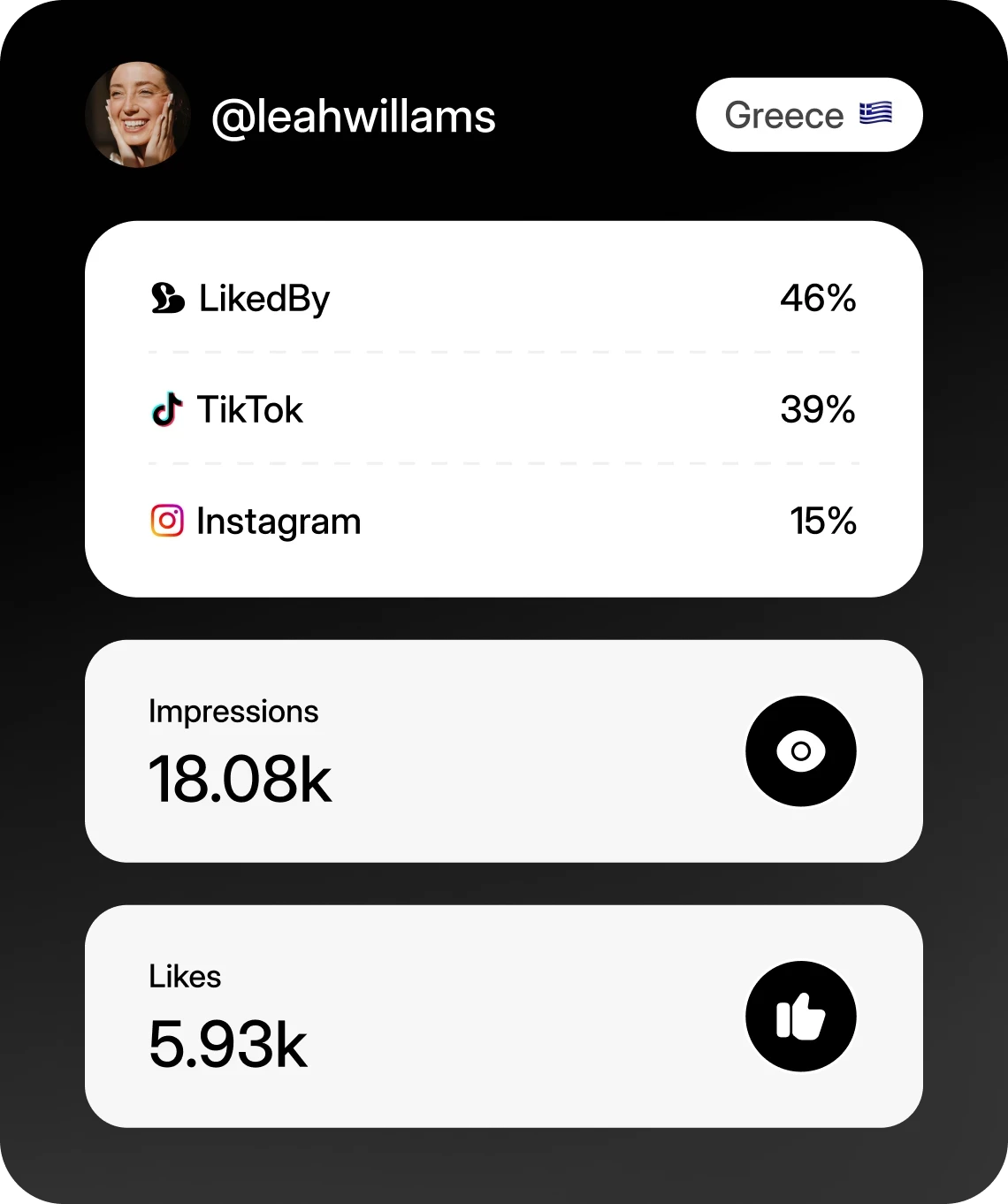
Every storefront generates granular tracking data: unique visitors, click-through rate, add-to-cart events, purchases, revenue, and average order value. Attribution persists across sessions using first-click and last-click models, so agencies can accurately credit creators even when the purchase happens days after the initial click.
Tiered Commission Management
Configure commission structures at the creator level, the campaign level, or the product level. Support flat-rate commissions, percentage-based commissions, tiered bonuses for hitting revenue thresholds, and hybrid models that combine fixed fees with performance incentives. All commission calculations happen automatically based on tracked sales data.
Content Asset Organization
Every piece of content a creator produces for a campaign is stored and organized in a centralized content library. Agencies can tag assets by brand client, campaign, product, content type, and performance tier. This turns your creator content into a searchable, reusable asset library — critical for UGC management at scale and for repurposing top-performing content across paid media.
Multi-Client Workspace Architecture
Performance agencies manage multiple brand clients simultaneously. Socialscale supports workspace-level separation so each brand client has its own creator roster, product catalog, storefront templates, and reporting dashboards. Agency team members can switch between client workspaces without logging into separate accounts.
Bulk Operations and Campaign Deployment
Launch a new campaign across 100 creators with bulk storefront updates, bulk product additions, and bulk commission adjustments. When a brand client runs a flash sale, update every creator storefront in one action rather than editing them individually.
Use Cases: Creator Storefronts in Performance Agency Workflows
Scaling a DTC Beauty Brand's Creator Affiliate Program
A performance agency managing a direct-to-consumer beauty brand needs to onboard 200 micro-creators in a single quarter. Each creator receives a personalized storefront featuring their curated product picks from the brand's catalog. The agency tracks which creators drive the highest conversion rates, identifies the top 20% of performers, and reallocates budget from underperforming partnerships to high-ROAS creators. Storefronts with embedded creator tutorials convert at 3x the rate of standard affiliate links because shoppers see the product in use before purchasing.
Running Multi-Brand Holiday Campaigns
During Q4, a performance agency runs simultaneous holiday campaigns for five brand clients. Each brand has 30–50 active creators, each with their own storefront featuring holiday gift guides and seasonal product bundles. The agency monitors real-time revenue across all five campaigns from a single dashboard, identifies which creators are trending ahead of target, and sends mid-campaign briefs to underperformers with optimized product selections. Commission payouts for all five brands are calculated automatically at campaign close.
Converting Brand Ambassadors into Revenue Drivers
A sportswear brand has an existing ambassador program that generates strong awareness but minimal trackable revenue. The agency transitions ambassadors from discount-code-only tracking to full creator storefronts. Each ambassador's storefront features their favorite products, training content, and shoppable lookbooks. Within 60 days, the agency demonstrates a clear revenue attribution path from each ambassador, turning a cost-center program into a measurable profit driver with transparent CPA metrics.
Testing New Markets with Creator-Led Commerce
An agency helping a home goods brand expand into a new demographic uses creator storefronts as a market testing mechanism. They recruit 40 creators in the target demographic, each with a storefront featuring a curated product assortment. By analyzing which products sell through which creator audiences, the agency generates market intelligence — identifying which product categories resonate with the new demographic, which price points convert, and which content formats drive the highest average order value. This data informs the brand's broader go-to-market strategy.
Weekly and Monthly Operational Workflow for Performance Agencies
Running creator storefronts effectively requires a disciplined operational cadence. Below is a proven workflow that performance agencies can implement to maximize creator-driven revenue across their client portfolio.
Creator Onboarding and Storefront Setup (Day 1–3 of Campaign)
Import your creator roster into the CRM, assign each creator to the appropriate brand client workspace, and generate their personalized storefronts. Curate product selections based on the creator's content niche and audience demographics. Send each creator their storefront URL along with campaign briefs and content guidelines.
Product Catalog Verification (Weekly, Monday)
Review synced product catalogs for each brand client. Confirm that all storefront products are in stock, correctly priced, and displaying current imagery. Flag any catalog issues to the brand client's e-commerce team for resolution before the week's content goes live.
Content Review and Storefront Updates (Weekly, Tuesday–Wednesday)
Review incoming creator content submissions. Approve content that meets brand guidelines and reject or request revisions on content that does not. Update storefronts with newly approved shoppable content — embedding top-performing videos and images directly into the storefront experience.
Mid-Week Performance Check (Weekly, Wednesday)
Pull storefront performance data: clicks, conversion rate, revenue, and average order value by creator. Identify creators whose storefronts are underperforming relative to their traffic volume. Investigate whether the issue is product selection, content quality, or audience mismatch, and take corrective action.
Creator Communication and Optimization (Weekly, Thursday)
Send performance summaries to active creators. Share their storefront metrics, highlight top-selling products, and suggest content angles for the following week. For top performers, offer bonus commission incentives or early access to new product drops to maintain momentum.
End-of-Week Reporting (Weekly, Friday)
Compile weekly performance reports for each brand client. Include storefront-level metrics, creator-level rankings, revenue attribution, and week-over-week trends. Highlight actionable insights: which creators to scale, which to pause, and which product categories are trending.
Monthly Commission Reconciliation (Monthly, First Week)
Calculate commissions for all creators across all brand clients based on the previous month's tracked sales. Verify commission accuracy against storefront attribution data. Process payouts and send earnings statements to creators.
Monthly Strategy Review (Monthly, Second Week)
Analyze monthly performance trends across the entire creator storefront portfolio. Identify patterns in conversion rates by content type, platform, product category, and creator tier. Use these insights to refine creator recruitment criteria, product curation strategies, and commission structures for the following month.
Key Performance Metrics for Creator Storefronts
Performance agencies need to track a specific set of KPIs to evaluate and optimize their creator storefront programs. These are the metrics that matter most when managing storefronts at scale.
Creator Activation Rate: Percentage of onboarded creators who have an active, traffic-generating storefront within the first 14 days of a campaign.
Storefront Click-Through Rate (CTR): Ratio of storefront visits to total impressions on creator content linking to the storefront.
Storefront Conversion Rate (CVR): Percentage of storefront visitors who complete a purchase. Benchmark against standard e-commerce conversion rates (2–4%) and optimize toward 5%+ for high-intent creator traffic.
Average Order Value (AOV): Mean purchase value per storefront transaction. Track by creator to identify which creators drive premium purchases versus volume purchases.
Revenue Per Creator: Total attributed revenue divided by number of active creators. Use this to calculate effective CPA and compare against other acquisition channels.
Gross Merchandise Value (GMV): Total revenue generated through all creator storefronts across a campaign or time period. The top-line metric for client reporting.
Return on Ad Spend (ROAS): Total storefront revenue divided by total creator program cost (fees, commissions, product seeding). Performance agencies typically target 4:1 or higher for mature programs.
Cost Per Acquisition (CPA): Total program cost divided by number of storefront-attributed purchases. Compare against paid media CPA to demonstrate the efficiency of creator-driven commerce.
Content-to-Commerce Ratio: Number of content pieces published versus number of storefront purchases generated. Identifies which content formats and frequencies drive the highest commercial output.
Commission Accuracy Rate: Percentage of commission calculations that require no manual adjustment. Target 99%+ to maintain creator trust and reduce operational overhead.
Content Approval Turnaround Time: Average hours from content submission to approval. Faster approvals mean faster storefront updates and more timely content going live.
Scenario: Performance Agency Scales Creator Storefronts for a Wellness Brand
A mid-size performance agency specializing in health and wellness brands takes on a new client — a supplement company generating $8M annually through paid media but with zero creator-driven revenue. The agency's mandate: build a creator commerce channel that delivers measurable ROAS within 90 days.
Month 1: Foundation
The agency onboards 60 micro-creators (10K–75K followers) across Instagram and TikTok using a structured creator CRM workflow. Each creator receives a personalized storefront featuring a curated selection of 8–12 products based on their content niche (fitness, nutrition, recovery, general wellness). Storefronts are live within 48 hours of creator acceptance. The agency configures a tiered commission structure: 12% base commission with a 3% bonus for creators exceeding $2,000 in monthly storefront revenue.
Month 2: Optimization
After 30 days of data, the agency identifies that storefronts with embedded video content convert at 4.8% versus 2.1% for storefronts with product grids only. They update all 60 storefronts to feature shoppable creator videos above the fold. The agency also identifies 15 underperforming creators whose storefronts receive traffic but generate minimal conversions. After analyzing the data, they swap product selections to better match each creator's audience demographics, resulting in a 40% conversion rate lift for the adjusted storefronts.
Month 3: Scale
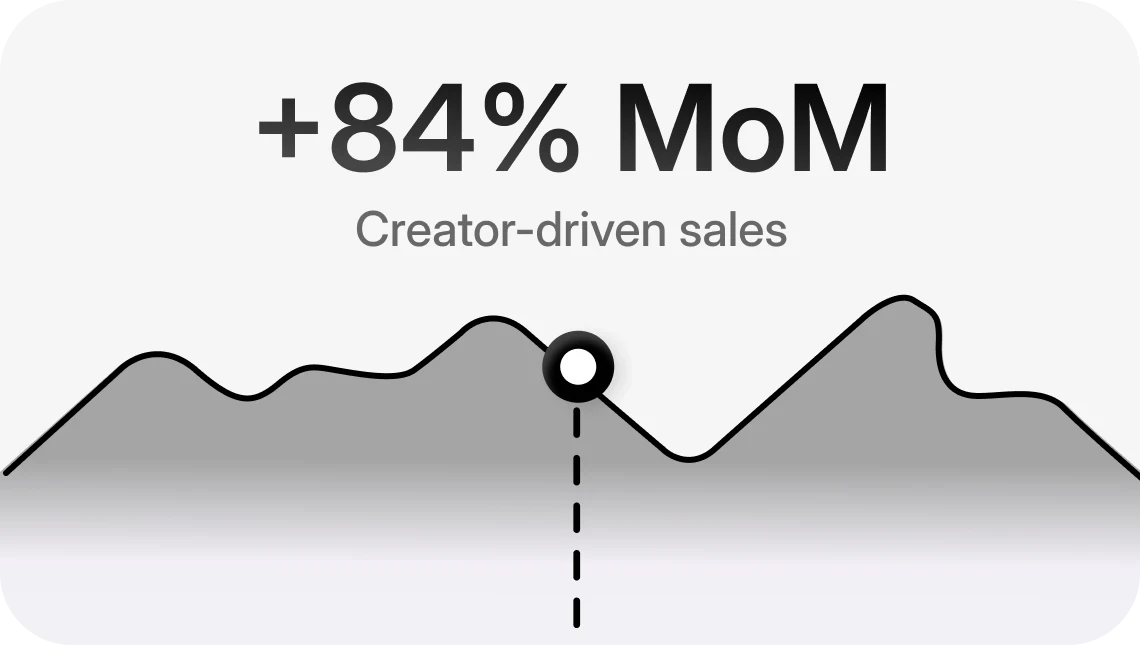
The agency expands the program to 120 creators, using performance data from Month 1–2 to refine recruitment criteria. They prioritize creators with audiences that index high on purchase intent signals. By the end of Month 3, the program generates $127,000 in attributed storefront revenue against $31,000 in total program costs (creator commissions, product seeding, agency management fees), delivering a 4.1:1 ROAS. The average CPA through creator storefronts is $18.40, compared to $34.70 through the brand's paid social campaigns. The agency presents a data-backed case for tripling the creator program budget in Q2.
Frequently Asked Questions
How is a creator storefront different from a standard affiliate link?
An affiliate link sends a customer to a generic product page on the brand's website. A creator storefront is a dedicated, branded shopping destination curated specifically for that creator's audience. It features the creator's selected products, their content, and a cohesive visual experience that maintains the trust the creator has built with their followers. This typically results in higher conversion rates because the shopping experience feels like a natural extension of the creator's recommendation rather than a redirect to an unfamiliar website.
Can we manage storefronts for multiple brand clients from one account?
Yes. Socialscale supports multi-client workspace architecture designed specifically for agencies. Each brand client gets a separate workspace with its own product catalog, creator roster, storefront templates, and reporting dashboards. Agency team members can switch between client workspaces seamlessly, and creator data can be shared across workspaces when a creator works with multiple brands in your portfolio.
How quickly can we launch storefronts for a new campaign?
Once your client's product catalog is synced and your creator roster is imported, individual storefronts can be generated in minutes. For a typical campaign launch with 50 creators, most agencies have all storefronts live within 1–2 business days. Bulk operations allow you to assign products, configure commissions, and activate storefronts in batches rather than one at a time.
What happens when a product goes out of stock on a creator's storefront?
Storefronts sync with the brand's product catalog in real time. When a product's inventory drops to zero, it is automatically flagged or hidden on the storefront so customers do not attempt to purchase unavailable items. When the product is restocked, it reappears automatically. This eliminates the broken experience that damages conversion rates and customer trust.
How do we prove ROAS to brand clients using storefront data?
Every purchase made through a creator storefront is attributed to the specific creator and campaign that drove it. You can pull reports showing total storefront revenue, cost per acquisition, and ROAS at the campaign level, the creator level, or the product level. This data is available in real time, so you can share performance updates with clients weekly rather than waiting for end-of-month reconciliation. The attribution model tracks the full journey from content impression to storefront visit to purchase completion.