Creator Storefronts Built for Ecommerce Agencies and Their Clients
Ecommerce agencies manage creator programs across multiple brand accounts, each with its own product catalog, creator roster, and revenue targets. Without a unified storefront system, agencies end up stitching together affiliate links, discount codes, and landing pages across disconnected tools — creating operational drag that erodes margins and frustrates clients.
Creator storefronts change that equation. By giving every creator a branded, shoppable destination tied directly to a client's product catalog, agencies can turn social commerce from a manual, link-heavy process into a scalable revenue channel. Each storefront becomes a living sales page: curated by the creator, powered by real-time inventory, and tracked down to the click.
Socialscale provides the white-label storefront system that ecommerce agencies need to deploy creator storefronts at scale — across every client account, every creator tier, and every campaign. From onboarding creators to embedding shoppable content and measuring storefront-level performance, the platform handles the operational complexity so your team can focus on strategy and growth.
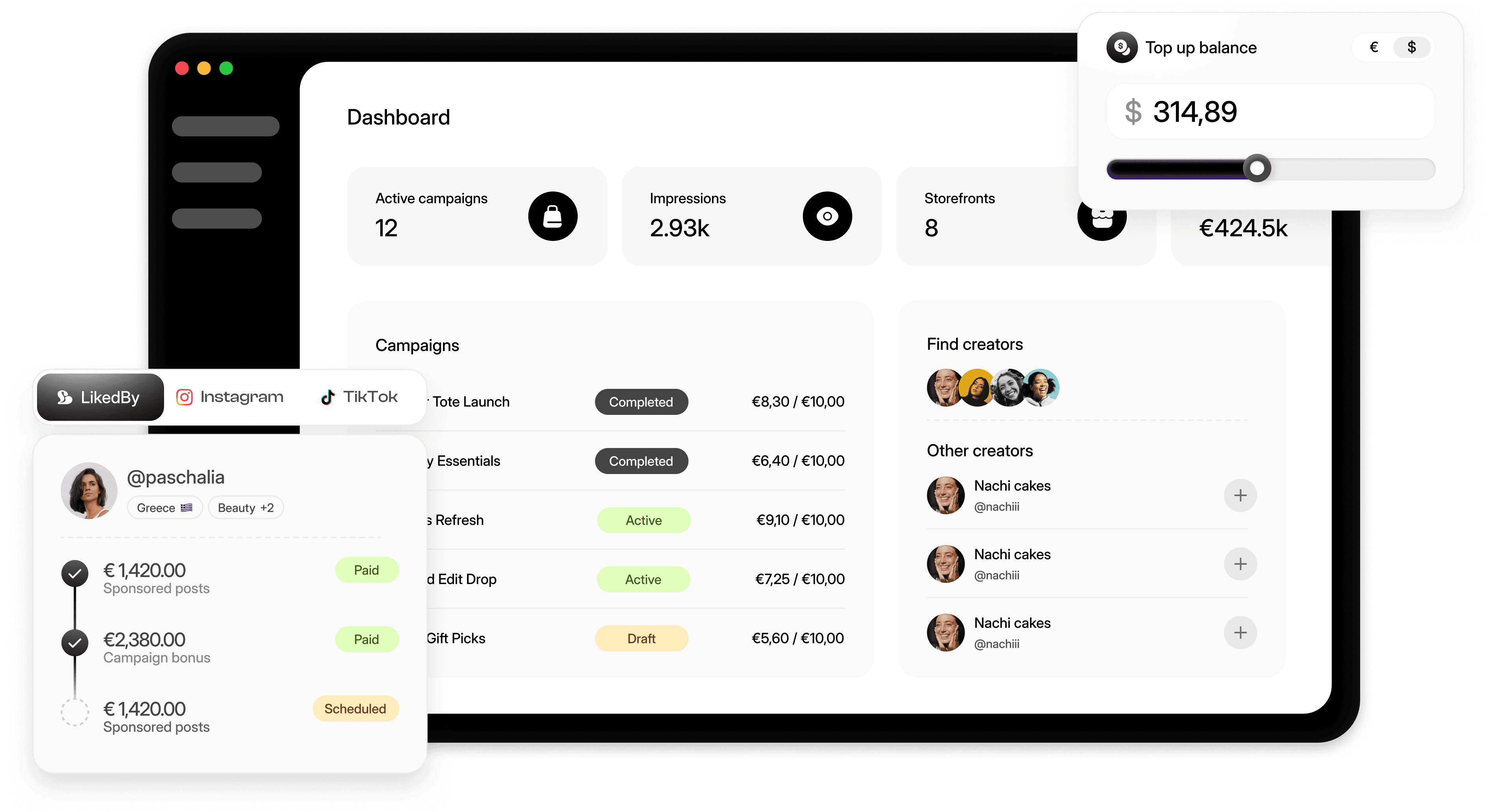
Core Challenges Ecommerce Agencies Face with Creator Storefronts
Running creator storefront programs for multiple clients introduces layers of complexity that most agencies struggle to manage efficiently. Here are the specific pain points that slow teams down.
1. Multi-Client Creator Management Without a Central System
Agencies juggle dozens of creators per client, each needing unique storefront configurations, product selections, and commission structures. Without a centralized creator CRM, teams rely on spreadsheets and email threads that break down at scale.
2. No White-Label Storefront Infrastructure
Most affiliate and influencer tools offer generic link pages, not branded storefronts. Agencies need storefronts that reflect each client's brand identity — fonts, colors, product imagery — without requiring custom development for every account.
3. Content Approval Bottlenecks Across Accounts
When creators produce content for storefronts, that content needs client approval. Agencies managing 10+ brands face a constant queue of assets waiting for review, with no standardized workflow to move them through.
4. Disconnected Performance Data
Storefront clicks, conversions, and revenue are tracked in one tool. Creator engagement lives in another. Campaign spend sits in a third. Agencies waste hours each week assembling cross-platform reports that still lack the granularity clients demand.
5. Inconsistent Creator Onboarding Across Clients
Every new client engagement means rebuilding onboarding flows from scratch — intake forms, contracts, product briefings, storefront setup. The lack of repeatable templates costs agencies 5–10 hours per new client launch.
6. Scaling Affiliate Creator Programs Without Losing Quality
Agencies want to activate more creators per client to drive revenue, but scaling means more storefronts to monitor, more content to approve, and more commissions to track. Quality control degrades as volume increases.
7. Proving Storefront ROI to Retain Clients
Clients want to see direct revenue attribution from creator storefronts — not vanity metrics. Agencies that cannot clearly tie storefront activity to GMV and ROAS risk losing accounts to competitors who can.

Why Traditional Tools Fail Ecommerce Agencies
Affiliate Platforms Were Built for Publishers, Not Creators
Legacy affiliate networks like ShareASale or CJ treat every partner the same — a tracking link and a commission rate. They offer no storefront experience, no content management layer, and no way for agencies to white-label the experience for their clients. The result is a transactional relationship that strips away the brand storytelling creators are hired to deliver.
Influencer Marketing Platforms Stop at Discovery
Tools like Grin, CreatorIQ, or Aspire focus heavily on creator discovery and outreach. But once a creator is recruited, these platforms offer limited storefront functionality. Agencies end up using one tool to find creators, another to build landing pages, and a third to track sales — tripling their tech stack costs and fragmenting their data.
Shopify Collabs Lacks Multi-Client Architecture
Shopify's native creator tools are designed for individual brands, not agencies managing a portfolio. There is no multi-tenant dashboard, no cross-client reporting, and no way to standardize storefront templates across accounts. Agencies using Shopify Collabs end up logging into each client's store individually, which does not scale.
Manual Processes Create Unacceptable Lag
When agencies rely on Google Sheets for creator tracking, Dropbox for content storage, and email for approvals, the average time from creator onboarding to live storefront stretches to 2–3 weeks. In social commerce, that delay means missed product launches, stale content, and lost revenue windows.
How Socialscale Solves Creator Storefronts for Ecommerce Agencies
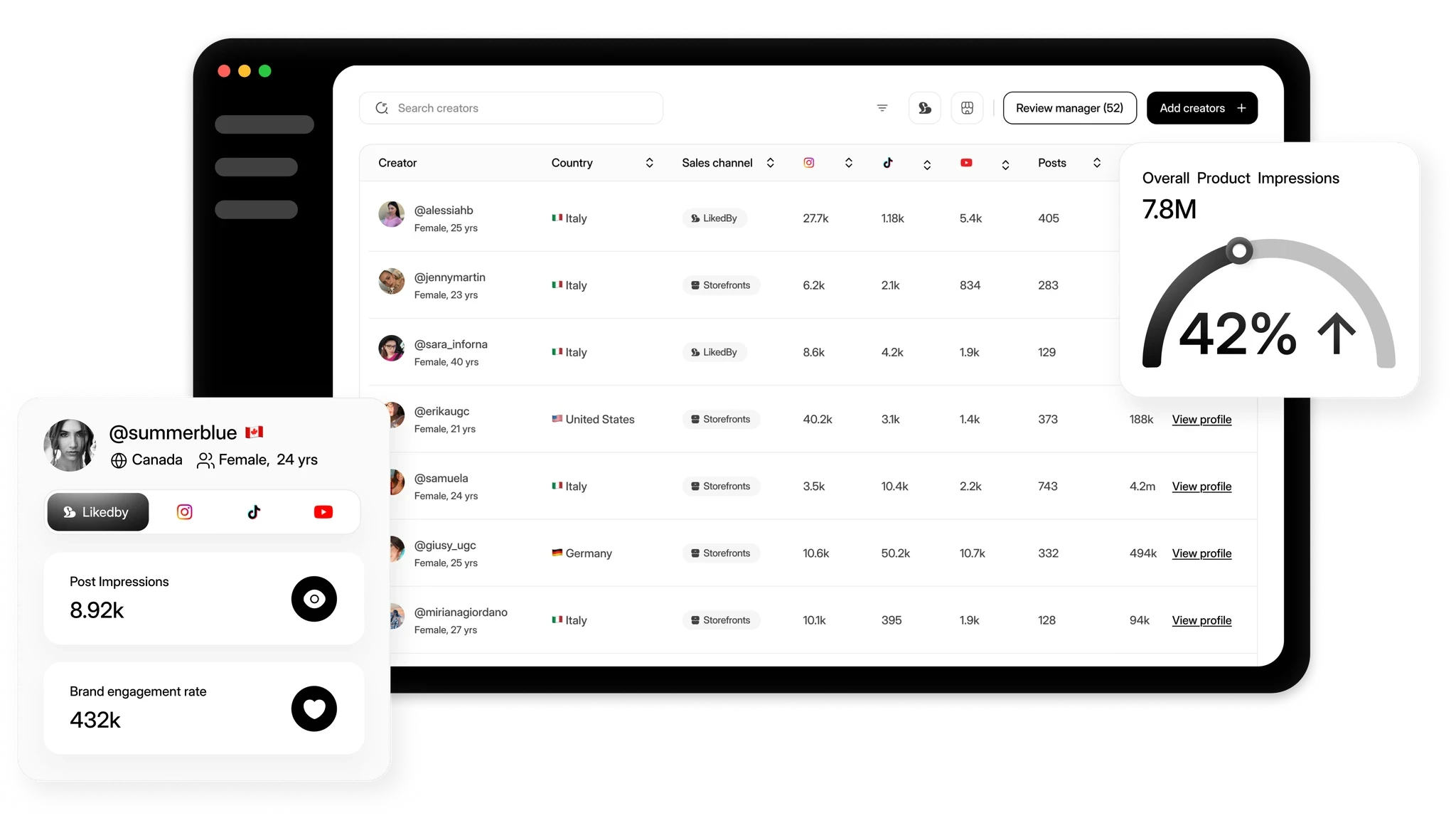
Socialscale is the creator marketing platform purpose-built for agencies that need to deploy and manage creator storefronts across multiple client accounts from a single operating system. Instead of cobbling together affiliate links, landing page builders, and spreadsheet trackers, agencies get an integrated system where every creator gets a branded storefront, every piece of content is organized and approved, and every sale is attributed back to the creator who drove it.
The platform's white-label architecture means each client's storefronts carry their own branding — no Socialscale logos, no generic templates. Agencies configure storefront layouts, product feeds, and commission tiers per client, then activate creators who curate their own product selections within the guardrails the agency sets. Content flows through a structured approval pipeline, and once approved, it populates the storefront automatically.
On the measurement side, Socialscale's creator analytics dashboard gives agencies real-time visibility into storefront-level metrics: visits, add-to-carts, conversions, revenue, and commission payouts. Agencies can generate client-ready reports without exporting data to a separate BI tool. Combined with the built-in creator CRM, teams can track every creator relationship from first outreach through ongoing storefront performance — all in one place.
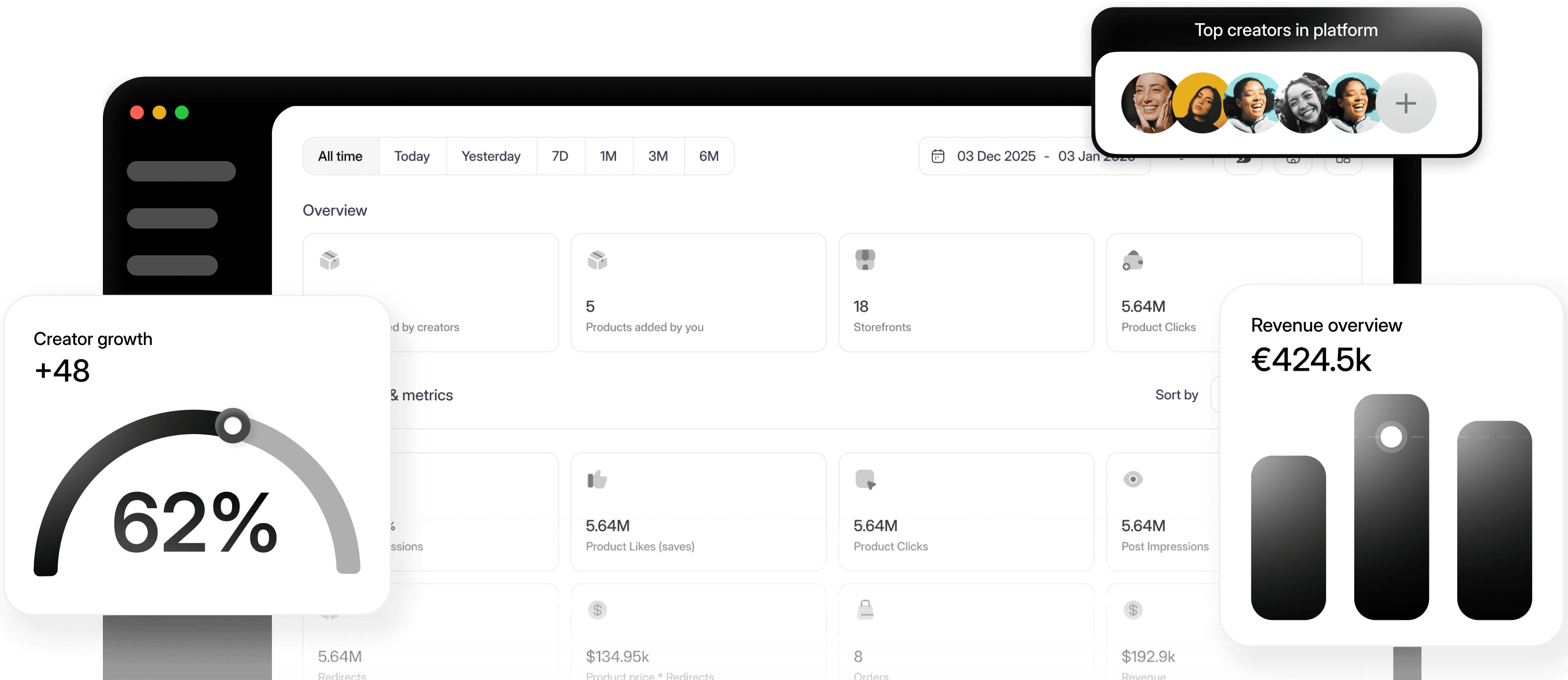
Feature Breakdown: Creator Storefronts in Socialscale
White-Label Storefront Builder
Each client account gets a configurable storefront template that matches their brand guidelines. Agencies set the layout, color palette, typography, and product display format. Creators then personalize their individual storefronts by selecting products, writing descriptions, and adding their own content — all within the brand framework the agency defines. No developer resources required.
Product Catalog Sync
Storefronts pull directly from the client's product catalog, ensuring real-time inventory accuracy, correct pricing, and up-to-date product imagery. When a product goes out of stock, it automatically hides from creator storefronts — eliminating the dead-link problem that plagues manual affiliate setups.
Creator-Level Commission Management
Agencies can set commission structures at the client level, campaign level, or individual creator level. Flat-rate commissions, percentage-based payouts, tiered bonuses for hitting revenue thresholds — all configurable without spreadsheets. Commission data flows directly into storefront analytics so agencies always know their margin per creator.
Content Approval Workflow
Every piece of creator content destined for a storefront passes through a structured review pipeline. Agencies can set approval stages (internal review, client review, final sign-off) and assign reviewers per client account. Content that passes review is automatically published to the creator's storefront. Content that needs revision gets sent back with inline comments — no email chains required.
Shoppable Content Embedding
Creator content approved for storefronts can also be embedded across the client's website, product pages, and email campaigns using creator widgets. This extends the value of every storefront asset beyond the storefront itself, turning UGC into a conversion tool across every owned channel.
Centralized Content Storage
All creator assets — photos, videos, stories, reels — are stored in a centralized content library organized by client, campaign, creator, and content type. Agencies can search, filter, and repurpose assets without digging through Dropbox folders or Slack threads. This is especially critical for agencies managing UGC at volume across 10+ client accounts.
Multi-Client Dashboard
Agencies see all client accounts from a single dashboard. Switch between clients instantly, compare storefront performance across accounts, and identify which creator programs are driving the most revenue. Team members can be assigned to specific client accounts with role-based permissions, ensuring clean separation of data and workflows.

Use Cases: Creator Storefronts in Action for Ecommerce Agencies
These scenarios illustrate how ecommerce agencies can deploy creator storefronts to drive measurable outcomes for their clients.
1. Scaling a DTC Beauty Brand's Ambassador Program
A mid-size ecommerce agency manages a DTC skincare brand with 200 micro-creators. Each creator receives a personalized storefront featuring their top product picks, tutorial videos, and before-and-after photos. The agency uses tiered commissions — 10% base, 15% for creators exceeding $5,000 in monthly GMV — to incentivize performance. Storefronts are promoted through creator Instagram bios and TikTok link-in-bio pages, creating a persistent sales channel that generates revenue between campaign bursts.
2. Launching a Seasonal Campaign Across Multiple Clients
During Q4 holiday season, an agency activates creator storefronts for six clients simultaneously. Each client's storefronts feature curated holiday gift guides assembled by creators. The agency uses the content approval workflow to ensure all gift guide content meets brand standards before going live. Storefront performance is tracked daily, and the agency reallocates creator budgets mid-campaign toward the highest-converting storefronts — a move that increases aggregate client GMV by double digits compared to the prior year's static affiliate links.
3. Converting Organic UGC Creators into Storefront Partners
An agency identifies 50 customers who are already posting about a client's fitness apparel brand organically. Instead of sending one-off discount codes, the agency invites these creators into a storefront program. Each creator gets a branded storefront pre-loaded with the products they have already featured. The agency tracks which organic creators convert at the highest rate and graduates top performers into paid collaboration tiers — building a self-sustaining creator pipeline rooted in authentic advocacy.
4. Providing White-Label Storefront Services as a Revenue Stream
A growth-focused agency adds creator storefronts as a new service offering in its client proposals. By deploying white-label storefronts under each client's domain, the agency positions itself as a full-stack social commerce partner — not just a media buyer. The storefront management fee becomes a recurring revenue line, and the performance data from storefronts strengthens the agency's case for expanded retainers. Within six months, the storefront service accounts for 20% of the agency's new revenue.
Weekly Operational Workflow for Agency Creator Storefront Programs
Managing creator storefronts across multiple clients requires a repeatable cadence. Here is the operational workflow that high-performing ecommerce agencies follow using Socialscale.
Monday: Creator Pipeline Review
Review incoming creator applications and outreach responses in the creator CRM. Score candidates based on audience alignment, content quality, and past conversion data. Move qualified creators into onboarding for the appropriate client account.
Tuesday: Onboarding and Storefront Setup
Send onboarding briefs to newly approved creators, including product catalogs, brand guidelines, and storefront setup instructions. Creators select their products and upload initial content. The agency configures commission tiers and storefront branding per client specifications.
Wednesday: Content Review and Approval
Process the content approval queue across all client accounts. Review creator-submitted photos, videos, and product descriptions against brand standards. Approve compliant content for storefront publication. Send revision requests with specific feedback for content that does not meet guidelines.
Thursday: Storefront Performance Analysis
Pull storefront-level analytics for each client: visits, conversion rates, average order value, and revenue per creator. Identify top-performing storefronts and flag underperformers. Share weekly performance snapshots with client stakeholders.
Friday: Optimization and Creator Communication
Send performance summaries to creators with actionable tips — product recommendations to feature, content formats that are converting, and upcoming product launches to prepare for. Adjust commission tiers for top performers. Archive inactive storefronts and pause underperforming creators.
Bi-Weekly: Client Reporting
Generate comprehensive client reports covering storefront GMV, creator activation rates, content output volume, and commission costs. Include recommendations for scaling — new creator segments to recruit, product categories to feature, and seasonal storefront themes to plan.
Monthly: Program Strategy Review
Conduct a monthly strategy session per client to review storefront program health. Analyze month-over-month trends in creator-driven revenue, compare storefront performance against other acquisition channels, and align on next month's creator recruitment and campaign calendar.
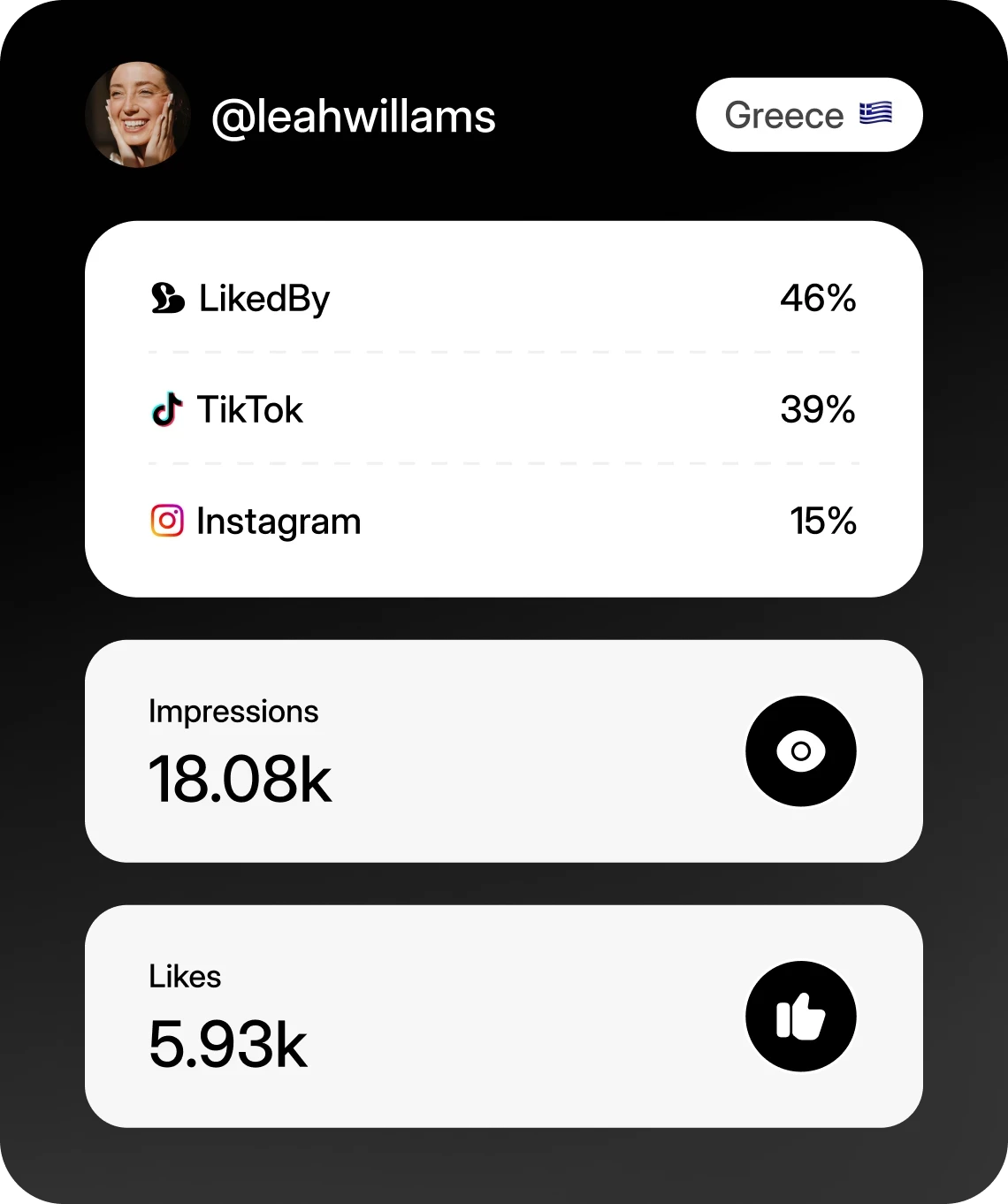
Key Performance Metrics for Creator Storefront Programs
Ecommerce agencies need to track specific KPIs to demonstrate storefront program value to clients and optimize ongoing performance. These are the metrics that matter most.
Creator Activation Rate: Percentage of onboarded creators who have a live, active storefront with at least one product featured. Target: 80%+ within 14 days of onboarding.
Storefront Conversion Rate (CVR): Percentage of storefront visitors who complete a purchase. Benchmark varies by vertical, but 3–6% indicates strong creator-product alignment.
Revenue Per Creator: Average monthly GMV generated per active storefront. Used to identify top-tier creators and justify commission tier upgrades.
Content Approval Turnaround Time: Average hours from content submission to approval or revision request. Target: under 24 hours to keep storefronts fresh.
Content Output Per Creator: Number of approved content assets per creator per month. Higher output correlates with more storefront engagement and repeat visits.
Storefront Click-Through Rate (CTR): Percentage of social media impressions that result in a storefront visit. Measures how effectively creators drive traffic from their channels.
Gross Merchandise Value (GMV): Total revenue generated through all creator storefronts per client. The primary metric clients use to evaluate program success.
Return on Ad Spend (ROAS) / Cost Per Acquisition (CPA): When agencies run paid amplification on top-performing creator content, ROAS and CPA measure the efficiency of that spend relative to storefront-driven revenue.
Commission-to-Revenue Ratio: Total commissions paid as a percentage of total storefront GMV. Helps agencies ensure program profitability for clients. Target: 8–15% depending on vertical and creator tier.
Client Retention Rate: Percentage of clients who renew or expand their storefront program engagement quarter over quarter. The ultimate measure of agency service value.
Case Example: How an Ecommerce Agency Scaled Creator Storefronts Across Five Clients
A 15-person ecommerce agency specializing in DTC brands was managing creator programs for five clients across beauty, wellness, and home goods. Each client had 30–80 active creators, but the agency was using a patchwork of Shopify Collabs, Google Sheets, and Notion to manage storefronts — resulting in inconsistent branding, slow onboarding, and fragmented reporting.
After consolidating onto a unified creator storefront system, the agency restructured its operations around a centralized multi-client dashboard. Within the first 60 days, the team achieved the following measurable results:
Creator onboarding time dropped from 12 days to 3 days per creator across all five client accounts.
Content approval turnaround improved from 72 hours to under 18 hours, thanks to structured approval workflows with client-specific review stages.
Average storefront conversion rate increased from 2.1% to 4.7% after implementing branded storefronts with curated product selections replacing generic affiliate link pages.
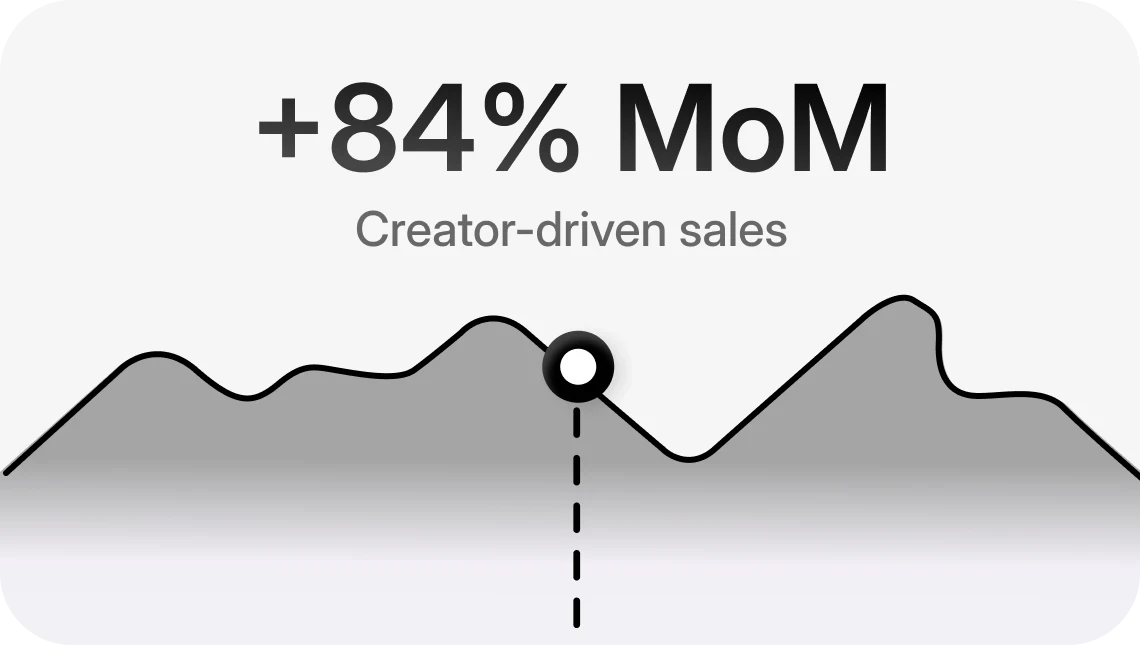
Aggregate GMV across all five clients grew 38% in the first quarter, with the top-performing client seeing a 52% increase in creator-driven revenue.
The agency reduced its tech stack costs by 40% by eliminating three separate tools previously used for affiliate tracking, content storage, and creator communication.
Two clients expanded their retainers to include additional creator tiers and seasonal storefront campaigns, adding $14,000 in monthly recurring revenue for the agency.
The agency now uses storefront performance data as the centerpiece of its quarterly business reviews with clients, directly tying creator program investment to revenue outcomes and making the case for continued scaling.
Frequently Asked Questions
Can agencies white-label creator storefronts for each client?
Yes. Socialscale's storefront system is designed for multi-client agency use. Each client account gets its own branded storefront templates — custom colors, fonts, logos, and product layouts. Creators and end customers see only the client's brand, with no agency or platform branding visible. This allows agencies to offer storefronts as a premium, branded service under each client's identity.
How does the platform handle creator commissions across multiple clients?
Commissions are configured independently per client account. Agencies can set flat-rate, percentage-based, or tiered commission structures for each client. Commission data is tracked at the storefront level and rolled up into client-specific reports. This ensures clean financial separation between accounts and makes it straightforward to reconcile payouts.
What happens when a product goes out of stock on a creator's storefront?
Storefronts sync with the client's product catalog in real time. When a product's inventory drops to zero, it is automatically hidden from all creator storefronts featuring that product. Once inventory is replenished, the product reappears. This prevents broken purchase experiences and eliminates the need for agencies to manually monitor stock levels across hundreds of storefronts.
How do agencies measure which creators are driving the most storefront revenue?
The analytics dashboard provides creator-level attribution for every storefront metric: visits, add-to-carts, completed purchases, revenue, and average order value. Agencies can rank creators by GMV, conversion rate, or content output and use this data to make decisions about commission tier upgrades, paid collaborations, or program exits. Reports can be filtered by client, campaign, date range, or creator segment.
Can creator storefront content be repurposed outside the storefront itself?
Absolutely. Content approved for storefronts is stored in a centralized content library and can be embedded on client websites, product detail pages, email campaigns, and social ads using shoppable content widgets. This multiplies the ROI of every creator asset by extending its reach beyond the storefront into every owned and paid channel the client operates.