Creator Storefronts for Beauty Retailers
Beauty retailers operate in one of the most creator-driven categories in social commerce. Consumers discover new serums, palettes, and skincare routines through creators they trust — and the path from recommendation to purchase needs to be seamless. A creator storefront for beauty retailers bridges that gap by giving every affiliate creator a branded, shoppable destination that converts product enthusiasm into trackable revenue.
Storefront hubs for beauty affiliate creators centralize the entire shopping experience around individual influencers, micro-creators, and brand ambassadors. Instead of scattering affiliate links across bio pages and spreadsheets, beauty retailers can deploy dedicated storefronts that showcase curated product collections, tutorial-linked SKUs, and seasonal edits — all under the retailer's brand umbrella.
For influencer marketing managers and e-commerce directors at beauty retailers, creator storefronts solve a structural problem: how to scale a creator program from dozens to hundreds of affiliates without losing brand control, attribution clarity, or operational sanity. This page breaks down exactly how storefront infrastructure works, why legacy tools fall short, and what operational workflows look like week over week.
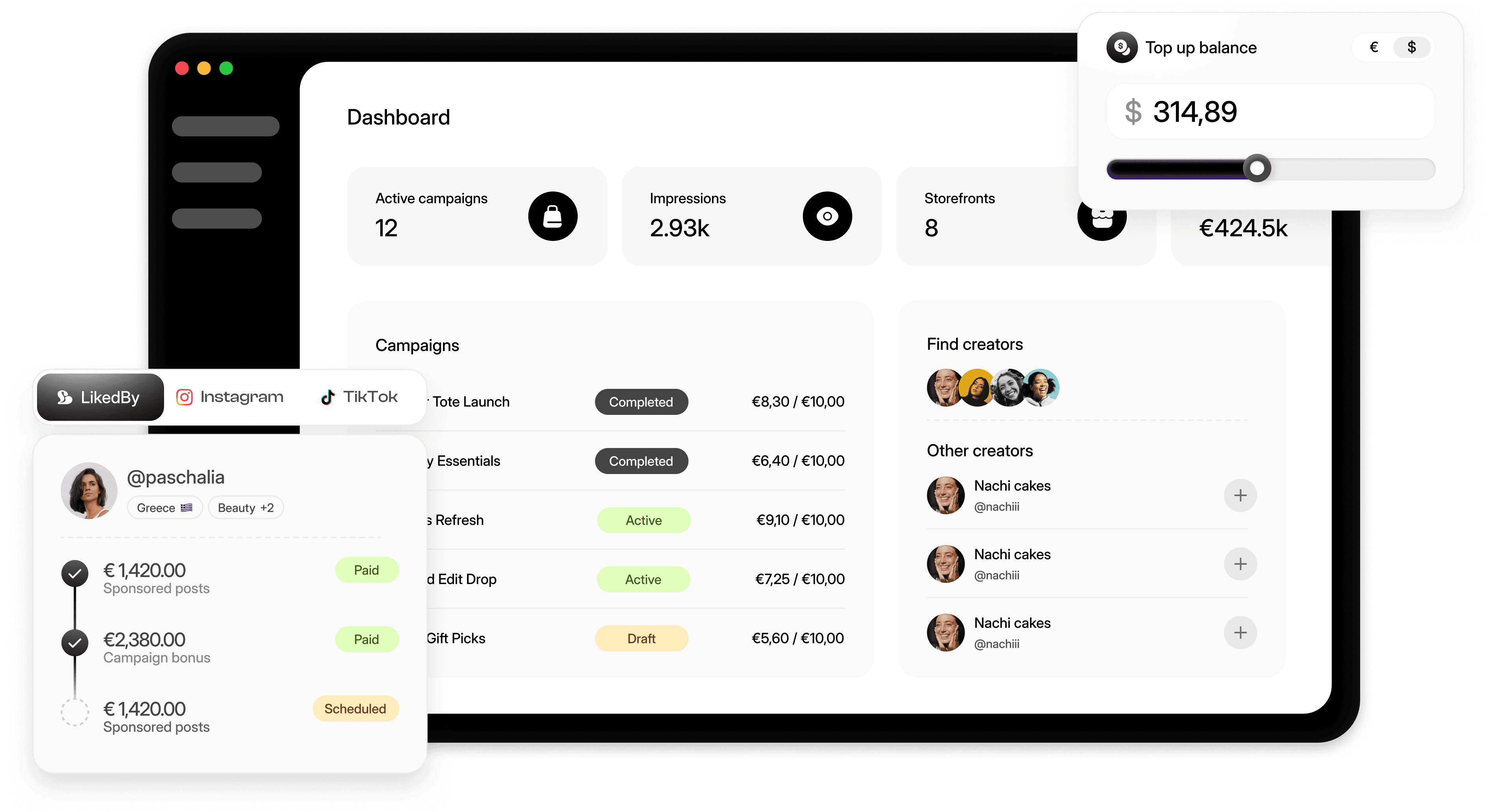
Fragmented Creator Attribution Across Channels
Beauty retailers run creator programs across Instagram, TikTok, YouTube, and increasingly Pinterest. When creators share affiliate links through multiple platforms, tracking which creator drove which sale — and through which piece of content — becomes unreliable. Discount codes help but introduce margin erosion and are easily shared outside intended audiences.
Scaling Beyond a Handful of Creators
Most beauty retailers start with 10–30 hand-picked creators. Scaling to 200+ affiliate creators introduces chaos: onboarding bottlenecks, inconsistent storefront setups, delayed product seeding, and communication gaps. Without infrastructure, growth stalls at the point where spreadsheets break.
Brand Consistency Across Creator Storefronts
Beauty is a visual-first category. When creators link out to generic affiliate pages or build their own landing pages, the brand experience fractures. Retailers lose control over product imagery, pricing display, and promotional messaging — all of which directly impact conversion rates.
Content Reuse and Rights Management
Creators produce tutorials, swatches, hauls, and reviews that have enormous value beyond the original post. Beauty retailers struggle to collect, organize, and repurpose this UGC across their own e-commerce pages, email campaigns, and paid media without a centralized content management system.
Slow Approval and Launch Cycles
Seasonal launches in beauty — holiday collections, summer skincare, limited-edition collaborations — require fast turnaround. If it takes two weeks to brief creators, approve content, and activate storefronts, the launch window shrinks and competitors capture demand first.
Disconnected Performance Data
Beauty marketing teams often pull data from affiliate networks, social platform analytics, and Shopify separately. Reconciling creator-level performance across these sources is manual, error-prone, and delays optimization decisions like reallocating budget to top-performing creators.
Managing Product Catalog Updates at Scale
Beauty retailers frequently rotate SKUs — new shades, reformulations, discontinued products. Keeping creator storefronts updated with current inventory, pricing, and availability requires either manual intervention or tight catalog integration that most tools lack.
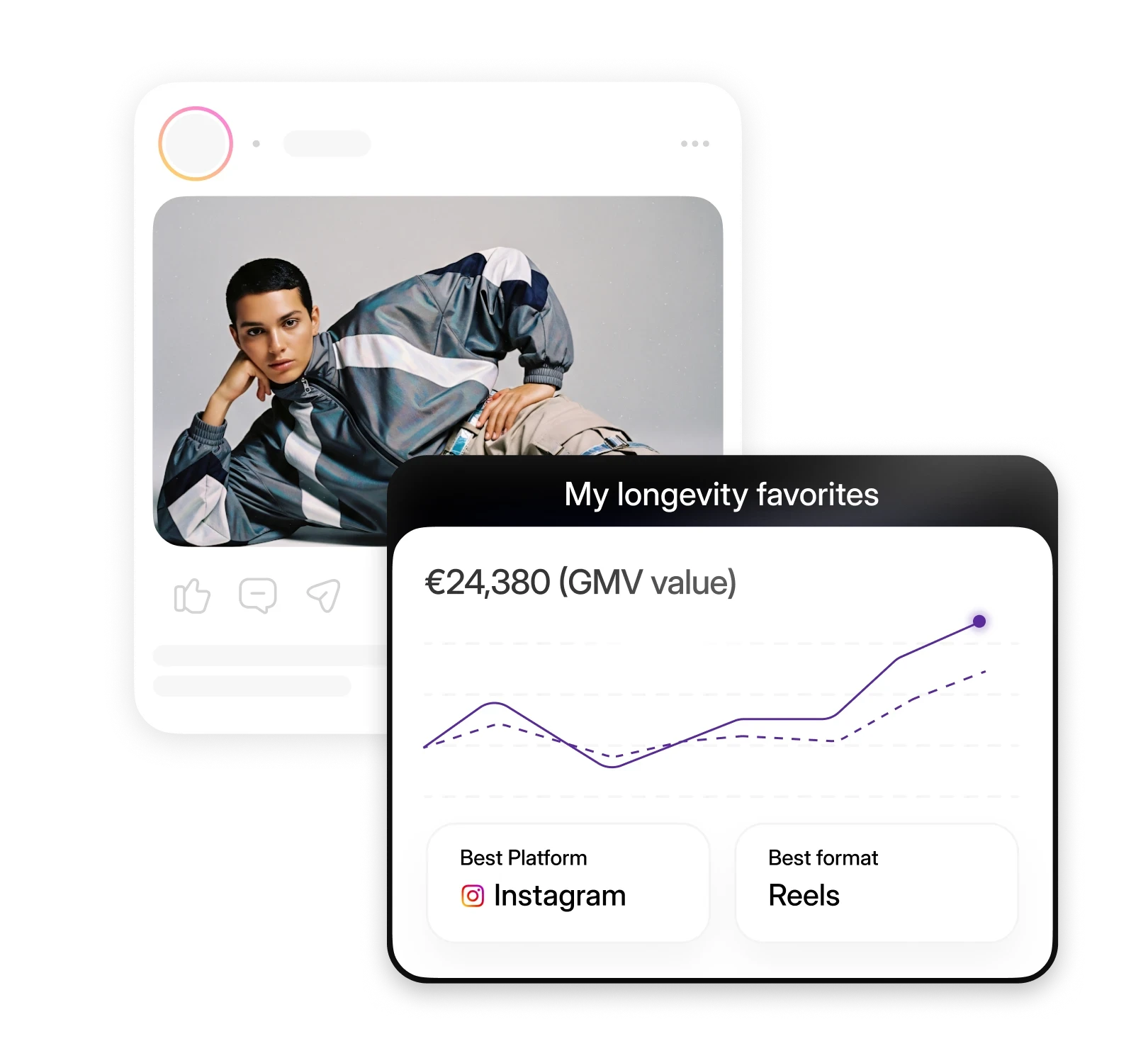
Affiliate Networks Were Not Built for Storefronts
Traditional affiliate platforms like ShareASale or CJ Affiliate handle link tracking and commission payouts, but they do not provide branded storefront experiences. Creators get a tracking link, not a curated shopping destination. For beauty retailers where visual merchandising drives conversion, a bare link is a missed opportunity.
Influencer Marketplaces Focus on Discovery, Not Operations
Platforms like AspireIQ or Grin help brands find creators, but their storefront capabilities are either nonexistent or bolted on as afterthoughts. Beauty retailers need more than a creator database — they need an operational layer that handles storefront deployment, content collection, catalog syncing, and performance tracking in one place.
Spreadsheets and Manual Processes Create Bottlenecks
Many beauty retail teams still manage creator storefronts through a combination of Google Sheets, Slack threads, and email chains. This works at small scale but collapses when managing seasonal campaigns with 100+ creators, each needing unique storefront configurations, product selections, and content approvals.
Generic E-commerce Tools Lack Creator Context
Shopify apps and landing page builders can create product pages, but they lack the creator-specific logic needed for affiliate storefronts: per-creator attribution, commission tracking, content embedding, and performance dashboards. Beauty retailers end up stitching together multiple tools, creating data silos and integration headaches.
Social Platform Native Tools Are Walled Gardens
TikTok Shop and Instagram Shopping offer in-platform storefronts, but they lock data inside their ecosystems. Beauty retailers cannot aggregate cross-platform creator performance, reuse content outside the platform, or maintain a unified view of their affiliate program.
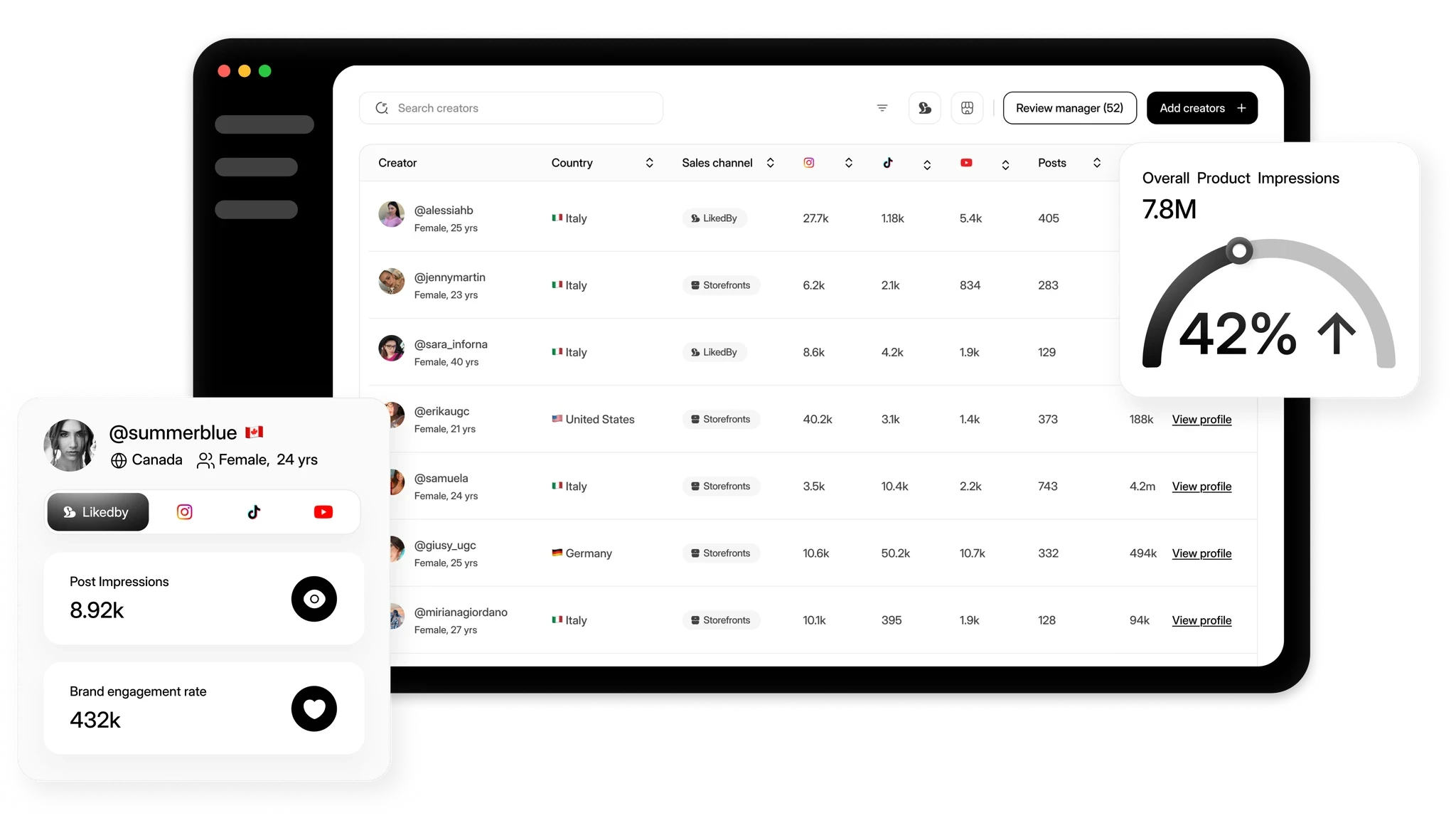
How Socialscale Powers Creator Storefronts for Beauty Retailers
Socialscale provides the end-to-end infrastructure beauty retailers need to launch, manage, and scale creator storefronts as a core part of their social commerce strategy. Rather than cobbling together affiliate networks, content tools, and analytics dashboards, teams operate from a single creator marketing platform purpose-built for storefront-driven programs.
At the foundation, Socialscale's storefront system lets beauty retailers deploy branded, shoppable creator pages that pull directly from the product catalog. Each creator gets a personalized storefront featuring their curated product picks, embedded UGC content, and tracked affiliate links — all styled to match the retailer's brand guidelines. When a creator posts a tutorial featuring a new foundation shade, their storefront becomes the conversion destination, complete with the video, product details, and one-click purchase.
Operationally, Socialscale connects the storefront layer to every other part of the creator program. The creator CRM manages onboarding, segmentation, and communication. The content pipeline collects and organizes creator assets for reuse. And the creator analytics dashboard tracks storefront-level performance — clicks, conversions, revenue, and commission — in real time. This eliminates the fragmentation that plagues beauty retail teams running programs across multiple disconnected tools.
For beauty retailers specifically, Socialscale supports product catalog syncing so storefronts always reflect current inventory, shade ranges, and pricing. When a SKU sells out or a new collection drops, storefronts update automatically — no manual intervention required across hundreds of creator pages.
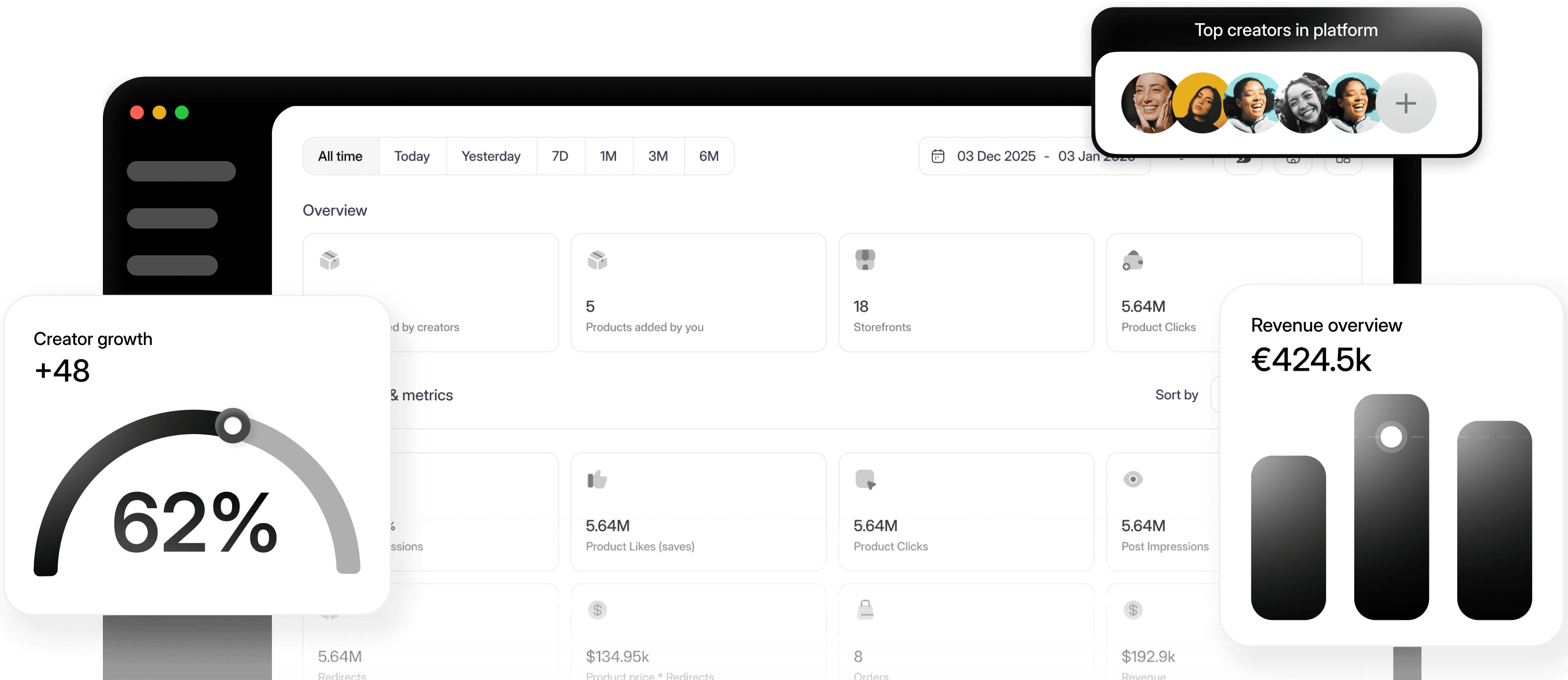
Feature Breakdown: Creator Storefronts Built for Beauty Retail Operations
Branded Storefront Deployment
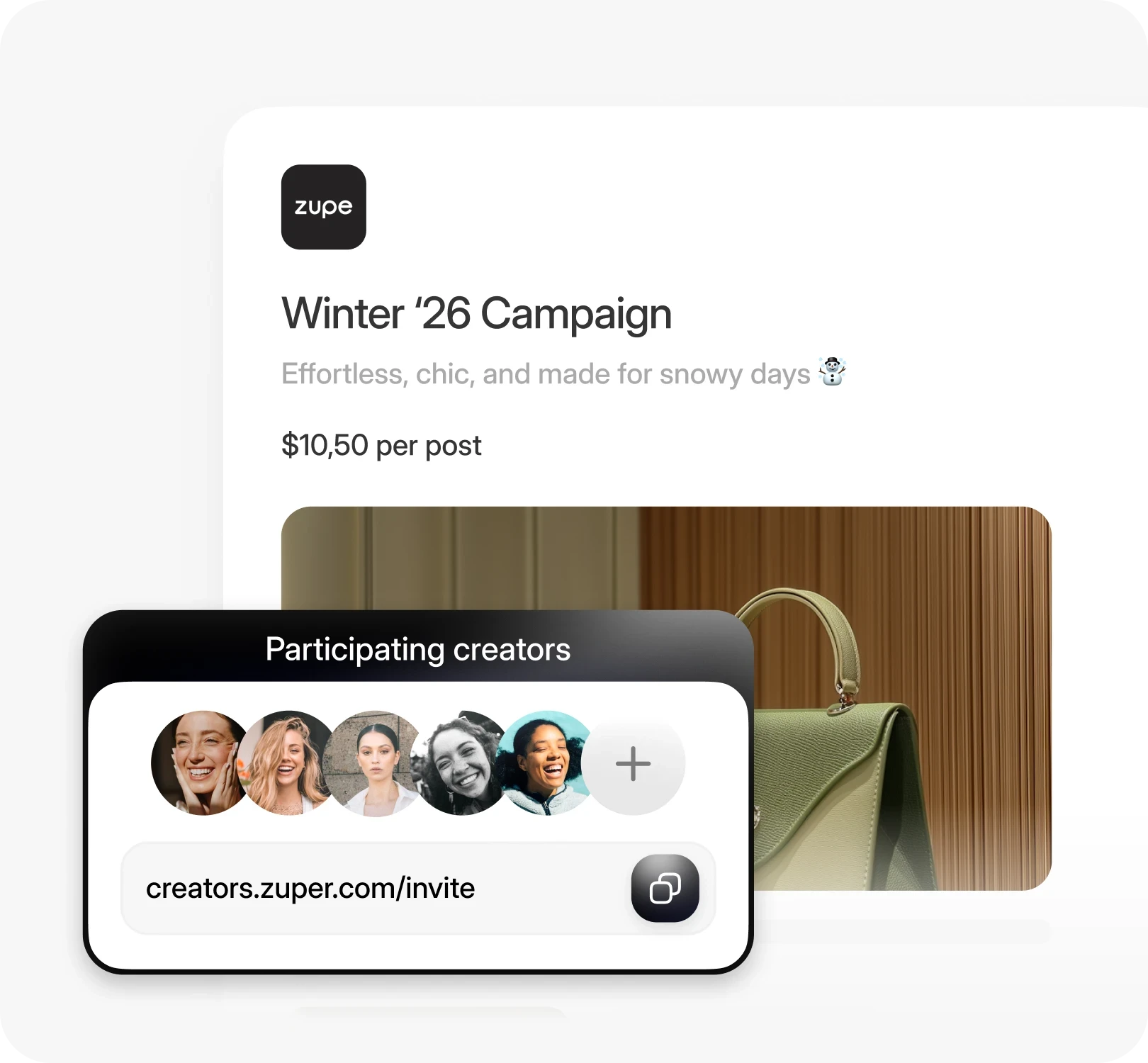
Each creator receives a dedicated storefront page hosted under the retailer's domain or a branded subdomain. Storefronts are templated for visual consistency — matching the retailer's typography, color palette, and product photography standards — while allowing creators to personalize their product selections and featured content. Beauty retailers can configure storefront templates by program tier (e.g., ambassador vs. affiliate vs. VIP creator) with different product access levels and commission structures.
Product Catalog Integration and Auto-Sync
Storefronts connect directly to the retailer's product catalog via Shopify or other e-commerce platform integrations. When new products launch, shades are added, or items go out of stock, storefronts reflect changes automatically. For beauty retailers managing hundreds of SKUs across skincare, makeup, haircare, and fragrance categories, this eliminates the manual catalog management that consumes hours every week.
Embedded Shoppable Creator Content
Creator-produced content — tutorials, swatches, reviews, get-ready-with-me videos — can be embedded directly into storefronts using shoppable content widgets. This transforms a static product page into a rich, social-proof-driven shopping experience. When a beauty creator films a full-face tutorial using five products, each product appears as a clickable, purchasable item within the video embed on their storefront.
Creator Onboarding and Storefront Activation
New creators are onboarded through structured workflows that collect profile information, content preferences, product interests, and shipping details for seeding. Once approved, their storefront is auto-generated based on the program template, pre-populated with recommended products based on their content niche (e.g., clean beauty, luxury skincare, drugstore dupes). This reduces storefront activation time from days to minutes.
Content Collection and UGC Management
Every piece of content a creator produces for the program is collected and stored in a centralized content library. Beauty retail teams can tag assets by product, campaign, content type, and creator — then repurpose them across email marketing, paid social, product detail pages, and in-store digital displays. Usage rights are tracked per asset, ensuring compliance with creator agreements.
Commission and Attribution Tracking
Each storefront generates unique attribution data tied to the individual creator. Beauty retailers can track first-click, last-click, and assisted conversions at the storefront level. Commission structures can be configured per creator tier, per product category, or per campaign — supporting the complex incentive models beauty retailers use to drive behavior (e.g., higher commission on new launches, bonus payouts for hitting revenue thresholds).
Campaign-Specific Storefront Overlays
During seasonal campaigns — holiday gift guides, summer essentials, back-to-school skincare — retailers can push campaign-specific overlays onto creator storefronts. These overlays feature curated product collections, limited-time offers, and campaign-specific messaging without requiring each creator to manually update their page.
Use Cases: Creator Storefronts in Beauty Retail
1. Scaling a Skincare Affiliate Program from 50 to 500 Creators
A mid-size skincare retailer with a successful but manually managed affiliate program of 50 creators wants to 10x their roster. Each new creator needs a branded storefront, product access, and performance tracking. By deploying templated storefronts with auto-populated product catalogs and tiered commission structures, the team onboards cohorts of 50 creators per month without adding headcount. Storefronts go live within 24 hours of creator approval, and performance data flows into a unified dashboard from day one.
2. Holiday Collection Launch with 200 Creator Storefronts
A prestige beauty retailer launches a limited-edition holiday collection across 200 creator storefronts simultaneously. Each storefront receives a campaign overlay featuring the holiday products, gift set bundles, and exclusive discount codes. Creators receive pre-approved content briefs and product samples two weeks before launch. On launch day, every storefront activates the holiday collection in sync, driving coordinated traffic from Instagram, TikTok, and YouTube to shoppable creator pages. The marketing team monitors real-time storefront performance and reallocates paid amplification budget toward top-converting creators within the first 48 hours.
3. Micro-Creator Shade Match Program
A complexion-focused beauty brand recruits 300 micro-creators across diverse skin tones to each curate a "shade match" storefront. Each creator's page features their personal shade recommendations across foundation, concealer, and powder categories, alongside their tutorial content showing application and finish. Shoppers discover creators who match their skin tone and shop directly from the storefront. The program generates authentic, high-converting content at scale while building an inclusive brand narrative that resonates across social platforms.
4. Agency-Managed Multi-Brand Beauty Storefront Hub
A social commerce agency manages creator programs for five beauty brands under one parent company. Each brand has its own storefront template, product catalog, and creator roster, but the agency needs a unified operational view. Creator storefronts are deployed per brand with distinct branding, while the agency monitors cross-brand performance, identifies creators who could cross-promote between brands, and manages all collaborations from a single operational workspace. This structure reduces per-brand management overhead by consolidating creator communications, content approvals, and reporting.
Weekly and Monthly Operational Workflow
Running a creator storefront program for a beauty retailer requires consistent operational cadence. Below is a practical workflow that influencer marketing managers and social commerce leads can implement immediately.
Week 1: Creator Recruitment and Onboarding
Identify and invite new creators through inbound applications, social listening, and existing customer databases. Use the creator CRM to collect applications, review content quality and audience demographics, and approve creators into the appropriate program tier. Approved creators receive automated onboarding sequences with program guidelines, product catalogs, and storefront setup instructions.
Week 1–2: Storefront Configuration and Product Seeding
Auto-generate storefronts for newly approved creators using brand-approved templates. Creators select their featured products or receive curated recommendations based on their content niche. Ship product samples for creators who need to create original content. Verify storefront accuracy — correct product images, pricing, and availability — before activation.
Week 2: Content Briefing and Collaboration Kickoff
Distribute campaign briefs for upcoming launches or seasonal pushes through creator collaborations workflows. Briefs include product details, key messaging, content format requirements, posting timelines, and storefront linking instructions. Creators confirm participation and submit content drafts for review.
Week 2–3: Content Review and Approval
Review submitted content against brand guidelines — checking product claims, visual quality, FTC disclosure compliance, and messaging accuracy. Approve content or request revisions through the platform. Approved content is automatically tagged and stored in the centralized content library for future repurposing.
Week 3: Storefront Activation and Campaign Launch
Activate campaign overlays on creator storefronts. Creators publish content across their social channels with storefront links. Monitor initial traffic and conversion data to identify early performance signals. Flag any storefront issues — broken links, out-of-stock products, incorrect pricing — for immediate resolution.
Week 3–4: Performance Monitoring and Optimization
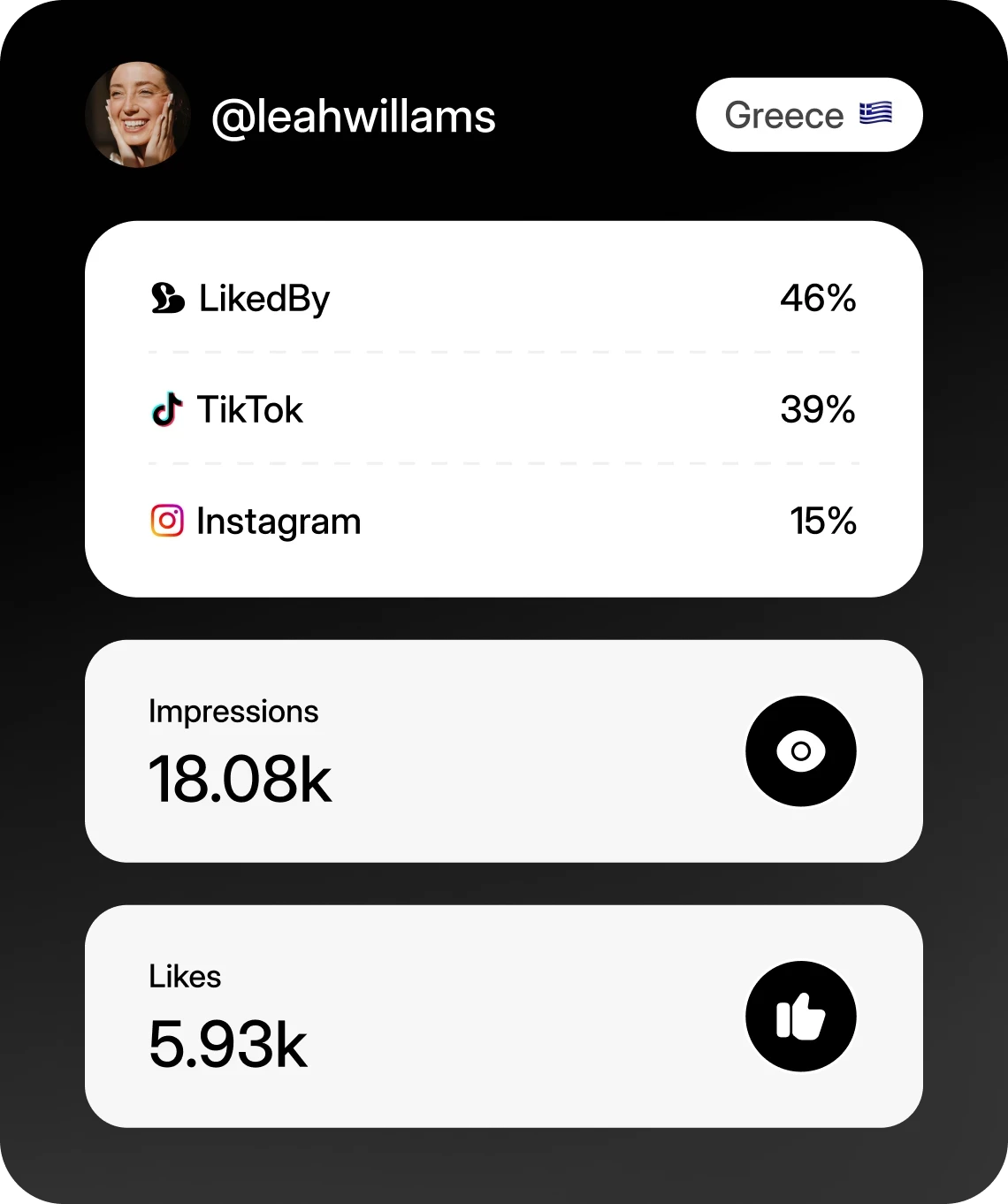
Review storefront-level analytics daily during active campaigns: page views, click-through rates, add-to-cart rates, conversion rates, and revenue per creator. Identify top-performing creators for additional paid amplification or bonus incentives. Identify underperforming storefronts and diagnose issues — low traffic (distribution problem), low conversion (merchandising or content problem), or high bounce (audience mismatch).
Monthly: Reporting, Payouts, and Program Iteration
Generate monthly performance reports by creator, campaign, product category, and channel. Process commission payouts based on verified conversions. Review program-level KPIs: total storefront revenue, average revenue per creator, creator activation rate, content output volume, and cost per acquisition. Use insights to refine creator recruitment criteria, storefront templates, product recommendations, and commission structures for the following month.
Monthly: Content Repurposing and Catalog Refresh
Audit the content library for high-performing creator assets suitable for repurposing in email campaigns, paid social, and on-site product pages. Update product catalogs to reflect new launches, discontinued items, and seasonal collections. Push catalog updates to all active storefronts automatically.
Key Performance Metrics for Beauty Retail Creator Storefronts
Tracking the right KPIs ensures your creator storefront program delivers measurable business outcomes. These are the metrics beauty retail teams should monitor weekly and monthly.
Creator Activation Rate: Percentage of onboarded creators who have an active, live storefront with at least one piece of published content driving traffic.
Storefront Approval Time: Average time from creator application to live storefront — target under 48 hours for scaled programs.
Content Output per Creator: Number of content pieces (videos, posts, stories) produced per creator per month, segmented by format and platform.
Storefront Click-Through Rate (CTR): Percentage of social content viewers who click through to the creator's storefront page.
Storefront Conversion Rate (CVR): Percentage of storefront visitors who complete a purchase — benchmark against site-wide conversion rates to measure creator storefront lift.
Average Order Value (AOV) via Storefronts: Compare AOV from creator storefronts against other acquisition channels to assess basket-building effectiveness.
Gross Merchandise Value (GMV) per Creator: Total revenue generated through each creator's storefront, used to tier creators and allocate resources.
Revenue per Storefront Visit: GMV divided by total storefront sessions — a composite metric reflecting both traffic quality and merchandising effectiveness.
Return on Ad Spend (ROAS) for Amplified Storefronts: When paid media is used to boost traffic to top creator storefronts, track ROAS to validate amplification spend.
Cost per Acquisition (CPA) by Creator Tier: Total program cost (commissions + product seeding + management overhead) divided by conversions, segmented by creator tier.
Content Repurpose Rate: Percentage of creator-produced content that is reused across email, paid social, or on-site — indicating content library ROI.
Creator Retention Rate: Percentage of creators who remain active in the program after 90 days, signaling program health and creator satisfaction.
Scenario: Multi-Category Beauty Retailer Scales Creator Storefronts
A national beauty retailer selling skincare, makeup, haircare, and fragrance through 400+ physical locations and a Shopify-powered e-commerce site wanted to build a creator storefront program to complement their existing influencer marketing efforts. Previously, they managed 60 affiliate creators through a combination of an affiliate network for link tracking, Google Sheets for content management, and email for communication. Storefront setup for each new creator took an average of five business days, and monthly reporting required 12+ hours of manual data reconciliation.
Program Restructure
The team deployed branded creator storefronts through a centralized platform, connecting their Shopify catalog for automatic product syncing. They segmented creators into three tiers — Ambassadors (top 20 by revenue), Partners (mid-tier), and Affiliates (long-tail micro-creators) — each with distinct storefront templates, product access levels, and commission rates. Onboarding was automated with self-serve applications, instant storefront generation, and structured content briefing workflows.
Results After Six Months
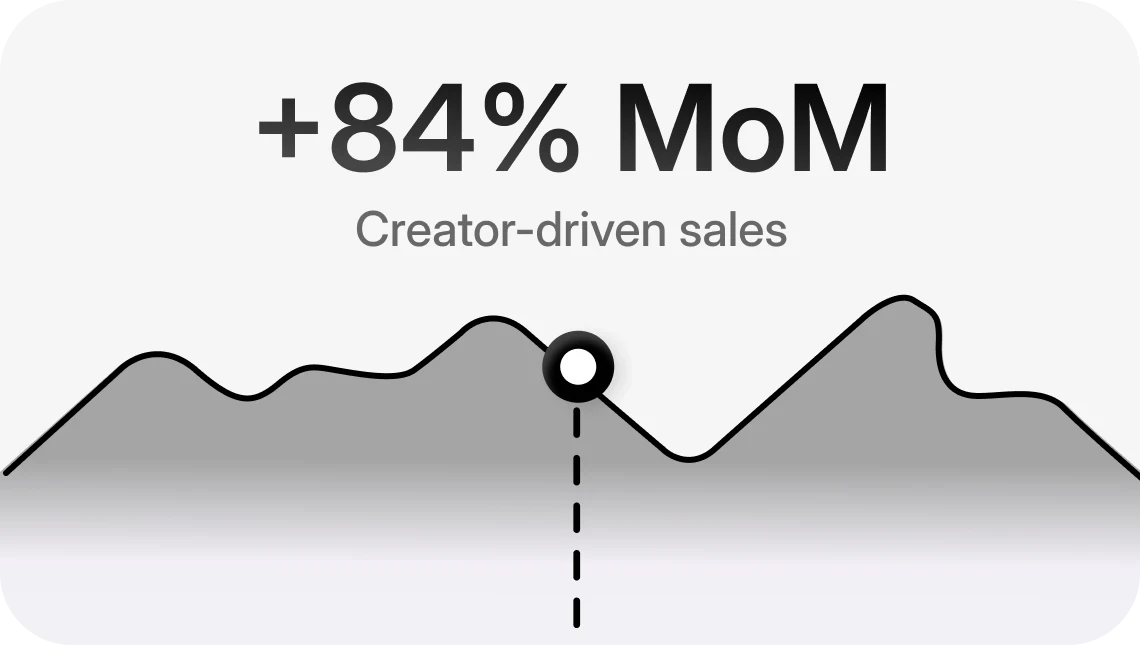
The retailer scaled from 60 to 340 active creator storefronts. Storefront activation time dropped from five days to under six hours. Monthly content output increased from approximately 180 pieces to over 1,100 pieces across platforms. Storefront conversion rates averaged 4.2%, compared to 2.1% for standard affiliate link traffic. Total creator-attributed GMV grew 280% over the six-month period. The content library accumulated over 4,800 tagged assets, with 38% repurposed across email campaigns and product detail pages. Monthly reporting time decreased from 12 hours to under 90 minutes through automated dashboards. CPA through creator storefronts was 34% lower than paid social acquisition costs for the same product categories.
Frequently Asked Questions
How does a creator storefront differ from a standard affiliate link?
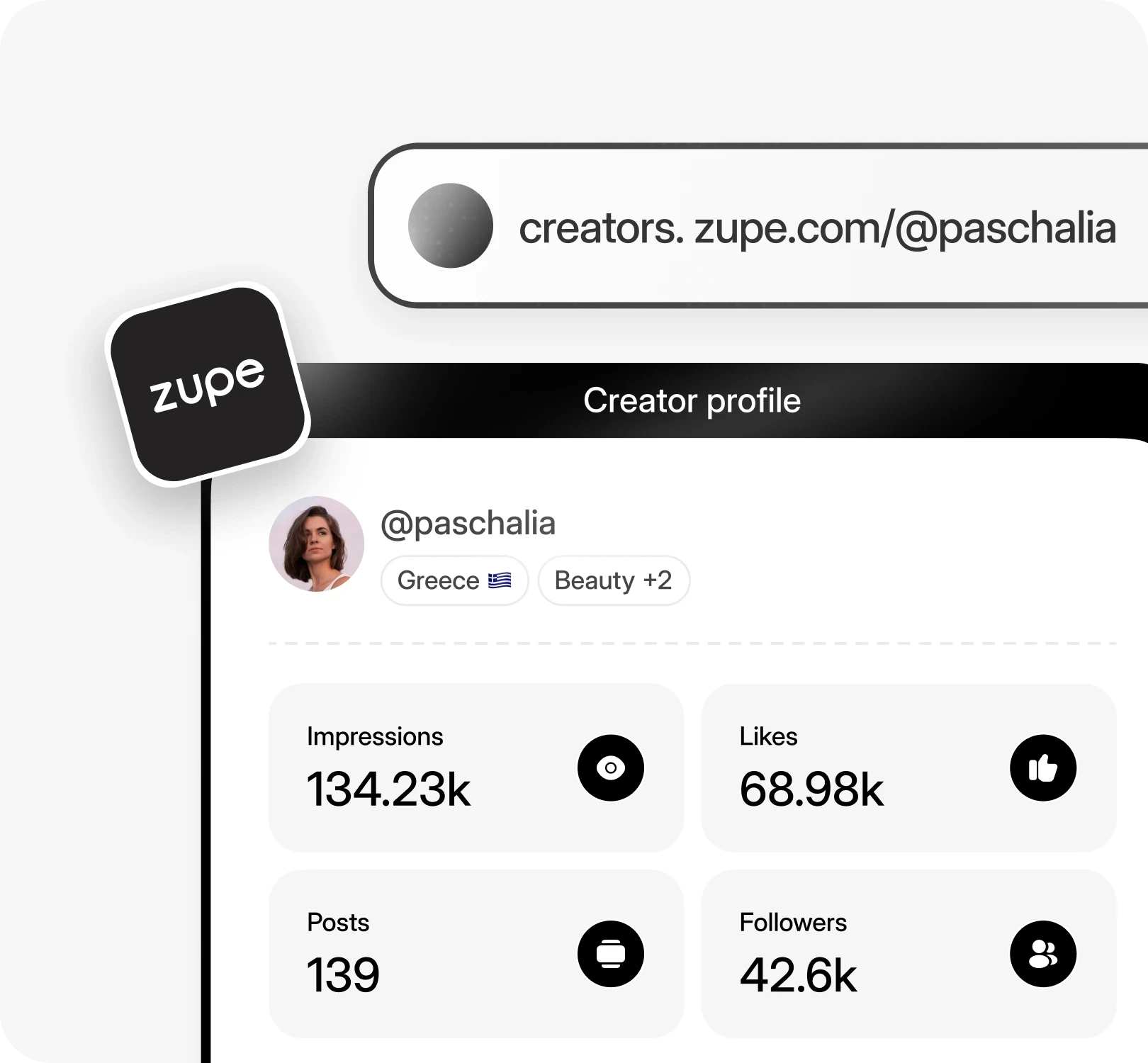
An affiliate link sends a shopper to a generic product page or retailer homepage. A creator storefront is a dedicated, branded shopping page personalized to the individual creator — featuring their curated product picks, embedded content, and a cohesive brand experience. For beauty retailers, this matters because shoppers who arrive through a creator recommendation expect to see that creator's perspective reflected in the shopping experience. Storefronts consistently outperform bare affiliate links on conversion rate and average order value because they maintain the trust and context established by the creator's content.
Can creator storefronts be customized per campaign or season?
Yes. Beauty retailers can push campaign-specific overlays onto storefronts — for example, a holiday gift guide collection or a summer skincare essentials edit. These overlays update all relevant storefronts simultaneously without requiring individual creator action. Creators can also curate their own seasonal picks within the parameters set by the retailer, balancing brand control with creator authenticity.
How do product catalog updates work across hundreds of storefronts?
When the retailer's product catalog is connected via Shopify integration, any changes — new products, price adjustments, inventory updates, discontinued items — sync automatically across all active storefronts. This eliminates the manual catalog management that becomes unmanageable at scale, especially for beauty retailers who frequently rotate shades, launch limited editions, and manage complex SKU assortments.
What happens to creator content after a campaign ends?
All creator-produced content is collected and stored in a centralized content library with metadata tags for product, campaign, creator, content type, and usage rights. Beauty retail teams can repurpose this content for email marketing, paid social ads, on-site product pages, and in-store digital displays long after the original campaign concludes — maximizing the return on every piece of creator content produced.
How is creator performance tracked at the storefront level?
Each storefront generates individual attribution data including page views, click-through rates, add-to-cart events, conversions, revenue, and commission earned. Beauty retailers can view performance at the individual creator level, aggregate by creator tier or campaign, and compare storefront metrics against other acquisition channels. This data feeds directly into optimization decisions — which creators to amplify, which products to feature more prominently, and where to adjust commission structures.