Creator Performance Tracking for Fashion Brands
Fashion brands invest heavily in creator programs, but without granular performance tracking, it is nearly impossible to know which creators, campaigns, and content formats actually drive revenue. As social commerce reshapes how consumers discover and purchase fashion, the gap between creator activity and measurable business outcomes keeps widening for teams that rely on manual reporting or disconnected tools.
Creator performance tracking gives fashion marketing teams the ability to attribute sales, engagement, and content output back to individual creators and campaigns. Whether you are running seasonal lookbook collaborations, affiliate creator programs for new collections, or always-on ambassador squads, understanding which creators convert browsers into buyers is the difference between scaling profitably and burning budget.
For influencer marketing managers, e-commerce directors, and agencies managing fashion creator rosters, performance tracking is not a nice-to-have dashboard. It is the operational backbone that informs creator selection, compensation models, content strategy, and campaign optimization week over week.
Disconnected Data Across Platforms
Fashion brands typically activate creators across Instagram, TikTok, YouTube, and Pinterest simultaneously. Each platform has its own analytics silo, making it extremely difficult to build a unified view of creator performance across channels. Teams spend hours each week manually pulling metrics from multiple dashboards.
Inability to Attribute Revenue to Individual Creators
When a fashion brand runs a campaign with 40 creators promoting a new collection, knowing which five creators drove 80% of the revenue is critical. Most teams lack the tracking infrastructure to connect creator content to actual purchases, especially when customers interact with multiple touchpoints before converting.
Seasonal Campaign Complexity
Fashion operates on tight seasonal cycles: pre-fall, resort, spring/summer, fall/winter, plus flash sales and capsule drops. Each cycle involves different creator cohorts, content briefs, and KPIs. Tracking performance across overlapping campaigns without a centralized system leads to data chaos.
High Creator Volume with Variable Quality
Fashion programs often involve hundreds of micro and mid-tier creators. Identifying which creators consistently produce high-performing content versus those who generate vanity metrics (likes without clicks) requires ongoing performance monitoring that spreadsheets cannot sustain.
Content Reuse Without Performance Context
Fashion brands frequently repurpose creator content for paid ads, email, and on-site galleries. Without tracking which original creator assets performed best organically, teams make repurposing decisions based on aesthetics alone rather than conversion data.
Affiliate and Commission Disputes
As fashion brands scale affiliate creator programs, disputes over attribution and commission accuracy increase. Without transparent, real-time tracking, creator relationships deteriorate and top performers leave for competitors who offer better reporting.
Delayed Reporting Kills Optimization Windows
Fashion campaigns often have short windows of relevance. A two-week delay in performance reporting means the campaign is already over before the team can reallocate budget to top-performing creators or pause underperformers.
Spreadsheets Cannot Scale with Fashion's Creator Volume
A mid-size fashion brand running 15 campaigns per year with 50+ creators per campaign generates thousands of data points. Spreadsheets break down when you need to cross-reference creator output, engagement rates, click-through rates, and revenue attribution across multiple platforms and time periods. Formulas become fragile, version control is nonexistent, and one misplaced row can distort an entire campaign report.
Platform-Native Analytics Are Incomplete
Instagram Insights and TikTok Analytics show surface-level engagement metrics but do not connect to your Shopify store or e-commerce backend. You can see likes and views, but you cannot see which creator's Reel drove 200 orders of a specific SKU. Fashion teams need full-funnel visibility, not just top-of-funnel vanity numbers.
Generic Influencer Platforms Lack Fashion-Specific Workflows
Many influencer marketing tools were built for one-off sponsored posts, not for the ongoing, multi-season creator relationships that fashion brands depend on. They lack the ability to track creator performance longitudinally across collections, compare seasonal cohorts, or tie content performance to product-level sales data.
Disconnected Tools Create Reporting Lag
When your creator CRM lives in one tool, your content assets in another, your affiliate links in a third, and your analytics in a fourth, assembling a coherent performance report takes days. By the time the report is ready, the optimization window has closed. Fashion teams need real-time or near-real-time performance data to make decisions during live campaigns.
How Socialscale Solves Creator Performance Tracking for Fashion
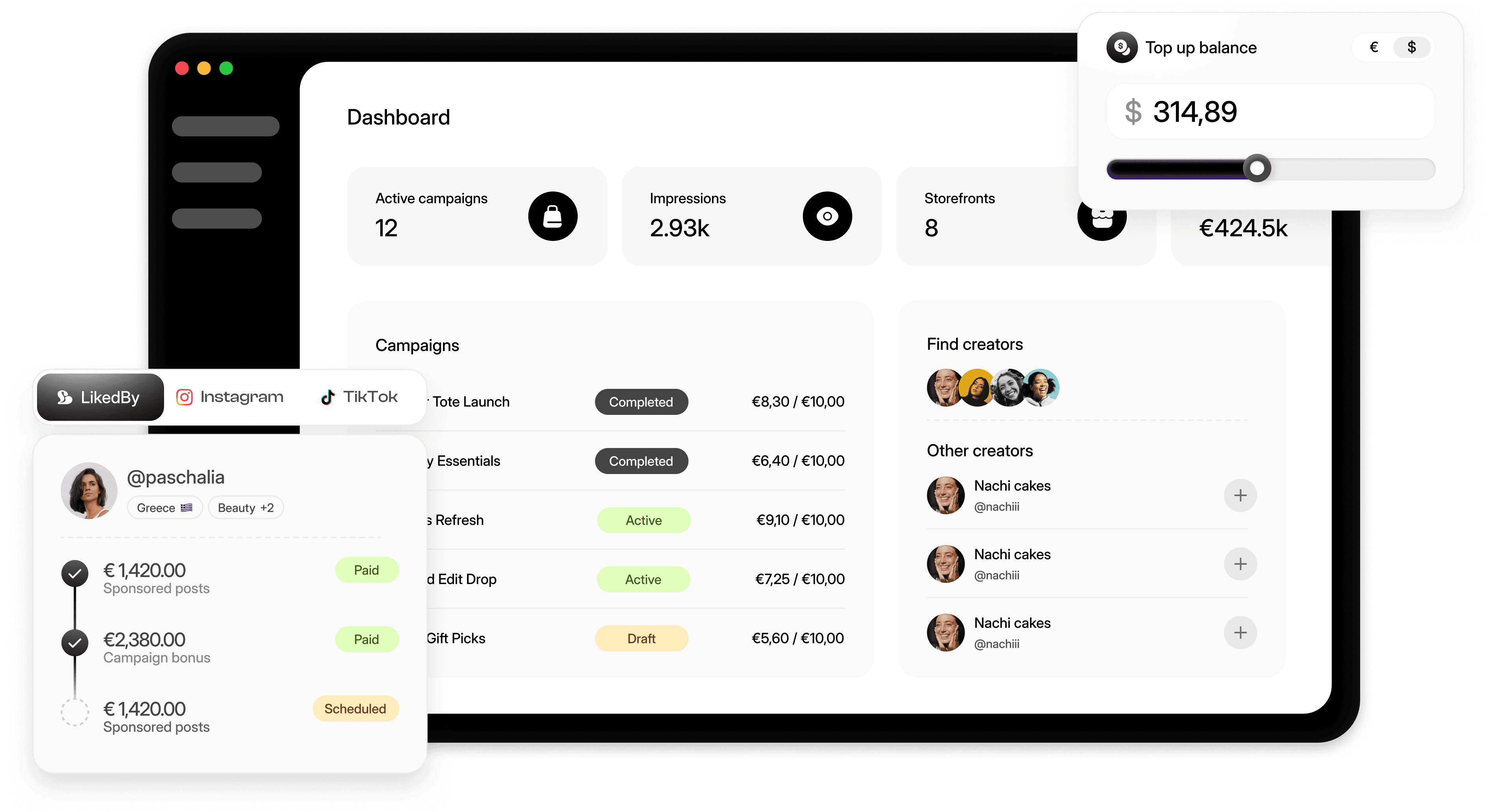
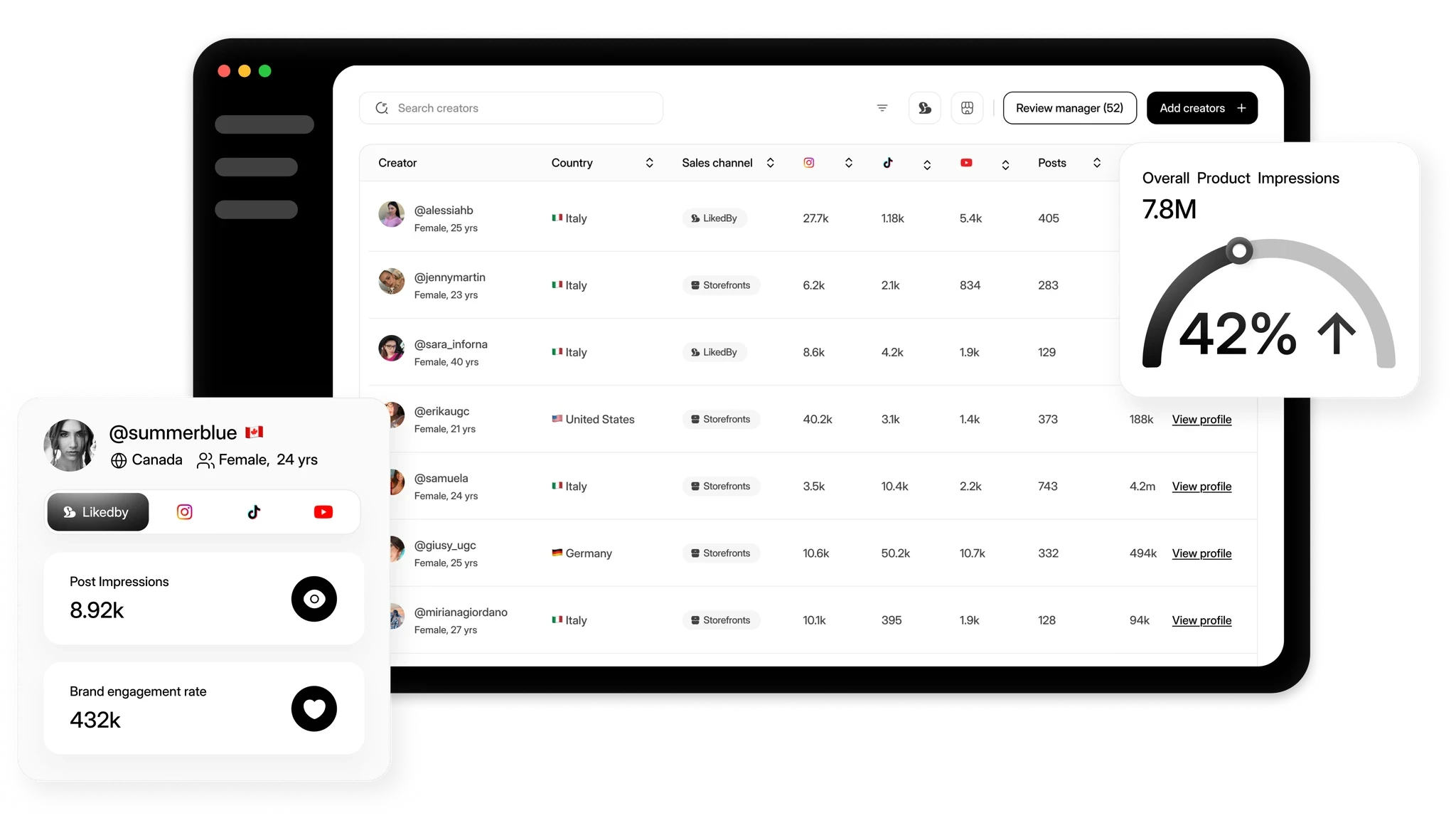
Socialscale is built as the operating system for social commerce, giving fashion brands and agencies a single platform to manage creator programs end-to-end while maintaining deep performance visibility at every stage. Rather than stitching together five different tools, fashion teams use Socialscale to onboard creators, manage collaborations, store and organize content, embed shoppable creator assets on-site, and track every performance metric from a unified dashboard.
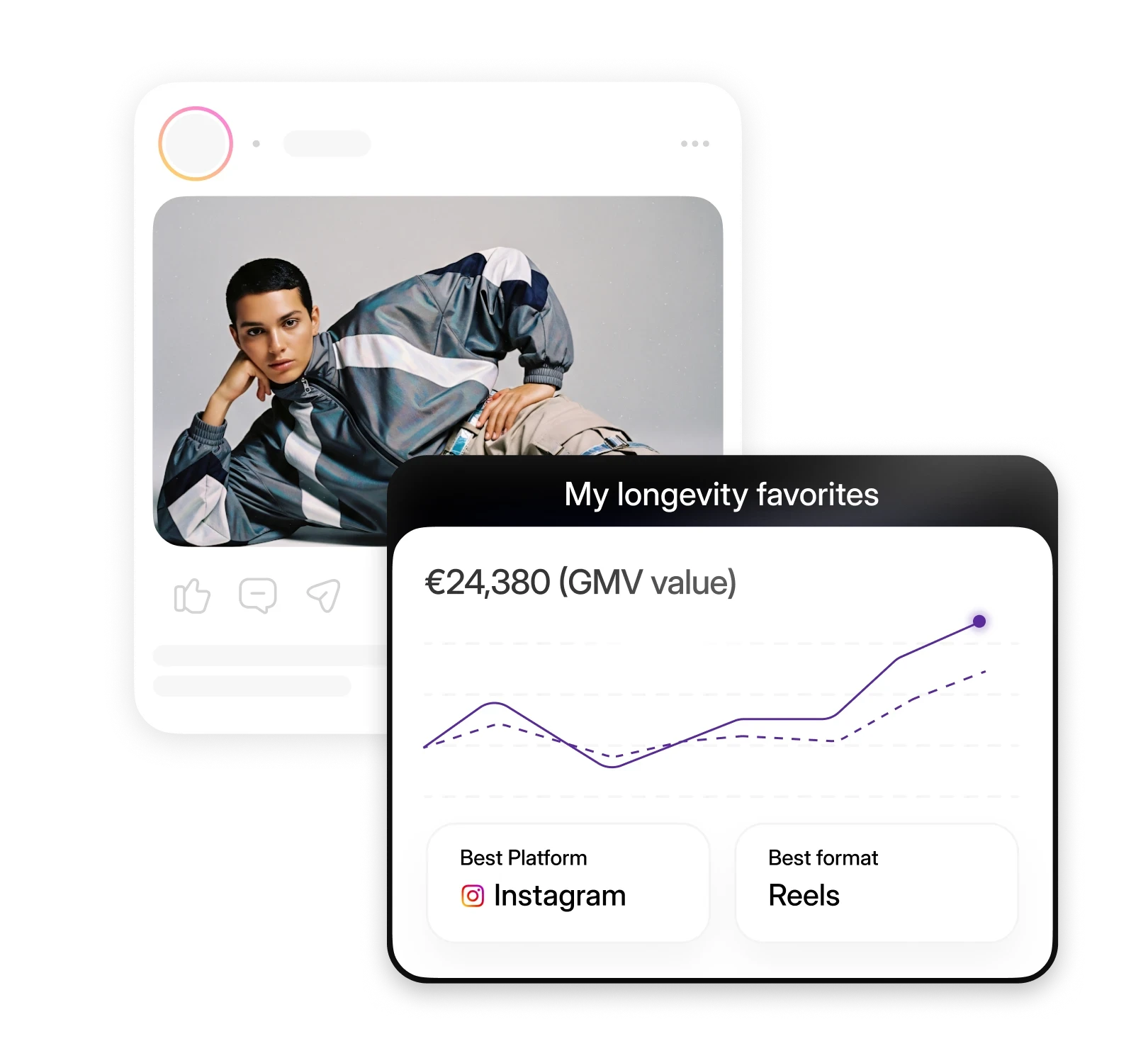
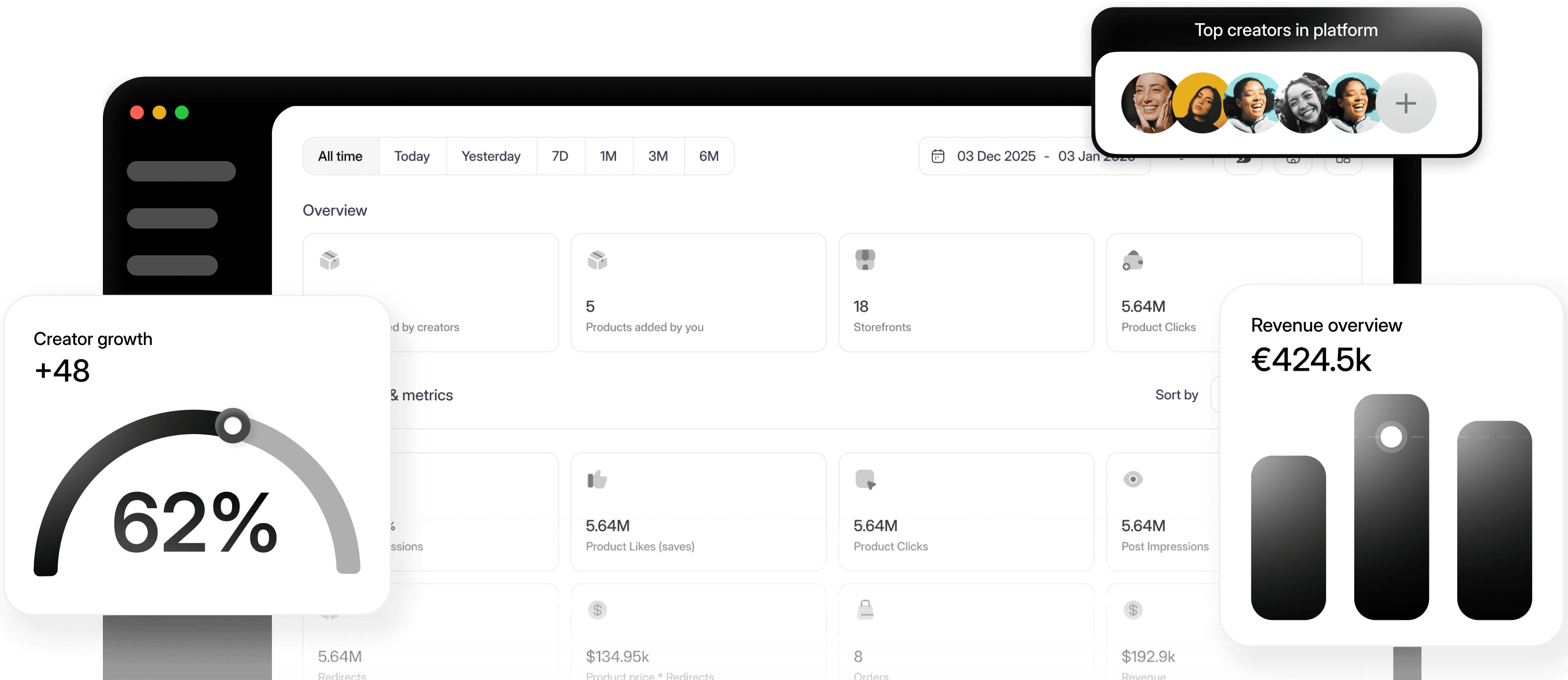
The creator analytics dashboard in Socialscale connects creator activity directly to business outcomes. Fashion teams can see which creators drive the most revenue per post, which content formats convert best for specific product categories, and how creator cohorts perform across seasonal campaigns. This is not aggregated vanity data. It is creator-level, campaign-level, and content-level attribution that ties back to actual orders and GMV.
Socialscale's creator CRM maintains a living performance profile for every creator in your roster. When it is time to plan next season's campaign, you are not guessing which creators to re-engage. You are looking at historical conversion rates, content approval speed, average order value driven, and engagement trends. This transforms creator selection from a subjective process into a data-driven one.
For fashion brands embedding creator content on product pages and collection landing pages, creator widgets track how shoppable content performs on-site, including click-through rates, add-to-cart actions, and conversion rates. This closes the loop between creator content creation and on-site commerce performance, giving fashion e-commerce teams the data they need to optimize their storefronts.
Feature Breakdown: Creator Performance Tracking for Fashion
Creator-Level Revenue Attribution
Every creator in your program gets tracked individually. Socialscale connects unique tracking links, discount codes, and affiliate identifiers to your e-commerce backend so you can see exactly how much revenue each creator generates. For fashion brands running collection launches with dozens of creators, this means you know within days which creators are driving purchases versus which are generating impressions without conversions.
Campaign-Level Performance Dashboards
Each campaign gets its own performance view with aggregated and drill-down metrics. Track total GMV, number of orders, average order value, content pieces produced, engagement rates, and cost-per-acquisition at the campaign level. Compare your Spring/Summer campaign performance against Fall/Winter to identify seasonal trends in creator effectiveness.
Content Performance Scoring
Not all creator content performs equally. Socialscale scores individual content pieces based on engagement, click-through rate, and downstream conversion. Fashion teams can quickly identify which styling approaches, video formats, or product pairings resonate most with audiences. This intelligence feeds directly into future content briefs.
Real-Time Reporting During Live Campaigns
Fashion drops and limited-edition releases have tight windows. Socialscale provides real-time performance updates so campaign managers can reallocate budget, send additional product to top performers, or adjust messaging mid-campaign. Waiting two weeks for a report is not an option when a capsule collection sells out in 72 hours.
Cohort Analysis Across Seasons
Fashion brands work in seasonal cycles, and creator performance should be analyzed the same way. Socialscale allows teams to group creators into cohorts by season, tier, content type, or product category and compare performance over time. This reveals which creator relationships are appreciating in value and which are declining.
Affiliate Program Tracking
For fashion brands running affiliate creator programs, Socialscale tracks clicks, conversions, and commissions in real time. Creators can see their own performance, reducing commission disputes and building trust. Transparent tracking also incentivizes creators to promote more actively because they can see the direct impact of their efforts.
Content-to-Commerce Funnel Visibility
Socialscale tracks the full journey from creator content impression to on-site engagement to purchase. Fashion teams can see where drop-off happens in the funnel. If a creator drives high traffic but low conversion, the issue might be the landing page or product pricing rather than the creator's content quality. This level of funnel visibility prevents teams from making incorrect creator decisions based on incomplete data.
Use Cases: Creator Performance Tracking in Fashion
Seasonal Collection Launch with Tiered Creator Squads
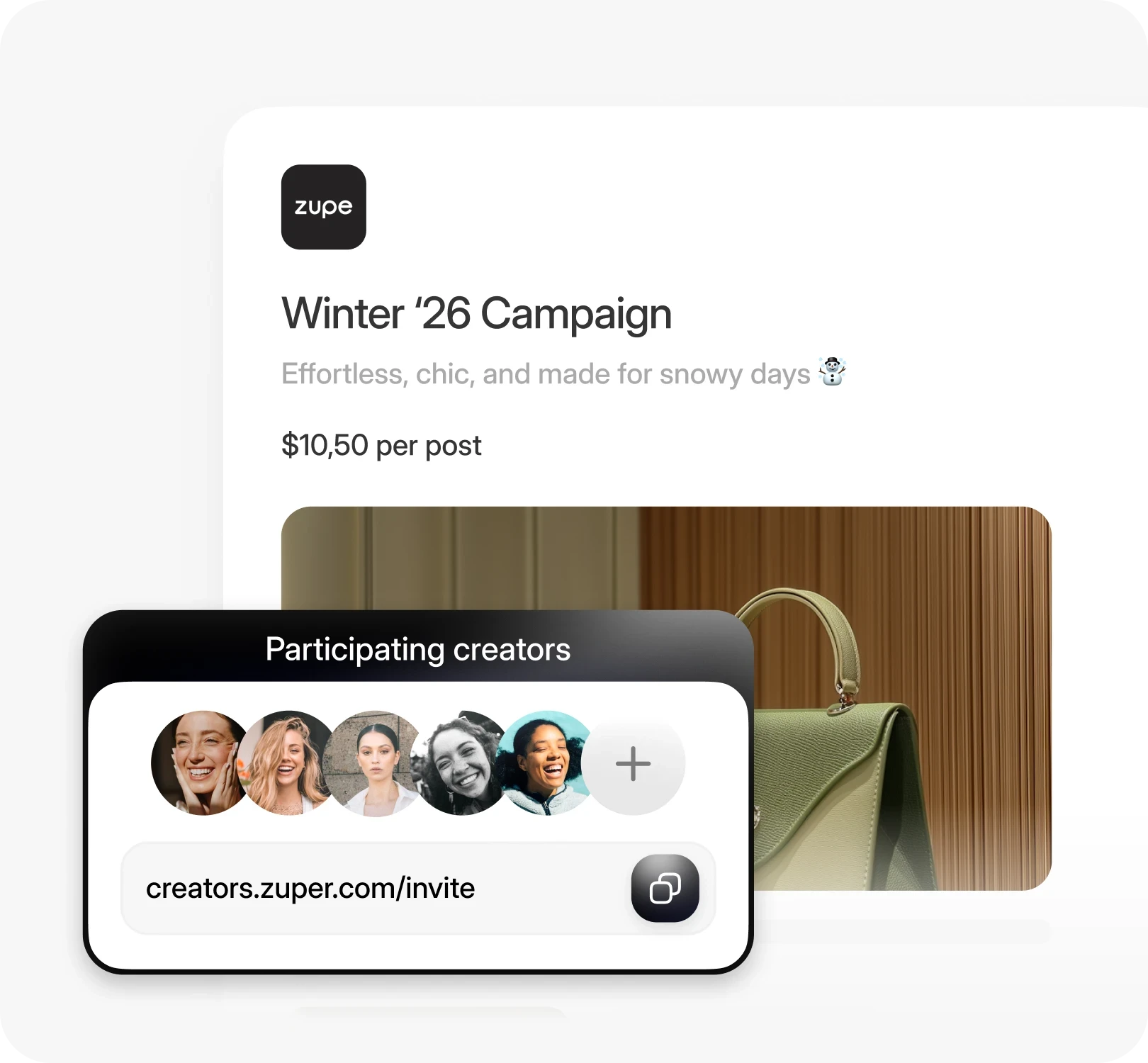
A contemporary fashion brand launches its Fall/Winter collection using three creator tiers: 10 macro creators for awareness, 30 mid-tier creators for consideration, and 100 micro creators for conversion-focused content. Performance tracking allows the brand to measure each tier's contribution to total campaign GMV, identify the top 15 creators across all tiers by revenue generated, and build a data-backed case for next season's budget allocation. The brand discovers that its micro-creator cohort drives 3x the return on investment compared to macro creators, fundamentally shifting its future investment strategy.
Always-On Ambassador Program for a DTC Fashion Label
A direct-to-consumer fashion label runs a year-round ambassador program with 200 creators who post monthly. Without performance tracking, the program becomes a cost center with unclear ROI. With creator-level attribution, the label identifies that 25 ambassadors drive 70% of the program's revenue. The team restructures compensation to reward top performers with higher commission rates and exclusive early access to new drops, increasing ambassador-driven revenue by a significant margin over two quarters.
Flash Sale Activation with Real-Time Optimization
A fashion e-commerce brand runs a 48-hour flash sale promoted by 50 creators. Real-time performance tracking reveals within the first six hours that video content on TikTok is outperforming Instagram static posts by 4x in click-through rate. The campaign manager immediately messages the remaining creators who have not yet posted, asking them to prioritize TikTok video over Instagram carousels. The mid-campaign pivot increases total flash sale revenue by 35% compared to the brand's previous flash sale that lacked real-time tracking.
Agency Managing Multiple Fashion Brand Accounts
A social commerce agency manages creator programs for five fashion brands simultaneously. Each brand has different KPIs: one prioritizes brand awareness, another focuses on direct sales, and a third cares most about content volume for repurposing. Performance tracking allows the agency to build custom reporting views for each client, demonstrate clear ROI in monthly reviews, and justify retainer fees with hard data. The agency also identifies creators who perform well across multiple brands, creating cross-pollination opportunities that benefit all clients.
Weekly and Monthly Performance Tracking Workflow for Fashion Teams
Establishing a consistent performance tracking cadence ensures fashion teams catch optimization opportunities early and build institutional knowledge about what works across seasons. Below is a practical workflow that integrates naturally into existing campaign operations.
Step 1: Set Campaign KPIs Before Launch — Before activating creators for a new collection or campaign, define the specific metrics that matter: target GMV, minimum content pieces per creator, engagement rate benchmarks, and cost-per-acquisition thresholds. Load these targets into your tracking dashboard so you have a baseline for comparison from day one.
Step 2: Assign Unique Tracking Identifiers — Generate unique affiliate links, UTM parameters, and discount codes for every creator in the campaign. Ensure each identifier is mapped to the correct creator profile in your CRM so that all downstream data flows back to the right person.
Step 3: Monitor Real-Time Performance During Campaign Windows — During active campaign periods, check the performance dashboard daily. Flag creators who are significantly overperforming or underperforming. For fashion drops with tight timelines, this daily check allows you to send additional inventory to top performers or adjust content direction within the campaign window.
Step 4: Run Weekly Performance Snapshots — Every week, pull a snapshot of creator-level and campaign-level metrics. Compare against the KPIs set in Step 1. Identify trends: Are certain product categories converting better through creator content? Are specific platforms outperforming others? Document these findings in a shared team report.
Step 5: Conduct Mid-Campaign Optimization — For campaigns running longer than two weeks, use the weekly snapshot data to make adjustments. This might mean reallocating budget from underperforming creators to top performers, updating content briefs based on what is converting, or extending the campaign window for high-performing cohorts.
Step 6: Generate End-of-Campaign Reports — After the campaign closes, compile a comprehensive performance report that includes total GMV attributed, revenue per creator, content output and quality scores, engagement metrics, and cost efficiency ratios. Compare against previous campaigns to identify improvement or regression.
Step 7: Update Creator Profiles with Performance Data — Feed campaign performance data back into each creator's profile in your CRM. This creates a longitudinal performance record that informs future creator selection. Over multiple seasons, you build a rich dataset that makes every subsequent campaign more efficient.
Step 8: Conduct Quarterly Performance Reviews — Every quarter, analyze creator cohort performance across all campaigns. Identify your top 10% of creators by revenue, your most cost-efficient creators, and creators whose performance is trending upward. Use this analysis to restructure your creator roster, adjust compensation tiers, and plan the next season's program.
Key Performance Metrics for Fashion Creator Programs
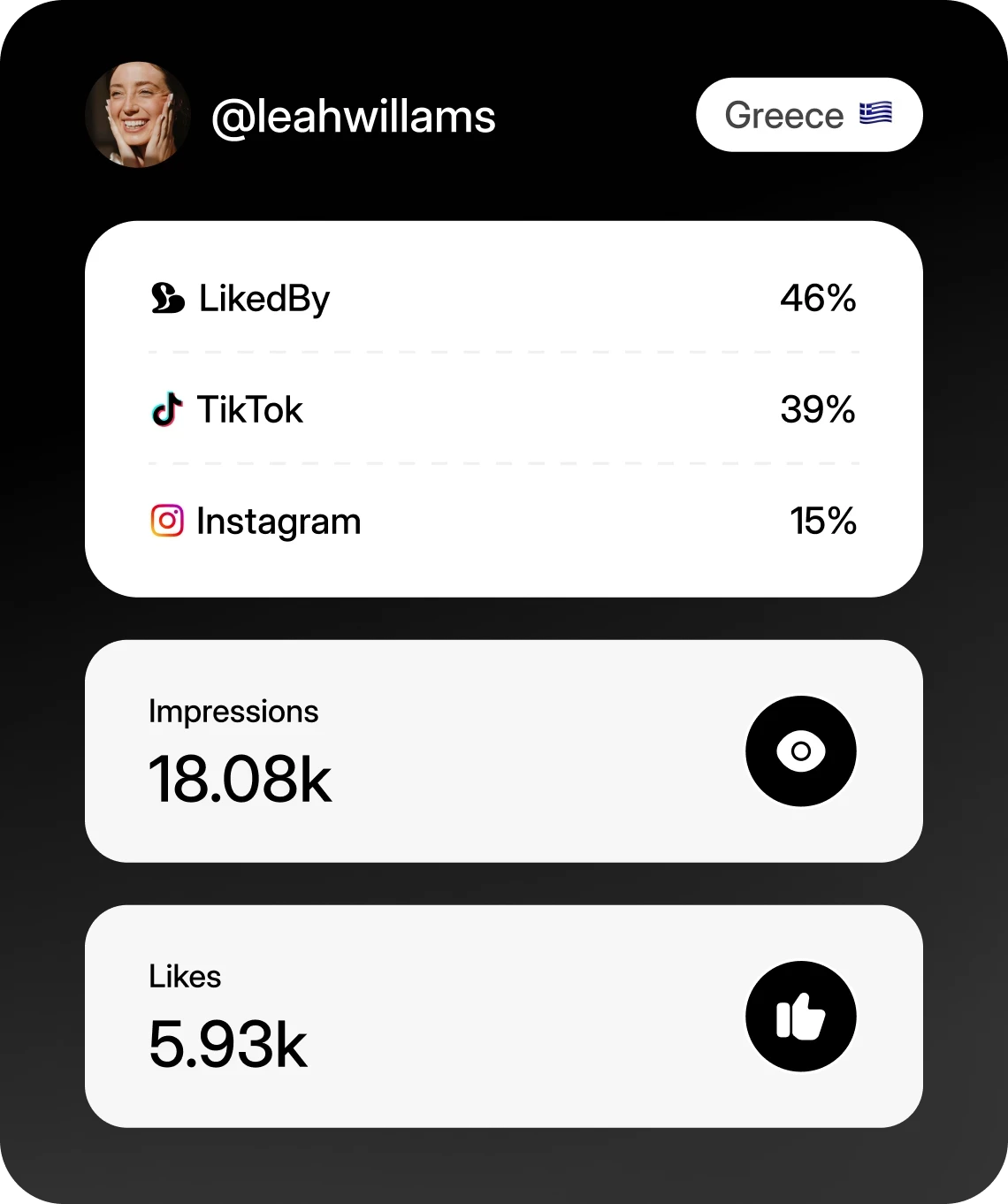
Fashion teams should track a combination of activity, engagement, and commerce metrics to get a complete picture of creator program health. The following KPIs are essential for operational decision-making.
Creator Activation Rate — Percentage of onboarded creators who actually publish content within the campaign window. Fashion programs with low activation rates have an onboarding or briefing problem.
Content Output per Creator — Number of content pieces delivered per creator per campaign. Tracks whether creators are meeting their deliverable commitments.
Content Approval Time — Average time from content submission to brand approval. Slow approval cycles delay campaign launches and frustrate creators.
Engagement Rate by Platform — Likes, comments, shares, and saves normalized by follower count, broken down by Instagram, TikTok, and YouTube.
Click-Through Rate (CTR) — Percentage of viewers who click through from creator content to the brand's site. A critical mid-funnel metric for fashion campaigns.
Conversion Rate (CVR) — Percentage of creator-driven site visitors who complete a purchase. Reveals whether creator audiences are qualified buyers.
Gross Merchandise Value (GMV) per Creator — Total revenue attributed to each creator. The most important bottom-line metric for fashion brands running commerce-focused creator programs.
Average Order Value (AOV) from Creator Traffic — Measures whether creator-driven customers purchase at higher or lower basket sizes compared to other channels.
Return on Ad Spend / Cost per Acquisition (ROAS/CPA) — Total creator program cost divided by revenue generated or orders acquired. Essential for comparing creator program efficiency against paid media.
Content Repurpose Performance — Tracks how creator content performs when repurposed as paid ads or on-site shoppable widgets, measuring incremental value beyond organic posting.
Creator Retention Rate — Percentage of creators who participate in multiple campaigns. High retention signals a healthy program; low retention indicates compensation or experience issues.
Scenario: Mid-Size Fashion Brand Scales Creator-Driven Revenue
A mid-size contemporary fashion brand selling primarily through its Shopify store had been running creator campaigns for 18 months using a combination of spreadsheets, Instagram native analytics, and a basic affiliate link tool. The brand worked with approximately 120 creators per season across Instagram and TikTok, spending roughly $45,000 per campaign on product seeding and creator fees.
The core problem was visibility. The marketing team could see total affiliate revenue but could not break it down by individual creator with confidence. They suspected that a small group of creators drove most of the sales, but they could not prove it. Content approval happened over email and DMs, making it impossible to track turnaround times. And when the e-commerce team asked which creator content to feature on product pages, the marketing team had no performance data to guide the decision.
After implementing a centralized creator performance tracking system, the brand consolidated all creator data into one platform. Within the first full campaign cycle, the team discovered that 18 out of 120 creators generated 72% of total creator-attributed revenue. They also found that TikTok styling tutorial videos converted at 2.4x the rate of Instagram carousel posts, and that creators who received personalized product selections rather than generic seeding packages produced content with 40% higher engagement rates.
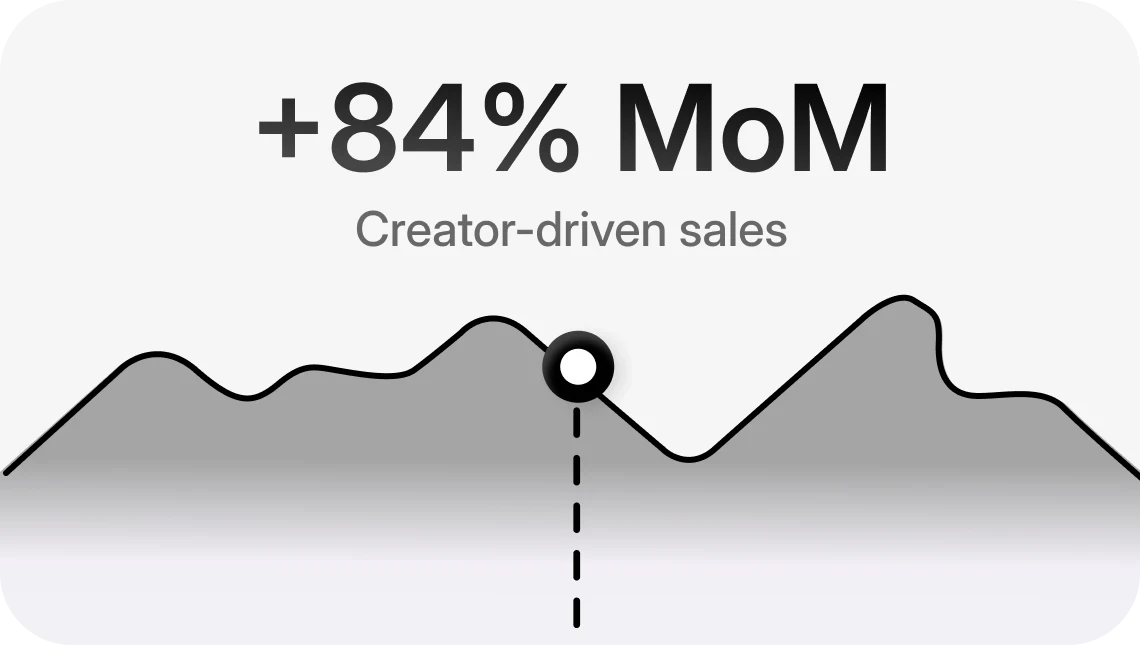
Armed with this data, the brand restructured its next campaign. They increased investment in the top 18 creators with higher commission rates and exclusive early access. They shifted 30% of their Instagram budget to TikTok. They implemented a personalized seeding workflow based on each creator's audience demographics and past content style. The results over two campaign cycles were significant: creator-attributed GMV increased by 58%, cost per acquisition dropped by 31%, and content approval time decreased from an average of 5 days to 1.5 days. The e-commerce team began featuring top-performing creator content on product pages, which increased on-site conversion rates for those pages by 22%.
Frequently Asked Questions
How does creator performance tracking differ from standard social media analytics?
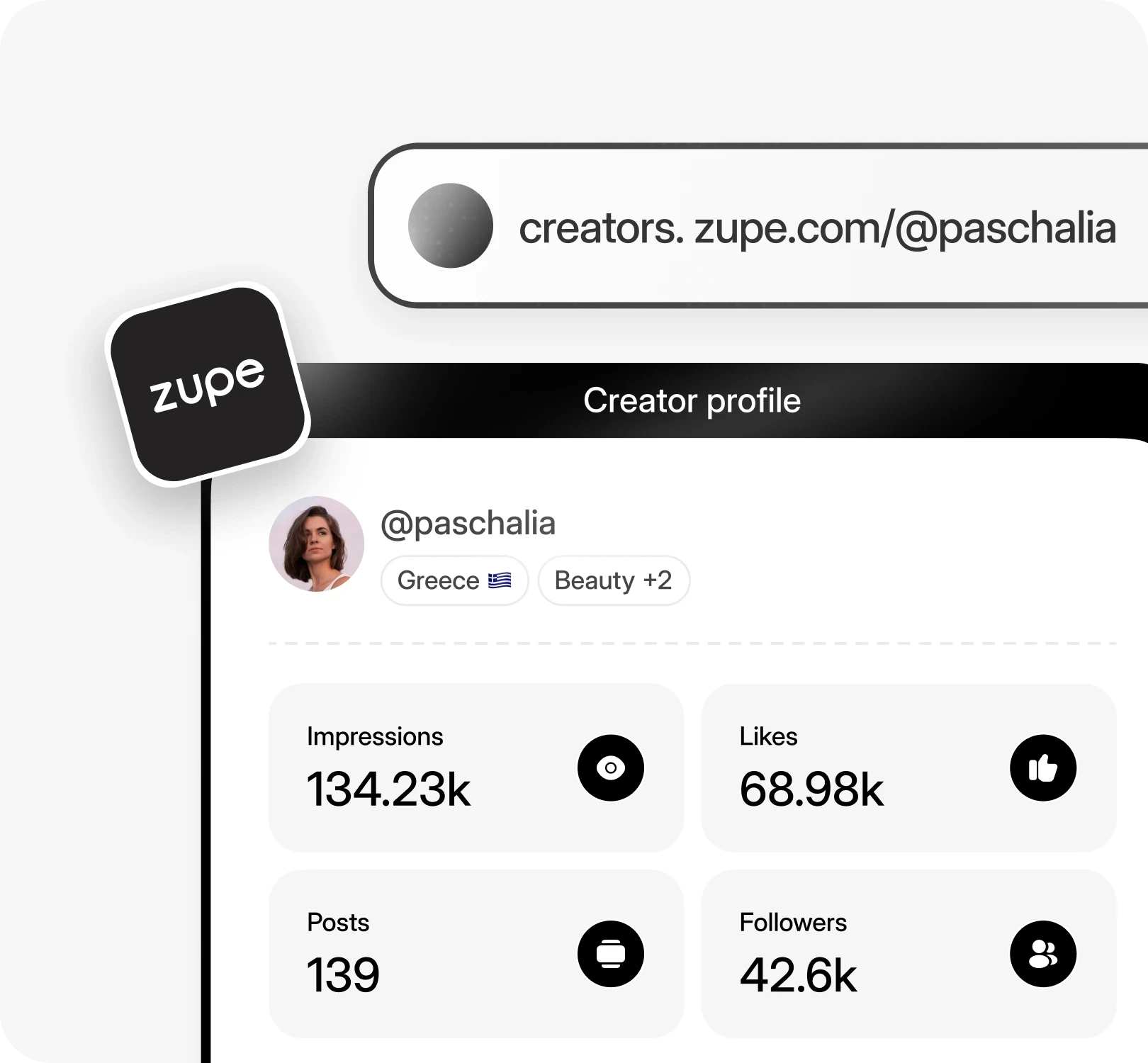
Standard social media analytics show surface-level metrics like likes, views, and follower growth. Creator performance tracking goes further by connecting these engagement signals to commerce outcomes: clicks, site visits, add-to-cart actions, purchases, and revenue. For fashion brands, this means you can see not just that a creator's post got 50,000 views, but that it drove 340 site visits, 85 add-to-carts, and 42 orders totaling $6,200 in revenue. This full-funnel attribution is what separates performance tracking from basic analytics.
Can I track creator performance across multiple platforms in one place?
Yes. A centralized creator performance tracking system pulls data from Instagram, TikTok, YouTube, and your e-commerce platform into a single dashboard. This eliminates the need to manually export data from each platform and stitch it together in spreadsheets. For fashion brands activating creators across multiple channels simultaneously, this cross-platform view is essential for making accurate investment decisions.
How quickly can I see performance data during a live campaign?
With proper tracking infrastructure, performance data is available in near real-time. Engagement metrics typically update within hours, while commerce metrics like clicks and conversions update as transactions are processed. For fashion brands running time-sensitive campaigns like flash sales or limited drops, this speed allows for mid-campaign optimization that can materially impact results.
What is the minimum number of creators needed to make performance tracking worthwhile?
Performance tracking adds value at any scale, but the operational ROI becomes most apparent when you are working with 20 or more creators per campaign. At that volume, manual tracking becomes unreliable and the ability to quickly identify top and bottom performers saves significant time and budget. Fashion brands running programs with 50 to 500 creators see the highest return on investing in dedicated tracking infrastructure.
How does creator performance tracking help with content repurposing decisions?
When you know which creator content pieces drive the highest engagement and conversion rates, you can make data-informed decisions about which assets to repurpose for paid ads, email campaigns, and on-site shoppable galleries. Instead of choosing content based on visual appeal alone, fashion teams can prioritize assets that have proven commerce performance, increasing the ROI of every repurposed piece.