Creator Drive for Online Marketplaces: Centralize Your Multi-Brand Influencer Content Repository
Online marketplaces operate at a scale that most single-brand stores never encounter. When you manage hundreds or thousands of sellers, each running their own creator campaigns, the volume of influencer-generated content can spiral into chaos within weeks. Photos, videos, usage rights, brand guidelines, and approval statuses scatter across email threads, Google Drives, Slack channels, and individual seller accounts. Without a centralized multi-brand influencer content repository, your marketplace team loses visibility into what content exists, who created it, and where it can legally be used.
This is where Creator Drive transforms how online marketplaces approach social commerce at scale. Rather than treating creator content as disposable campaign assets, a purpose-built content repository turns every piece of UGC into a searchable, licensable, and reusable resource that compounds in value over time. Marketplace operators can finally give sellers access to high-performing creator content while maintaining governance over brand standards, usage rights, and content quality.
Whether your marketplace supports fashion sellers, home goods vendors, or multi-category retail, Creator Drive provides the infrastructure to organize, distribute, and activate creator content across every storefront and marketing channel your platform touches.
Content Fragmentation Across Hundreds of Sellers
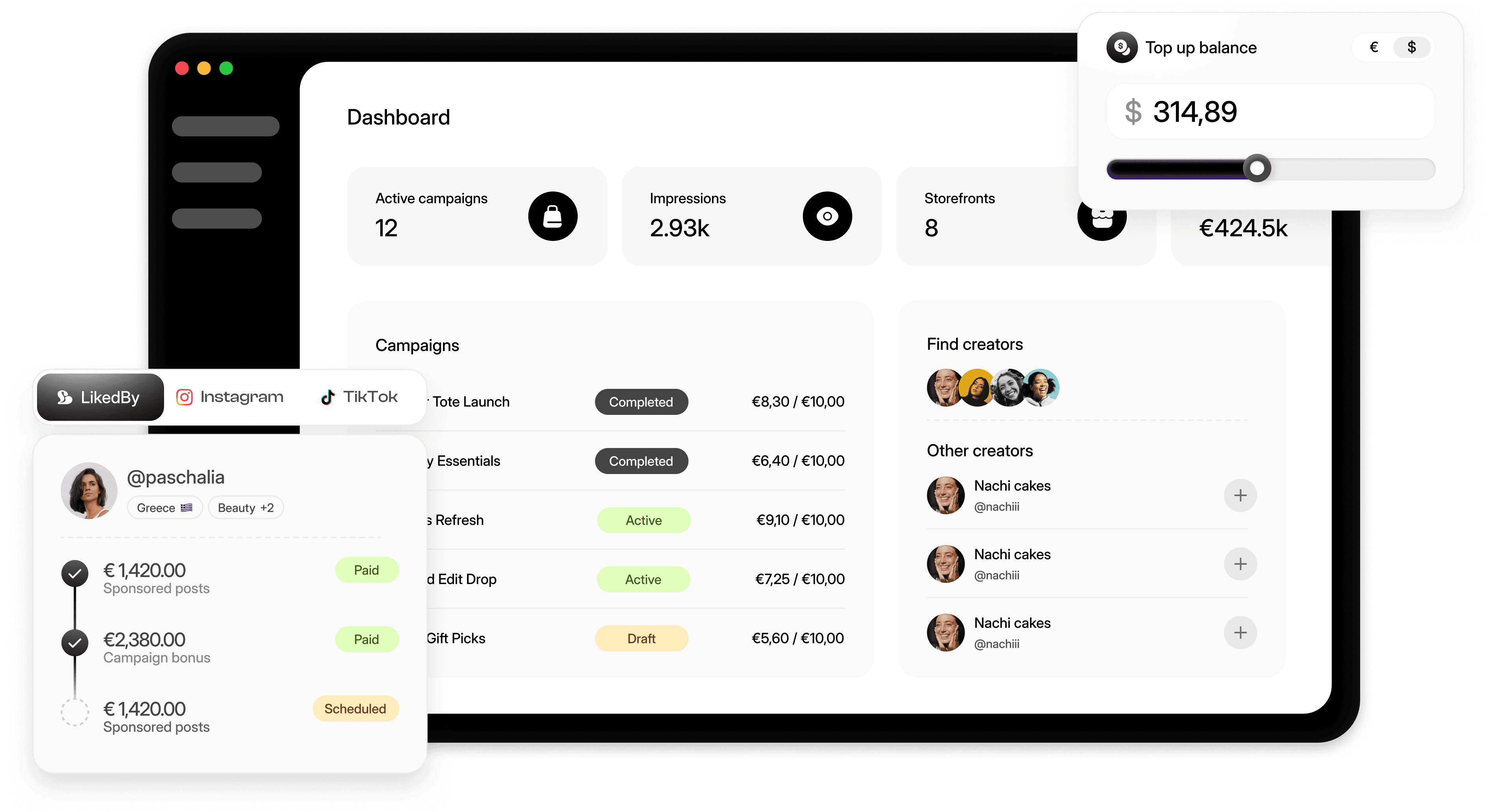
Online marketplaces work with dozens to thousands of independent sellers, each generating creator content independently. Without a shared system, content lives in silos — individual seller folders, creator inboxes, and agency portals — making it impossible for marketplace teams to audit, curate, or redistribute assets efficiently.
Usage Rights Ambiguity at Scale
When multiple brands and creators collaborate through a marketplace, tracking who owns what content and where it can be displayed becomes a legal minefield. Expired licenses, unclear territorial rights, and missing creator agreements expose marketplaces to takedown requests and compliance risks.
Duplicate Content Production
Without visibility into existing assets, marketplace sellers frequently commission new creator content for products or categories that already have high-performing UGC available. This leads to redundant spend and slower time-to-market for seasonal campaigns.
Inconsistent Content Quality Across Storefronts
Marketplaces depend on consistent buyer experiences. When individual sellers source their own creator content without centralized quality guidelines, the result is a patchwork of production values that erodes marketplace brand trust.
Slow Approval Workflows
Content approvals in marketplace environments often involve multiple stakeholders: the seller, the marketplace brand team, legal, and sometimes the creator themselves. Without structured workflows, approvals stall in email chains for days or weeks.
No Connection Between Content and Commerce Performance
Most marketplaces store content separately from performance data. Teams cannot quickly identify which creator assets drive clicks, conversions, or GMV for specific product categories, making optimization guesswork rather than data-driven.
Difficulty Scaling Creator Programs Across New Verticals
As marketplaces expand into new product categories or geographies, they need to rapidly onboard creators and organize content for unfamiliar verticals. Without a scalable content repository, each new vertical launch starts from zero.
Generic Cloud Storage Lacks Commerce Context
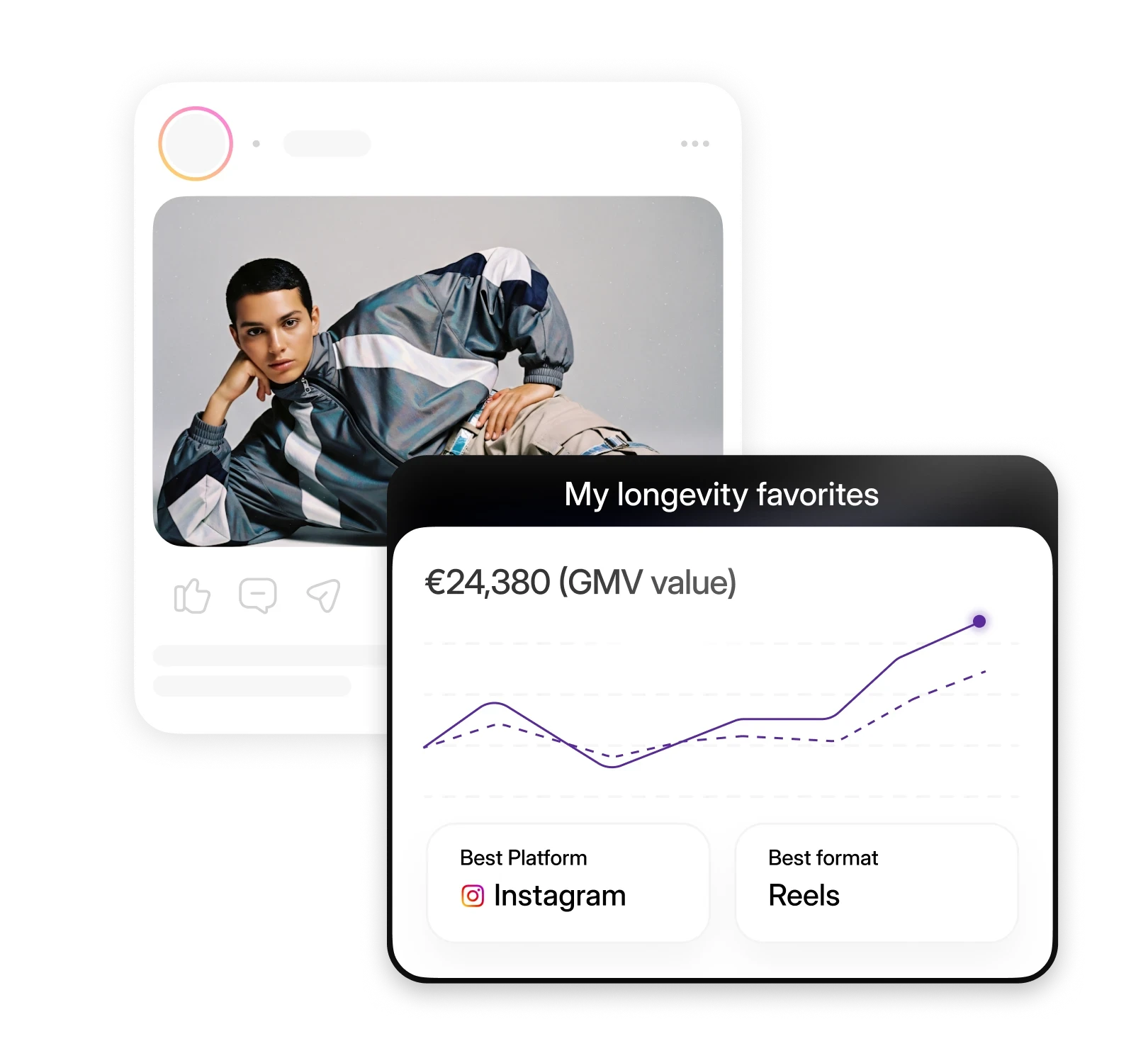
Tools like Google Drive, Dropbox, and Box were designed for general file storage, not for managing creator content with attached metadata like usage rights, creator profiles, campaign associations, and commerce performance data. Marketplace teams end up building fragile spreadsheet layers on top of these tools, which break as content volume grows.
DAM Platforms Are Built for Brand Teams, Not Marketplaces
Traditional digital asset management platforms assume a single-brand workflow. They lack multi-tenant structures that let marketplace operators organize content by seller, category, campaign, and creator simultaneously. Permissions models are too rigid to support the dynamic relationships between marketplace teams, sellers, and external creators.
Social Media Management Tools Ignore the Content Lifecycle
Scheduling tools like Hootsuite or Sprout Social focus on publishing, not on the upstream work of collecting, organizing, approving, and licensing creator content. They treat content as ephemeral social posts rather than durable commerce assets that need to be reused across product pages, ads, email campaigns, and shoppable widgets.
Influencer Platforms Stop at Campaign Delivery
Most influencer marketing software focuses on creator discovery and campaign execution. Once content is delivered, it lands in a download folder with no structured taxonomy, no rights tracking, and no connection to downstream commerce performance. For marketplaces managing ongoing creator relationships across multiple sellers, this gap is critical.
Spreadsheet-Based Tracking Collapses at Scale
Small marketplace teams often start with spreadsheets to track content status, creator details, and usage rights. This approach fails once content volume exceeds a few hundred assets per month, which most active marketplaces hit within their first quarter of running creator programs.
How Socialscale Creator Drive Solves Content Chaos for Online Marketplaces
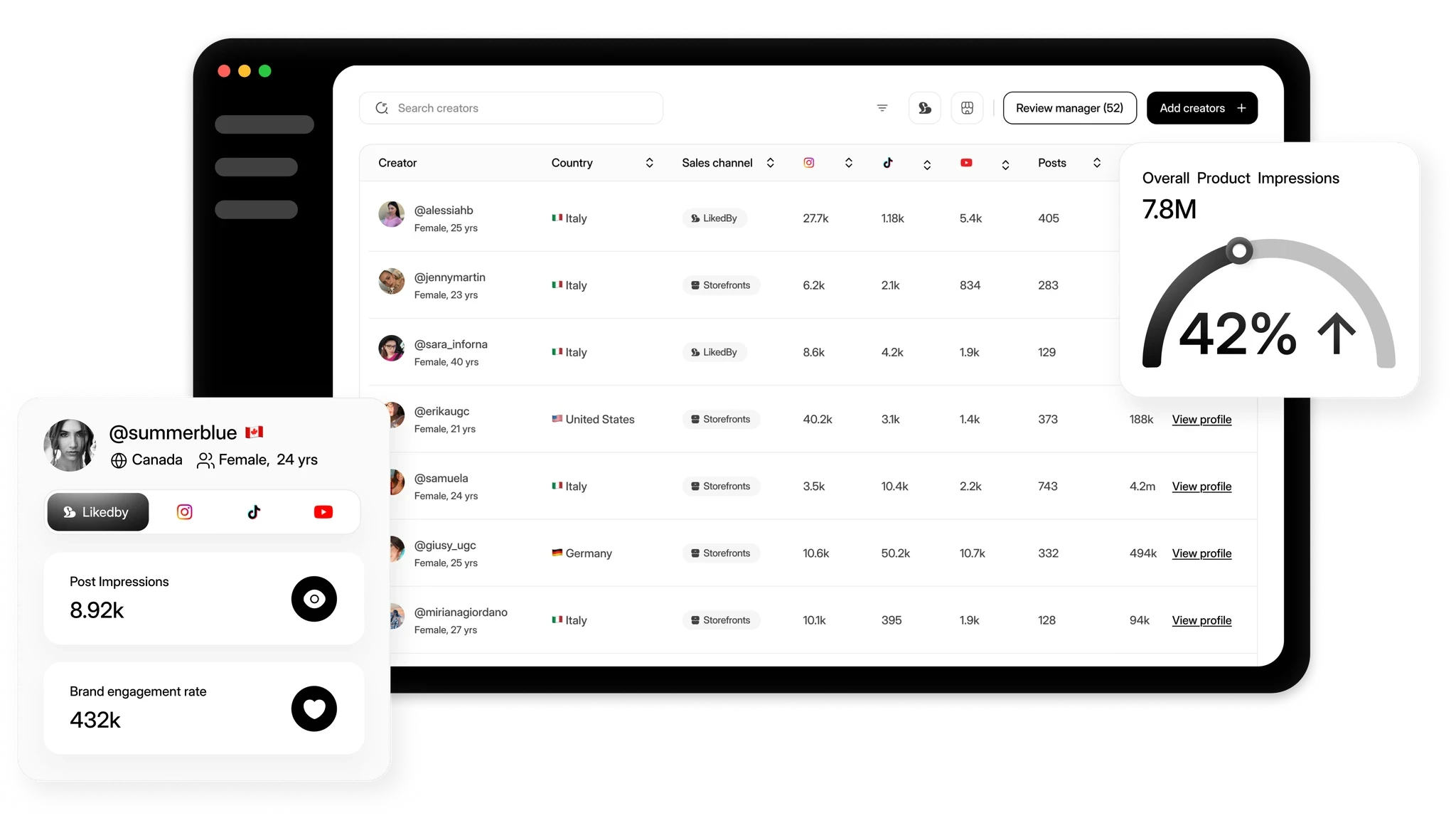
Socialscale's Creator Drive is a purpose-built multi-brand influencer content repository designed for the complexity of marketplace operations. It sits at the center of your creator program, connecting content ingestion, organization, approval, rights management, and distribution into a single workflow that scales with your marketplace.
Unlike generic storage tools, Creator Drive automatically enriches every asset with commerce-relevant metadata: the creator who produced it, the campaign it belongs to, the seller or brand it serves, usage rights and expiration dates, and performance signals from downstream activation. This means your marketplace team can search, filter, and surface the right content in seconds rather than digging through folders.
Creator Drive integrates directly with Socialscale's creator CRM, so every asset is linked to a creator profile with collaboration history, performance benchmarks, and contact details. When your team needs to re-engage a top-performing creator for a new seller campaign, the context is already there.
For marketplaces that embed shoppable content across seller storefronts, Creator Drive feeds directly into creator widgets — allowing approved UGC to be displayed on product pages, category pages, and homepage carousels without manual export-import cycles. The result is a closed loop from content creation to commerce conversion, all governed by your marketplace's quality and compliance standards.
Feature Breakdown: What Creator Drive Delivers for Marketplace Teams
Multi-Tenant Content Organization
Creator Drive supports hierarchical folder structures designed for marketplace complexity. Organize content by seller, product category, campaign, season, content format, or any custom taxonomy your team defines. Each seller can have their own content workspace while marketplace administrators retain full visibility and governance across all workspaces. This eliminates the need for separate storage accounts per seller and centralizes your entire content library.
Automated Content Ingestion
Creators submit content directly into Creator Drive through branded upload portals or automated pulls from Instagram, TikTok, and YouTube. Every submission is automatically tagged with the creator's profile, the associated campaign brief, and preliminary metadata. Marketplace teams no longer need to chase creators for deliverables or manually download content from social platforms.
Rights Management and License Tracking
Every asset in Creator Drive carries a rights record: the type of license granted, permitted usage channels, territorial restrictions, and expiration dates. When a license is approaching expiration, the system flags it so your team can renew or retire the content before compliance issues arise. For marketplaces operating across multiple countries, this feature prevents costly rights violations.
Multi-Stakeholder Approval Workflows
Configure approval chains that match your marketplace's review process. A typical flow might route content from creator submission to seller review, then to marketplace brand compliance, and finally to legal sign-off. Each stakeholder sees only the assets requiring their attention, with inline commenting and revision request capabilities. Approval status is visible to all parties in real time, eliminating status-check emails.
Content Performance Tagging
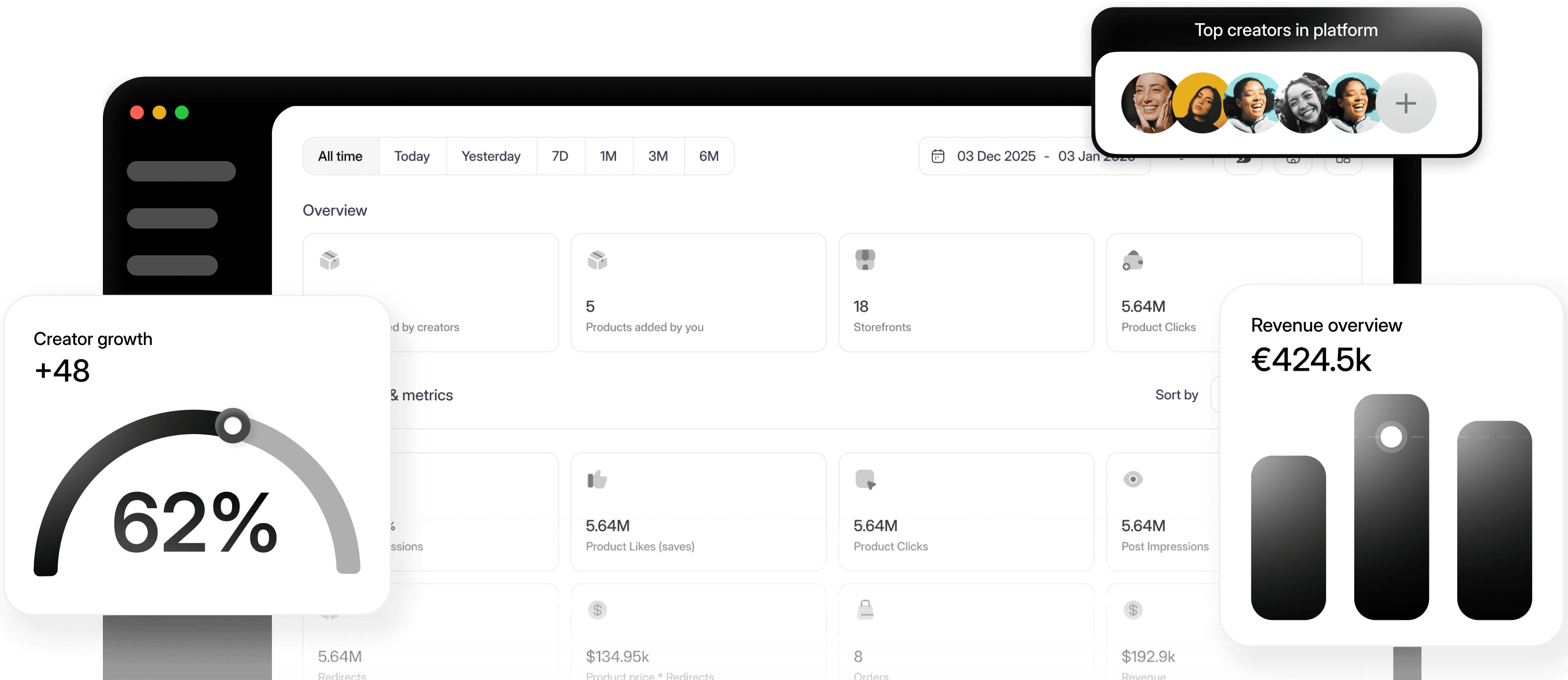
Creator Drive doesn't just store content — it connects each asset to downstream performance data. When a creator video is embedded on a product page via shoppable widgets, the resulting click-through rate, add-to-cart rate, and conversion data flow back to the asset record. Over time, your marketplace builds a performance-indexed content library where the best-converting assets surface automatically.
Advanced Search and Filtering
Search across your entire content library by creator name, seller, product SKU, campaign name, content format (photo, video, reel, story), approval status, rights status, performance tier, or date range. For marketplace teams managing tens of thousands of assets, this search capability reduces the time to find and activate the right content from hours to seconds.
Bulk Operations and Export
Select hundreds of assets at once for bulk approval, bulk tagging, bulk rights updates, or bulk export. When a seller needs a content pack for an external ad campaign, marketplace teams can assemble and deliver it in minutes rather than manually collecting files from scattered locations.
Creator Attribution and Watermarking
Maintain proper creator attribution across every usage channel. Creator Drive can embed creator handles or custom watermarks into exported assets, ensuring compliance with FTC guidelines and creator agreements while giving creators the visibility they expect from marketplace partnerships.
Use Cases: Creator Drive in Action for Online Marketplaces
1. Seasonal Campaign Content Hub for a Fashion Marketplace
A fashion marketplace running a spring/summer campaign across 200 sellers needs to coordinate creator content from 80 influencers simultaneously. Each creator produces content for 2-3 sellers, resulting in over 500 assets delivered within a two-week window. The marketplace team uses Creator Drive as the central intake point, automatically routing each submission to the correct seller workspace based on campaign tags. Sellers review and approve content within their workspace, while the marketplace brand team runs a parallel quality check. Approved assets are immediately available for embedding on seller storefronts and for the marketplace's own social channels. The entire campaign goes from content delivery to live activation in under five business days instead of the typical three-week scramble.
2. Always-On UGC Library for a Home Goods Marketplace
A home goods marketplace encourages its top 50 sellers to run ongoing micro-influencer programs, generating a steady stream of lifestyle photography and short-form video. Rather than letting this content disappear into individual seller folders, the marketplace aggregates everything into Creator Drive. The content team curates a "best of" collection each month, surfacing top-performing assets for homepage features, email campaigns, and paid social. Sellers who lack their own creator programs can request access to category-level content libraries, reducing the barrier to high-quality storefront merchandising across the entire marketplace.
3. Multi-Market Content Localization for a Global Marketplace
A marketplace expanding from the US into the UK and Germany needs to manage creator content with region-specific usage rights and language requirements. Creator Drive's rights management and tagging system allows the marketplace to maintain separate content pools by market while giving the global team a unified view. When a US-created product video performs well, the team can quickly check whether its rights permit UK usage, identify whether localization is needed, and assign the asset to the appropriate regional content queue — all without leaving the platform.
4. Affiliate Creator Content Scaling for an Electronics Marketplace
An electronics marketplace runs an affiliate creator program where 300 tech reviewers produce unboxing videos, comparison reviews, and tutorial content for products listed by 150 sellers. The volume of content — over 1,000 videos per quarter — makes manual organization impossible. Creator Drive ingests content automatically from YouTube and TikTok, tags each asset with the associated product SKU and seller, and tracks which videos drive the most referral traffic and conversions. The marketplace uses this performance data to identify its top 20 affiliate creators each quarter and offer them premium placement deals, creating a virtuous cycle of higher-quality content and stronger commerce results.
Weekly and Monthly Operational Workflow for Marketplace Teams
Running a creator content repository effectively requires consistent operational rhythms. Below is a practical workflow that marketplace teams can adopt to keep their Creator Drive organized and high-performing.
Monday: Content Intake Review
Start each week by reviewing all new content submissions that arrived over the weekend and previous week. Use Creator Drive's intake dashboard to sort submissions by campaign, seller, and creator. Flag any incomplete deliverables — missing formats, wrong aspect ratios, or submissions without proper briefs — and send revision requests directly through the platform.
Tuesday–Wednesday: Approval Routing
Route approved-for-review content through your multi-stakeholder approval workflow. Sellers receive notifications to review content tagged to their products. The marketplace brand team reviews assets flagged for homepage or featured placement. Legal reviews any content involving claims, testimonials, or comparison statements. Track approval progress in real time and escalate any bottlenecks before they delay activation.
Thursday: Rights Audit
Run a weekly rights status report to identify any assets with licenses expiring in the next 30 days. Initiate renewal conversations with creators whose content is still performing well. Archive or remove assets with expired rights to prevent accidental usage. This weekly cadence prevents the rights compliance gaps that plague marketplaces relying on manual tracking.
Friday: Content Activation
Push newly approved content to its activation channels. Embed top-performing assets into seller storefronts via shoppable content widgets. Queue assets for the marketplace's own social channels and email campaigns. Update category-level content libraries so sellers browsing for UGC see the freshest material.
Bi-Weekly: Performance Review
Every two weeks, pull performance reports from Creator Drive to identify which assets are driving the highest CTR, conversion rate, and GMV contribution. Tag top-performing assets as "featured" so they surface first in search results. Share performance summaries with sellers to demonstrate the ROI of their creator investments.
Monthly: Creator and Seller Reporting
Generate monthly reports for each seller showing total content produced, approval rates, activation channels, and commerce performance tied to creator content. Separately, generate creator-level reports showing content output, approval rates, and performance benchmarks. Use these reports to inform creator tier assignments and seller program renewals.
Quarterly: Content Library Audit and Taxonomy Refresh
Once per quarter, audit the entire content library for outdated assets, retired products, or inactive sellers. Archive content that is no longer relevant. Review and update your taxonomy — adding new product categories, campaign types, or content formats as your marketplace evolves. This prevents content sprawl and keeps the repository navigable as it scales.
Key Performance Indicators for Marketplace Creator Content Programs
Tracking the right metrics ensures your Creator Drive investment translates into measurable marketplace growth. These KPIs span content operations, creator program health, and commerce impact.
Content Activation Rate: Percentage of submitted creator content that passes approval and is activated on at least one channel (storefront, social, email, ads). Target: 70%+ for well-briefed campaigns.
Average Approval Time: Time from content submission to final approval. Marketplace teams should target under 72 hours for standard content and under 48 hours for time-sensitive seasonal campaigns.
Content Output per Creator: Average number of approved assets produced per creator per month. Tracks creator productivity and helps identify underperforming partnerships.
Content Reuse Rate: Number of times a single asset is deployed across different channels or seller storefronts. Higher reuse rates indicate strong content ROI.
Click-Through Rate (CTR) on Embedded Content: CTR on shoppable creator content embedded on product pages and category pages. Benchmark varies by category but typically ranges from 2-6% for well-placed UGC.
Conversion Rate (CVR) from Creator Content: Percentage of users who click on creator content and complete a purchase. This is the most direct measure of content commerce impact.
GMV Attributed to Creator Content: Total gross merchandise value generated through sessions that interacted with creator content. This is the north-star metric for marketplace social commerce programs.
Rights Compliance Rate: Percentage of active content with valid, non-expired usage licenses. Target: 100% at all times.
Cost per Asset (CPA): Total creator program spend divided by number of approved, activated assets. Helps marketplace teams benchmark efficiency against alternative content production methods.
ROAS on Creator Content in Paid Channels: Return on ad spend when creator content is repurposed for paid social or display campaigns. Typically 1.5-3x higher than brand-produced creative for marketplace categories.
Scenario: Multi-Category Marketplace Scales Creator Content Operations
A mid-size online marketplace operating across fashion, beauty, and home décor categories was managing creator content for 120 active sellers. Before implementing a centralized content repository, the marketplace team relied on a combination of Google Drive folders (one per seller), email threads for approvals, and a master spreadsheet to track usage rights across 4,000+ creator assets.
The Problem
Content approval cycles averaged 11 business days. The team estimated that 15% of content displayed on seller storefronts had expired or ambiguous usage rights. Sellers frequently complained that they could not find or access creator content produced for their products. Meanwhile, the marketplace's own marketing team had no reliable way to identify top-performing UGC for homepage features or paid campaigns. An internal audit revealed that approximately 30% of creator content was never activated on any channel after approval — representing significant wasted investment.
The Implementation
The marketplace migrated its entire content library into Creator Drive over a three-week period. The team established a taxonomy organized by product category, seller, campaign type, and content format. Automated ingestion was configured for Instagram and TikTok, covering 85% of new content submissions. A three-stage approval workflow was implemented: seller review, marketplace brand review, and legal sign-off for content involving product claims.
Results After 90 Days
Average approval time dropped from 11 business days to 2.8 business days. Content activation rate increased from 70% to 94%, meaning nearly all approved content was deployed to at least one channel. The rights compliance rate reached 100% — every active asset had a valid, tracked license. The marketplace's marketing team used performance tagging to identify the top 50 creator assets by conversion rate and featured them in a homepage carousel, which generated a 22% increase in homepage-to-product-page click-through rate. Sellers reported a 40% reduction in time spent searching for and requesting creator content. Over the quarter, GMV attributed to sessions that interacted with creator content grew by 18%, representing an incremental $1.2M in marketplace transaction volume.
Frequently Asked Questions
How does Creator Drive differ from a standard digital asset management platform?
Creator Drive is built specifically for creator content workflows in commerce environments. Unlike generic DAM platforms, it includes native rights management with expiration tracking, multi-stakeholder approval workflows designed for marketplace seller-brand-creator relationships, automatic content ingestion from social platforms, and performance data integration that connects each asset to downstream commerce metrics like CTR, conversion rate, and GMV. Standard DAM tools require extensive customization to replicate even a fraction of this functionality.
Can individual sellers access and manage their own content within Creator Drive?
Yes. Creator Drive supports multi-tenant access with configurable permissions. Each seller can view, review, and approve content within their designated workspace without seeing other sellers' assets. Marketplace administrators retain a global view across all seller workspaces, enabling centralized governance while preserving seller autonomy over their own content programs.
How does Creator Drive handle content rights for creators working with multiple sellers on the same marketplace?
Each piece of content carries its own rights record, independent of the creator's other work. If a creator produces content for Seller A and Seller B on the same marketplace, each asset has separate license terms, usage permissions, and expiration dates. This prevents rights conflicts and ensures that content produced for one seller is not inadvertently used by another without proper authorization.
What happens to content when a seller leaves the marketplace?
Marketplace administrators can archive or transfer a departing seller's content workspace. Content with active usage rights can be retained in the marketplace's general library if the license terms permit it. Content with seller-specific rights is automatically flagged for review and can be retired or renegotiated with the original creators. This process is managed through Creator Drive's bulk operations tools, preventing orphaned content from creating compliance gaps.
How quickly can a marketplace team get started with Creator Drive?
Most marketplace teams complete initial setup — taxonomy configuration, permission structures, and integration connections — within one to two weeks. Migrating an existing content library depends on volume but typically takes an additional one to three weeks for libraries of 5,000-20,000 assets. Socialscale provides onboarding support to ensure your taxonomy and workflows match your marketplace's operational structure. You can book a demo to see the setup process in detail.