Creator Drive for Influencer Agencies: The Content Vault Built for Large Influencer Networks
Influencer agencies managing dozens or hundreds of creators across simultaneous campaigns face a persistent operational bottleneck: content chaos. Raw assets live in scattered Google Drives, WeTransfer links expire, and approved deliverables get buried in email threads. When a brand partner asks for a specific piece of UGC from last quarter, the scramble begins.
Creator Drive by Socialscale solves this by giving influencer agencies a centralized, searchable content vault purpose-built for creator content storage at scale. Every asset uploaded by every creator across every campaign is automatically organized, tagged, and accessible to the team members who need it. No more hunting through folders or re-requesting files from talent.
For agencies operating in social commerce, where speed-to-publish and content repurposing directly impact revenue, a disorganized asset library is not just an inconvenience. It is a measurable drag on campaign performance, client satisfaction, and team capacity. Creator Drive transforms content management from a recurring headache into a strategic advantage.
Content Fragmentation Across Creators and Campaigns
When an agency manages 200+ creators running content for 15 different brand clients, assets end up scattered across personal drives, Slack channels, email attachments, and platform DMs. There is no single source of truth for what content exists, what has been approved, and what has been published.
Version Control Nightmares
Creators often submit multiple drafts before final approval. Without a structured system, teams frequently publish the wrong version, use unapproved content in paid amplification, or lose track of revision history entirely. This creates compliance risk and damages client trust.
Slow Content Retrieval for Client Requests
Brand clients routinely request specific assets for their own channels, paid media, or quarterly reports. Agencies without a centralized vault waste hours digging through folders, messaging creators, and re-downloading files that should be instantly accessible.
Inability to Repurpose Content Efficiently
High-performing creator content has a long shelf life when repurposed across shoppable content widgets, email campaigns, and paid social. But if the agency cannot quickly locate and categorize top-performing assets, repurposing becomes ad hoc rather than systematic.
Onboarding New Team Members Takes Too Long
When a new account manager joins the agency, understanding what content has been produced for each client requires manual walkthroughs. Without organized archives, institutional knowledge lives in individual team members' heads rather than in the system.
Rights Management and Usage Tracking Gaps
Agencies must track content usage rights per creator, per campaign, and per brand. Spreadsheet-based tracking breaks down at scale, leading to potential legal exposure when content is used beyond its agreed scope.
No Connection Between Content and Performance Data
Most file storage tools treat assets as static files. They cannot tell you which piece of content drove the most conversions, which creator consistently delivers high-CTR assets, or which content format performs best for a specific brand vertical.
Google Drive and Dropbox Were Not Built for Creator Workflows
General-purpose cloud storage tools lack creator-specific metadata, campaign-level organization, and approval status tracking. Agencies end up building elaborate folder hierarchies that break down the moment a creator works across multiple campaigns or a brand requests assets filtered by format, platform, or performance tier.
Project Management Tools Treat Content as an Afterthought
Tools like Asana, Monday, or Trello can track task completion but offer no native asset management. Linking to external files creates dependency chains that break when links expire or permissions change. The content itself remains disconnected from the workflow that produced it.
Influencer Marketing Platforms Offer Shallow Storage
Many influencer marketing software platforms include basic media libraries, but these are typically limited to thumbnails or links rather than full-resolution originals. They rarely support bulk uploads from creators, lack granular tagging, and cannot connect assets to downstream performance metrics or shoppable content deployment.
Manual Processes Do Not Scale Beyond 50 Creators
An agency managing a small roster can get by with naming conventions and shared folders. But once the network exceeds 50 active creators producing content weekly, manual organization becomes a full-time job. The cost of a dedicated content coordinator often exceeds the cost of proper tooling, and human error remains a constant risk.
How Socialscale Creator Drive Solves Content Management for Influencer Agencies
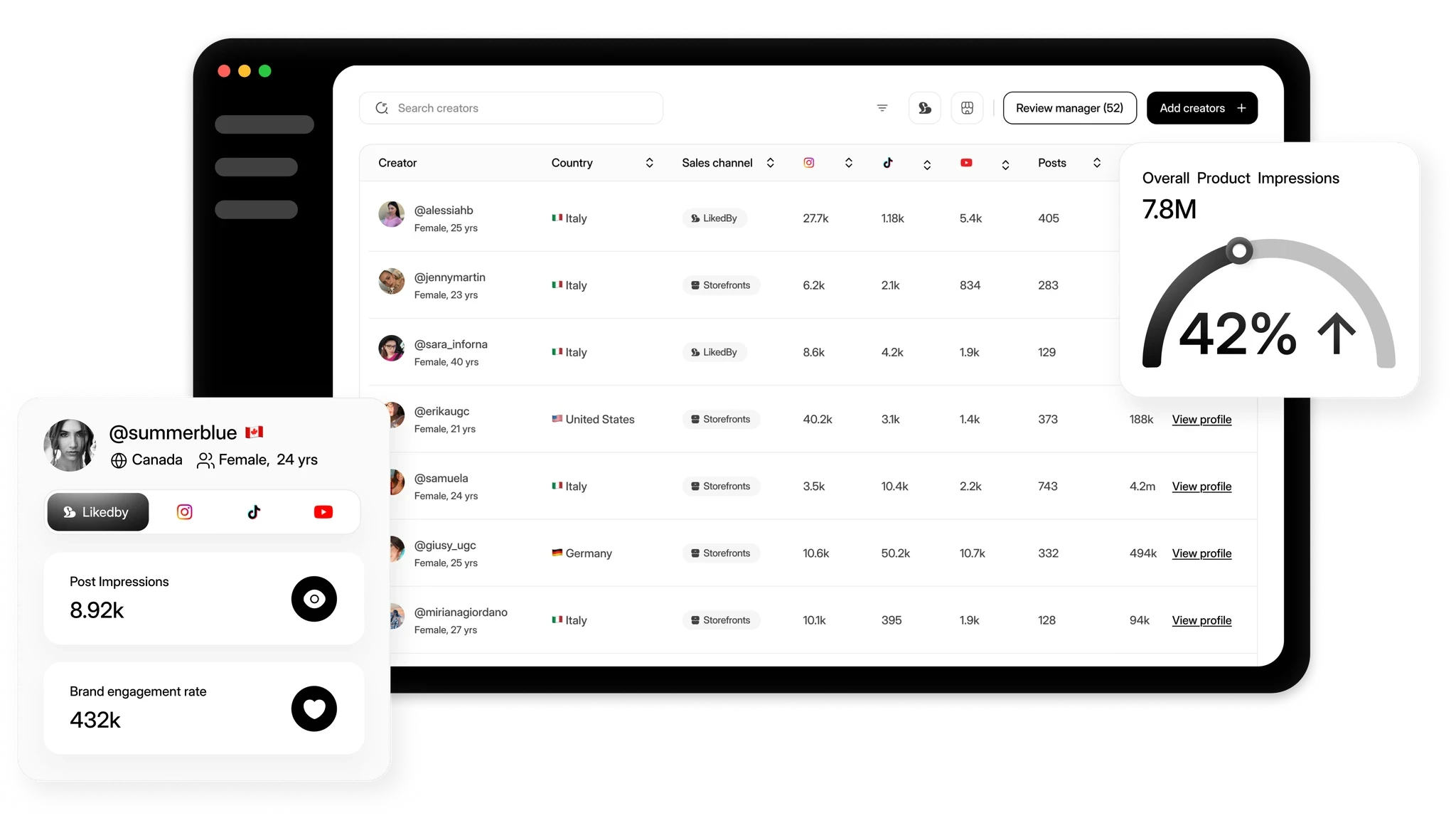
Socialscale's Creator Drive is a purpose-built content vault designed for the specific demands of agencies running large influencer networks. Unlike generic storage, every asset in Creator Drive is automatically linked to the creator who produced it, the campaign it belongs to, the brand client it serves, and the approval status it carries.
When creators submit content, it flows directly into the drive with structured metadata. Account managers can filter by campaign, creator, content type, platform, approval status, or date range. This eliminates the folder-diving that consumes hours every week and ensures that every team member, from the junior coordinator to the agency director, can find exactly what they need in seconds.
Creator Drive integrates tightly with the rest of the Socialscale ecosystem. Assets stored in the drive can be pushed directly into shoppable creator widgets on brand partner websites, linked to performance data in the creator analytics dashboard, or associated with creator profiles in the CRM. This means content is not just stored; it is activated, measured, and continuously repurposed as part of a living social commerce engine.
For agencies managing affiliate creator programs, Creator Drive also serves as the audit trail. Every piece of content tied to a commission-generating link is archived with full provenance, making reconciliation with brand partners straightforward and transparent.
Campaign-Level Asset Organization
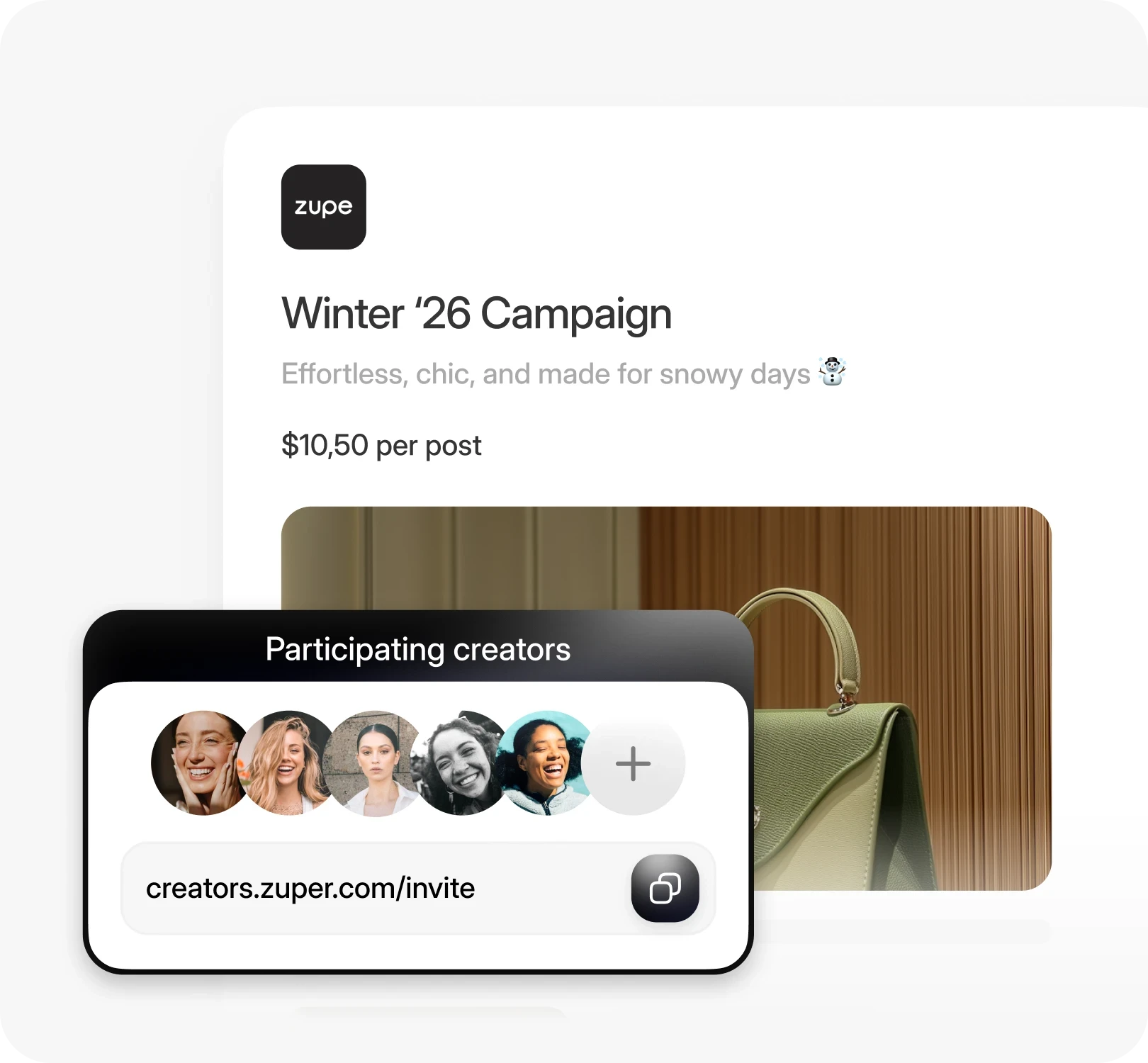
Every asset uploaded to Creator Drive is automatically categorized under its associated campaign and brand client. Agencies can create campaign-specific folders that mirror their actual client structure, with sub-categories for content type (Reels, TikToks, Stories, static posts, long-form YouTube), draft stage, and platform destination. This mirrors how agency teams actually think about content rather than forcing them into generic folder trees.
Creator-Linked Uploads with Metadata Tagging
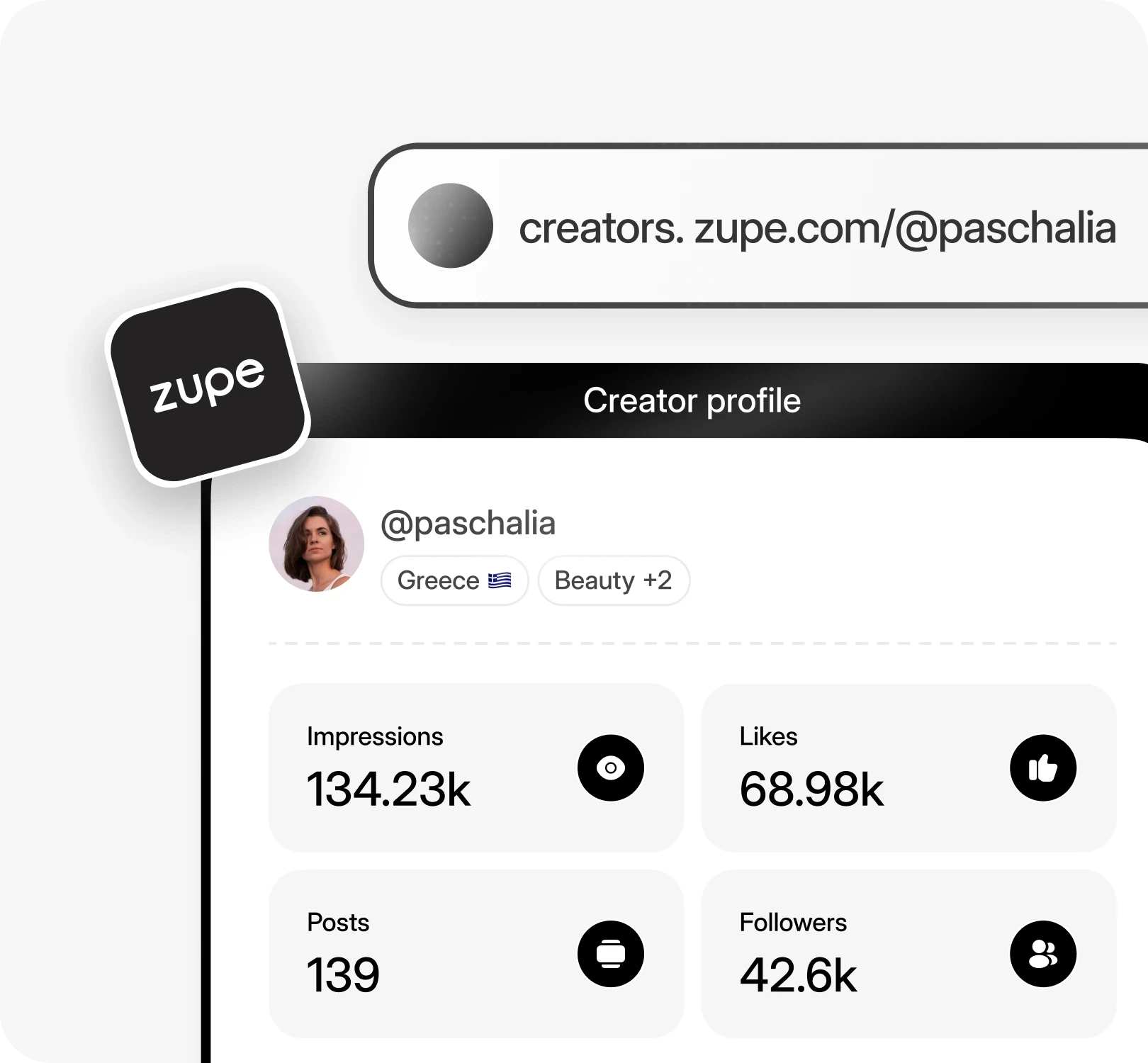
When a creator submits content, the file is automatically tagged with the creator's profile, submission date, campaign brief reference, and content specifications. Additional custom tags can be applied for product SKU, content theme, seasonal relevance, or any taxonomy the agency defines. This makes retrieval instant, whether searching by creator name, product, or campaign period.
Approval Workflow Integration
Each asset carries a visible approval status: pending review, revision requested, approved, or published. Account managers can approve or request revisions directly within the drive interface, and creators receive notifications without leaving the platform. This eliminates the back-and-forth across email and messaging apps that delays campaign timelines.
Bulk Download and Export for Client Delivery
Brand clients frequently need content packages for their own use, whether for paid amplification, website galleries, or internal presentations. Creator Drive supports bulk export filtered by any combination of tags, delivering a clean, organized package that the agency can hand off without manual curation.
Usage Rights Tracking Per Asset
Each asset can carry usage rights metadata specifying the scope of permitted use, duration, platforms, and whether paid media rights are included. This gives account managers a clear view of what content can be repurposed and when rights expire, reducing legal risk and enabling proactive renewal conversations with creators.
Performance Data Overlay
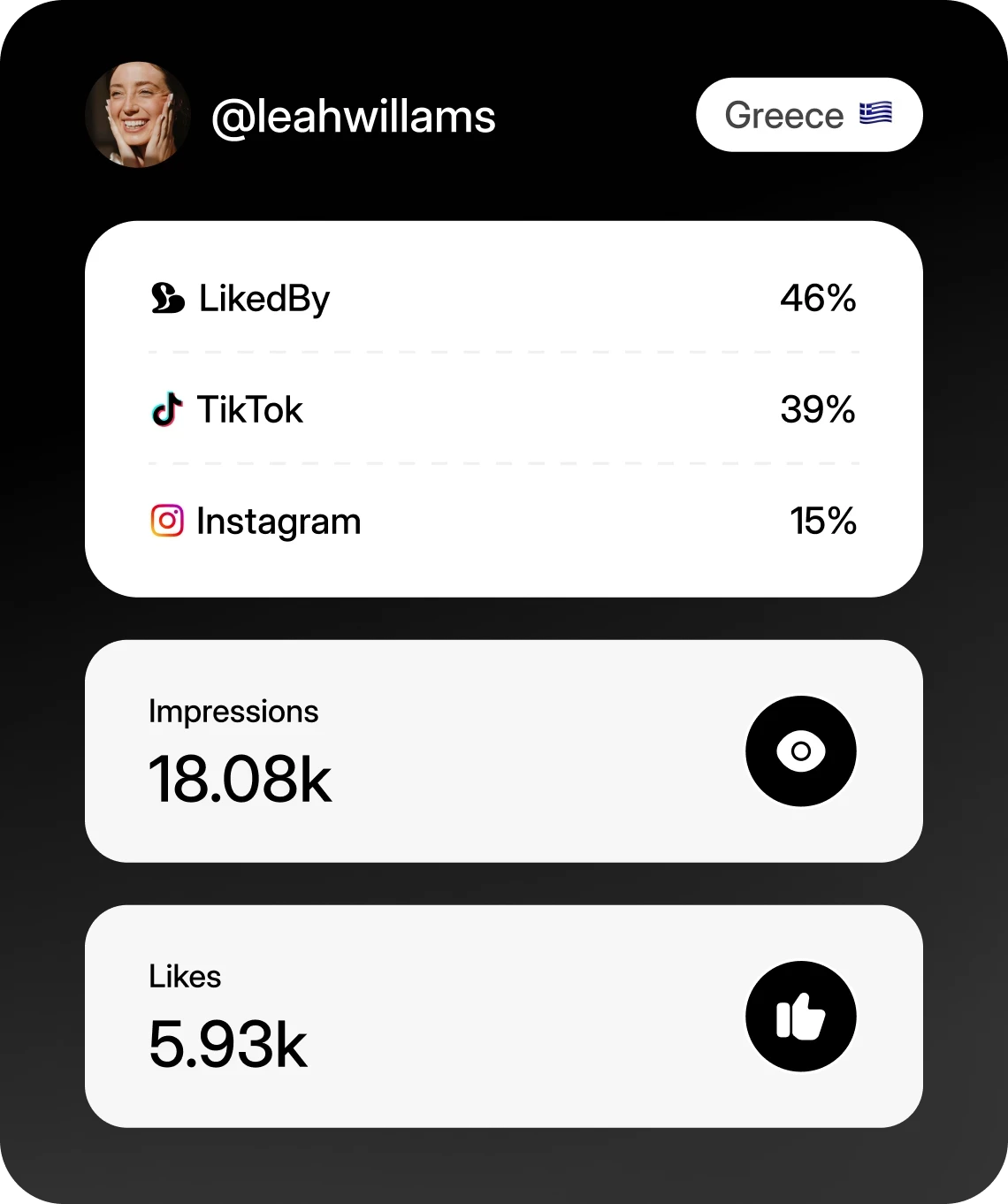
Unlike static file storage, Creator Drive connects each asset to its downstream performance metrics. When a piece of content is deployed via shoppable widgets or tracked through affiliate links, the drive displays engagement rate, click-through rate, conversion rate, and attributed revenue directly alongside the asset thumbnail. This transforms the content vault from a passive archive into an active intelligence layer.
Search and Filter at Scale
Agencies managing thousands of assets need more than folder browsing. Creator Drive offers full-text search across metadata, advanced filtering by multiple dimensions simultaneously, and saved filter presets for recurring queries like "all approved Instagram Reels for Brand X from Q3." This is the difference between a content vault and a content intelligence system.
Real-World Scenarios for Influencer Agencies
1. Multi-Brand Agency Managing Seasonal Campaigns Across 300 Creators
A mid-size influencer agency runs holiday campaigns for eight brand clients simultaneously, each with 30-50 active creators producing platform-specific content. During peak season, the agency receives 200+ content submissions per week. By organizing all assets in a centralized content vault tagged by brand, campaign, creator, and platform, the team eliminates the chaos of scattered submissions. Account managers pull client-ready content packages in minutes rather than hours, and the agency can identify top-performing assets for real-time redeployment into shoppable content galleries on each brand's e-commerce site.
2. Talent Management Agency Building Creator Portfolios
An agency representing 150 creators needs to showcase each talent's best work to prospective brand partners. Rather than maintaining separate portfolio decks that go stale within weeks, the agency uses a living content vault where each creator's approved assets are continuously updated with performance data. When a CPG brand inquires about creators in the wellness vertical, the agency filters by niche, content format, and historical conversion rate to surface the strongest candidates with proof of performance attached to every asset.
3. Performance-Focused Agency Running Affiliate Creator Programs
An agency specializing in affiliate creator programs manages content that directly drives trackable revenue. Every piece of content is linked to specific product SKUs and affiliate tracking codes. The content vault serves as the reconciliation layer: when a brand questions commission payouts, the agency can pull every asset associated with a given product, show its approval chain, publication date, and attributed sales. This level of documentation strengthens client relationships and reduces disputes.
4. Full-Service Agency Repurposing UGC Across Owned, Earned, and Paid Channels
A social commerce-focused agency produces creator content that gets deployed across organic social, brand websites, email marketing, and paid media. Each channel requires different formats and aspect ratios. The content vault stores all versions of each asset with clear labeling, so the paid media team can pull the 9:16 cut while the email team grabs the square crop. Usage rights metadata ensures no asset is used beyond its contractual scope, and performance tracking reveals which content formats drive the highest ROAS when amplified through paid channels.
Weekly Content Management Workflow for Influencer Agencies
A structured weekly workflow ensures that content flows smoothly from creator submission to client delivery and performance analysis. Here is how agencies operationalize Creator Drive on a recurring basis.
Creator Content Submission (Monday–Wednesday): Creators upload raw and edited assets directly to Creator Drive through their portal. Each upload is automatically tagged with the creator's profile, associated campaign, and content brief reference. The system flags submissions that are missing required metadata or do not match brief specifications.
Account Manager Review and Approval (Wednesday–Thursday): Account managers open their campaign-specific queue in Creator Drive, review each submission against the brief, and mark assets as approved, revision-needed, or rejected. Revision requests include inline notes visible to the creator, who receives an immediate notification.
Revised Content Re-Submission (Thursday–Friday): Creators resubmit revised assets, which appear as new versions linked to the original submission. The approval chain is preserved, giving full visibility into the revision history for both the agency and the brand client.
Client Content Package Delivery (Friday): Account managers use filtered bulk export to compile approved assets for each brand client. Packages are organized by content type and platform, with usage rights documentation included. Clients receive a clean, professional deliverable without the agency spending time on manual file organization.
Content Deployment to Shoppable Widgets and Brand Sites (Friday–Monday): Top-performing approved assets are pushed from Creator Drive into shoppable creator widgets embedded on brand partner e-commerce sites. This step connects the content vault directly to revenue generation, turning static UGC management into active social commerce.
Weekly Performance Review (Monday): The team reviews performance data overlaid on assets in Creator Drive. Metrics like CTR, conversion rate, and attributed revenue are visible per asset. High performers are flagged for repurposing or paid amplification. Low performers are analyzed for pattern insights that inform future briefs.
Monthly Content Audit and Rights Review (First Monday of Month): A monthly audit checks for expiring usage rights, identifies content gaps across campaigns, and archives completed campaign assets. This keeps the vault clean and ensures compliance with creator agreements. The creator CRM is updated with notes on creator content quality and reliability based on the month's submissions.
Key Performance Indicators for Influencer Agencies Using Creator Drive
Tracking the right metrics ensures that your content vault is not just organized but actively contributing to agency growth and client results. These KPIs connect content operations to business outcomes.
Content Submission Rate: Number of assets submitted per creator per campaign cycle. Measures creator activation and program health.
Average Approval Time: Hours or days from content submission to final approval. Directly impacts campaign launch speed and creator satisfaction.
First-Pass Approval Rate: Percentage of submissions approved without revision requests. Indicates brief clarity and creator-brand alignment.
Content Output Volume: Total approved assets per week/month across all campaigns. Tracks agency production capacity.
Content Retrieval Time: Average time to locate and export a specific asset or content package. Measures vault organization effectiveness.
Click-Through Rate (CTR): CTR on deployed creator content across shoppable widgets, social posts, and paid amplification.
Conversion Rate (CVR): Percentage of content-driven clicks that result in purchases. Tied to specific assets via tracking links.
Attributed GMV/Revenue: Gross merchandise value generated by content deployed from Creator Drive. The ultimate measure of content-to-commerce impact.
ROAS on Amplified Content: Return on ad spend when creator content is used in paid media. Identifies which vault assets deliver the strongest paid performance.
Cost Per Acquisition (CPA): Cost to acquire a customer through creator content. Benchmarked against non-creator channels to demonstrate program value.
Usage Rights Compliance Rate: Percentage of deployed content within active usage rights. Tracks legal and contractual compliance.
Content Repurposing Rate: Percentage of assets used across more than one channel or campaign. Measures how effectively the agency extracts value from each piece of content.
Scenario: How a 200-Creator Agency Transformed Content Operations
Consider a mid-market influencer agency managing 200 active creators across 12 brand clients in the fashion, beauty, and lifestyle verticals. Before implementing a centralized content vault, the agency relied on a combination of Google Drive, Dropbox, and Slack for content collection and distribution.
The Problem
Account managers spent an average of 6 hours per week per client searching for, organizing, and packaging content for delivery. With 12 clients, this consumed over 70 hours of team capacity weekly, roughly two full-time employees dedicated entirely to file management. Content was frequently delivered late, wrong versions were sent to clients, and high-performing assets were rarely repurposed because no one could find them quickly enough.
The Shift
After migrating to a structured creator drive with campaign-level organization, automated creator tagging, and integrated approval workflows, the agency restructured its content operations. Creators submitted directly to the platform. Approvals happened within the same interface. Client packages were generated through filtered bulk exports.
Measurable Results Over 90 Days
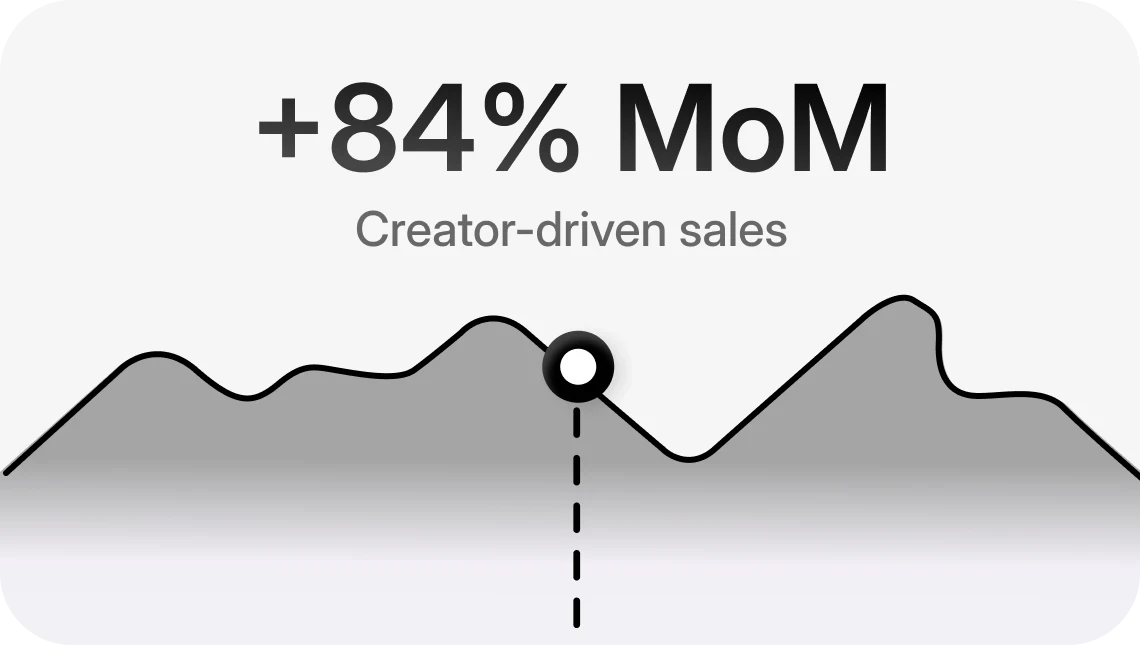
Content retrieval time dropped from an average of 22 minutes per asset to under 90 seconds. Weekly time spent on content management per client fell from 6 hours to 1.5 hours, freeing 54 hours of team capacity per week. First-pass approval rates improved by 18% because creators had clearer visibility into brief requirements and revision history. The agency repurposed 3x more content into shoppable widgets on brand e-commerce sites, contributing to a 27% increase in content-attributed GMV across their client portfolio. Client satisfaction scores improved measurably, and the agency onboarded two new brand clients without adding headcount, directly attributable to the operational capacity unlocked by eliminating manual content management.
What makes Creator Drive different from a regular cloud storage solution like Google Drive?
Creator Drive is built specifically for creator content workflows. Every asset is automatically linked to the creator who produced it, the campaign it belongs to, and its approval status. It supports usage rights tracking, performance data overlay, and direct deployment to shoppable widgets. General cloud storage requires manual organization and offers none of these creator-specific capabilities, which means agencies spend significantly more time on file management and lose the connection between content and commerce outcomes.
Can Creator Drive handle content from hundreds of creators simultaneously?
Yes. Creator Drive is architected for agencies managing large influencer networks. The tagging, filtering, and search capabilities are designed to scale to thousands of assets across hundreds of creators and multiple brand clients. Saved filter presets and campaign-level organization ensure that even at high volume, any asset is retrievable in seconds rather than minutes.
How does Creator Drive connect content to revenue and performance metrics?
When content stored in Creator Drive is deployed through shoppable widgets, affiliate links, or tracked social posts, performance data flows back to the asset level. This means you can see CTR, conversion rate, and attributed revenue for each individual piece of content. This transforms your content vault from a passive archive into an active decision-making tool that informs which creators to scale, which content formats to prioritize, and which assets to amplify with paid spend.
Does Creator Drive support content approval workflows?
Each asset in Creator Drive carries a visible approval status that moves through a defined workflow: pending review, revision requested, approved, and published. Account managers can approve or request changes directly within the interface, and creators receive notifications with inline feedback. The full revision history is preserved, providing an audit trail for both the agency and the brand client.
Can we use Creator Drive to deliver content packages to brand clients?
Absolutely. Creator Drive supports filtered bulk export, allowing account managers to select assets by any combination of campaign, creator, content type, platform, approval status, or date range. The exported package is organized and ready for client delivery without manual file sorting. This alone saves agencies multiple hours per client per week and ensures clients always receive the correct, approved versions of every asset.