Creator Collaboration for Online Marketplaces: Run Marketplace-Wide Influencer Campaigns with Precision
Online marketplaces face a unique challenge that single-brand stores never encounter: coordinating creator collaborations across dozens or hundreds of sellers, product categories, and campaign objectives simultaneously. When your marketplace runs a seasonal push or category-specific promotion, you need creators who can authentically represent multiple vendors while driving measurable traffic and conversions back to specific storefronts. That demands a level of operational coordination that spreadsheets and email threads simply cannot deliver.
Social commerce has fundamentally changed how marketplace shoppers discover and purchase products. Buyers now expect shoppable creator content embedded directly into their browsing experience, and marketplaces that fail to deliver this lose ground to competitors who do. Creator collaboration for online marketplaces is no longer a nice-to-have brand awareness play. It is a core revenue channel that requires dedicated infrastructure, clear workflows, and performance tracking tied to actual GMV.
This page breaks down how marketplace teams can structure, execute, and measure influencer campaign coordination across their entire ecosystem, from onboarding creators who understand multi-vendor environments to tracking which collaborations actually move the needle on seller performance and marketplace-wide revenue.
Managing Creator Relationships Across Multiple Sellers
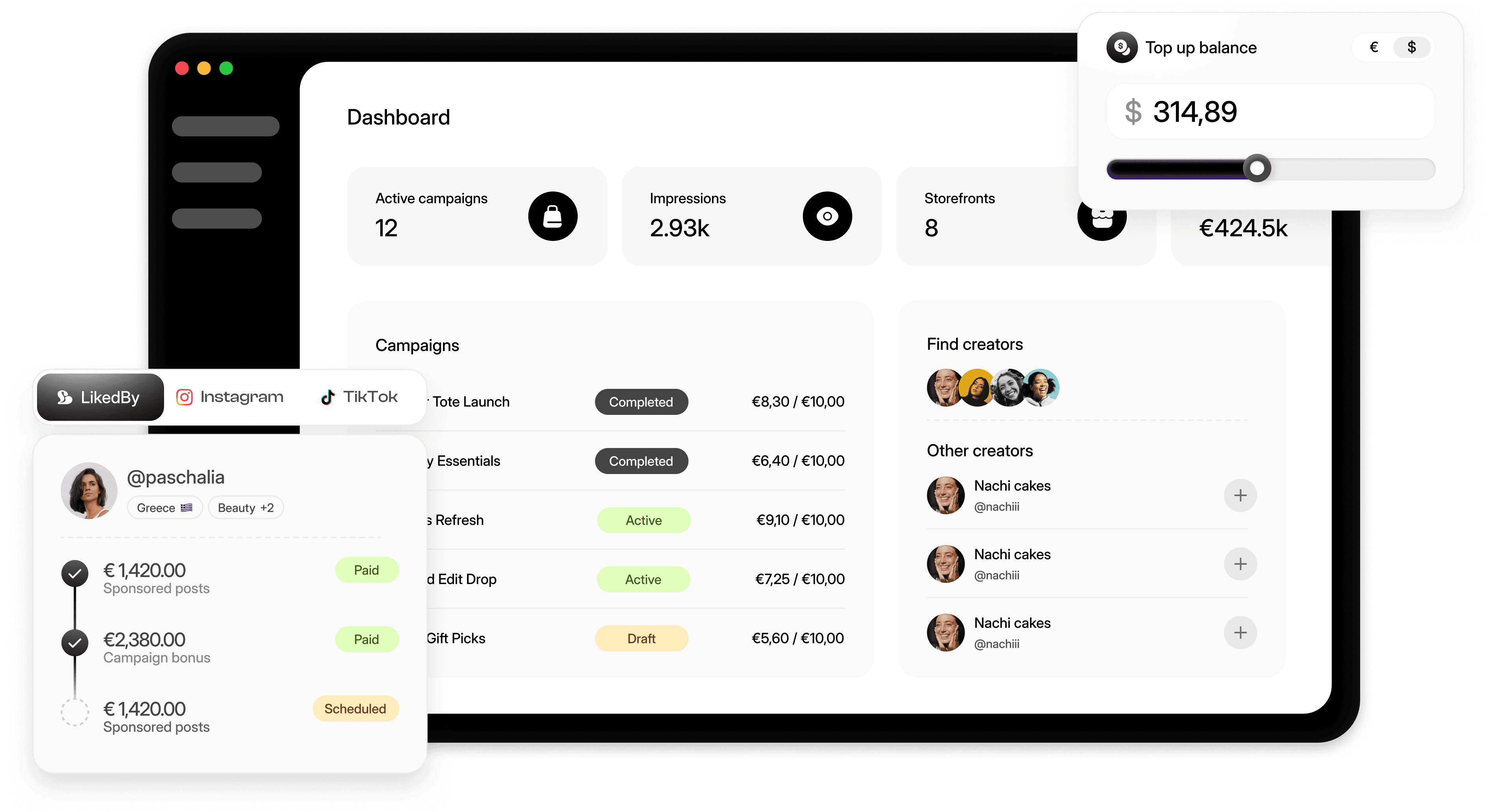
Unlike single-brand operations, online marketplaces must coordinate creator collaborations that span multiple sellers, each with different products, brand guidelines, and promotional calendars. Without a centralized system, creator communications fragment across seller teams, leading to inconsistent messaging and duplicated outreach.
Maintaining Brand Consistency Across a Diverse Catalog
Marketplaces carry products from dozens or hundreds of vendors. Ensuring that creator content maintains marketplace-level brand standards while accurately representing individual seller products requires structured briefing and approval workflows that most teams lack.
Attribution Complexity in Multi-Seller Environments
When a creator promotes a marketplace and a shopper purchases from three different sellers in one session, attributing that revenue correctly to the originating creator collaboration becomes extremely difficult. Standard affiliate tracking often breaks down in multi-cart environments.
Scaling Creator Programs Without Proportional Headcount
Marketplace teams are expected to run campaigns that rival those of major DTC brands, but with leaner teams. Scaling from 20 active creators to 200 requires automation and workflow tooling that most influencer marketing software was not built to handle.
Content Rights and Asset Organization
Creator content generated for marketplace campaigns often needs to be shared with individual sellers for their own channels, repurposed for marketplace advertising, and stored for compliance. Without a dedicated UGC management system, assets get lost in email attachments and shared drives.
Coordinating Marketplace-Wide Campaigns with Tight Timelines
Flash sales, seasonal events like Black Friday, and category launches require dozens of creators to publish coordinated content within narrow windows. Late posts or misaligned messaging can undermine the entire campaign.
Proving ROI to Marketplace Leadership and Sellers
Marketplace executives and participating sellers both demand clear performance data. Teams need to demonstrate not just reach and engagement, but actual conversion rates, revenue contribution, and cost efficiency per creator collaboration.
Spreadsheets Cannot Handle Multi-Dimensional Campaign Coordination
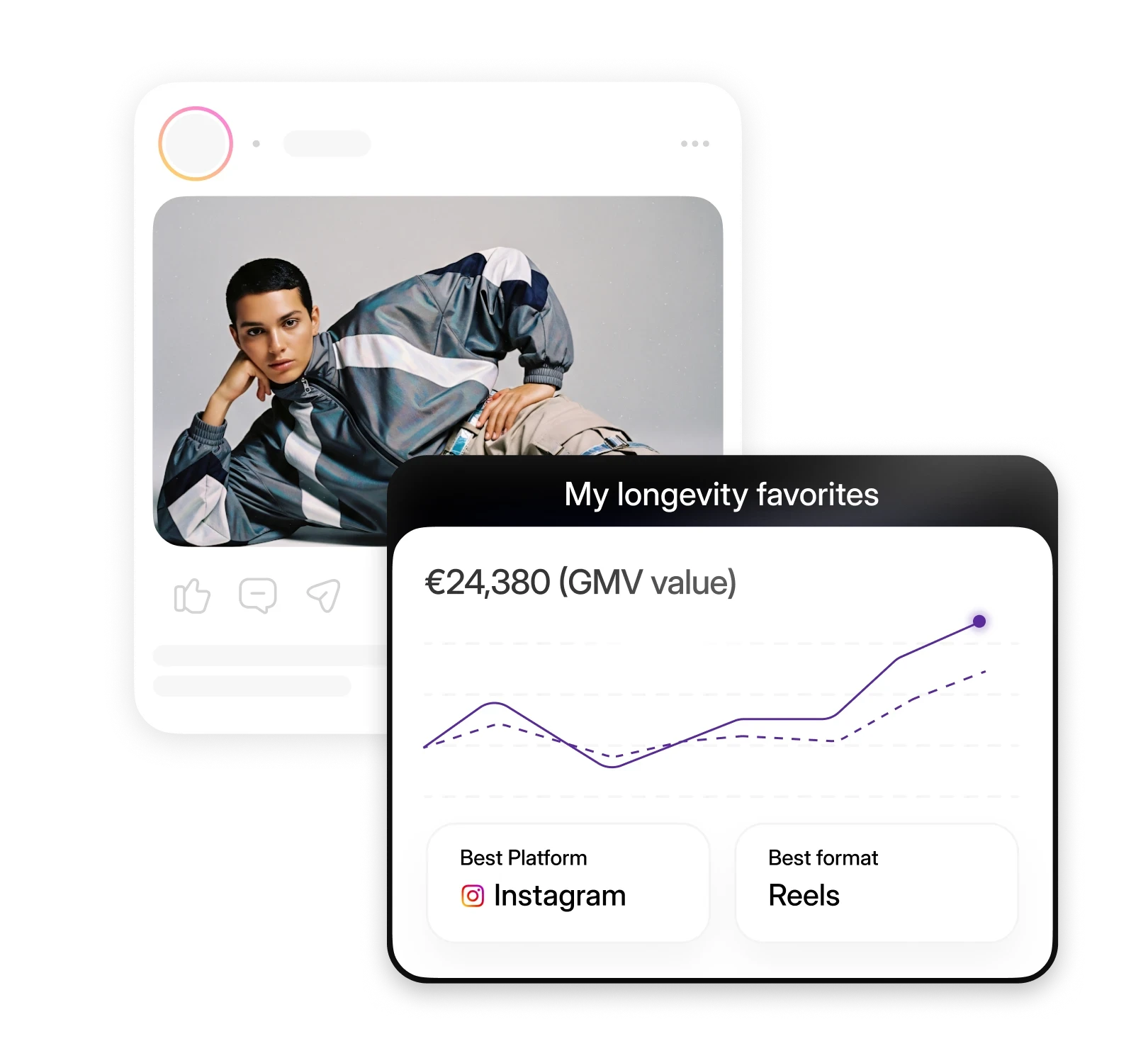
Most marketplace teams start with spreadsheets to track creator outreach, deliverables, and payments. This works for five creators. At fifty, the spreadsheet becomes a liability. Version control issues, missed deadlines, and lost communication threads become daily problems. There is no way to link a spreadsheet row to a content asset, an approval status, and a revenue metric simultaneously.
Generic Influencer Platforms Ignore Marketplace Workflows
Many influencer marketing platforms are designed for single-brand campaigns. They assume one brand, one product line, one set of guidelines. Online marketplaces need tools that can handle multi-seller briefings, category-level campaign segmentation, and attribution across a shared shopping cart. Generic platforms force marketplace teams to create awkward workarounds that break at scale.
Disconnected Tools Create Data Silos
When your creator CRM lives in one tool, your content approvals happen in email, your asset storage sits in Google Drive, and your analytics come from a separate dashboard, no one has a complete picture. Marketplace teams waste hours each week reconciling data across systems instead of optimizing campaigns. Creator performance tracking becomes a manual reporting exercise rather than a real-time operational input.
Communication Gaps Between Marketplace and Seller Teams
Traditional tools offer no structured way for marketplace-level campaign managers to share creator content, performance data, or collaboration updates with individual seller teams. This disconnect means sellers cannot leverage creator content for their own channels, and marketplace teams cannot incorporate seller-level product knowledge into creator briefings.
How Socialscale Powers Creator Collaboration for Online Marketplaces
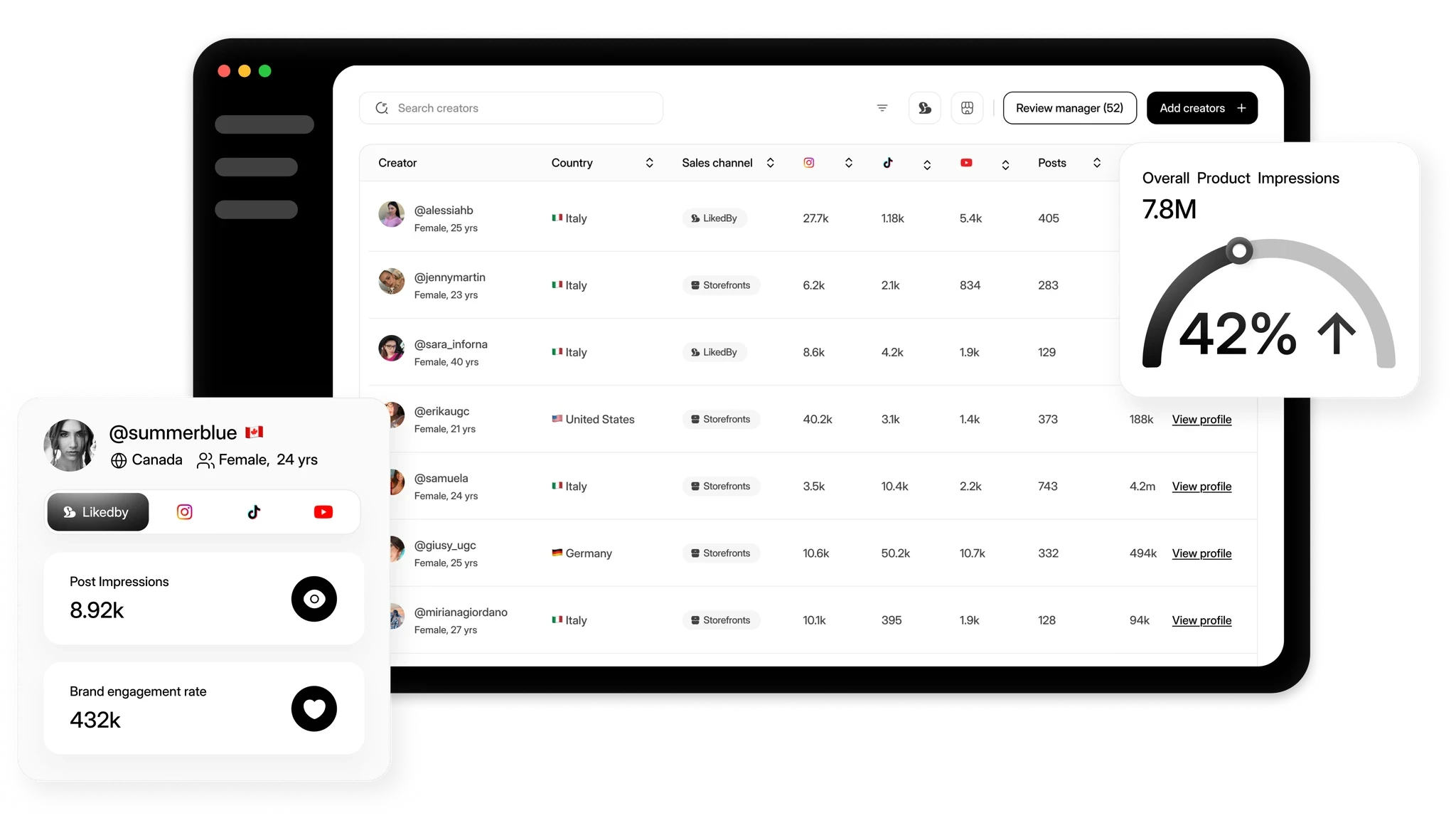
Socialscale is built as the operating system for social commerce, and its architecture maps directly to the operational reality of online marketplaces. Rather than forcing marketplace teams to adapt single-brand workflows, Socialscale provides the infrastructure to manage creator collaborations across multiple sellers, categories, and campaign types from a single workspace.
At the core, Socialscale's creator CRM lets marketplace teams segment their creator roster by category expertise, audience demographics, past performance, and seller affinity. This means when a home goods category manager needs creators for a weekend flash sale, they can instantly filter for creators who have driven conversions in that category before, rather than blasting the entire roster with an irrelevant brief.
Content workflows are centralized through structured briefing, submission, and approval pipelines. Every piece of creator content is tagged to the specific seller, product, and campaign it belongs to, then stored in a searchable asset library for repurposing. Once approved, that content can be embedded as shoppable widgets directly on marketplace pages using Socialscale's creator widgets, turning creator content into a direct revenue driver rather than a top-of-funnel awareness play.
Performance tracking ties every creator collaboration back to measurable outcomes. Marketplace teams can see which creators drive the highest GMV per post, which categories benefit most from creator content, and which campaign formats deliver the best ROAS. This data feeds directly back into creator selection and campaign planning, creating a continuous optimization loop that generic tools cannot replicate.
Feature Breakdown: What Marketplace Teams Actually Use
Multi-Seller Campaign Structuring
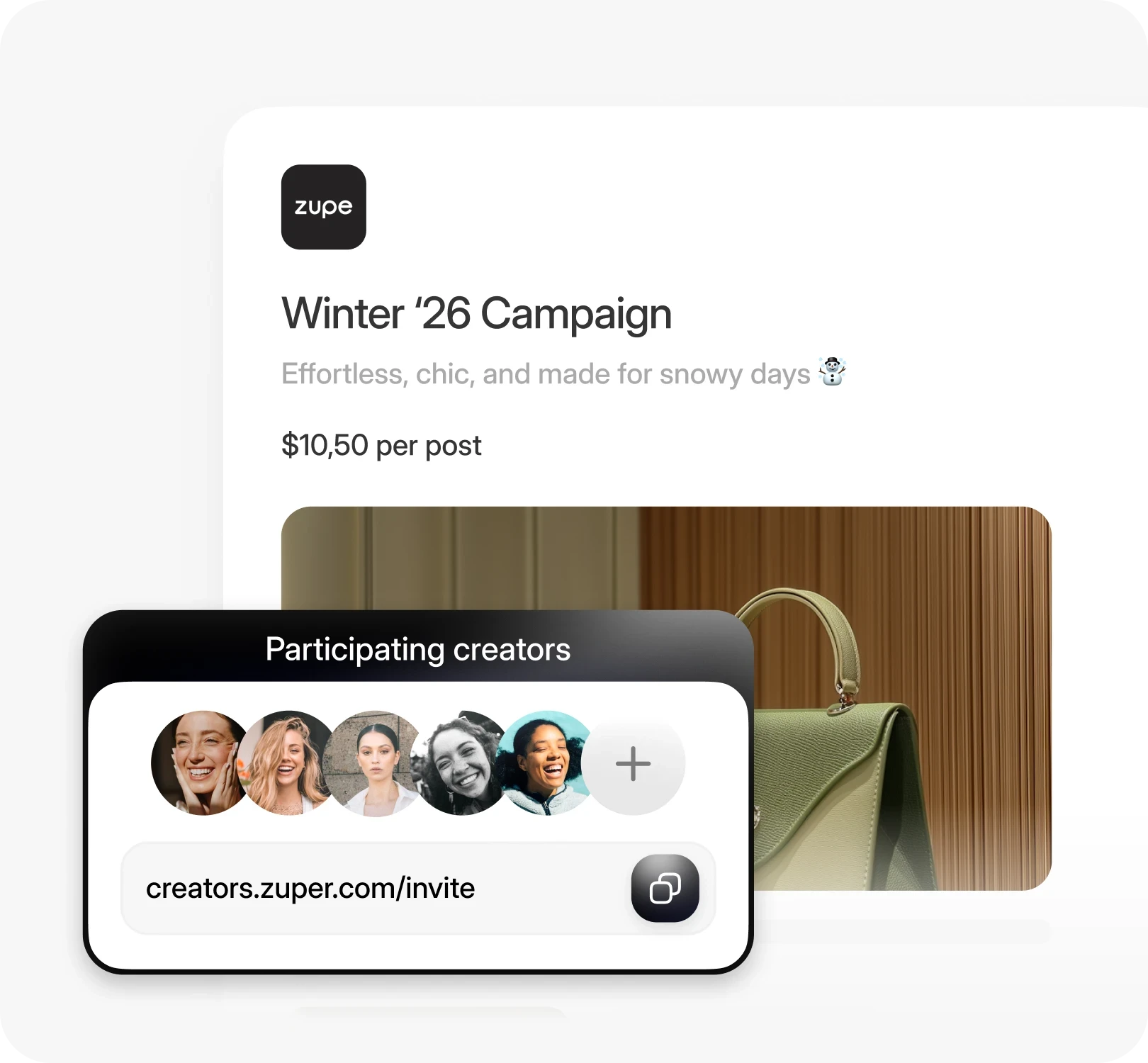
Create campaigns that span multiple sellers within your marketplace. Assign creators to specific seller products or category-level promotions. Each campaign can carry its own brief, timeline, deliverable requirements, and approval chain. Marketplace-level campaign managers maintain oversight while seller teams can view progress on their specific products.
Creator CRM with Marketplace-Specific Segmentation
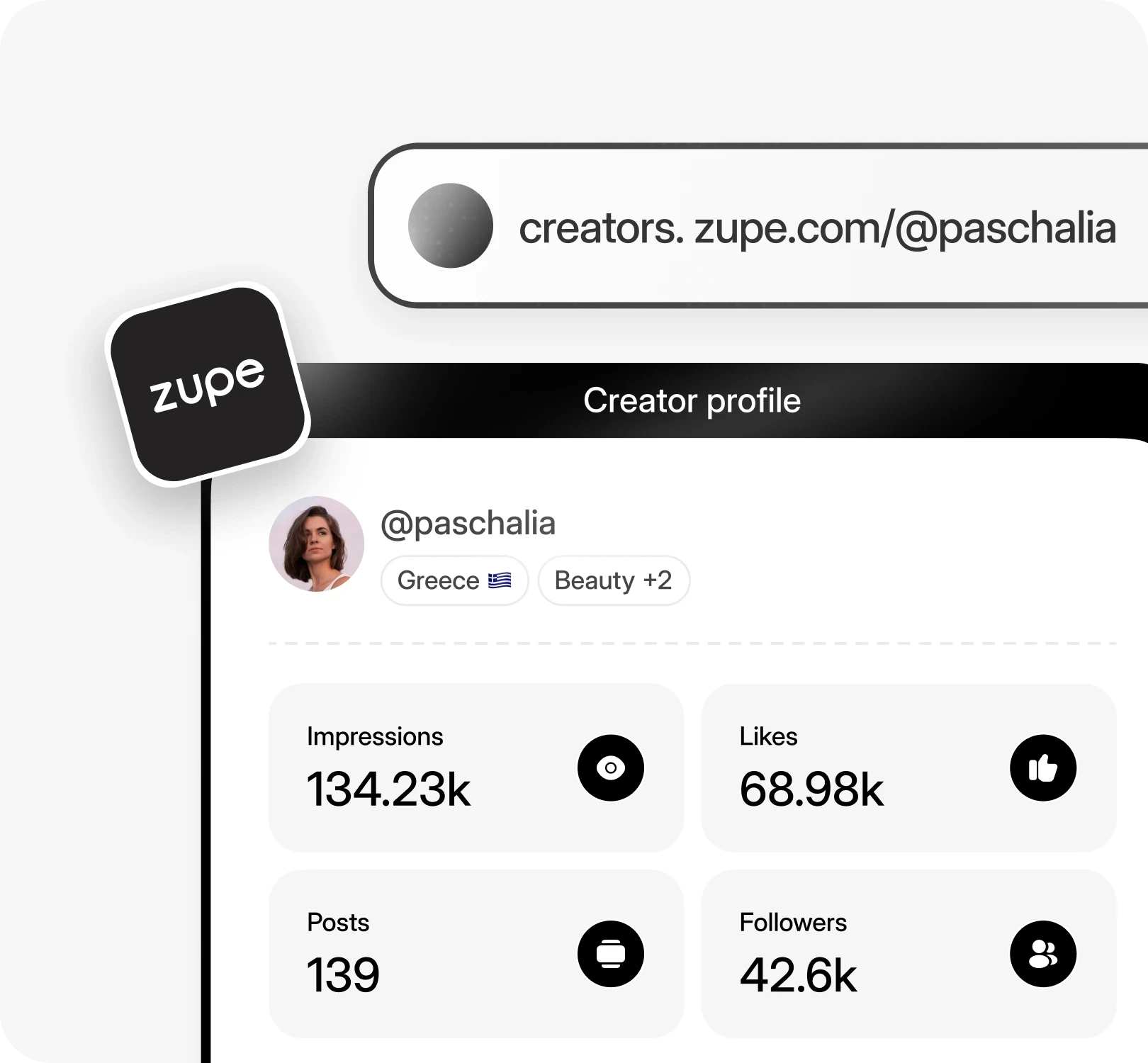
Tag and segment creators by product category expertise, audience geography, content format preference, historical conversion rate, and seller affinity. Build saved segments like "beauty creators with 10K+ followers who have driven $500+ GMV in the last 90 days" and activate them instantly for new campaigns. This eliminates the guesswork in creator selection and ensures every collaboration has a data-backed rationale.
Structured Briefing and Content Approval Workflows
Send detailed briefs that include seller-specific product information, marketplace brand guidelines, required disclosures, and content format specifications. Creators submit content through a standardized pipeline where marketplace and seller teams can review, request revisions, and approve with timestamped records. No more chasing creators through DMs or losing approval history in email threads.
Centralized Content Storage and Rights Management
Every approved asset is automatically organized by campaign, seller, creator, and content type. Marketplace teams can grant seller-level access so individual vendors can download and repurpose creator content for their own channels. Usage rights, expiration dates, and licensing terms are tracked at the asset level, reducing legal exposure.
Shoppable Content Embedding
Transform approved creator content into shoppable experiences embedded directly on marketplace category pages, product detail pages, and dedicated landing pages. Each widget links directly to the featured products, shortening the path from inspiration to purchase. This is where creator collaborations translate directly into marketplace revenue.
Real-Time Creator Performance Dashboards
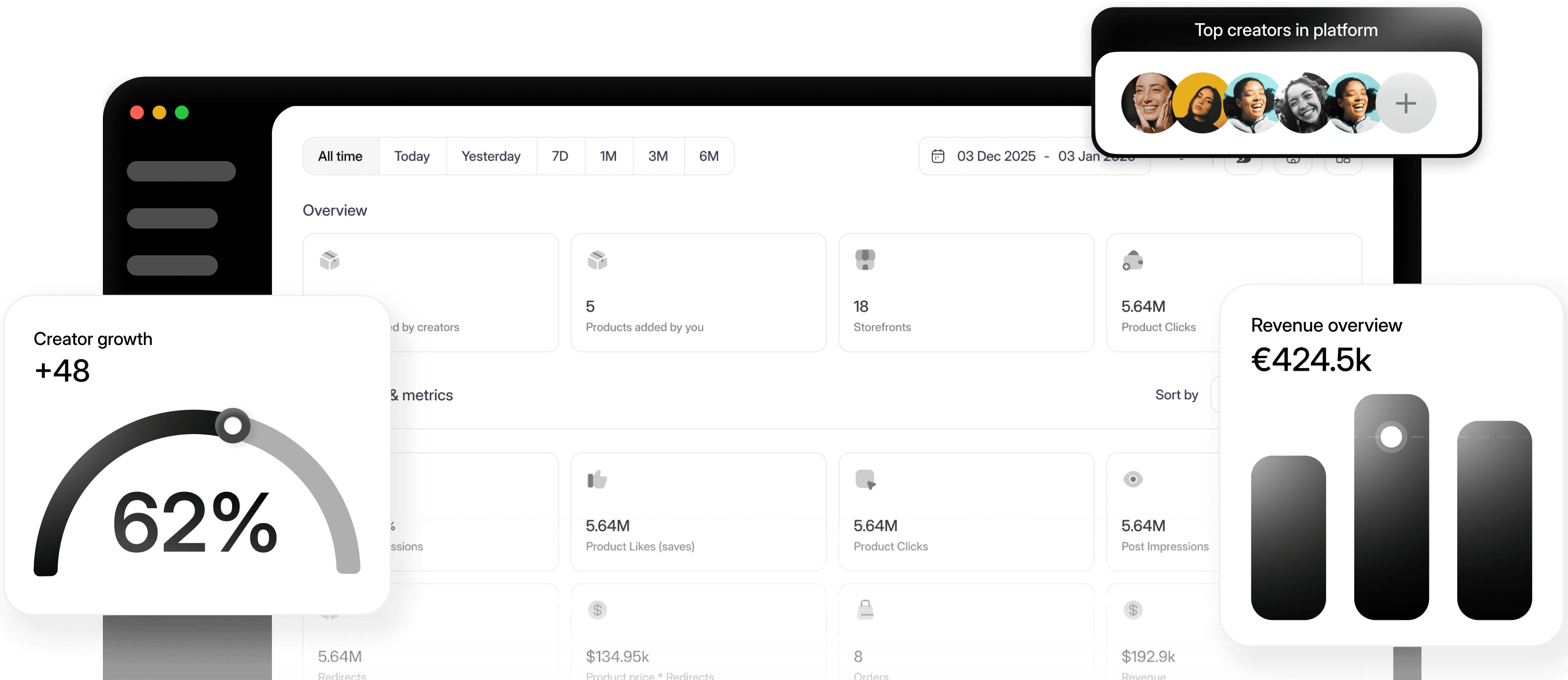
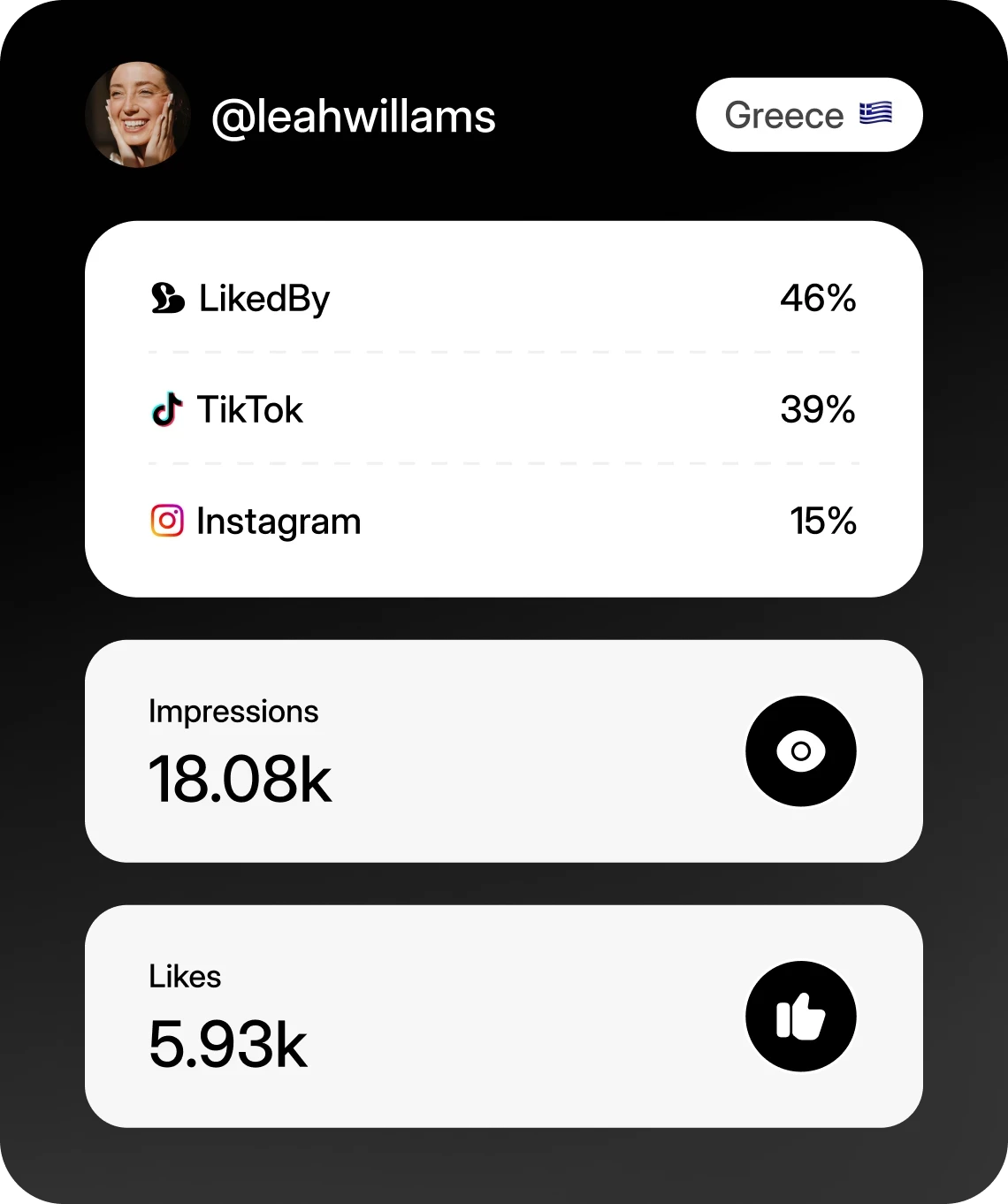
Track every collaboration against KPIs that matter to marketplace operations: click-through rate, conversion rate, GMV attributed, cost per acquisition, and content output velocity. Compare creator performance across campaigns, categories, and time periods. Use creator analytics to identify top performers and reallocate budget from underperforming collaborations in real time.
Use Cases: Creator Collaborations in Online Marketplace Environments
1. Marketplace-Wide Seasonal Campaign Coordination
A large online marketplace preparing for a summer sale event needs 80 creators to publish coordinated content across TikTok, Instagram, and YouTube within a 72-hour window. Each creator is assigned to a specific product category, with tailored briefs that include seller-approved product imagery, key selling points, and discount codes. Campaign managers monitor content submissions in real time, approve posts before they go live, and track early performance signals to amplify top-performing content through paid media within the first 24 hours.
2. New Seller Onboarding Through Creator Storefronts
When a marketplace onboards a new premium seller, the growth team activates a curated group of creators to build awareness for the new storefront. Creators receive product samples, create unboxing and review content, and link directly to the seller's marketplace storefront. The marketplace tracks which creators drive the most first-time visits and purchases to the new seller, using that data to refine future onboarding campaigns for similar seller profiles.
3. Category-Level Affiliate Creator Programs
A marketplace's electronics category team launches an ongoing affiliate creator program where tech reviewers earn commission on every sale driven through their unique tracking links. The program runs continuously, with new product drops briefed to relevant creators each week. Category managers use performance data to tier creators into bronze, silver, and gold levels, with higher commission rates and early product access for top performers. This creates a self-sustaining creator ecosystem around the category.
4. Localized Creator Campaigns for Regional Marketplace Expansion
An online marketplace expanding into a new geographic region partners with local creators who have strong community followings. These creators produce content in the local language, featuring products from regional sellers available on the marketplace. The campaign is structured to build trust with a new audience, so KPIs focus on new account registrations, first purchases, and repeat purchase rates rather than immediate ROAS. Content is repurposed as shoppable widgets on the marketplace's regional landing pages to extend its shelf life beyond the initial social posts.
Weekly and Monthly Operational Workflow for Marketplace Creator Campaigns
Running creator collaborations at marketplace scale requires a repeatable operational cadence. The following workflow outlines the steps marketplace teams follow from campaign planning through performance optimization.
Campaign Planning and Creator Segmentation (Monthly)
At the start of each month, the marketplace campaign team reviews upcoming promotions, new seller launches, and category priorities. They define campaign objectives, budget allocations, and target creator profiles. Using the creator CRM, they pull segmented lists of creators matched to each campaign based on category expertise, audience fit, and historical performance data.
Creator Outreach and Onboarding (Monthly/As Needed)
Selected creators receive campaign invitations with clear terms, deliverable expectations, and compensation structures. New creators go through a streamlined onboarding flow that captures tax information, content preferences, and platform handles. Returning creators are fast-tracked with pre-filled profiles and updated briefs.
Brief Distribution and Product Seeding (Weekly)
Each week, campaign managers distribute detailed briefs for upcoming content drops. Briefs include seller-specific product details, required messaging, visual guidelines, and posting schedules. For physical product campaigns, shipping is coordinated with sellers to ensure creators receive samples with adequate lead time for content production.
Content Submission and Approval (Weekly)
Creators submit draft content through the platform's approval pipeline. Marketplace brand managers and relevant seller contacts review submissions against brief requirements. Feedback is provided within 24–48 hours, and approved content is tagged and stored in the centralized asset library for immediate publishing and future repurposing.
Content Publishing and Shoppable Widget Deployment (Weekly)
Approved content goes live on creator channels according to the campaign calendar. Simultaneously, marketplace teams embed top-performing creator content as shoppable widgets on relevant product and category pages. This dual-channel approach maximizes both social reach and on-site conversion.
Performance Monitoring and Mid-Campaign Optimization (Weekly)
Within 48 hours of content going live, campaign managers review early performance metrics including engagement rates, click-throughs, and initial conversion data. Underperforming content is deprioritized, and budget is reallocated to amplify high-performing creator posts through paid channels. Creators who consistently underdeliver are flagged for roster review.
Monthly Performance Reporting and Creator Tiering
At month-end, the team generates comprehensive reports covering GMV attributed to creator collaborations, cost per acquisition by creator and category, content output volume, and approval cycle times. These reports are shared with marketplace leadership and relevant seller teams. Creator tier assignments are updated based on cumulative performance, informing next month's campaign planning.
Quarterly Program Review and Strategy Adjustment
Every quarter, the marketplace creator program undergoes a strategic review. The team evaluates which categories benefit most from creator content, which campaign formats deliver the best returns, and where operational bottlenecks exist. Findings are used to adjust creator recruitment priorities, refine briefing templates, and negotiate updated compensation structures with top-tier creators.
Key Performance Indicators for Marketplace Creator Collaborations
Marketplace teams should track these KPIs to evaluate and optimize their creator collaboration programs effectively.
Creator Activation Rate: Percentage of onboarded creators who complete at least one deliverable within 30 days of joining the program.
Content Approval Cycle Time: Average number of hours from content submission to final approval. Target under 48 hours to maintain publishing cadence.
Content Output per Creator: Number of approved content pieces produced per creator per month, segmented by format (video, static, Stories).
Click-Through Rate (CTR): Percentage of viewers who click through from creator content to marketplace product pages, tracked by platform and content format.
Conversion Rate (CVR): Percentage of creator-driven traffic that completes a purchase on the marketplace.
GMV Attributed to Creator Collaborations: Total gross merchandise value generated through creator-driven traffic and shoppable content widgets.
Revenue per Creator: Average GMV generated per active creator, used to identify top performers and inform tiering decisions.
ROAS (Return on Ad Spend): Revenue generated divided by total creator program spend including compensation, product seeding, and paid amplification costs.
CPA (Cost per Acquisition): Total program cost divided by number of new customers acquired through creator-driven channels.
Seller Participation Rate: Percentage of marketplace sellers actively participating in creator collaboration campaigns.
Content Repurpose Rate: Percentage of creator content that is repurposed for marketplace on-site widgets, paid ads, or seller channels beyond the original social post.
Creator Retention Rate: Percentage of creators who remain active in the program quarter over quarter.
Scenario: Multi-Category Marketplace Scales Creator Program from 30 to 150 Creators
A mid-size online marketplace specializing in fashion, beauty, and home goods had been running creator collaborations through a combination of spreadsheets, email, and a basic influencer discovery tool. Their team of three managed relationships with 30 creators, but campaign coordination consumed over 60% of their working hours. Content approval cycles averaged 5 days, and the team had no reliable way to attribute marketplace sales to specific creator collaborations.
After implementing a structured creator collaboration workflow with centralized briefing, approval pipelines, and performance tracking, the team achieved the following results over six months:
Scaled from 30 to 150 active creators without adding headcount.
Reduced average content approval cycle time from 5 days to 1.5 days.
Increased monthly content output from 45 pieces to 320 approved assets.
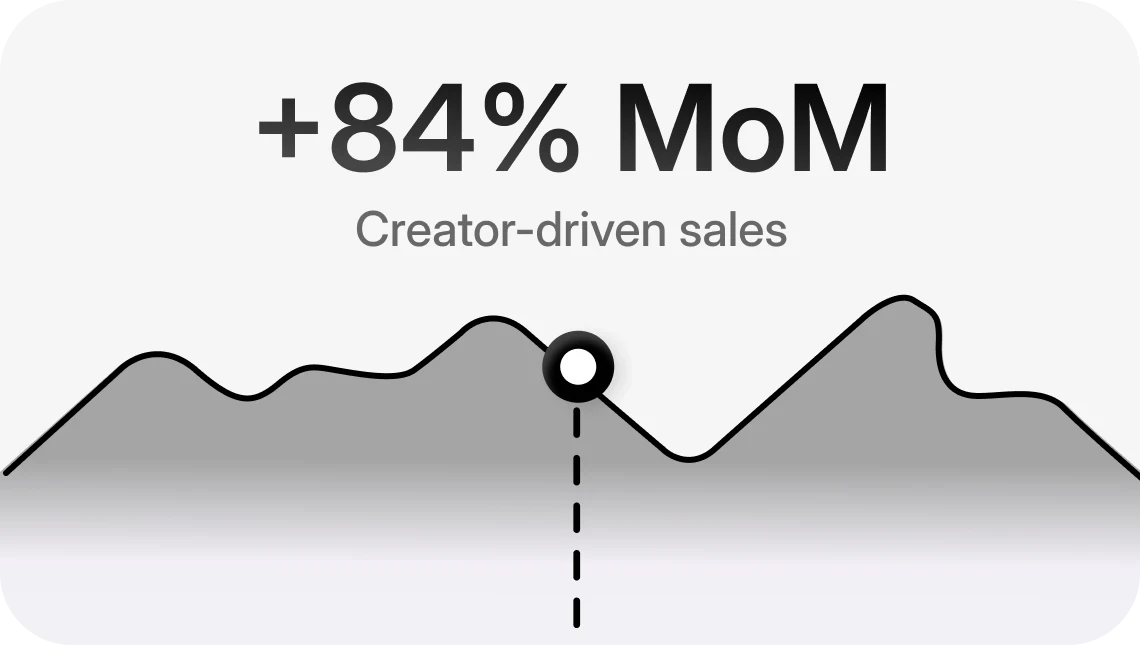
Attributed $420,000 in GMV directly to creator-driven traffic and shoppable content widgets.
Improved creator-driven conversion rate from 1.8% to 3.4% through data-informed creator selection and brief optimization.
Achieved a blended ROAS of 6.2x across all creator collaboration campaigns.
Increased seller participation in creator campaigns from 12% to 41% of active marketplace sellers.
The key operational shift was moving from reactive, ad-hoc creator management to a structured weekly cadence with clear workflows for briefing, approval, publishing, and performance review. The team now spends less than 30% of their time on administrative coordination and more than 50% on strategic optimization and creator relationship development.
Frequently Asked Questions
How is creator collaboration for online marketplaces different from single-brand influencer marketing?
Online marketplaces must coordinate creator content across multiple sellers, product categories, and promotional calendars simultaneously. This requires multi-layered briefing workflows, category-specific creator segmentation, and attribution models that can track revenue across a shared shopping cart. Single-brand influencer marketing tools typically lack these capabilities, forcing marketplace teams into manual workarounds that break at scale.
How do marketplace teams attribute sales to specific creator collaborations?
Attribution in marketplace environments requires unique tracking links or discount codes assigned to each creator, combined with platform-level analytics that connect clicks to completed purchases across multiple seller storefronts. Advanced setups also track assisted conversions where a creator drives initial awareness but the purchase happens in a later session. Socialscale's performance tracking connects these data points to give marketplace teams clear revenue attribution per creator and per campaign.
What types of creators work best for online marketplace campaigns?
The most effective marketplace creators typically have category-specific expertise and engaged audiences that trust their product recommendations. Micro-creators with 10,000 to 100,000 followers often deliver higher conversion rates than mega-influencers because their audiences perceive their recommendations as more authentic. The ideal creator roster for a marketplace includes a mix of category specialists, lifestyle creators who can cross-promote across categories, and high-volume content producers who can support always-on affiliate programs.
How long does it take to see measurable results from a marketplace creator program?
Most marketplace teams see initial performance data within the first 2 to 4 weeks of launching structured creator collaborations. However, meaningful optimization requires at least 8 to 12 weeks of data to identify which creators, content formats, and campaign structures deliver the best returns. Programs that run continuously and iterate based on performance data typically reach peak efficiency around the 6-month mark.
Can individual sellers within the marketplace access and use creator content?
Yes, a well-structured creator collaboration program includes content rights management that allows marketplace teams to grant seller-level access to approved creator assets. Sellers can download and repurpose content for their own social channels, product pages, and advertising, extending the value of each creator collaboration beyond the marketplace's own channels. This also increases seller buy-in and participation in future creator campaigns.