Creator Collaborations for Global Retailers
Global retailers operate across dozens of markets, each with distinct consumer preferences, cultural nuances, and creator ecosystems. Coordinating creator collaborations at this scale demands more than a shared spreadsheet or a patchwork of regional agencies. It requires a regional influencer coordination platform purpose-built for the complexity of multi-market social commerce.
For influencer marketing managers and e-commerce directors at global retail organizations, the challenge is clear: how do you maintain brand consistency while empowering local teams to activate creators who genuinely resonate in their markets? How do you move from one-off influencer posts to sustained creator programs that drive measurable revenue across regions?
Socialscale provides the operational backbone for creator collaboration at global retail scale. From onboarding creators in São Paulo and Seoul to tracking shoppable content performance in London and Lagos, the platform centralizes every workflow so teams can focus on what matters—building authentic creator relationships that convert browsers into buyers across every storefront and channel.
Fragmented Creator Networks Across Regions
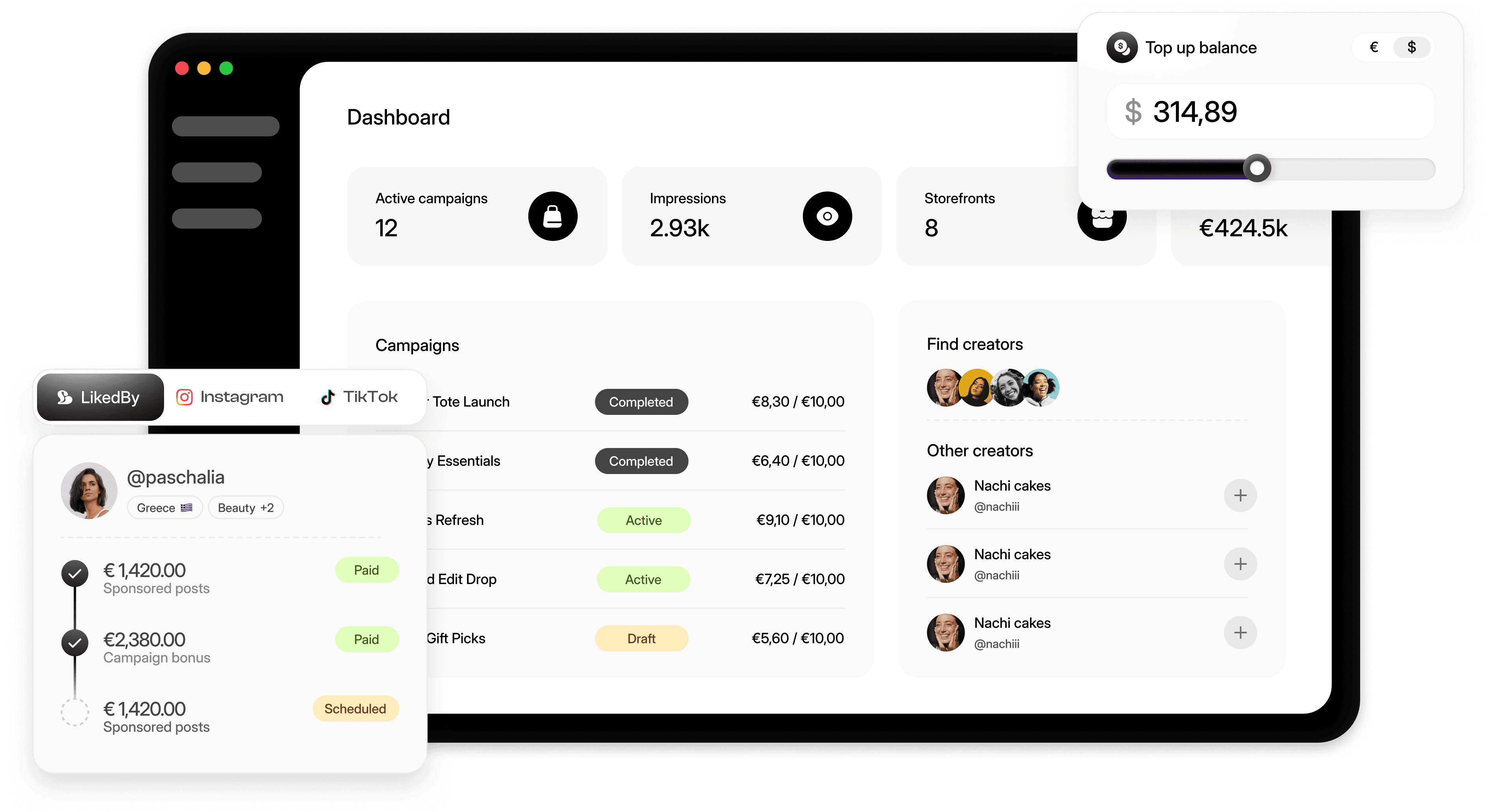
Global retailers typically work with hundreds or thousands of creators spread across North America, Europe, APAC, LATAM, and the Middle East. Without a unified system, regional teams build their own creator rosters in disconnected tools, leading to duplicated efforts, inconsistent vetting standards, and zero visibility at the global level.
Inconsistent Brand Messaging Across Markets
When collaboration briefs are managed locally without centralized templates or approval workflows, brand guidelines drift. A campaign in Germany may look nothing like its counterpart in Japan—not because of intentional localization, but because of process gaps.
Slow Approval Cycles That Kill Campaign Momentum
Content approvals that route through regional managers, legal teams, and global brand leads can take days or weeks. Creators lose enthusiasm, trending moments pass, and competitors move faster.
No Unified View of Creator Performance
When performance data lives in platform-native dashboards (Instagram Insights, TikTok Analytics, YouTube Studio) and regional spreadsheets, it is nearly impossible to compare creator ROI across markets or identify top performers for scaling.
Difficulty Scaling Affiliate Creator Programs
Many global retailers want to move beyond flat-fee sponsorships toward affiliate creator programs tied to revenue. But tracking commissions, attributing sales, and managing payouts across currencies and tax jurisdictions is operationally brutal without dedicated tooling.
Content Asset Chaos
Creator-generated photos, videos, and UGC assets pile up in email threads, Google Drives, and WeTransfer links. Reusing high-performing content across markets, channels, or paid media becomes a scavenger hunt.
Compliance and Disclosure Gaps
Advertising disclosure requirements differ by country. FTC guidelines in the US, ASA rules in the UK, and ARPP standards in France all require different labeling. Managing compliance manually across dozens of markets creates legal exposure.
Generic Project Management Tools Lack Creator Context
Tools like Asana, Monday, or Trello can track tasks, but they have no concept of a creator profile, a collaboration brief, content approval stages, or performance attribution. Teams end up building fragile workarounds that break as programs scale beyond a handful of creators per market.
Influencer Marketplaces Focus on Discovery, Not Operations
Most influencer marketing software platforms are built around creator discovery and outreach. They help you find creators but offer little support for the ongoing operational reality of managing collaborations—brief distribution, content review, asset storage, performance tracking, and reactivation. For global retailers running always-on programs, discovery is maybe 10% of the work.
Regional Agencies Create Silos
Hiring separate agencies for each market solves the local expertise problem but creates a new one: every agency uses different tools, reports in different formats, and owns the creator relationships. The brand loses control, visibility, and the ability to move creators or learnings across regions.
Spreadsheets Cannot Handle Multi-Market Complexity
A spreadsheet tracking 50 creators in one market is manageable. A spreadsheet tracking 2,000 creators across 15 markets with different campaign timelines, content formats, payment terms, and performance metrics is a liability. Version control issues, formula errors, and stale data are inevitable.
Disconnected Analytics Prevent Strategic Decisions
When creator performance tracking is scattered across native platform analytics, UTM dashboards, and agency reports, leadership cannot answer basic questions: Which market has the highest creator-driven conversion rate? Which content format drives the most GMV? Which creators should we scale globally?
How Socialscale Powers Creator Collaborations for Global Retailers
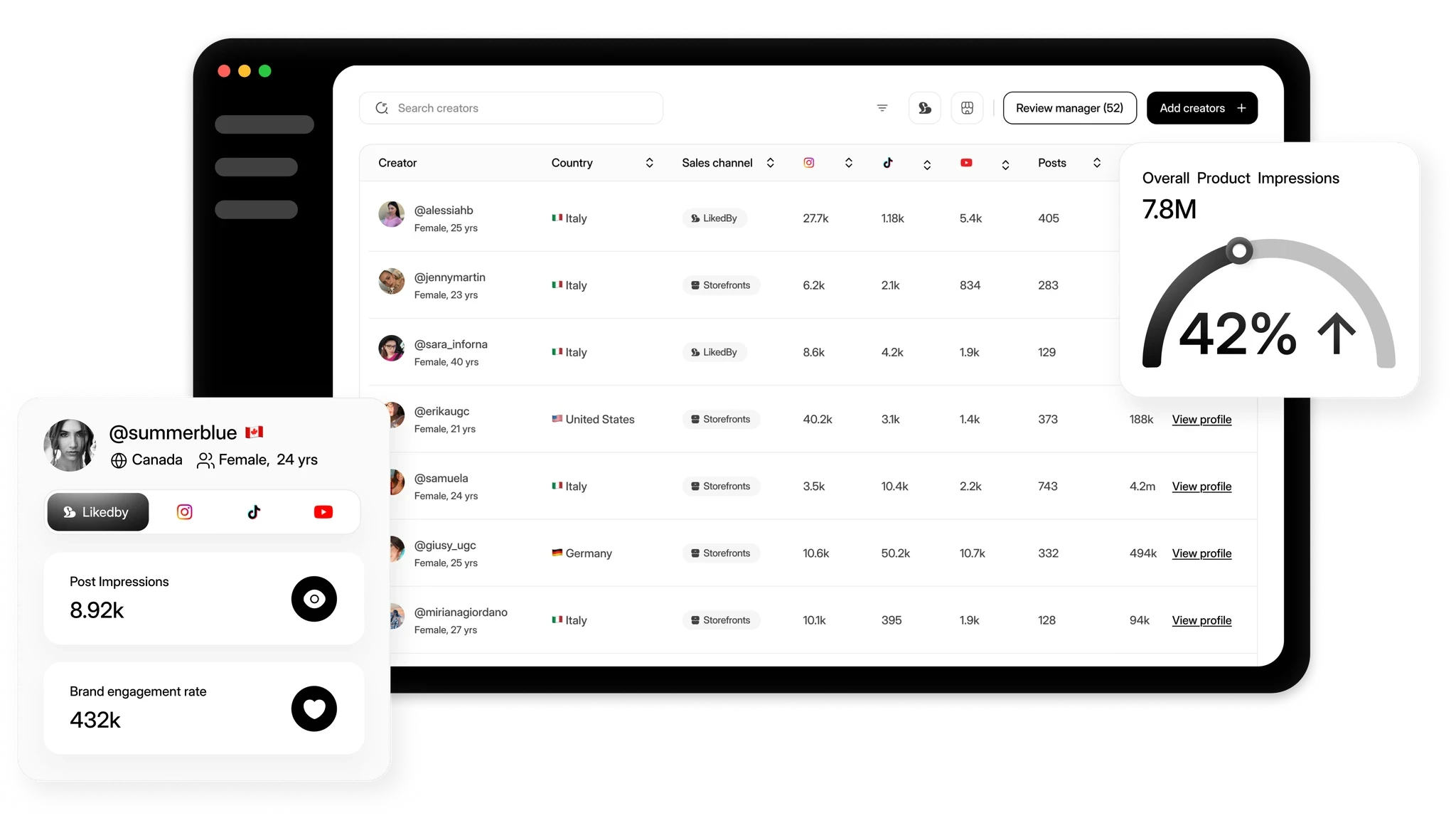
Socialscale is the operating system for social commerce, built to handle the end-to-end complexity of running creator programs across multiple markets, teams, and channels. Rather than stitching together five or six disconnected tools, global retail teams use a single creator marketing platform that covers every stage from creator onboarding to revenue attribution.
Centralized Creator CRM for Every Market
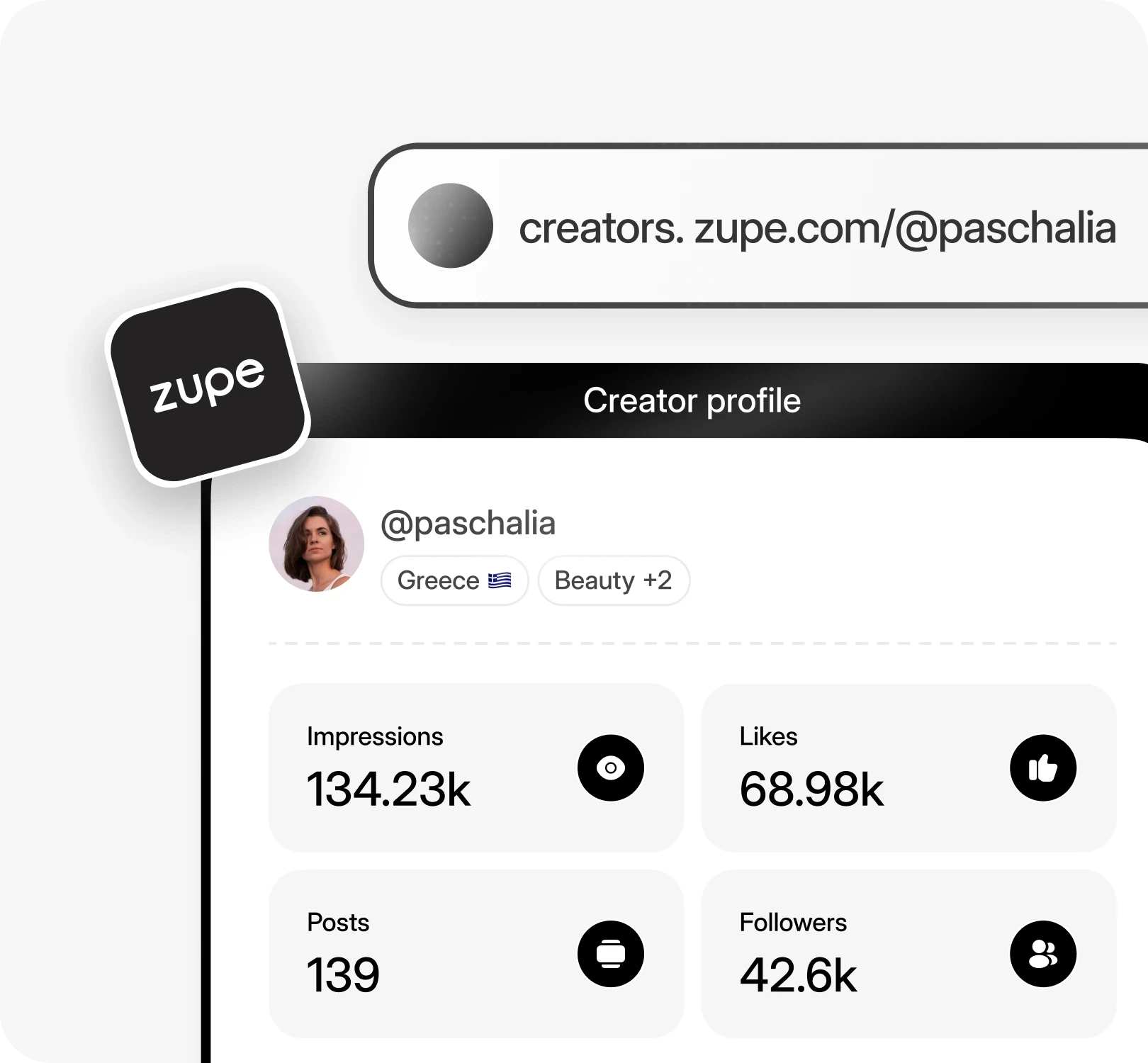
Every creator relationship—whether managed by your team in New York, a regional coordinator in Tokyo, or a partner agency in Berlin—lives in one creator CRM. Profiles include collaboration history, content performance data, audience demographics, market tags, and contract details. Global teams get full visibility while regional teams retain operational autonomy.
Structured Collaboration Workflows
Socialscale replaces ad-hoc email chains with structured creator collaboration workflows. Teams create briefs from brand-approved templates, assign creators, set deadlines, manage content review rounds, and track deliverables—all within a system that enforces consistency without slowing teams down.
Integrated Content Storage and Distribution
Every piece of creator content—raw footage, edited videos, product photos, story screenshots—is automatically organized in Creator Drive. Assets are tagged by market, campaign, product category, and creator, making it easy to repurpose top-performing UGC across regions or feed it into paid media.
Performance Tracking That Connects to Revenue
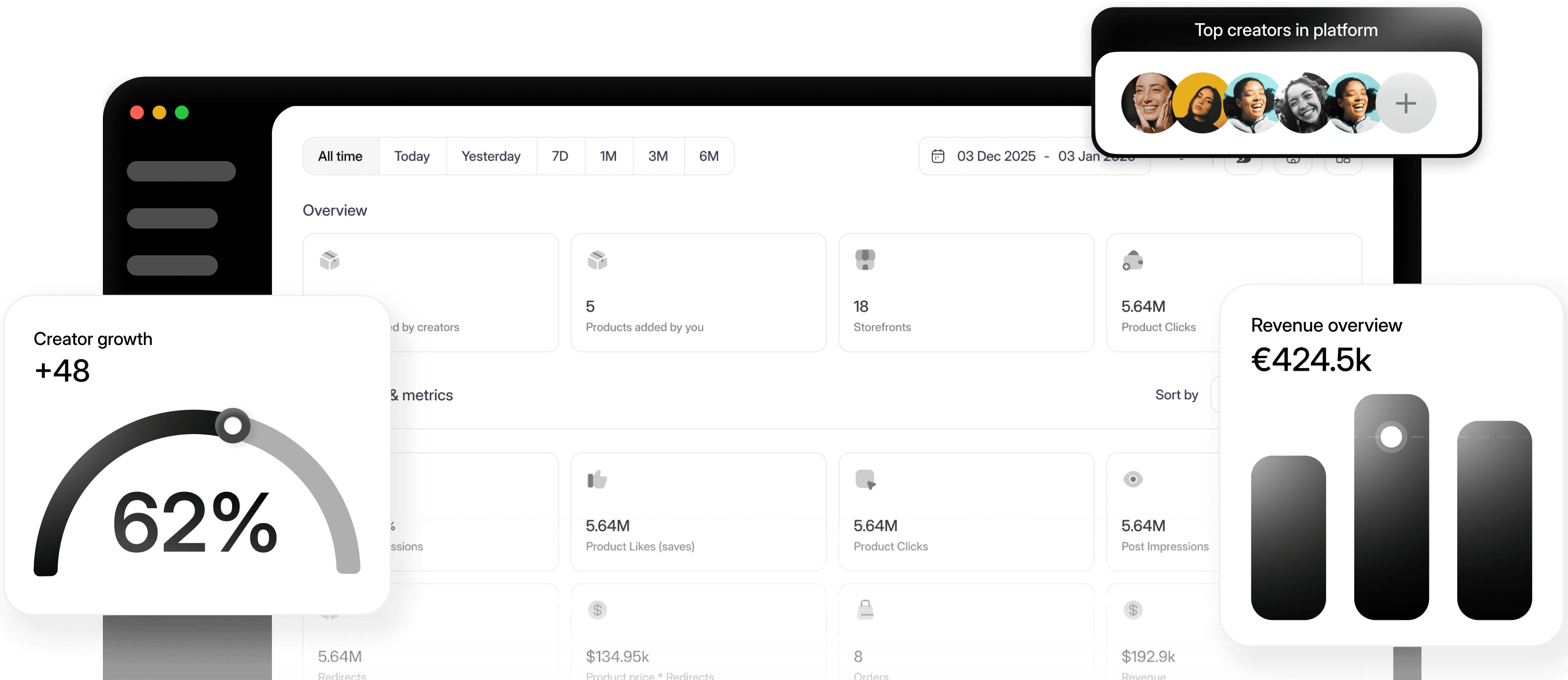
Socialscale's creator analytics dashboard aggregates engagement, reach, click-through, and conversion data across platforms and markets. For retailers running affiliate creator programs or embedding shoppable content on their storefronts, the platform tracks the full funnel from impression to purchase.
Feature Breakdown: What Global Retail Teams Actually Use
Multi-Market Creator Onboarding
Onboard creators at scale with customizable intake forms that capture tax information, content preferences, platform handles, audience data, and market-specific compliance acknowledgments. Creators self-register through branded portals, reducing manual data entry for regional coordinators. Each creator is automatically tagged by market, language, content vertical, and tier.
Brief Builder with Localization Support
Create campaign briefs using global templates that include brand guidelines, product messaging, visual references, and disclosure requirements. Regional teams can localize briefs—adjusting language, product SKUs, and cultural references—while the global team maintains oversight of core messaging pillars.
Multi-Stage Content Approval
Route creator content through configurable approval workflows. A typical global retailer might set up a three-stage flow: regional coordinator review, brand marketing approval, and legal/compliance sign-off. Each stage has clear ownership, deadlines, and feedback tools so creators receive consolidated notes rather than conflicting comments from multiple stakeholders.
Campaign Calendar and Scheduling
Visualize all active and upcoming collaborations across markets on a single calendar. Filter by region, campaign type (product launch, seasonal sale, always-on), content format, or creator tier. This eliminates the common problem of overlapping campaigns or gaps in content coverage during key retail moments like Black Friday, Singles' Day, or back-to-school season.
UGC Management and Rights Tracking
Every asset uploaded or linked by a creator is stored with clear usage rights metadata. Teams can see at a glance which content is approved for organic social only, which can be used in paid amplification, and which has rights expiring soon. This is critical for global retailers who repurpose creator content across e-commerce product pages, email marketing, and in-store digital displays.
Shoppable Content Embedding
Turn high-performing creator content into shoppable experiences on your retail website. Socialscale's widget tools let e-commerce teams embed creator videos and images with direct product links, transforming UGC into a conversion channel. This bridges the gap between social engagement and on-site revenue.
Creator Payment and Commission Tracking
Track flat fees, performance bonuses, and affiliate commissions in one place. While Socialscale does not replace your payment processor, it provides a clear ledger of what each creator is owed based on deliverables completed and sales attributed, simplifying reconciliation for finance teams managing multi-currency payouts.
Use Cases: How Global Retail Teams Run Creator Collaborations
1. Coordinated Global Product Launch
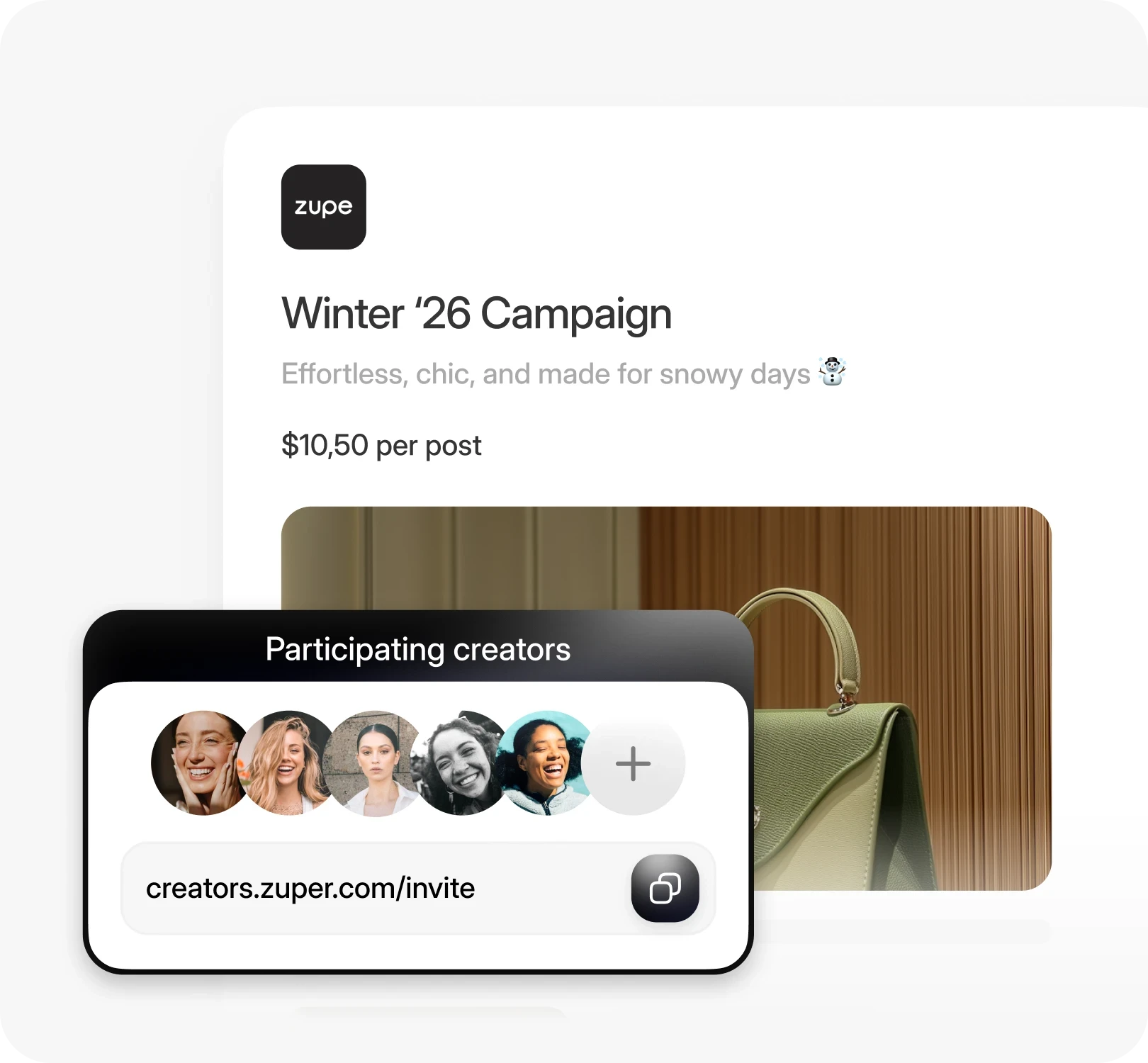
A multinational fashion retailer launches a new seasonal collection simultaneously in 12 markets. The global brand team creates a master brief with key messaging, hero product selections, and visual guidelines. Regional coordinators in each market select 15–25 local creators, localize the brief with market-specific product availability and pricing, and manage content approvals through a shared workflow. All creator content goes live within a 48-hour window, creating a coordinated wave of authentic product storytelling across Instagram, TikTok, and YouTube. Performance data flows into a single dashboard so the global team can identify which markets and creators drove the strongest engagement and conversion rates within the first week.
2. Always-On Affiliate Creator Program for E-Commerce
A global home goods retailer runs a year-round affiliate creator program with 500+ creators across North America and Europe. Each creator has a unique storefront or affiliate link. Monthly, the program team reviews creator performance, identifies top converters, and offers them early access to new product drops or increased commission rates. Creators who underperform receive refreshed briefs or are rotated out. The program generates a steady stream of shoppable content that feeds both social channels and the retailer's own website, contributing measurable GMV each quarter.
3. Localized Seasonal Campaign with Micro-Creators
A global grocery and lifestyle retailer activates 200 micro-creators across Southeast Asia for a Lunar New Year campaign. Each creator produces recipe content featuring the retailer's private-label products, tailored to local culinary traditions in Vietnam, Thailand, Malaysia, and the Philippines. Regional coordinators manage creator selection and brief localization, while the central team monitors content quality and brand compliance. The campaign generates thousands of pieces of authentic, culturally relevant UGC that the retailer repurposes across its digital channels for weeks after the holiday.
4. Cross-Market Creator Scaling
A global beauty retailer identifies a creator in Brazil whose tutorial content consistently outperforms benchmarks. The team uses performance data to build a case for expanding the relationship: the creator is invited to produce content for the retailer's US Hispanic market, with briefs adapted for the new audience. The collaboration history, content assets, and performance benchmarks from the original market are all accessible in one place, enabling the new regional team to onboard the creator quickly and set informed expectations for deliverables and results.
Weekly and Monthly Operational Workflow for Global Retail Creator Programs
Running creator collaborations across multiple markets requires disciplined operational cadences. Below is a practical workflow that global retail teams can adopt using Socialscale.
Monday: Pipeline Review and Creator Activation
Regional coordinators review the creator pipeline in the CRM, checking for new applicants, pending onboarding tasks, and creators flagged for reactivation. New creators are vetted against brand safety criteria, audience quality benchmarks, and market-specific compliance requirements. Approved creators are moved into active status and assigned to upcoming campaigns.
Tuesday–Wednesday: Brief Distribution and Creator Communication
Campaign briefs for the current cycle are distributed to assigned creators. Regional teams use localized brief templates, attaching product samples or digital assets as needed. Creators confirm participation and submit questions through the collaboration workflow, keeping all communication centralized and auditable.
Thursday–Friday: Content Submission and Review
Creators submit draft content for review. Regional coordinators provide first-round feedback, checking for brand guideline adherence, disclosure compliance, and creative quality. Content that passes regional review is routed to the global brand team or legal for final approval. Approved content is scheduled for publishing or marked for immediate posting.
Weekly: Performance Check-In
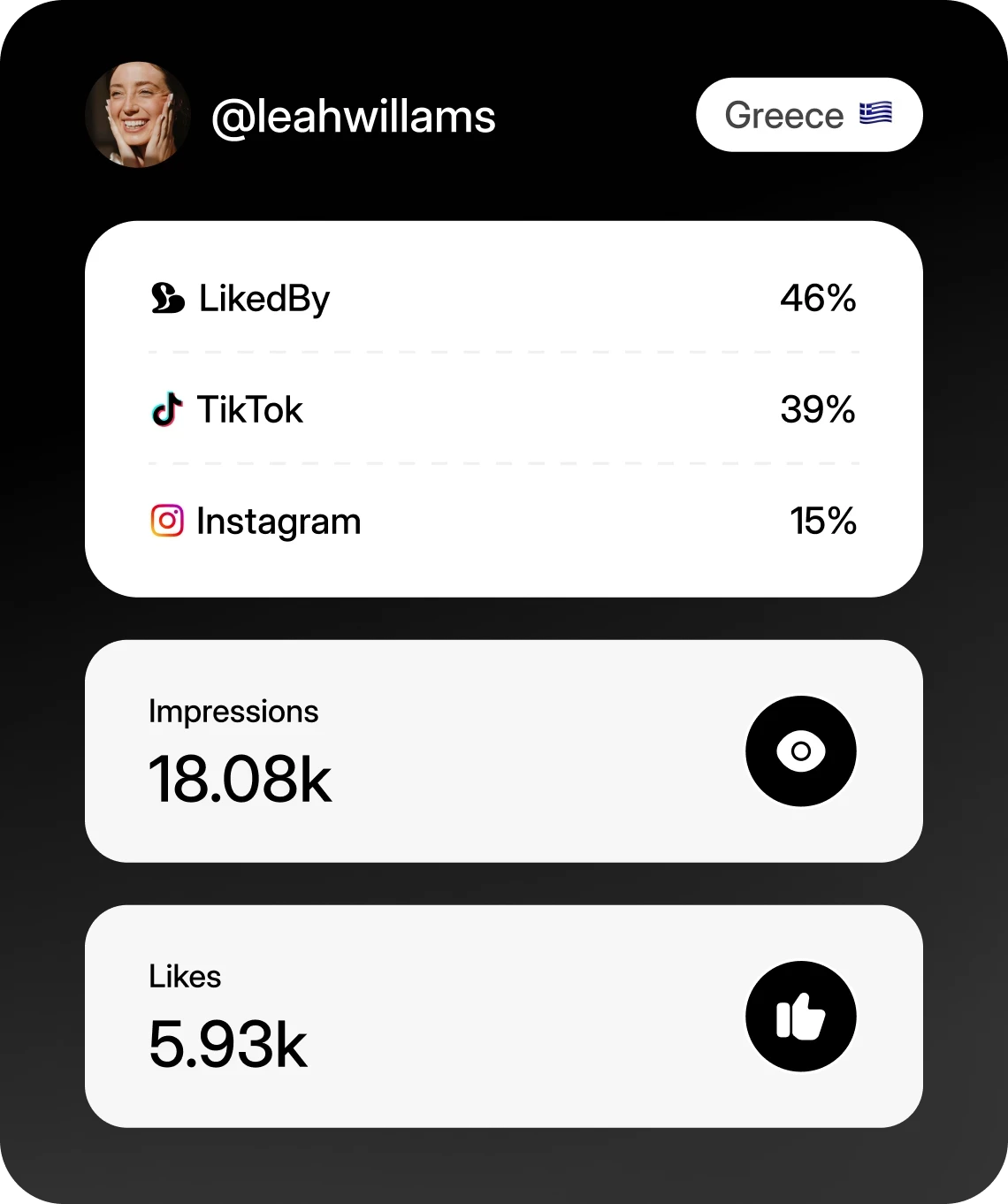
Every Friday, regional coordinators pull performance snapshots from the analytics dashboard. Key metrics include content reach, engagement rate, click-through rate, and early conversion signals. Underperforming content is flagged for optimization (caption edits, boosted distribution). Top-performing creators are noted for potential scaling or bonus incentives.
Bi-Weekly: Cross-Market Sync
Global program leads host a bi-weekly sync with regional coordinators to share learnings, compare performance across markets, and align on upcoming campaigns. Discussion topics include which content formats are working, which creator tiers deliver the best ROI, and where to reallocate budget based on performance data.
Monthly: Creator Program Health Report
The global team compiles a monthly report covering total content output, creator activation rate, average approval turnaround time, GMV attributed to creator content, and cost per acquisition. This report is shared with e-commerce directors and performance marketing managers to inform budget allocation and strategic planning for the next quarter.
Quarterly: Program Optimization and Roster Refresh
Every quarter, the team conducts a full roster review. Creators who consistently underperform are offboarded. High performers are offered upgraded terms, exclusive product access, or long-term ambassador contracts. New creators are scouted to fill gaps in underrepresented markets or content verticals. Campaign strategies are adjusted based on cumulative performance data and upcoming retail calendar priorities.
Key Performance Indicators for Global Retail Creator Programs
Tracking the right KPIs ensures your creator collaboration program delivers measurable business impact, not just vanity metrics. The following metrics are essential for global retail teams.
Creator Activation Rate: Percentage of onboarded creators who publish at least one piece of content per campaign cycle. Target: 70%+ for active programs.
Content Approval Turnaround Time: Average hours from content submission to final approval. Benchmark: under 48 hours for time-sensitive retail campaigns.
Content Output per Creator: Average number of deliverables produced per creator per month, segmented by market and content format.
Engagement Rate by Market: Average likes, comments, shares, and saves per post, normalized by follower count and compared across regions.
Click-Through Rate (CTR): Percentage of viewers who click creator content links to the retailer's website or product page.
Conversion Rate (CVR): Percentage of creator-driven traffic that completes a purchase. Segmented by creator tier, market, and content format.
GMV Attributed to Creators: Total gross merchandise value generated through creator affiliate links, shoppable content, and tracked storefronts.
ROAS (Return on Ad Spend for Boosted Creator Content): Revenue generated per dollar spent amplifying creator content through paid media.
Cost Per Acquisition (CPA): Total creator program cost divided by number of new customers acquired through creator-driven channels.
Content Reuse Rate: Percentage of creator content repurposed across additional channels (email, website, paid ads, in-store displays).
Creator Retention Rate: Percentage of creators who participate in multiple consecutive campaign cycles, indicating program health and creator satisfaction.
Scenario: Global Sportswear Retailer Scales Creator Collaborations Across 8 Markets
A global sportswear retailer with 400+ stores across North America, Europe, and Asia-Pacific had been managing creator collaborations through a combination of three regional agencies, a shared Google Drive, and market-specific Instagram DM outreach. The result: inconsistent content quality, no cross-market performance visibility, and an average content approval time of 9 business days.
After consolidating onto a centralized creator collaboration platform, the retailer onboarded 650 creators across 8 markets into a single CRM. Regional coordinators used localized brief templates tied to global brand guidelines. Content approval workflows were reduced to three stages with clear ownership and 48-hour SLAs.
Within six months, the program achieved the following results:
Content approval turnaround dropped from 9 days to 1.8 days on average.
Creator activation rate increased from 45% to 78%.
Monthly content output grew from 320 assets to 1,100+ assets across all markets.
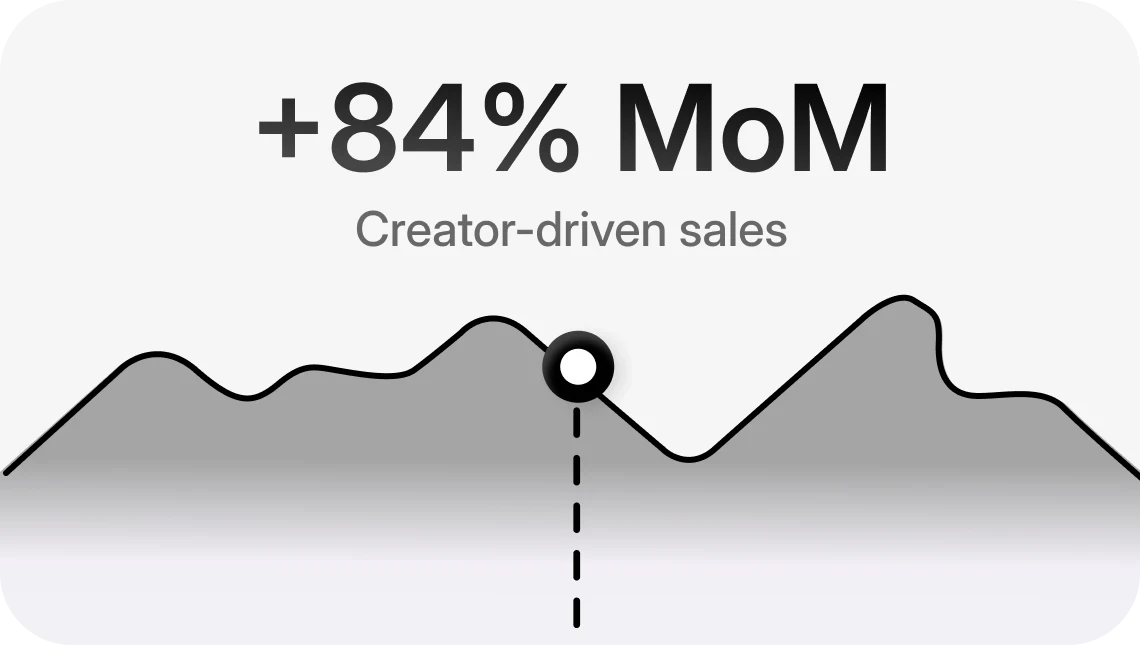
GMV attributed to creator-driven shoppable content reached $2.4M in Q3, up from $680K in the prior quarter.
Content reuse rate hit 40%, with top-performing UGC repurposed into paid social ads that delivered a 4.2x ROAS.
Creator retention rate improved to 82% quarter-over-quarter, reducing onboarding costs and maintaining audience trust through consistent creator partnerships.
The global marketing director noted that having a single view of creator performance across markets enabled the team to reallocate 20% of their Q4 creator budget from underperforming markets to high-ROI regions, directly improving overall program efficiency.
Frequently Asked Questions
How does Socialscale handle creator collaborations across different time zones and languages?
Socialscale's collaboration workflows are asynchronous by design. Briefs, content submissions, and approval feedback are all managed within the platform, so creators and coordinators in different time zones can work without waiting for real-time responses. Brief templates support localization, allowing regional teams to adapt messaging, product details, and compliance language for their specific markets while maintaining global brand consistency.
Can we manage both paid creator partnerships and affiliate creator programs in one platform?
Yes. Socialscale supports flat-fee collaborations, performance-based bonuses, and affiliate commission tracking within the same system. Each creator's profile in the CRM reflects their compensation model, deliverables, and attributed revenue, giving program managers a complete picture regardless of the partnership structure.
How does the platform help with UGC management and content rights?
Every piece of content submitted by a creator is stored in Creator Drive with metadata including usage rights, expiration dates, approved channels, and content format. Teams can filter and search for assets by market, campaign, product, or creator. This eliminates the common problem of losing track of which content can be used where, and ensures legal compliance when repurposing UGC across paid media, e-commerce pages, or in-store displays.
What level of visibility do global teams have into regional creator programs?
Global program leads have full dashboard access to every market's creator roster, active campaigns, content pipeline, and performance metrics. They can drill down into individual markets or roll up data for cross-market comparison. Regional teams retain operational control over their day-to-day workflows while the global team maintains strategic oversight and can identify opportunities to scale successful tactics across regions.
How long does it take to onboard a global retail team onto Socialscale?
Most global retail teams complete initial setup—including CRM configuration, brief template creation, approval workflow design, and first-market creator onboarding—within two to four weeks. Subsequent markets can be added in days since the core infrastructure is already in place. Teams typically see full operational adoption across all target markets within 60 to 90 days.