Creator Collaborations for Apparel Retailers
Apparel retailers operate on a relentless calendar of seasonal launches, product drops, and trend-driven capsule collections. Every week that passes without coordinated creator content is revenue left on the table. Creator collaboration for apparel retailers is no longer a nice-to-have brand awareness play. It is a core revenue channel that connects product storytelling directly to purchase, and it demands the same operational rigor you bring to merchandising and supply chain.
Social commerce has fundamentally changed how consumers discover and buy clothing. Shoppers scroll creator content on TikTok and Instagram, tap shoppable links, and check out without ever visiting a category page. For apparel brands running 20, 50, or 200 creator relationships simultaneously, the challenge is not finding influencers. It is orchestrating product drop influencer scheduling, managing content approvals at speed, and attributing every dollar of creator-driven revenue back to the right partnership.
This page breaks down how apparel retail teams can build a repeatable, measurable creator collaboration engine, from onboarding and briefing to content deployment and performance tracking, so every seasonal campaign ships on time and every creator relationship compounds in value.
Coordinating Product Drop Timing Across Dozens of Creators
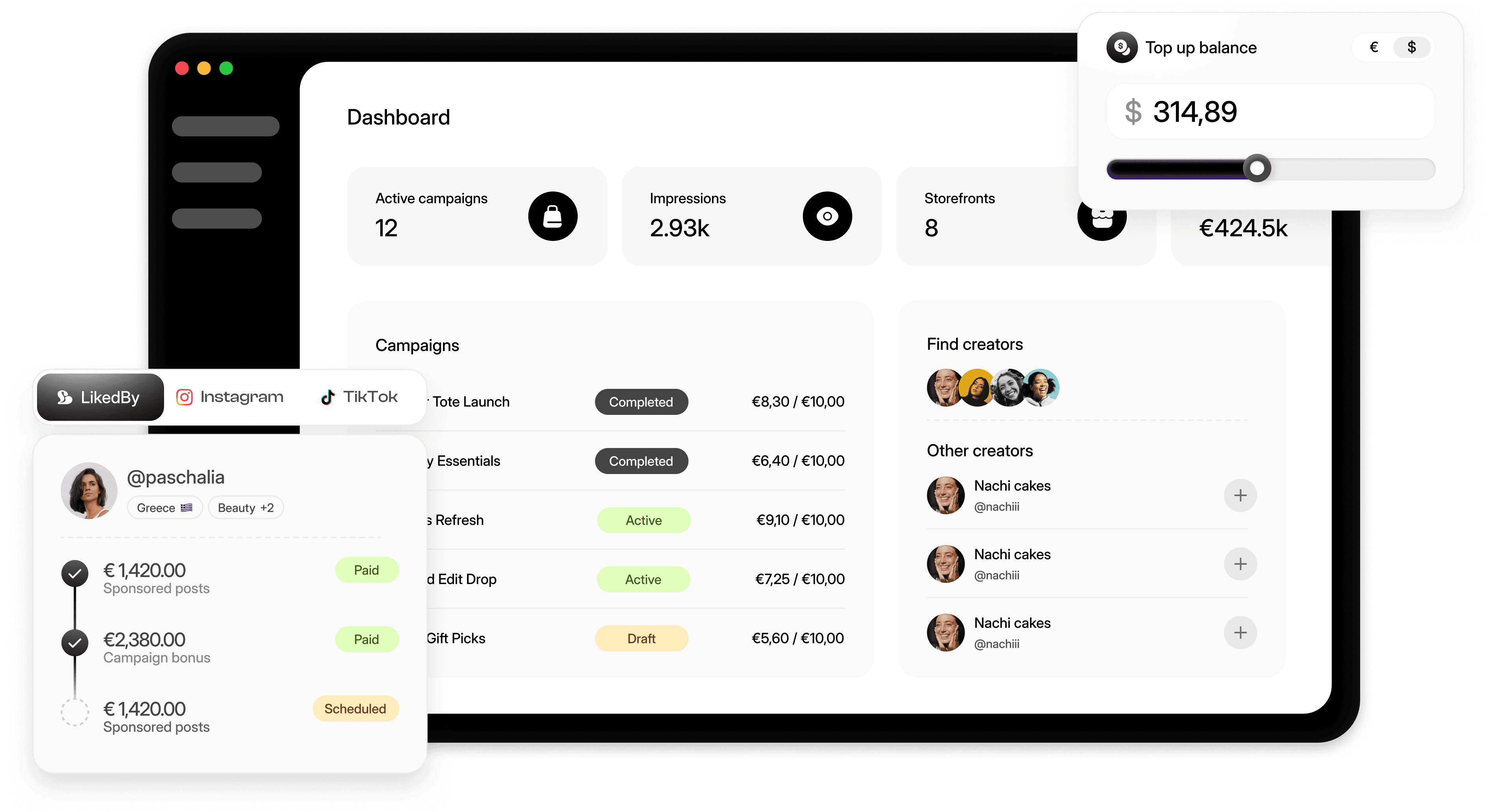
Apparel drops live and die by timing. When a new collection launches at 9 AM EST, every creator post needs to go live within a tight window. Coordinating embargo dates, shipping samples in advance, and confirming posting schedules across 30+ creators using spreadsheets and DMs leads to missed windows and inconsistent coverage.
Managing High-Volume Sample Seeding
Unlike SaaS or beauty, apparel requires size-specific samples. Teams must track which creator received which SKU, in which size and colorway, and whether the sample arrived in time for a styled shoot. A single shipping delay can derail an entire creator's content timeline.
Content Approval Bottlenecks During Peak Seasons
During back-to-school, holiday, or summer launch periods, apparel marketing teams review hundreds of creator drafts simultaneously. Without a centralized approval workflow, feedback loops stretch from hours to days, pushing posts past their optimal publish windows.
Attributing Revenue to Individual Creator Partnerships
Apparel retailers often run affiliate creator programs alongside flat-fee collaborations. Tracking which creator drove which sales, especially when multiple creators promote the same SKU, requires granular attribution that most general-purpose tools cannot provide.
Maintaining Brand Consistency Across Diverse Creator Aesthetics
Apparel brands have strict visual guidelines, from how garments are styled to which backgrounds and lighting are acceptable. Scaling creator programs means balancing creative freedom with brand standards across streetwear creators, minimalist fashion influencers, and plus-size style advocates simultaneously.
Reusing Creator Content Across Owned Channels
The best creator content should live beyond a single Instagram Story. Apparel teams need to repurpose UGC for product detail pages, email campaigns, and paid social, but content gets buried in email threads and Google Drive folders with no usage rights tracking.
Scaling Without Proportionally Scaling Headcount
An apparel brand managing 50 creators with two coordinators cannot simply hire five more people when the program grows to 250 creators. The operational model must scale through systems, not just staff.
Spreadsheets Cannot Handle Product Drop Influencer Scheduling
A Google Sheet tracking creator names, ship dates, posting dates, and content status works for five creators. At 50, it becomes a liability. Version conflicts, missed filter updates, and no automated reminders mean product drops launch with incomplete creator coverage. There is no way to visualize a drop calendar, flag at-risk creators, or trigger follow-ups automatically.
Email and DMs Create Invisible Workflows
When briefs go out via email, feedback happens in Instagram DMs, and contracts live in DocuSign, no single team member has a complete picture of any collaboration. Onboarding a new coordinator means weeks of context transfer. If a creator disputes a deliverable, there is no auditable trail.
Generic Project Management Tools Lack Commerce Context
Asana and Monday.com can track tasks, but they have no concept of a creator profile, a content asset with usage rights, a shoppable link, or an affiliate commission structure. Teams end up building fragile workarounds that break every time the program evolves.
Disconnected Analytics Obscure True Creator ROI
When engagement data lives in Instagram Insights, sales data lives in Shopify, and creator costs live in a finance spreadsheet, calculating cost-per-acquisition or return on creator spend requires manual data pulls that happen monthly at best. By the time the numbers are ready, the campaign is over and optimization opportunities are gone.
UGC Management Falls Through the Cracks
Creator content is one of the most valuable assets an apparel brand produces, yet most teams have no structured system for storing, tagging, and retrieving it. Content that could power six months of paid social sits unused because nobody can find it or confirm whether usage rights are still valid.
How Socialscale Powers Creator Collaborations for Apparel Retailers
Socialscale is built as the operating system for social commerce, purpose-designed for teams that run creator programs at scale. Rather than stitching together five disconnected tools, apparel retail teams use Socialscale to manage every stage of a creator collaboration from a single workspace.
The creator collaborations module gives apparel teams a structured pipeline for every partnership: from initial outreach and contract terms through sample shipment tracking, content briefing, draft review, publishing confirmation, and performance measurement. Each collaboration has a clear status, timeline, and audit trail that any team member can pick up without context switching.
For product drop influencer scheduling specifically, Socialscale lets teams build drop-specific campaigns, assign creators to specific SKUs and colorways, set embargo dates with automated reminders, and monitor real-time posting compliance. When a creator misses their window, the system flags it immediately rather than letting it surface in a weekly report.
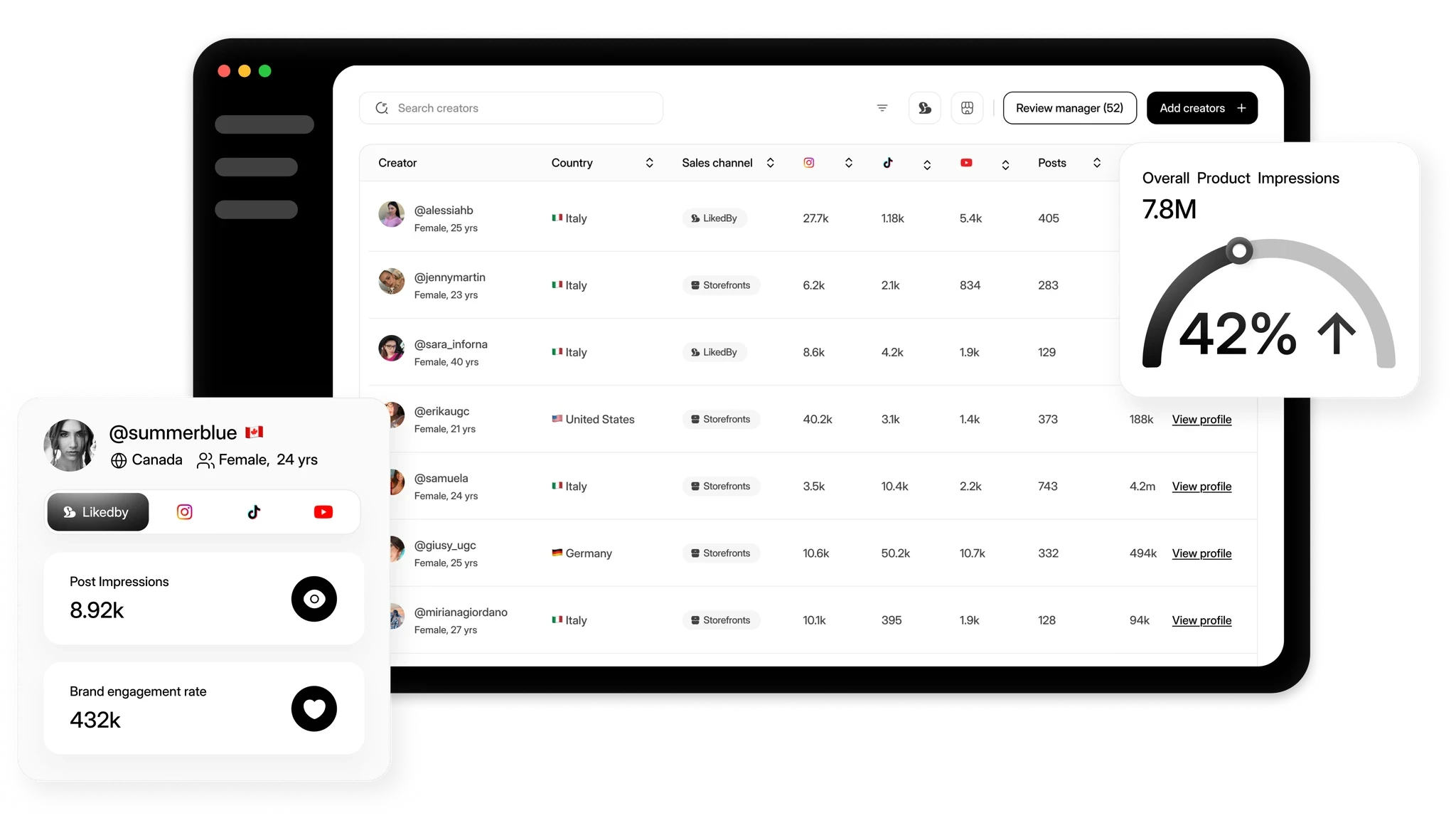
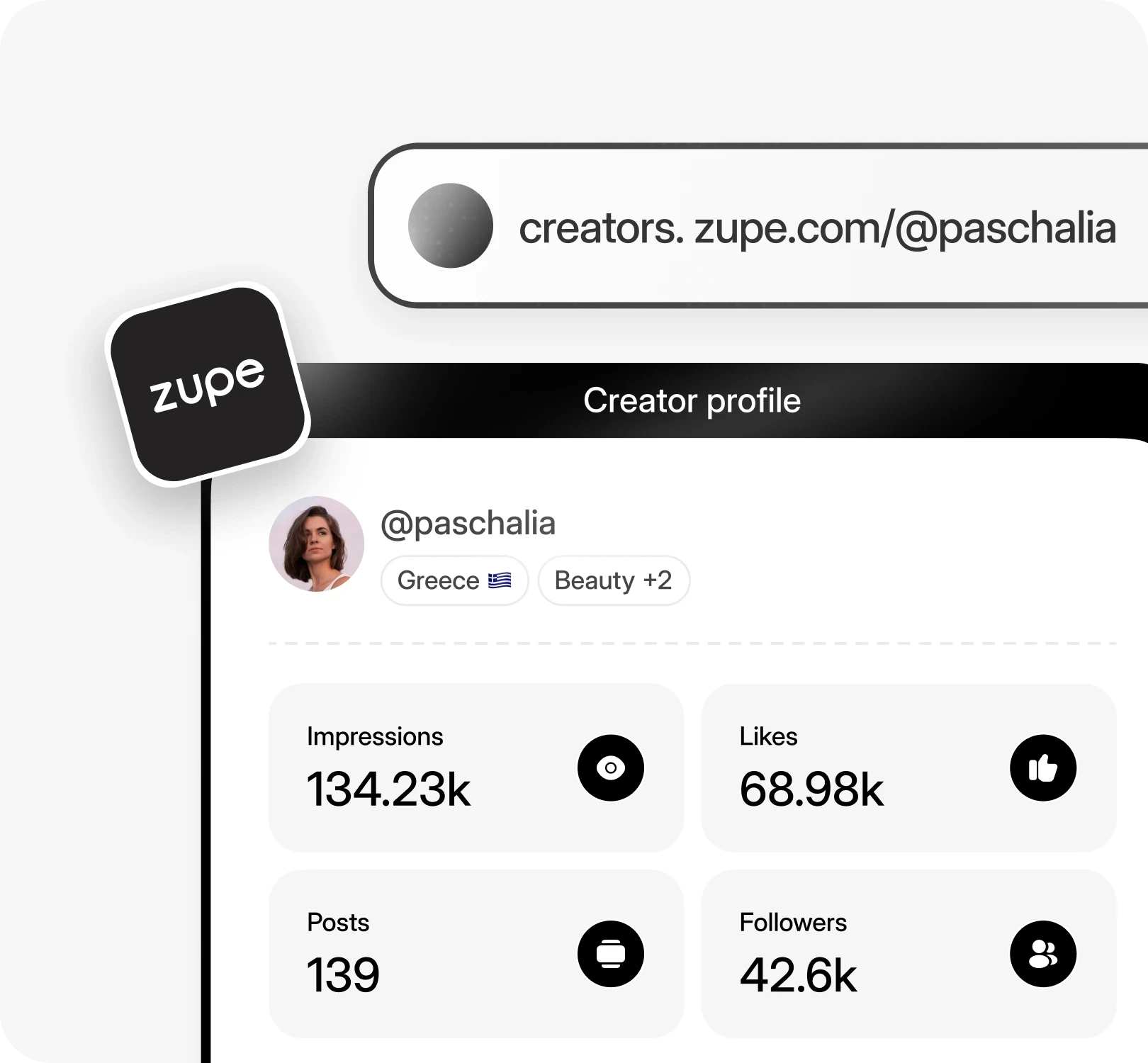
Creator relationships are managed through the creator CRM, which stores every interaction, past campaign performance, content preferences, sizing information, and commission history. When planning a new seasonal drop, merchandising and marketing teams can filter creators by past conversion rate, average order value driven, or content style to build the optimal roster.
All creator-generated assets flow into a centralized content library with tagging, usage rights tracking, and direct deployment capabilities. Teams can push top-performing UGC to product pages as shoppable content widgets, embed creator videos in email campaigns, or export assets for paid social, all without leaving the platform.
Feature Breakdown: What Apparel Teams Use Daily
Campaign and Drop Calendar
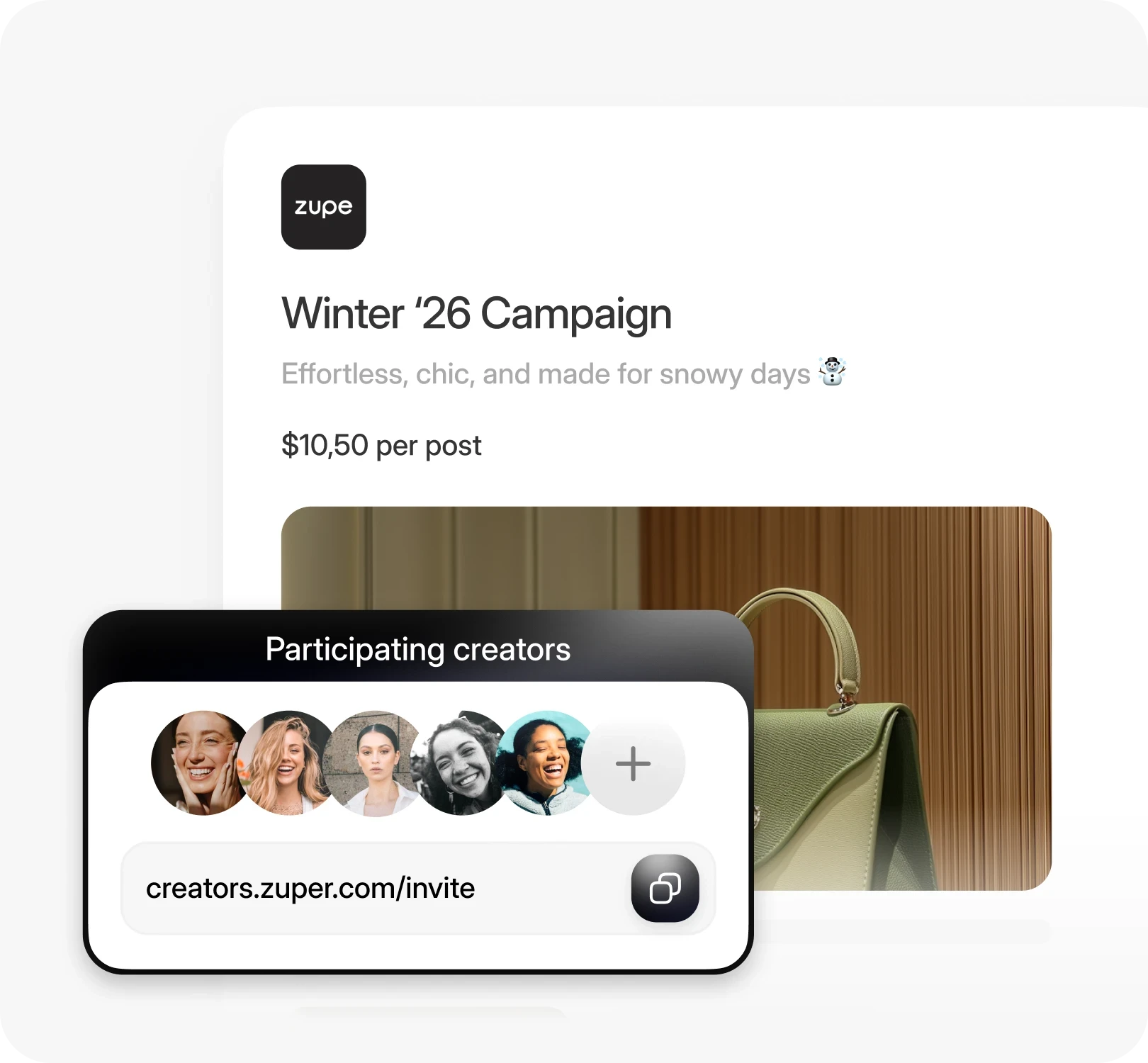
Build campaigns around specific product drops, seasonal collections, or promotional events. Each campaign includes a timeline, creator roster, deliverable checklist, and content calendar. Teams can view all active campaigns in a single calendar view, filter by collection or creator tier, and identify scheduling conflicts before they become problems.
Creator Onboarding and Briefing
Onboard new creators with structured intake forms that capture sizing, style preferences, content formats, platform strengths, and commission expectations. Attach visual briefs with mood boards, styling guidelines, and shot lists directly to each collaboration so creators have everything they need without back-and-forth emails.
Sample and Product Seeding Tracker
Log which products were shipped to which creators, track delivery confirmation, and link sample shipments to specific campaign deliverables. When a creator confirms receipt, the collaboration status automatically advances, keeping the pipeline moving without manual updates.
Content Review and Approval Workflow
Creators submit drafts directly into the platform. Reviewers can annotate images and videos, request revisions with specific feedback, and approve content with a single click. Approval timestamps are logged for compliance, and approved content is automatically tagged and stored for future use.
Shoppable Content Deployment
Approved creator content can be embedded on product detail pages, collection pages, and landing pages as shoppable widgets. Each widget links directly to the featured SKU, turning authentic creator styling into a conversion tool that lives permanently on your storefront.
Affiliate Link and Commission Management
Generate unique tracking links or discount codes for each creator. Track clicks, conversions, and revenue at the individual creator level. Manage commission tiers, process payouts, and give creators visibility into their own earnings to maintain engagement and transparency.
Performance Dashboards
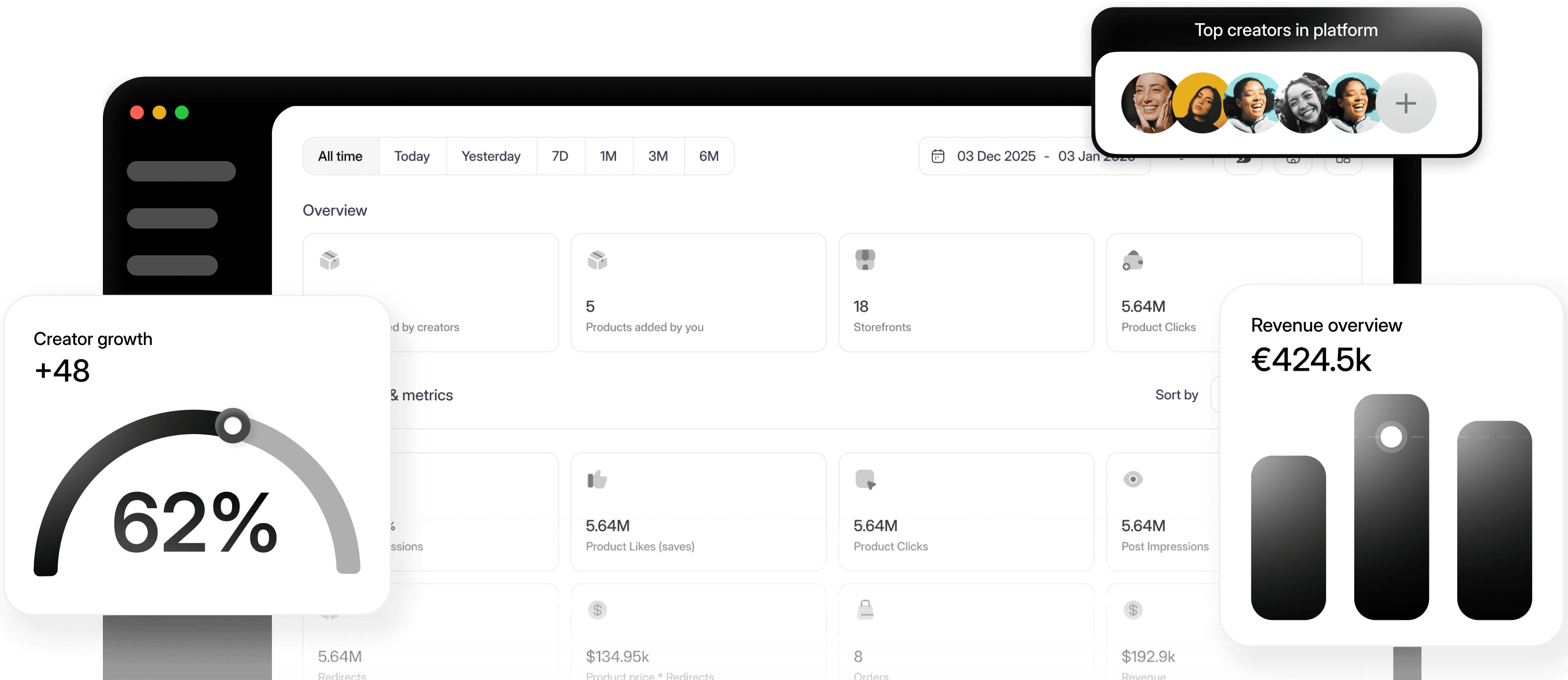
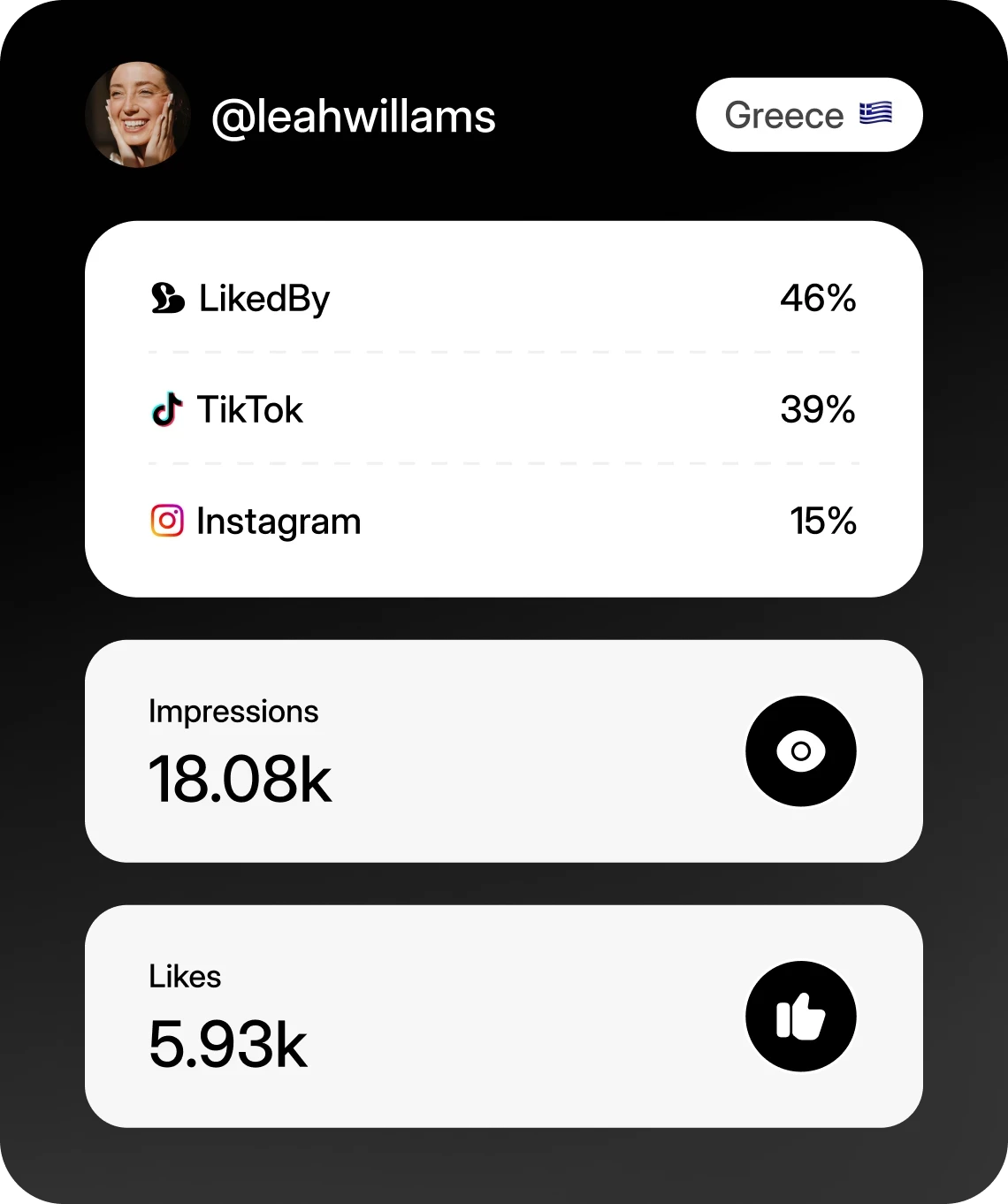
Track creator-level and campaign-level metrics including impressions, engagement rate, click-through rate, conversions, revenue generated, and cost-per-acquisition. Compare performance across product drops to identify which creator-product pairings drive the highest return. The creator analytics dashboard surfaces these insights in real time rather than requiring manual data assembly.
Content Library with Rights Management
Every piece of creator content is stored in a searchable, tagged library. Filter by creator, campaign, product, content format, or usage rights status. Export assets for paid media, email, or wholesale lookbooks with confidence that rights are current and documented.
Use Cases for Apparel Retail Teams
Seasonal Collection Launch with Tiered Creator Activation
A contemporary womenswear brand plans its Fall/Winter collection launch eight weeks out. The team segments its creator roster into three tiers: 10 macro creators who receive full collection samples and create lookbook-style Reels, 30 mid-tier creators who each receive two hero pieces for styled outfit posts, and 100 micro creators who receive a single bestseller SKU for TikTok try-on content. Each tier has different embargo dates, with macro creators posting 48 hours before the public launch to build anticipation, mid-tier creators posting on launch day, and micro creators posting throughout the first week to sustain momentum. Every creator receives a tailored brief with their specific products, posting window, and shoppable links.
Limited-Edition Streetwear Drop with Real-Time Coordination
A streetwear label releasing a 500-unit capsule collection needs all 15 selected creators to post within a 30-minute window on a Saturday morning. The team pre-ships samples under NDA, collects and approves all content drafts by Thursday, and uses scheduled reminders to confirm posting times on Friday evening. On drop morning, the team monitors a live dashboard to confirm each post goes live, immediately flagging any creator who misses the window so the community manager can follow up in real time. Post-drop, the team measures sell-through velocity correlated with each creator's posting time and engagement.
Ongoing Affiliate Program for Everyday Basics
A direct-to-consumer basics brand runs a year-round affiliate creator program with 200 creators who earn commission on every sale driven through their unique links. Each month, the team highlights three focus SKUs, such as a new colorway of their bestselling jogger, and sends updated briefs and fresh product shots. Creators produce content on their own schedule, and the brand tracks monthly revenue contribution per creator, adjusting commission tiers quarterly based on performance. Top performers receive early access to new products and higher commission rates, creating a self-reinforcing incentive loop.
Multi-Brand Retailer Running Cross-Label Creator Campaigns
A multi-brand apparel retailer curates creator campaigns that feature products from several labels in a single outfit-of-the-day format. The marketing team assigns each creator a mix of three to five brands per post, ensuring balanced brand exposure across the campaign. Briefs include specific product combinations, and the content review process involves sign-off from each brand's marketing contact. Approved content is deployed as shoppable widgets on the retailer's website, with each product in the outfit linked to its respective product page, driving cross-sell and increasing average order value.
Weekly Operational Workflow for Apparel Creator Collaborations
Running a creator collaboration program for apparel requires consistent weekly rhythms. The following workflow reflects how high-performing apparel marketing teams operate when managing 50 or more active creator relationships.
Monday: Campaign Planning and Creator Selection. Review upcoming product drops and promotional events for the next two to four weeks. Identify which creators align with each campaign based on past performance data, audience demographics, and content style. Use creator CRM filters to build rosters and send initial outreach or collaboration invitations.
Tuesday: Briefing and Sample Coordination. Finalize creative briefs for each active campaign, including mood boards, styling direction, key messaging, hashtags, and shoppable link details. Coordinate with the warehouse or fulfillment team to ship samples with size-specific assignments. Log all shipments in the sample tracker with expected delivery dates.
Wednesday: Content Review and Feedback. Review all incoming creator content drafts. Provide specific, actionable feedback on styling, lighting, caption copy, and product tagging. Approve content that meets brand standards and advance those collaborations to the scheduled posting stage. Flag any creators who have not submitted drafts and send follow-up reminders.
Thursday: Publishing Confirmation and Community Engagement. Confirm that all scheduled posts have gone live within their designated windows. Engage with creator posts through the brand account to boost visibility. Share top-performing creator content to the brand's own Stories or feed where agreements allow.
Friday: Performance Review and Reporting. Pull weekly performance data across all active campaigns. Review impressions, engagement rates, click-through rates, and attributed revenue per creator. Identify top performers and underperformers. Update the creator CRM with performance notes and flag any creators for tier adjustments or program changes.
Bi-Weekly: Content Library Curation. Tag and organize all approved content in the centralized library. Identify high-performing assets for repurposing on product pages, email campaigns, and paid social. Verify usage rights expiration dates and flag any content approaching its rights window.
Monthly: Program Optimization and Creator Relationship Management. Analyze month-over-month trends in creator-driven revenue, content output, and program costs. Calculate blended cost-per-acquisition and return on creator spend. Conduct one-on-one check-ins with top-tier creators to discuss upcoming collections, gather feedback, and strengthen the relationship. Adjust commission structures or collaboration terms based on performance data.
Key Performance Indicators for Apparel Creator Collaborations
Apparel retail teams should track these metrics weekly and monthly to evaluate creator program health and optimize for revenue impact.
Creator Activation Rate: Percentage of onboarded creators who complete at least one deliverable per campaign cycle. Target above 80% for active roster.
Content Approval Time: Average hours from draft submission to final approval. Best-in-class apparel teams maintain under 24 hours during peak seasons.
Content Output per Creator: Number of approved assets produced per creator per month, segmented by format (Reels, TikToks, Stories, static posts).
Click-Through Rate (CTR): Percentage of viewers who click shoppable links or swipe-up links from creator content. Benchmark varies by platform but aim for 2-5% on Instagram Stories and 1-3% on TikTok.
Conversion Rate (CVR): Percentage of link clicks that result in a completed purchase. Track at the individual creator level to identify high-converting partners.
Creator-Attributed GMV: Total gross merchandise value driven through creator links, discount codes, and shoppable widgets. The primary revenue signal for program ROI.
Return on Creator Spend (ROCS): Total creator-attributed revenue divided by total program cost (fees, commissions, product costs, shipping). Target varies by margin structure but 4:1 or higher is strong for apparel.
Cost Per Acquisition (CPA): Total program cost divided by number of new customers acquired through creator channels. Compare against paid social CPA to demonstrate relative efficiency.
Average Order Value (AOV) from Creator Traffic: Track whether creator-driven orders have higher or lower AOV than other channels, indicating cross-sell effectiveness of styled outfit content.
Content Reuse Rate: Percentage of creator content repurposed across owned channels (PDP, email, paid social). Higher reuse rates amplify the value of each collaboration.
Creator Retention Rate: Percentage of creators who participate in multiple campaigns over a 6-month period. High retention signals strong relationships and reduces onboarding costs.
Scenario: Mid-Size DTC Apparel Brand Scales Creator Program for Spring Launch
A direct-to-consumer women's apparel brand generating $12M in annual revenue decided to overhaul its creator collaboration process ahead of its Spring collection launch. Previously, the two-person influencer marketing team managed 40 creators using a combination of Google Sheets, email, and a shared Google Drive folder. Content approval took an average of 3.5 days, sample tracking was unreliable, and the team could not attribute revenue to individual creators beyond basic discount code tracking.
The team implemented a structured creator collaboration workflow with centralized campaign management, automated sample tracking, and integrated content review. For the Spring launch, they expanded the program to 85 creators across three tiers, each assigned specific SKUs from the new collection with tailored briefs and staggered posting schedules aligned to a two-week launch window.
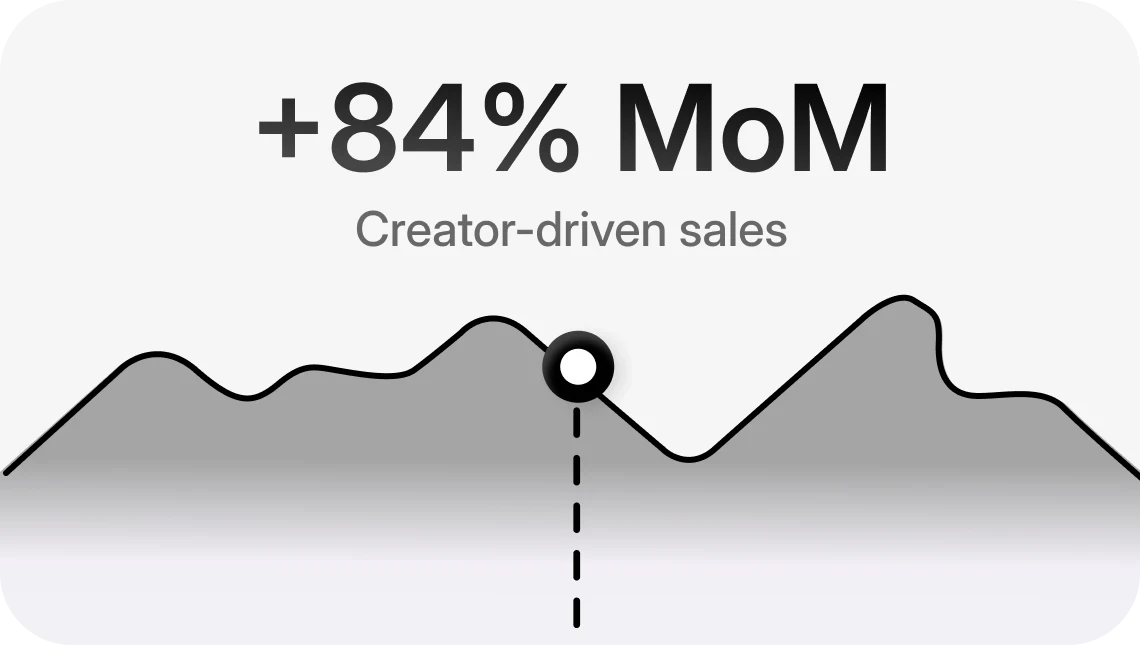
Results over the 60-day campaign period showed measurable operational and commercial improvements. Content approval time dropped from 3.5 days to 14 hours on average. Sample delivery confirmation rate reached 97%, up from an estimated 78% in previous seasons. The team collected 340 approved content assets, of which 120 were repurposed on product detail pages and in email campaigns. Creator-attributed revenue reached $285,000, representing a 5.2x return on total creator spend including product costs, commissions, and fees. Average order value from creator-driven traffic was 18% higher than the site average, driven by styled multi-piece outfit content that encouraged bundled purchasing. The team managed the expanded 85-creator program without adding headcount, freeing up approximately 15 hours per week previously spent on manual coordination tasks.
Frequently Asked Questions
How does creator collaboration software differ from general influencer marketing platforms for apparel?
General influencer marketing platforms focus primarily on discovery and outreach. Creator collaboration software like Socialscale covers the full operational lifecycle: onboarding, briefing, sample tracking, content review, publishing coordination, shoppable content deployment, and revenue attribution. For apparel retailers specifically, this means managing size-specific sample logistics, visual brand compliance across diverse creator aesthetics, and product drop influencer scheduling with tight embargo windows that general tools are not designed to handle.
Can we manage both paid collaborations and affiliate creator programs in one system?
Yes. Apparel brands commonly run hybrid programs where some creators receive flat fees for specific deliverables while others earn commission through affiliate links. The system supports both models within the same campaign, allowing teams to assign different compensation structures per creator and track total program cost and ROI across both models in a unified dashboard.
How do we handle content rights and usage tracking for creator assets?
Each collaboration includes content usage terms that are documented and tracked within the platform. When content is approved, its usage rights window, permitted channels, and any exclusivity terms are logged. The content library flags assets approaching rights expiration so teams can renegotiate or retire content before compliance issues arise. This is especially important for apparel brands repurposing creator content in paid advertising where usage rights violations carry financial risk.
What happens when a creator misses their posting window during a product drop?
The system monitors posting compliance against scheduled windows and immediately flags creators who have not posted by their designated time. The team receives real-time alerts and can follow up directly through the platform. For time-sensitive drops, this visibility is critical because a creator posting 48 hours late on a limited-edition release provides significantly less value than one who posts within the launch window.
How long does it take to onboard an apparel retail team onto a structured creator collaboration workflow?
Most apparel teams with an existing creator program can migrate their creator roster, set up their first campaign, and run a complete collaboration cycle within two to three weeks. Teams starting from scratch typically need four to six weeks to build their initial creator roster, develop briefing templates, and establish review workflows. Booking a demo is the fastest way to assess fit and get a tailored onboarding timeline based on your program size and complexity.