Creator Collaboration Software Built for Influencer Agencies Managing Large Rosters
Influencer agencies managing dozens or hundreds of creators across multiple brand clients face a coordination challenge that no spreadsheet or generic project management tool can solve. Every collaboration involves deliverables, approvals, timelines, usage rights, and performance data that must flow seamlessly between account managers, creators, and brand stakeholders. When collaboration tracking breaks down, agencies lose revenue, miss deadlines, and erode client trust.
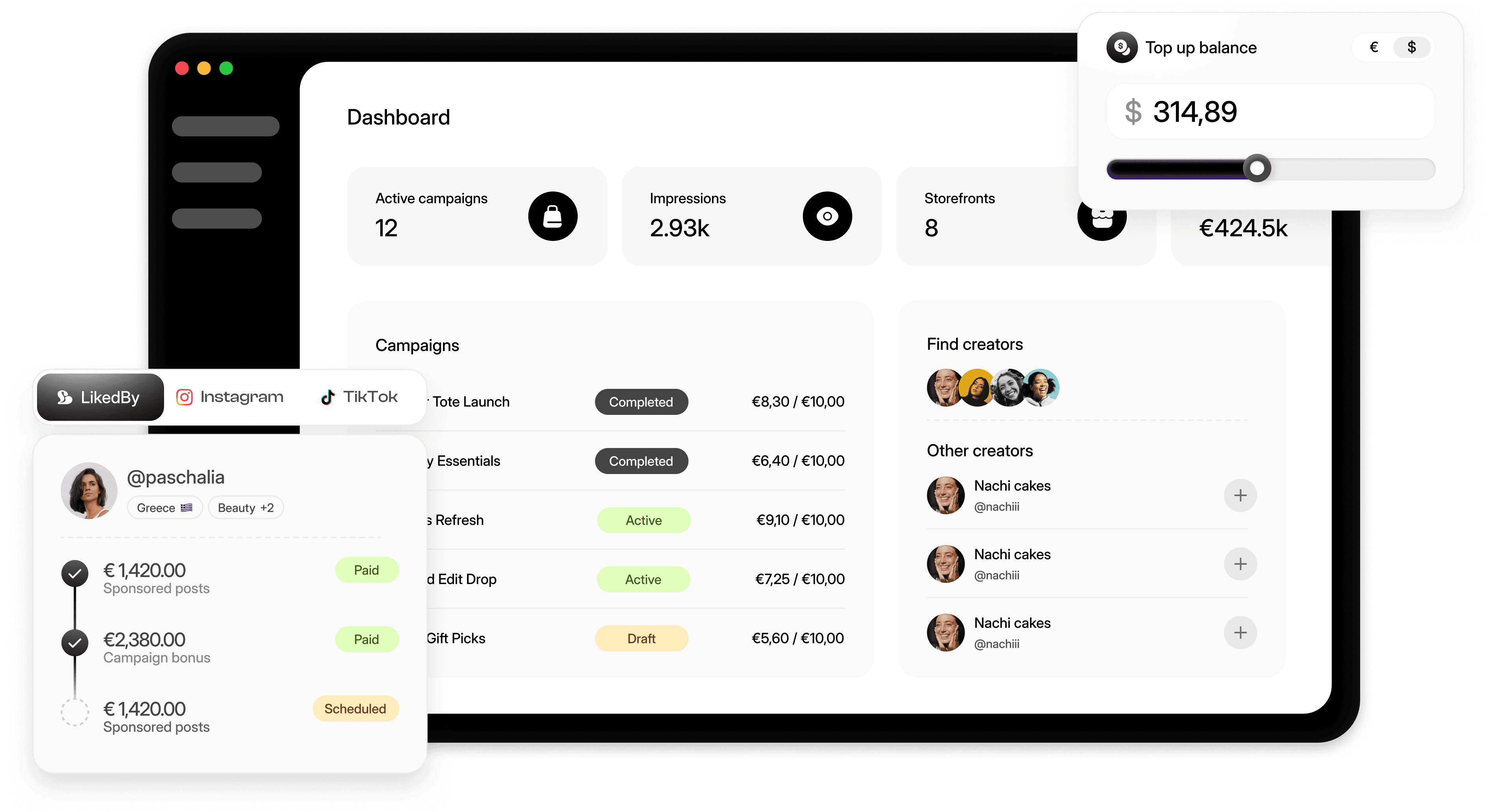
Socialscale gives influencer agencies a purpose-built operating system for managing creator collaborations at scale. From briefing and content approval to performance tracking and social commerce activation, every step lives in one platform. Agencies can onboard new creators in minutes, assign them to campaigns, track deliverable status across their entire roster, and surface the performance metrics that brand clients care about most.
Whether your agency runs affiliate creator programs, manages UGC campaigns, or activates creator storefronts for e-commerce brands, Socialscale replaces the patchwork of tools that slow your team down. The result is faster turnaround, fewer dropped balls, and a clear line from creator content to measurable revenue.
Core Challenges Influencer Agencies Face with Collaboration Tracking
Running creator collaborations for multiple brand clients simultaneously introduces operational complexity that compounds with every new creator and campaign. Here are the most persistent challenges agencies encounter.
1. Roster Fragmentation Across Tools
Most agencies track creator information in a mix of spreadsheets, Google Drive folders, Slack threads, and email chains. When a roster grows past 50 creators, finding the right creator for a campaign, checking their availability, or locating their past deliverables becomes a time sink that eats into billable hours.
2. Deliverable Tracking at Scale
A single campaign with 30 creators can generate 90 or more individual deliverables across Instagram, TikTok, and YouTube. Tracking which creators have submitted content, which pieces are awaiting approval, and which are overdue requires a system that most agencies simply do not have.
3. Multi-Client Campaign Overlap
Agencies frequently manage creators who work across multiple brand clients. Without centralized collaboration tracking, exclusivity conflicts, scheduling collisions, and brand safety issues slip through the cracks.
4. Slow Content Approval Cycles
When brand clients need to review and approve creator content before it goes live, the back-and-forth between agency account managers, creators, and client stakeholders often happens across email and messaging apps. Approvals stall, feedback gets lost, and launch dates slip.
5. Disconnected Performance Data
After content goes live, agencies must pull performance data from multiple native platform dashboards, compile it manually, and format it for client reports. This process is error-prone and delays the feedback loop that should inform future collaborations.
6. Inconsistent Onboarding and Briefing
Without a standardized onboarding flow, new creators receive inconsistent briefs, miss brand guidelines, and produce off-brand content that requires rework or rejection.
7. No Revenue Attribution from Creator Content
As social commerce becomes central to influencer marketing, agencies are expected to demonstrate how creator content drives actual purchases. Most agencies lack the tooling to connect creator collaborations to revenue outcomes like GMV, conversion rate, or affiliate commissions.
Why Spreadsheets, Project Management Tools, and Point Solutions Fall Short
Spreadsheets Cannot Handle Relational Data
A collaboration involves a creator, a brand client, a campaign brief, multiple deliverables, approval statuses, content assets, and performance metrics. Spreadsheets flatten this into rows and columns, making it impossible to see the full picture of a collaboration or quickly filter by status, creator, or client. As rosters grow past 100 creators, spreadsheets become unmanageable and error-prone.
Project Management Tools Lack Creator Context
Tools like Asana, Monday.com, or Trello can track tasks, but they have no concept of a creator profile, a content deliverable, a brand brief, or a performance metric. Agencies end up building elaborate workarounds that require constant manual maintenance and still fail to connect collaboration status to content output or revenue.
Point Solutions Create Data Silos
Some agencies use one tool for creator discovery, another for campaign management, a third for content storage, and a fourth for analytics. Each tool holds a fragment of the collaboration lifecycle, and no single view exists to show an account manager the full status of their campaigns. Data silos also mean that performance insights from one campaign never inform creator selection for the next.
Native Platform Dashboards Are Per-Channel Only
Instagram Insights, TikTok Analytics, and YouTube Studio each show performance for their own platform. Agencies running cross-platform campaigns must manually aggregate data, losing hours every reporting cycle and introducing inconsistencies that undermine client confidence.
How Socialscale Solves Collaboration Tracking for Influencer Agencies
Socialscale is a creator marketing platform designed to give influencer agencies a single system of record for every creator, collaboration, content asset, and performance metric across their entire operation. Instead of stitching together disconnected tools, agencies manage the full collaboration lifecycle in one place.
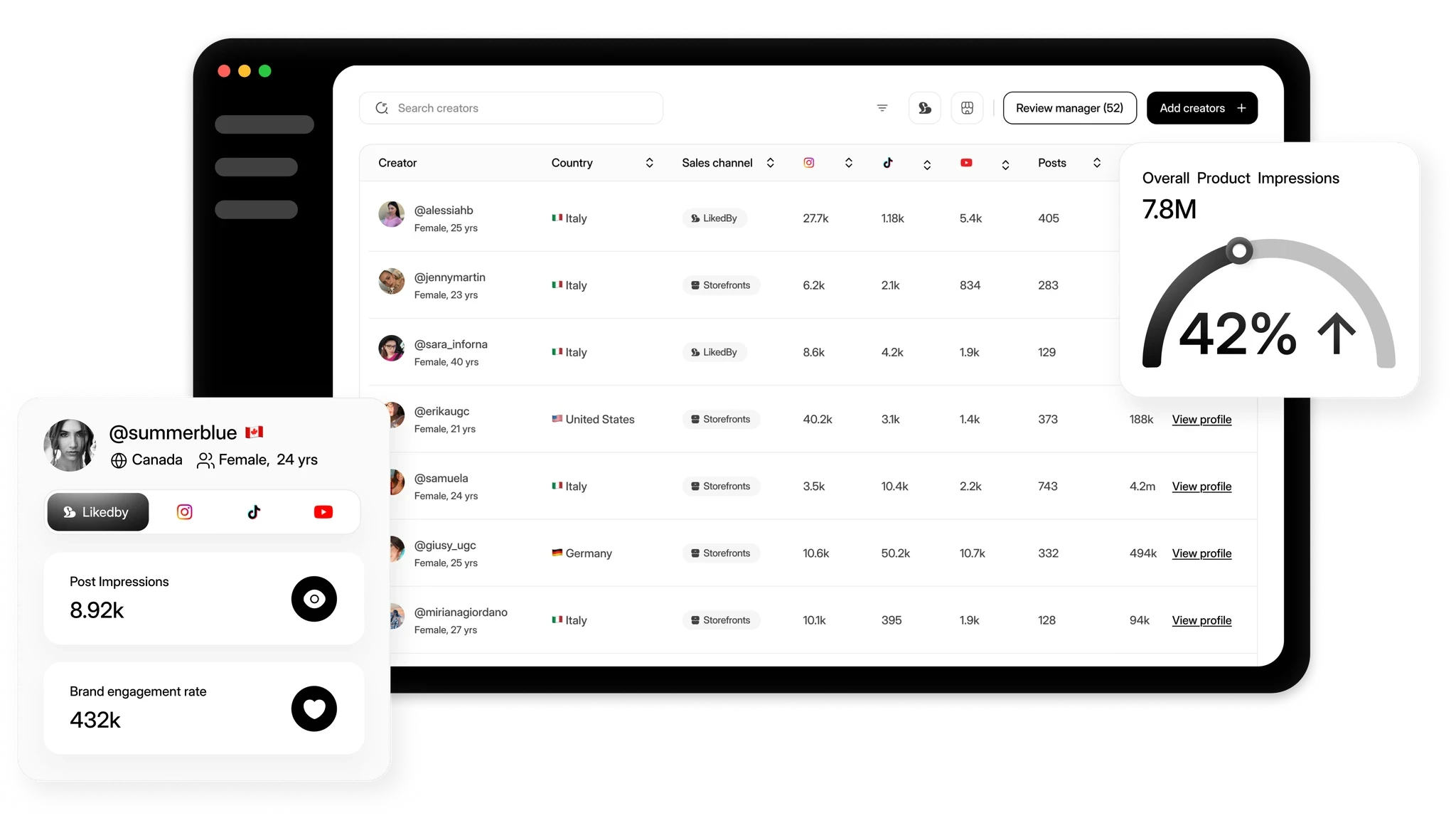
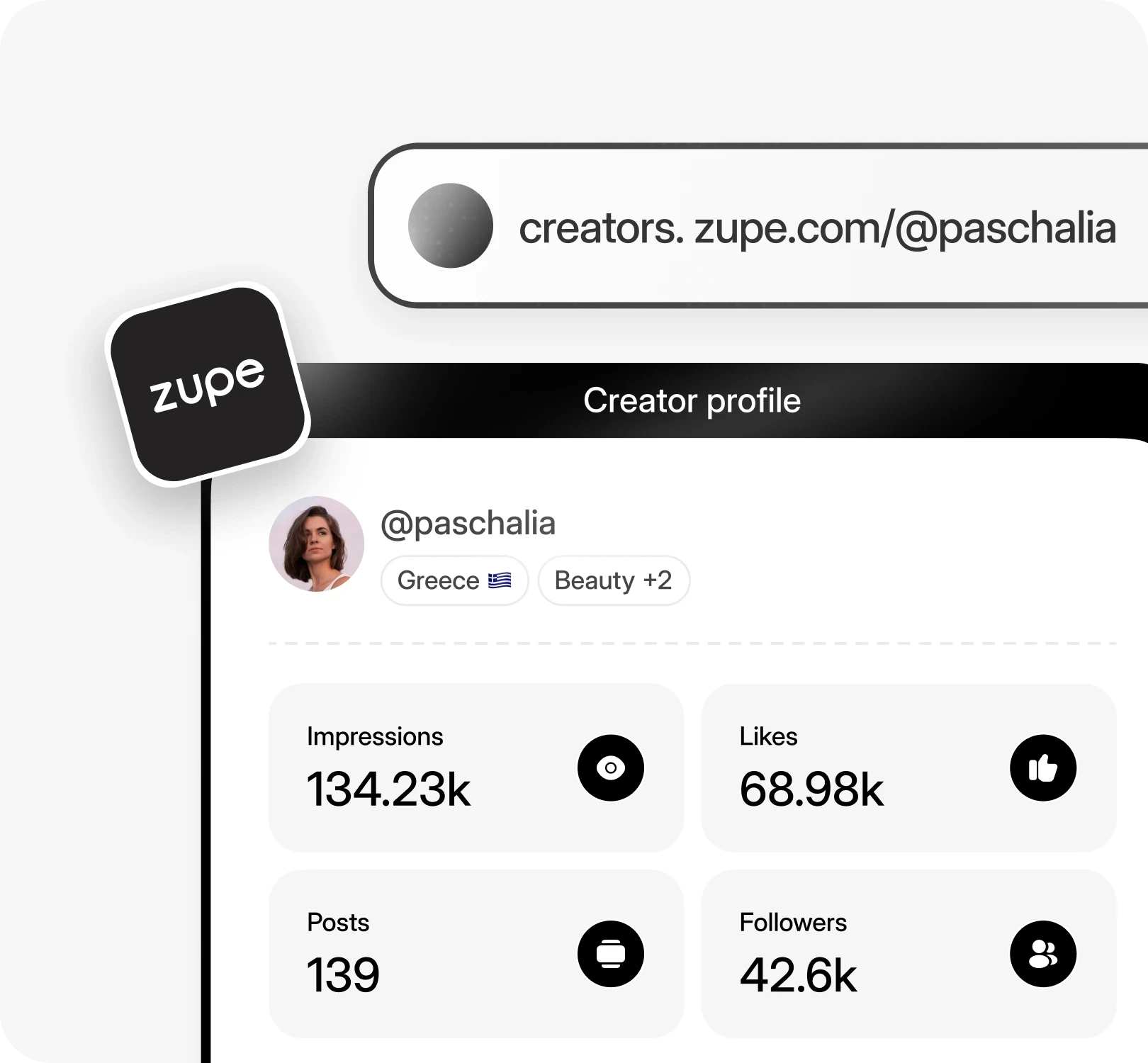
At the core of the platform is a creator CRM that stores every detail about each creator on your roster: contact information, social handles, past campaign history, content performance benchmarks, rate cards, and contractual notes. When an account manager needs to staff a new campaign, they can filter the roster by niche, engagement rate, platform, past brand work, or availability and build a shortlist in seconds.
Once creators are assigned to a campaign, Socialscale's creator collaborations module tracks every deliverable from briefing through submission, review, approval, and publication. Account managers see a real-time dashboard showing which creators have submitted, which are awaiting feedback, and which are overdue. Brand clients can be given limited access to review and approve content directly within the platform, eliminating email chains and reducing approval cycle time.
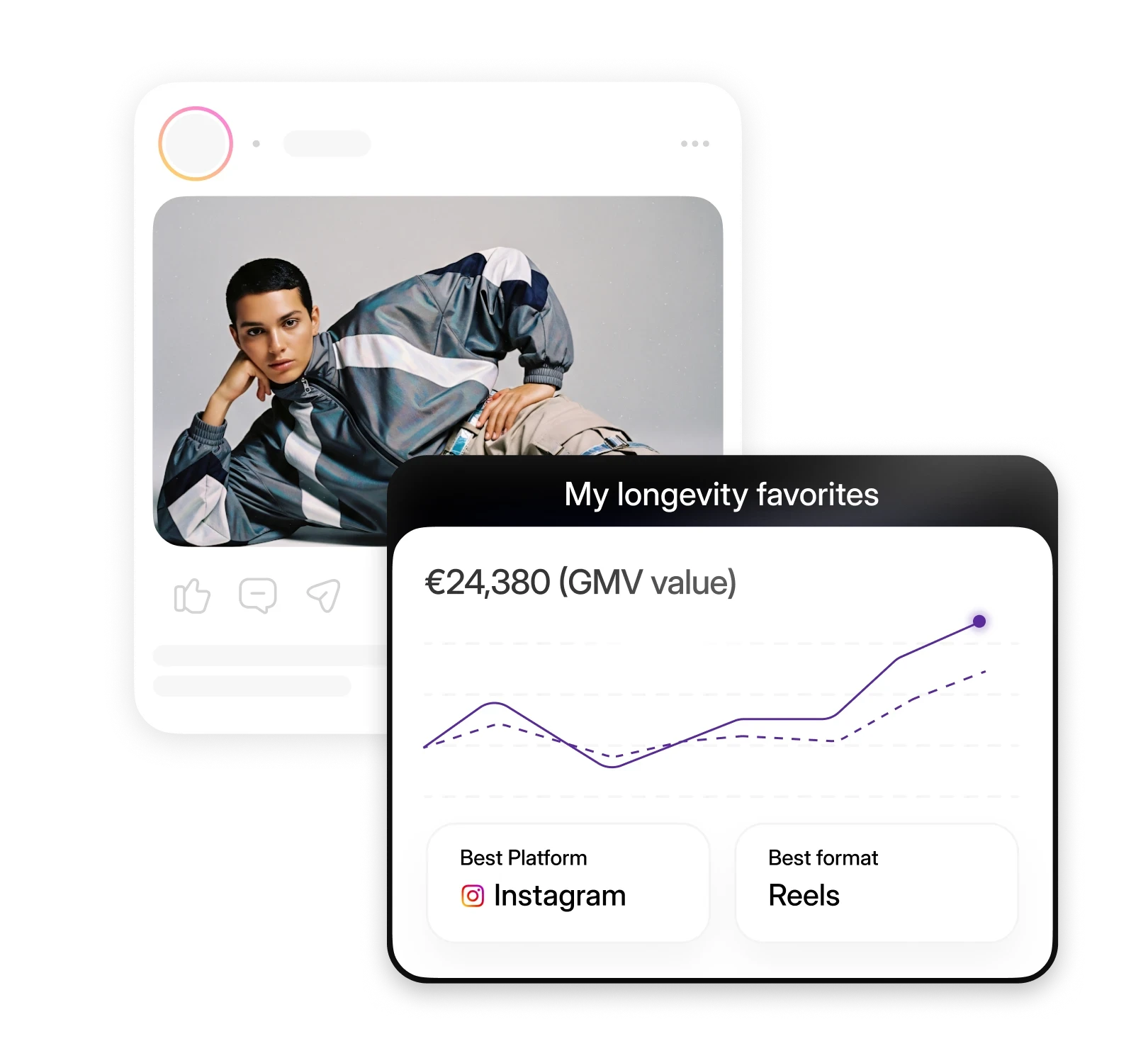
After content goes live, Socialscale pulls performance data across platforms and ties it back to the specific collaboration, creator, and campaign. Agencies can generate client-ready reports that show not just engagement metrics but also social commerce outcomes like click-through rates, conversion rates, and revenue generated through creator storefronts and affiliate links. This closed-loop visibility is what transforms an agency from a talent coordinator into a performance partner.
Feature Breakdown: What Agencies Get with Socialscale
Centralized Creator Roster Management
Every creator in your agency's roster lives in one searchable, filterable database. Profiles include social handles, audience demographics, engagement benchmarks, rate cards, past campaign history, and tags for niche, platform, and brand affinity. When a new RFP comes in, account managers can build a creator shortlist in minutes rather than hours.
Campaign-Level Collaboration Boards
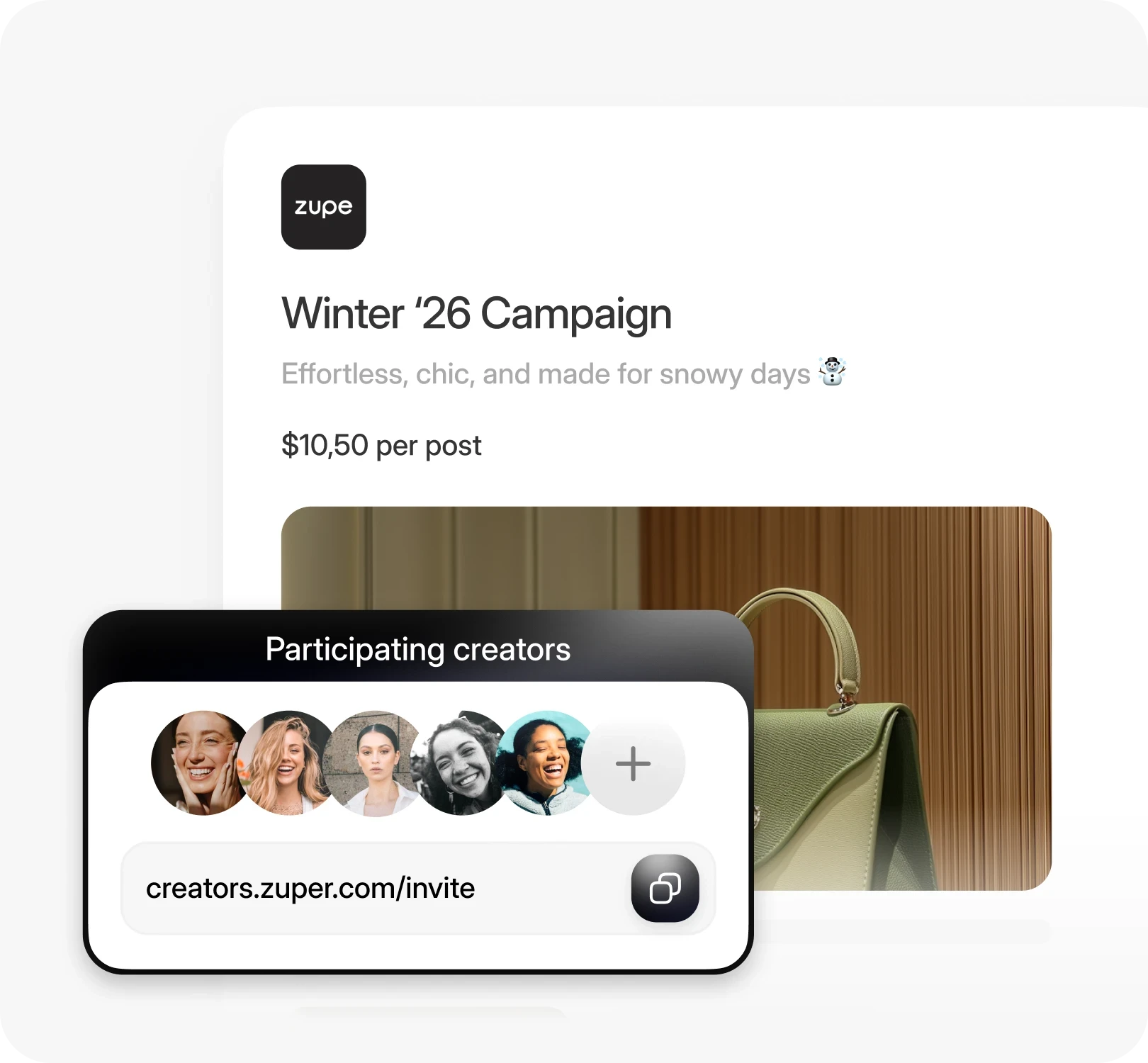
Each campaign gets its own collaboration workspace where account managers assign creators, attach briefs, set deliverable deadlines, and track status. The board view shows every deliverable across every creator in the campaign, with color-coded statuses: drafted, submitted, in review, revision requested, approved, and published. Managers can filter by creator, deliverable type, or status to quickly identify bottlenecks.
Briefing and Onboarding Templates
Agencies can create reusable brief templates for different campaign types: product seeding, sponsored posts, affiliate programs, UGC campaigns, and event activations. Templates ensure every creator receives consistent brand guidelines, messaging pillars, do's and don'ts, and deliverable specifications. New creators complete an onboarding flow that collects their information, tax forms, and content preferences before they receive their first brief.
Content Review and Approval Workflows
Creators submit content directly into Socialscale, where account managers and brand clients can review, leave timestamped feedback, request revisions, or approve. The entire approval history is logged, creating an audit trail that protects the agency in disputes. Approved content is automatically organized in the platform's asset library for future repurposing.
Asset Library and Content Storage
Every piece of creator content, whether raw footage, edited posts, or UGC clips, is stored in a centralized content drive organized by campaign, creator, and content type. Agencies can search, filter, and download assets for client presentations, paid media amplification, or embedding as shoppable content on brand websites.
Cross-Platform Performance Tracking
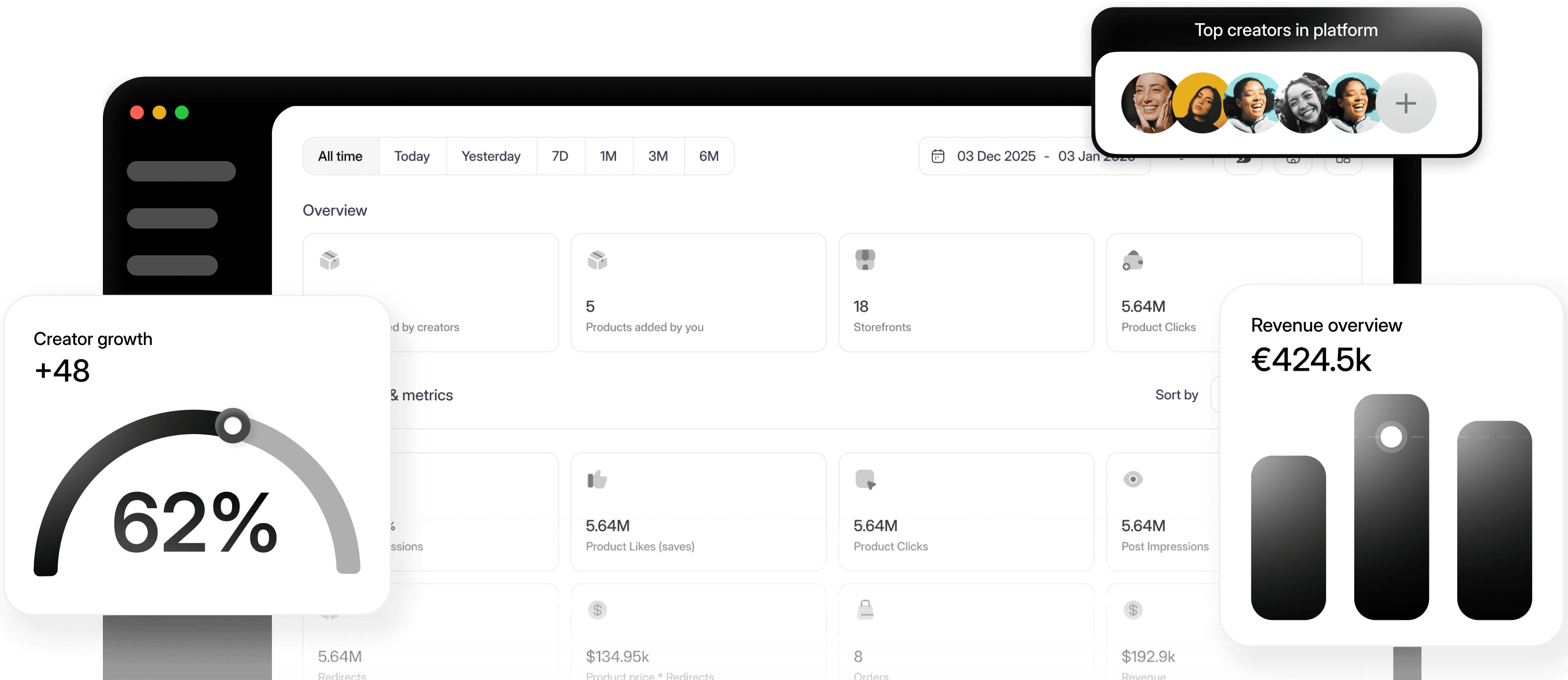
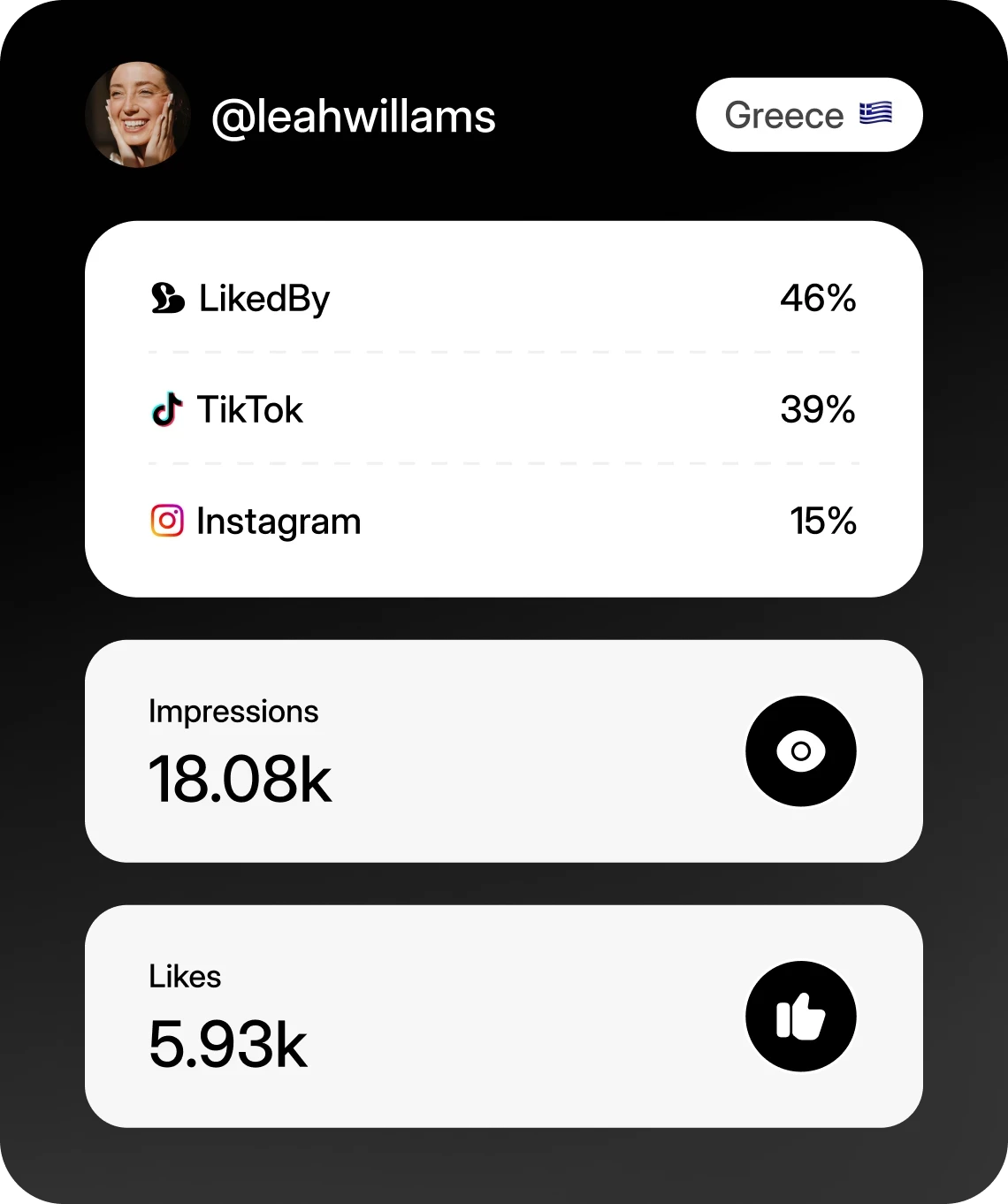
Socialscale aggregates performance data from Instagram, TikTok, YouTube, and connected e-commerce platforms into a unified creator analytics dashboard. Agencies see impressions, reach, engagement rate, clicks, conversions, and revenue attributed to each creator and each piece of content. This data feeds directly into client reports and informs future creator selection.
Shoppable Content and Commerce Integration
For agencies running social commerce programs, Socialscale enables embedding shoppable creator content directly on brand e-commerce sites. Creator storefronts, affiliate links, and product tagging connect content to purchase behavior, giving agencies the revenue attribution data that brand clients increasingly demand.
Use Cases: How Influencer Agencies Apply Collaboration Tracking
1. Multi-Brand Roster Coordination for a Full-Service Agency
A mid-size influencer agency manages a roster of 200 creators across 12 brand clients in beauty, fashion, and wellness. Each month, the agency runs 8 to 15 active campaigns simultaneously. With centralized collaboration tracking, account managers can see which creators are currently committed to campaigns, check for exclusivity conflicts before pitching a creator to a new brand, and ensure no creator is double-booked. The agency reduces scheduling conflicts by standardizing availability checks and maintains clean separation between competing brand accounts.
2. Scaling an Affiliate Creator Program for an E-Commerce Brand Client
An agency is tasked with building and managing a 150-creator affiliate program for a DTC skincare brand. Each creator receives unique affiliate links and is expected to post monthly content featuring the brand's products. Collaboration tracking allows the agency to monitor which creators have posted, which affiliate links are generating clicks and conversions, and which creators are underperforming. Monthly performance reviews use this data to identify top affiliates for increased commission tiers and flag inactive creators for re-engagement or removal.
3. UGC Campaign with Rapid Turnaround for a Product Launch
A consumer electronics brand hires an agency to produce 60 pieces of UGC content from 20 creators within a two-week window for a product launch. The agency uses collaboration tracking to assign specific deliverable types to each creator (unboxing, tutorial, testimonial), set staggered submission deadlines, and route content through a two-stage approval process involving both the agency creative director and the brand marketing team. Real-time status visibility ensures the agency hits the launch deadline without last-minute scrambles.
4. Always-On Creator Program with Monthly Reporting Cadence
An agency manages an always-on creator program for a fashion retailer, with 40 creators posting weekly content featuring new arrivals. Each month, the agency delivers a performance report to the brand showing total content output, aggregate engagement, top-performing creators, and revenue attributed to creator-driven traffic. Collaboration tracking automates the data collection that previously required two full days of manual work each reporting cycle, freeing the account team to focus on strategy and creator relationships.
Weekly and Monthly Operational Workflow for Agencies Using Socialscale
Adopting a structured workflow ensures that collaboration tracking delivers consistent results across every campaign and client. Here is a practical workflow that agencies can implement immediately.
Campaign Setup and Creator Assignment (Day 1)
When a new campaign brief arrives from a brand client, the account manager creates a campaign workspace in Socialscale, uploads the brief, sets deliverable requirements and deadlines, and assigns creators from the roster. Creators are selected using CRM filters for audience fit, past performance, and availability.
Creator Briefing and Onboarding (Days 1–2)
Assigned creators receive their brief through the platform, including brand guidelines, messaging pillars, content specifications, and deadlines. New creators complete an onboarding checklist that collects payment details, content preferences, and platform access. The account manager confirms all creators have acknowledged the brief.
Content Creation Window (Days 3–10)
Creators produce and submit content directly into Socialscale. The account manager monitors the collaboration board daily to track submission progress, send reminders to creators who have not submitted, and flag any issues to the brand client proactively.
Content Review and Approval (Rolling, Days 5–12)
As content comes in, the account manager reviews for brand compliance and quality, then routes approved pieces to the brand client for final sign-off. Revision requests include specific, timestamped feedback. The approval workflow ensures nothing is published without proper authorization.
Content Publication and Activation (Days 10–14)
Approved content is scheduled for publication. For social commerce campaigns, shoppable links and affiliate tracking codes are attached. The account manager confirms all content is live and correctly tagged.
Weekly Performance Check (Every Friday)
The account manager reviews the analytics dashboard to check early performance signals: impressions, engagement rate, click-through rate, and any initial conversion data. Underperforming content is flagged for potential paid amplification or creator follow-up.
Monthly Client Reporting (End of Month)
The agency generates a comprehensive performance report from Socialscale's analytics module, covering content output, engagement metrics, commerce metrics, top-performing creators, and recommendations for the next month. This report is delivered to the brand client within two business days of month-end.
Roster Review and Optimization (Monthly)
The agency reviews creator performance across all active campaigns to identify top performers for expanded roles, underperformers for coaching or removal, and gaps in the roster that require new creator recruitment. CRM data informs every decision.
Key Performance Indicators for Collaboration Tracking
Agencies using Socialscale track the following KPIs to measure operational efficiency and campaign performance across their creator rosters.
Creator Activation Rate: Percentage of rostered creators who are actively assigned to and producing content for campaigns in a given month.
Average Approval Cycle Time: Number of hours or days between content submission and final approval, measured across all collaborations.
Content Output per Campaign: Total number of approved and published deliverables per campaign, tracked against the target set in the brief.
On-Time Delivery Rate: Percentage of deliverables submitted by the original deadline, indicating roster reliability and briefing clarity.
Click-Through Rate (CTR): Percentage of viewers who click on shoppable links, affiliate URLs, or creator storefront links embedded in content.
Conversion Rate (CVR): Percentage of clicks that result in a completed purchase, tracked per creator and per campaign.
Gross Merchandise Value (GMV): Total revenue generated through creator-driven traffic, attributed to specific collaborations and affiliate programs.
Return on Ad Spend (ROAS): For campaigns where creator content is amplified with paid media, the ratio of revenue generated to media spend invested.
Cost per Acquisition (CPA): Total campaign cost divided by the number of conversions attributed to creator content, used to benchmark efficiency against other marketing channels.
Content Repurposing Rate: Percentage of creator content that is repurposed for paid ads, website embedding, email marketing, or other channels beyond organic social.
Agency Scenario: Scaling Collaboration Tracking from 50 to 300 Creators
A Los Angeles-based influencer agency specializing in beauty and lifestyle brands had grown its roster from 50 to 300 creators over 18 months. The agency managed campaigns for 8 brand clients, running an average of 20 campaigns per month. Before implementing a centralized collaboration tracking system, the agency relied on a combination of Google Sheets, Slack channels, and Dropbox folders to manage creator assignments, content submissions, and performance reporting.
The operational strain was significant. Account managers spent an average of 6 hours per week per campaign on manual status tracking and follow-ups. Content approval cycles averaged 5.2 days because feedback was scattered across email and Slack. Monthly client reports required 2 full days of manual data compilation per brand. The agency estimated it was losing approximately 15% of potential campaign capacity to administrative overhead.
After migrating to a purpose-built collaboration tracking platform, the agency centralized its entire roster in a searchable CRM, standardized briefing templates across all clients, and implemented structured approval workflows with client-facing review portals. Within 90 days, the results were measurable:
Average content approval cycle time dropped from 5.2 days to 1.8 days.
On-time deliverable submission rate increased from 68% to 91%.
Monthly reporting time per client decreased from 16 hours to 3 hours.
The agency onboarded 4 new brand clients without adding headcount, representing a 50% increase in client capacity.
Creator reactivation rate improved by 22% because the CRM flagged inactive creators for re-engagement automatically.
For clients running affiliate programs, revenue attribution accuracy improved, enabling the agency to demonstrate an average 4.2x ROAS across social commerce campaigns.
The agency's managing director noted that the shift from reactive status-chasing to proactive campaign management fundamentally changed how the team operated, allowing senior account managers to focus on strategy and client relationships rather than administrative coordination.
Frequently Asked Questions
How does Socialscale handle collaboration tracking when creators work across multiple brand clients?
Socialscale's creator CRM maintains a complete history of each creator's campaign assignments across all brand clients. Account managers can check a creator's current commitments, exclusivity agreements, and scheduling availability before assigning them to a new campaign. This prevents conflicts and ensures brand safety across the agency's entire portfolio.
Can brand clients access the platform to review and approve creator content?
Yes. Agencies can grant brand clients limited access to specific campaign workspaces where they can review submitted content, leave feedback, request revisions, and approve deliverables. This eliminates the need for email-based approval chains and gives clients visibility into campaign progress without exposing the agency's full roster or internal operations.
What happens to creator content after a campaign ends?
All approved creator content is stored in Socialscale's asset library, organized by campaign, creator, and content type. Agencies and their brand clients can access, search, and download assets for repurposing in paid media, website embedding, email marketing, or future campaigns. Usage rights and license terms are tracked alongside each asset.
How does the platform support affiliate creator programs and social commerce tracking?
Socialscale integrates with e-commerce platforms like Shopify to track clicks, conversions, and revenue generated through creator affiliate links and storefronts. Each creator's commerce performance is tied to their profile and campaign history, enabling agencies to report on GMV, conversion rate, and ROAS at the creator, campaign, and client level.
Is Socialscale suitable for agencies managing fewer than 50 creators?
Absolutely. While the platform is designed to scale with large rosters, agencies with smaller rosters benefit equally from structured collaboration workflows, centralized content storage, and automated performance tracking. Many agencies adopt Socialscale early specifically to build operational discipline before their roster grows, avoiding the painful migration from spreadsheets that larger agencies often face.