Creator Collaboration Platform for DTC Brands
Running creator collaborations for a DTC brand means managing dozens or hundreds of relationships simultaneously, each with its own deliverables, timelines, compensation structures, and performance benchmarks. Without a centralized system, these workflows fracture across spreadsheets, email threads, and disconnected tools, creating operational drag that directly impacts revenue.
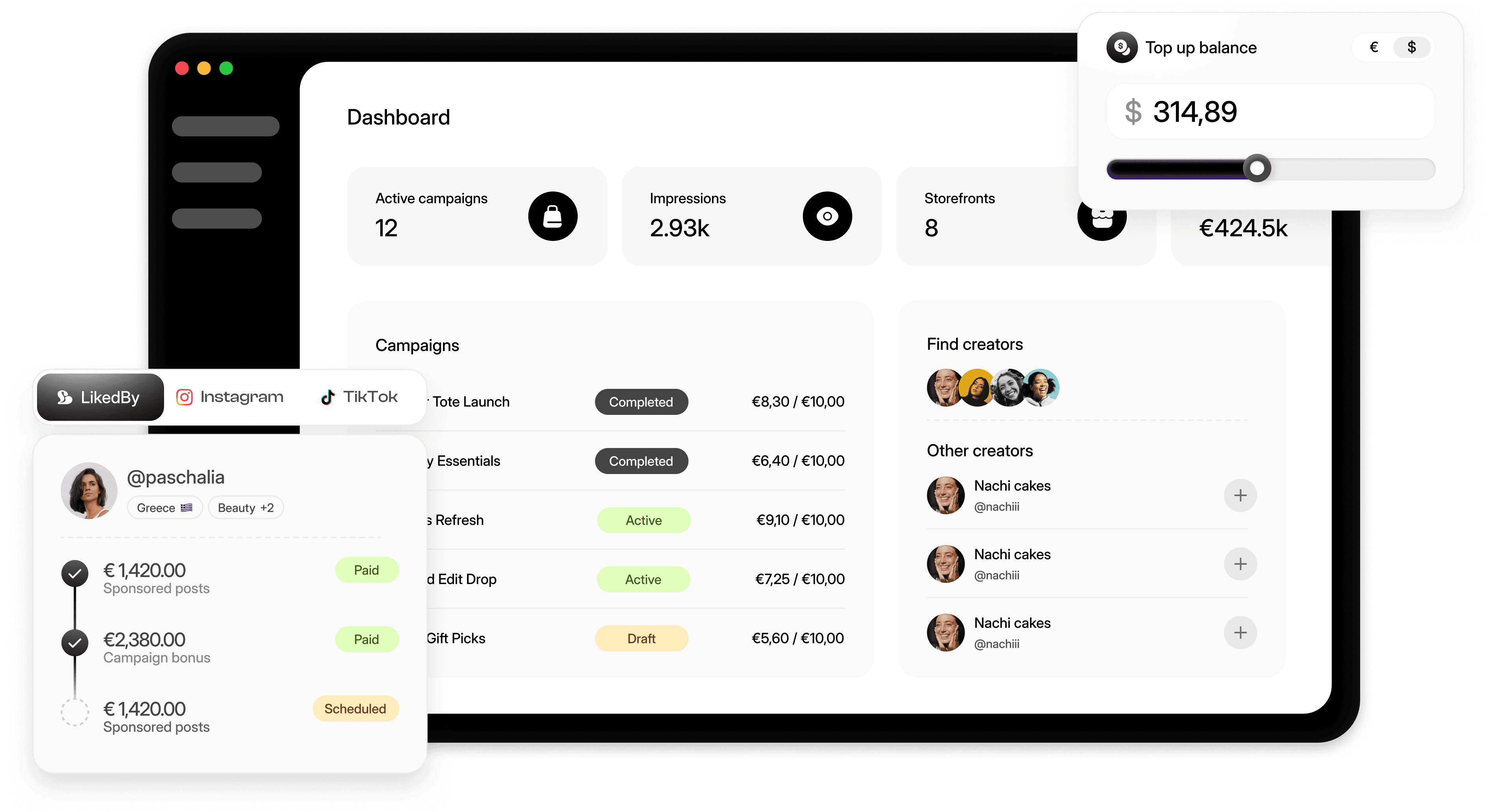
Socialscale gives DTC teams a single operating system for social commerce that handles every stage of creator collaboration, from initial outreach and contract negotiation to content approval, asset organization, and performance-based payouts. Instead of stitching together five or six tools, your team works from one platform purpose-built for the way modern DTC brands actually run influencer and affiliate programs.
Whether you are scaling a seeding program, managing an ambassador tier structure, or running performance-based influencer workflows for DTC brands with affiliate commissions, Socialscale replaces the operational chaos with repeatable, measurable processes that connect creator output directly to revenue outcomes.
Managing High-Volume Creator Relationships Without Dedicated Infrastructure
DTC brands often work with 50 to 500+ creators at any given time across seeding, gifting, affiliate, and paid campaigns. Without a structured collaboration platform, relationship management becomes a bottleneck that slows content production and campaign launches.
Disconnected Communication Channels
Briefs go out via email, feedback happens in DMs, contracts live in Google Drive, and shipping confirmations sit in Slack. This fragmentation leads to missed deadlines, duplicated work, and creators who feel unsupported, all of which reduce content quality and repost rates.
No Visibility Into Creator Pipeline Status
Brand managers frequently lack a real-time view of where each collaboration stands. Questions like "Did she receive the product?" or "Has his content been approved?" require manual check-ins that consume hours every week.
Difficulty Tying Creator Output to Revenue
DTC brands live and die by unit economics. If you cannot attribute sales, average order value, or customer acquisition cost to specific creators, you cannot optimize spend or justify scaling your program.
Content Approval Bottlenecks
When content review requires downloading files from multiple sources, gathering feedback from brand and legal teams, and communicating revisions back to creators, the approval cycle stretches from days to weeks, missing trend windows and launch timelines.
Inconsistent Compensation and Payout Tracking
DTC programs often blend flat fees, product gifting, affiliate commissions, and performance bonuses. Tracking what each creator is owed across these models manually is error-prone and creates trust issues with your creator community.
Scaling Beyond a Small Roster
What works with 10 creators breaks at 100. Most DTC teams hit an operational ceiling where adding more creators actually decreases output per creator because the team cannot service relationships at scale.
Spreadsheets and Project Management Tools Were Not Built for Creator Workflows
Tools like Airtable, Notion, and Asana can track tasks, but they have no native understanding of creator collaboration stages, content approval flows, affiliate link generation, or performance attribution. Every workflow must be manually constructed and maintained, creating fragile systems that break when team members change or programs scale.
Influencer Discovery Platforms Stop at the Handshake
Many influencer marketing software tools focus heavily on creator discovery and audience analytics but offer minimal support for the operational reality of managing ongoing collaborations. Finding creators is only 10% of the work. The other 90%, onboarding, briefing, shipping, content review, publishing, tracking, and paying, is where DTC teams need the most help.
E-commerce Platforms Lack Creator-Specific Functionality
Shopify and other e-commerce platforms handle storefronts and orders but have no built-in concept of creator collaborations, content pipelines, or performance-based payouts. DTC teams end up building Frankenstein stacks with Shopify plus an affiliate tool plus a content management system plus a communication platform, none of which share data cleanly.
Generic CRMs Miss the Nuance of Creator Relationships
HubSpot or Salesforce can track contacts, but they do not understand the lifecycle of a creator relationship: application, vetting, tier assignment, campaign matching, content delivery, performance review, and re-engagement. Forcing creator data into a sales CRM creates more work than it saves.
How Socialscale Powers Creator Collaborations for DTC Brands
Socialscale is built specifically for the operational demands of DTC creator programs. Rather than forcing your team to adapt generic tools, it provides purpose-built infrastructure for every stage of the collaboration lifecycle.
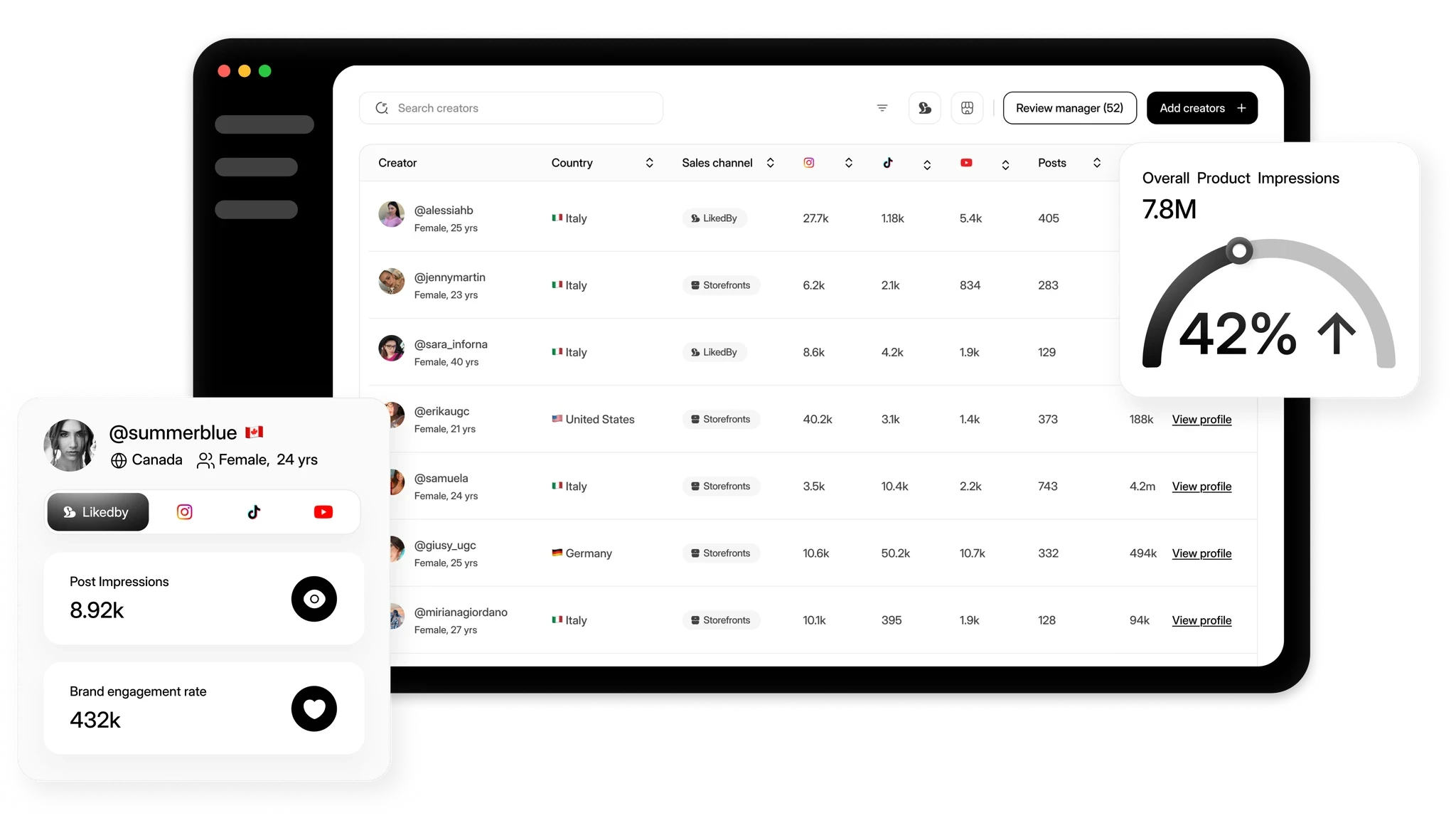
At the core is a creator CRM that tracks every creator relationship from first contact through ongoing campaigns, storing communication history, content deliverables, compensation records, and performance data in one unified profile. Your team never has to ask "where is this creator's information?" again.
The creator collaborations module handles the day-to-day execution: assigning briefs, managing content submissions and revisions, tracking shipping and product seeding, and automating status updates so managers can focus on strategy instead of status checks. Every collaboration follows a structured workflow that ensures nothing falls through the cracks.
Content produced by creators flows directly into Creator Drive, a centralized asset library where your team can organize, tag, and repurpose UGC across channels. No more hunting through DMs or cloud folders for that one video a creator posted three weeks ago.
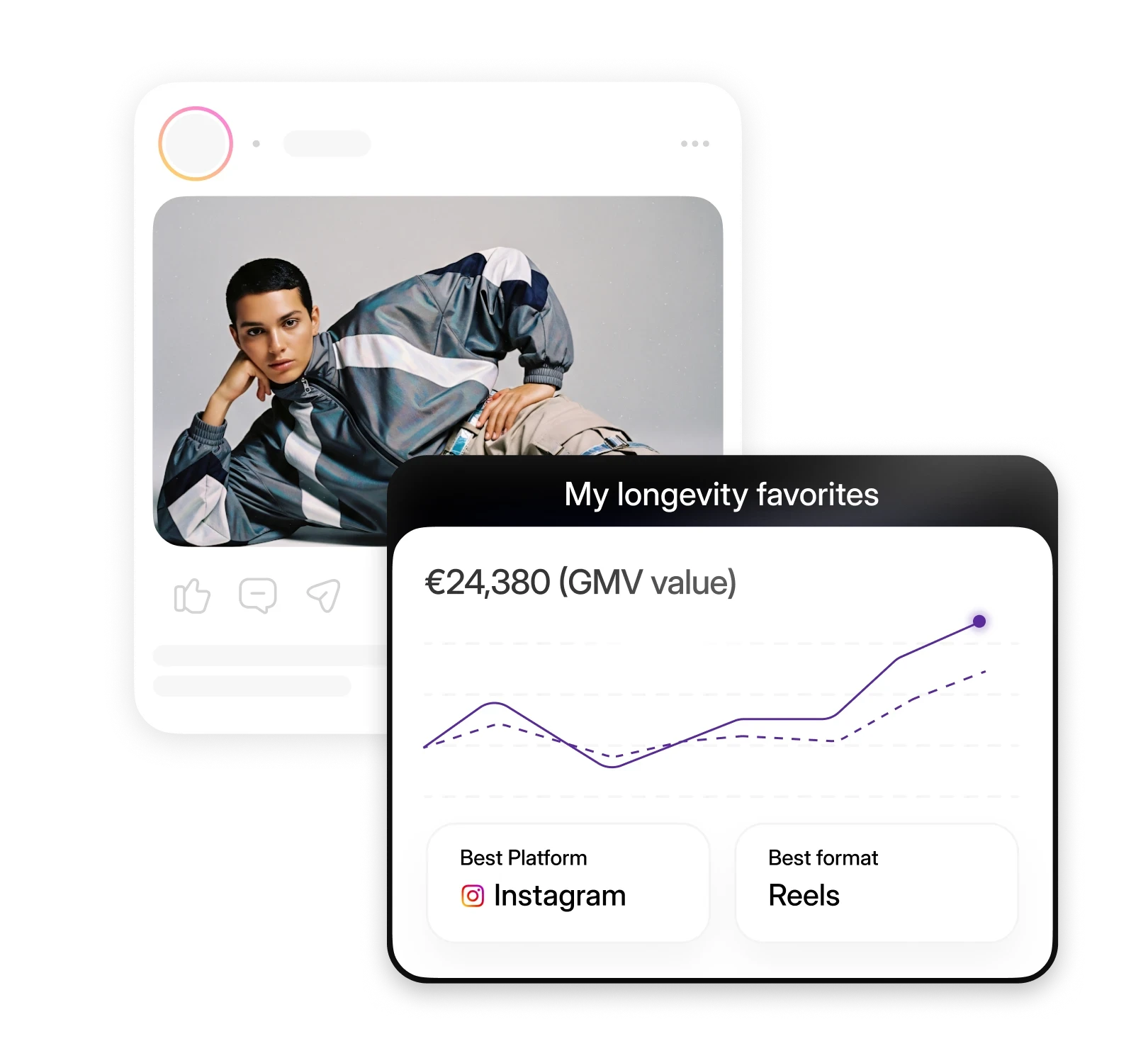
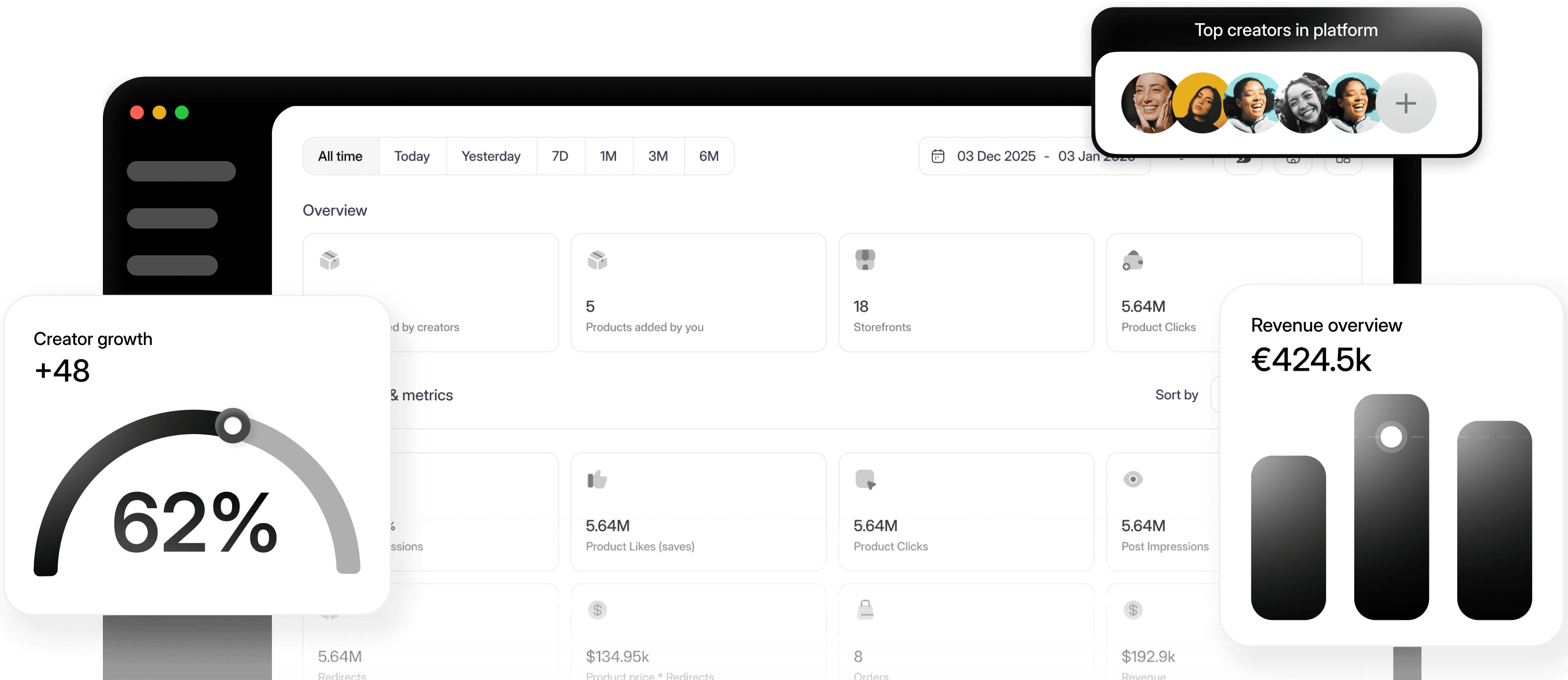
For DTC brands focused on performance-based influencer workflows, Socialscale connects creator activity to revenue signals through integrated creator analytics, tracking clicks, conversions, average order value, and return on ad spend at the individual creator level. This data feeds directly into compensation calculations, making affiliate creator programs and tiered commission structures operationally simple.
Finally, shoppable content widgets let you embed creator UGC directly on product pages, collection pages, and landing pages, turning social proof into a conversion driver without requiring engineering resources.
Feature Breakdown: What DTC Teams Actually Use Daily
Collaboration Pipeline Management
Every creator collaboration moves through defined stages: outreach, agreement, product shipment, content creation, review, approval, publishing, and performance tracking. Socialscale visualizes this pipeline so managers can see at a glance how many collaborations are in each stage, identify bottlenecks, and take action before deadlines slip. Filters let you segment by campaign, product line, creator tier, or content type.
Brief Builder and Content Guidelines
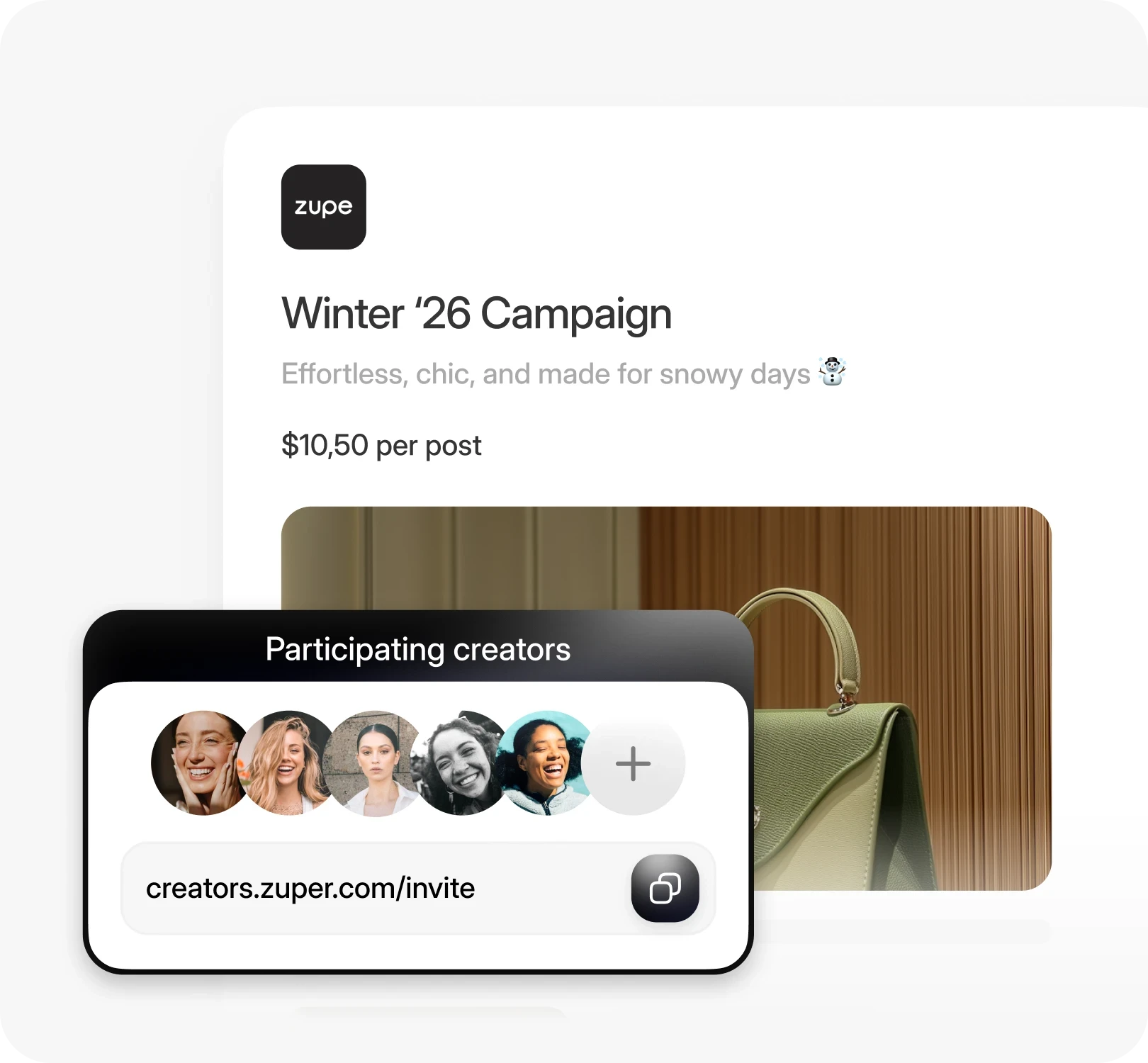
Create structured briefs that include product details, key messaging, visual guidelines, platform specifications, hashtag requirements, and FTC disclosure instructions. Briefs are attached directly to collaborations so creators always have access to the latest version. Templates save time when running recurring campaigns like monthly product drops or seasonal launches.
Content Submission and Approval Workflow
Creators submit content directly within the platform. Brand teams review, leave timestamped feedback, request revisions, or approve, all without leaving the collaboration view. Approval workflows can include multiple stakeholders such as brand managers, legal reviewers, and creative directors, with configurable permissions so each person sees only what they need to act on.
Creator Relationship Profiles
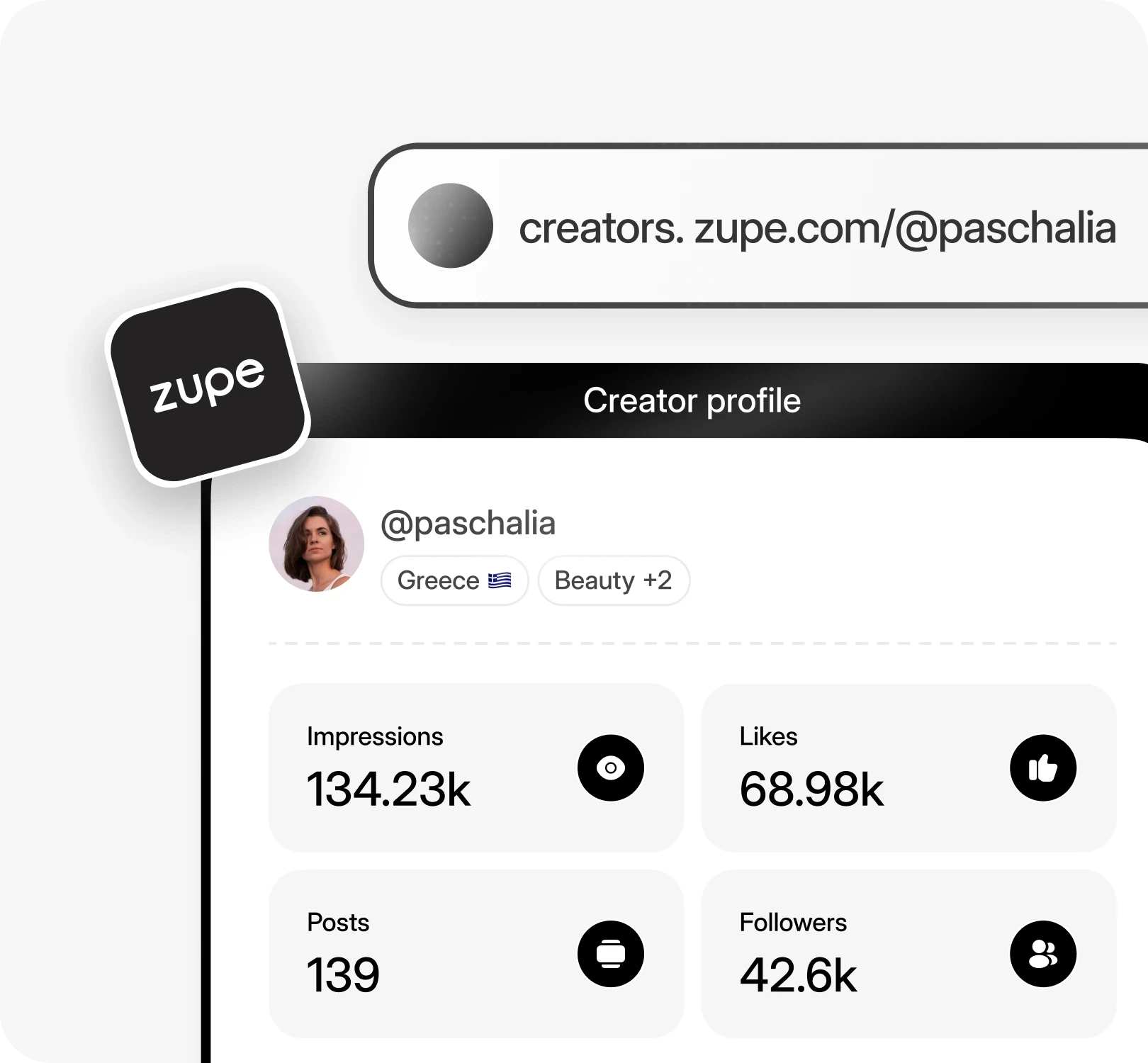
Each creator profile aggregates their collaboration history, content library, performance metrics, compensation records, audience demographics, and communication log. When planning a new campaign, your team can quickly identify which creators have delivered strong results for similar products or audiences, eliminating guesswork in roster selection.
Automated Status Tracking and Notifications
Instead of manually checking in with creators about deadlines, the platform sends automated reminders for upcoming content due dates, flags overdue submissions, and notifies managers when content is ready for review. This reduces the administrative overhead that typically consumes 30-40% of an influencer marketing manager's week.
UGC Management and Asset Library
All approved content is automatically organized in a searchable asset library. Tag by product, campaign, content format, platform, and usage rights. When your paid media team needs fresh creative or your e-commerce team wants to update product page UGC, they can self-serve from the library without interrupting the creator team.
Performance Attribution at the Creator Level
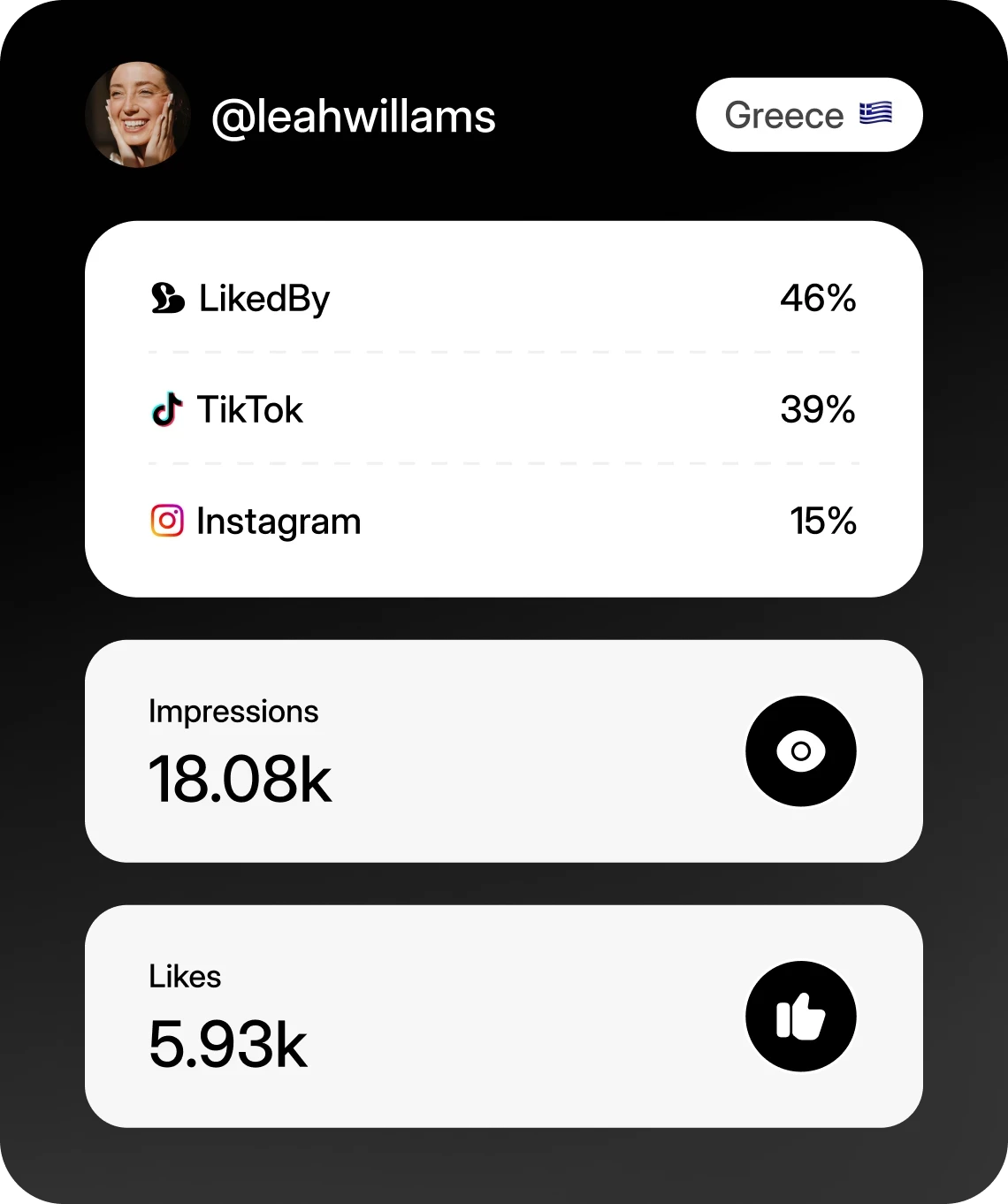
Track each creator's contribution to clicks, site visits, add-to-carts, conversions, revenue, and customer acquisition cost. Compare performance across creator tiers, content formats, and platforms to continuously optimize your program's ROI. This data is essential for DTC brands running affiliate creator programs where compensation is tied directly to sales outcomes.
Shoppable Content Embedding
Turn creator content into on-site conversion assets. Embed shoppable UGC galleries, carousels, and individual posts on product detail pages, homepage sections, and dedicated landing pages. Each embedded piece links directly to the featured product, reducing friction between social proof and purchase.
Use Cases: How DTC Brand Teams Apply Performance-Based Creator Collaborations
1. Scaling a Product Seeding Program Across 200+ Micro-Creators
A skincare DTC brand launches a new SPF moisturizer and wants authentic reviews from micro-creators in the 5K-50K follower range. The team onboards 200 creators through an application form, segments them by skin type and audience geography, ships product with personalized briefs, and tracks content submissions through a single pipeline. Creators who generate the highest engagement are automatically flagged for upgrade to a paid ambassador tier. The entire program runs with a two-person team because the platform handles status tracking, reminders, and content collection.
2. Running a Tiered Affiliate Program With Commission-Based Payouts
A DTC fashion brand structures its creator program into three tiers: Seed (product-only compensation), Growth (product plus 10% commission), and Partner (flat fee plus 15% commission plus performance bonuses). Each tier has different brief requirements, content cadences, and exclusivity terms. The collaboration platform manages tier assignments, generates unique tracking links, calculates commissions based on attributed sales, and provides creators with a dashboard showing their earnings. The brand scales from 30 to 150 active affiliates in one quarter without adding headcount.
3. Coordinating a Multi-Platform Product Launch Campaign
A DTC supplements brand coordinates a launch across Instagram Reels, TikTok, and YouTube Shorts with 40 creators. Each creator receives platform-specific briefs with different aspect ratios, caption guidelines, and posting windows. The collaboration workflow tracks which creators have posted on which platforms, collects all content assets centrally, and measures performance by platform so the brand can allocate future spend toward the highest-converting channels. Shoppable content from top performers is embedded on the product landing page within 48 hours of launch.
4. Building an Always-On Ambassador Community
A DTC pet food brand maintains a roster of 80 pet influencer ambassadors who post monthly content in exchange for free product and a 12% affiliate commission. The collaboration platform automates monthly brief distribution, tracks content submissions against deadlines, flags creators who have missed two consecutive months for re-engagement outreach, and generates monthly performance reports showing which ambassadors drive the most revenue per post. The brand uses these reports to inform quarterly roster reviews, graduating top performers to higher tiers and offboarding consistently low performers.
Weekly and Monthly Operational Workflow for DTC Creator Collaborations
A structured workflow ensures that creator collaborations produce consistent output without overwhelming your team. Here is the operational cadence that high-performing DTC brands follow using Socialscale.
Creator Sourcing and Application Review (Weekly, 2-3 hours)
Review incoming creator applications from your branded signup page. Evaluate each applicant's audience demographics, content quality, and brand alignment using profile data pulled into the CRM. Accept, reject, or waitlist applicants and assign accepted creators to the appropriate program tier.
Campaign Brief Creation and Distribution (Per Campaign Launch)
Build campaign-specific briefs using templates that include product details, key messages, visual references, platform specs, and compliance requirements. Attach briefs to new collaborations and notify assigned creators. For always-on programs, distribute monthly briefs on a fixed schedule.
Product Shipment and Tracking (Weekly, 1-2 hours)
Coordinate product seeding by updating shipment status within each collaboration. Track delivery confirmations so your team knows exactly when creators have received product and can begin content creation. Flag any shipping issues for immediate resolution.
Content Review and Approval Cycles (Daily, 30-60 minutes)
Review submitted content against brief requirements. Provide specific, actionable feedback for revisions or approve content for publishing. Route content requiring legal or executive review to the appropriate stakeholders within the platform. Aim for a 24-48 hour approval turnaround to keep creators engaged and content timely.
Asset Organization and Repurposing (Weekly, 1 hour)
As content is approved, tag and categorize assets in the content library by product, campaign, format, and usage rights. Share high-performing assets with your paid media team for whitelisting or dark posting. Update shoppable content widgets on your e-commerce site with fresh creator UGC.
Performance Monitoring and Attribution (Weekly, 1-2 hours)
Review creator-level performance dashboards to track clicks, conversions, revenue attributed, and cost per acquisition. Identify top performers and underperformers. Adjust upcoming campaign rosters based on data rather than gut feel.
Creator Communication and Relationship Management (Ongoing)
Send personalized check-ins to high-value creators. Acknowledge strong performance with bonus offers or tier upgrades. Re-engage dormant creators with new campaign invitations. Maintain relationship health scores in the CRM to prioritize outreach.
Monthly Program Review and Optimization (Monthly, 2-3 hours)
Generate monthly reports covering total content output, revenue attributed to creator program, average cost per acquisition by tier, content approval cycle time, and creator activation rate. Use these metrics to justify budget, refine tier structures, and plan next month's campaigns.
Key Performance Indicators for DTC Creator Collaboration Programs
Tracking the right metrics ensures your creator program drives measurable business outcomes, not just vanity metrics. Here are the KPIs that matter most for DTC brands running performance-based influencer workflows.
Creator Activation Rate: Percentage of onboarded creators who complete at least one content deliverable within their first 30 days. Target: 70%+.
Content Approval Cycle Time: Average number of hours from content submission to final approval. Target: under 48 hours.
Content Output Per Creator: Average number of approved assets produced per creator per month across all active campaigns.
Click-Through Rate (CTR): Percentage of viewers who click creator-generated links or shoppable content. Benchmark varies by platform but track trends over time.
Conversion Rate (CVR): Percentage of creator-referred traffic that completes a purchase. Compare across creator tiers and content formats.
Revenue Attributed to Creators (GMV): Total gross merchandise value generated through creator tracking links, discount codes, and shoppable content widgets.
Return on Ad Spend (ROAS) / Cost Per Acquisition (CPA): Calculate total program cost (product, fees, commissions) divided by attributed revenue or conversions to understand unit economics at the creator and tier level.
Creator Retention Rate: Percentage of creators who remain active in your program quarter over quarter. High retention indicates strong relationship management and fair compensation.
UGC Repurpose Rate: Percentage of creator content that gets repurposed in paid ads, email campaigns, or on-site shoppable galleries, maximizing the value of each asset.
Average Order Value (AOV) from Creator Traffic: Compare AOV from creator-referred customers versus other acquisition channels to quantify the quality of creator-driven traffic.
Scenario: DTC Wellness Brand Scales Creator Program From 25 to 175 Creators in 90 Days
A DTC wellness brand selling adaptogenic drink mixes had been managing 25 creator relationships through a combination of email, Google Sheets, and a basic affiliate platform. The influencer marketing manager spent roughly 20 hours per week on administrative tasks: chasing content submissions, manually calculating commissions, and searching through DMs for approved assets.
After implementing a centralized creator collaboration platform, the team restructured their program into three tiers with automated brief distribution, content submission workflows, and commission tracking. They launched a recruitment campaign that brought in 150 new creator applications over six weeks, accepting 150 creators who met their audience and content quality criteria.
Within 90 days of implementation, the brand achieved the following measurable results:
Creator roster grew from 25 to 175 active collaborators
Content approval cycle time dropped from 5.2 days to 1.4 days
Monthly UGC output increased from 40 assets to 310 assets
Administrative time per week decreased from 20 hours to 7 hours
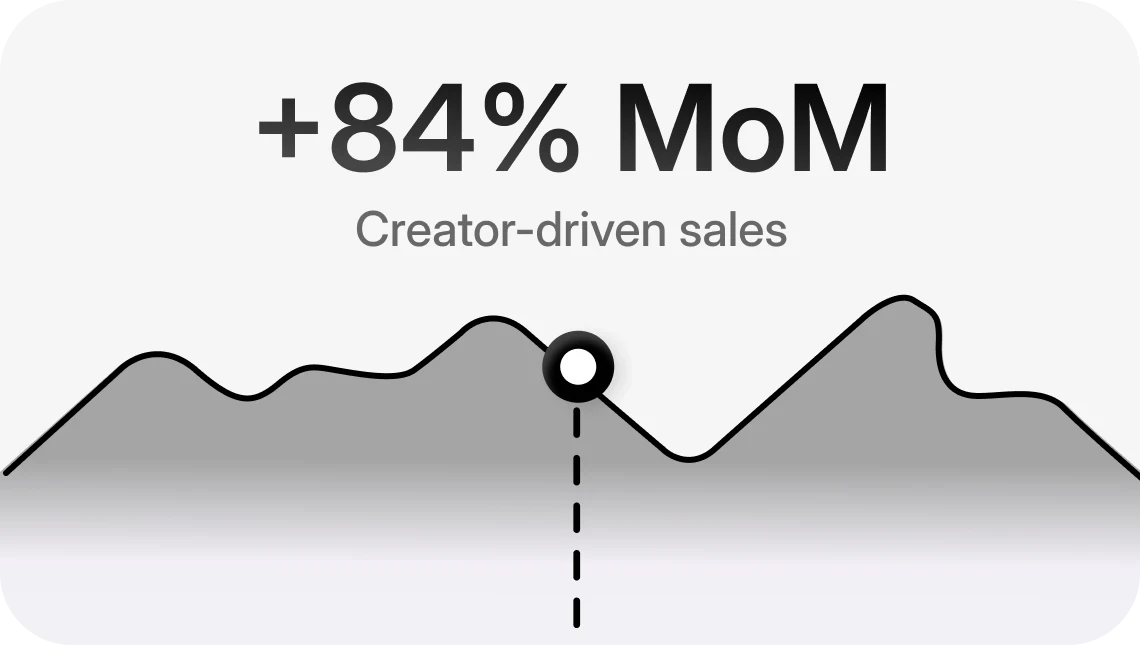
Creator-attributed revenue increased 340%, from $18,000/month to $79,200/month
Blended CPA from creator channel decreased from $42 to $19
On-site shoppable UGC galleries contributed to a 22% increase in product page conversion rate
The brand's e-commerce director noted that the creator program had become their most efficient acquisition channel, outperforming paid social on a CPA basis while simultaneously generating a library of authentic content that improved performance across all marketing channels.
Frequently Asked Questions
How is a creator collaboration platform different from an influencer discovery tool?
Discovery tools help you find creators. A collaboration platform manages everything that happens after you find them: onboarding, briefing, content review, asset storage, performance tracking, and compensation. For DTC brands running ongoing programs with dozens or hundreds of creators, the operational workflow is where most time and money is spent, not discovery.
Can I run both paid and affiliate creator programs on the same platform?
Yes. Socialscale supports multiple compensation models within a single program, including flat-fee paid collaborations, product-only seeding, percentage-based affiliate commissions, and hybrid structures. Each creator can be assigned a different compensation model based on their tier, and the platform tracks what is owed to each creator automatically.
How does creator performance tracking work with my Shopify store?
Creator-specific tracking links and discount codes connect to your Shopify store so that every order attributed to a creator is recorded in their profile. You can see revenue, order count, average order value, and conversion rate at the individual creator level, then aggregate this data by tier, campaign, or time period for program-level reporting.
What happens to creator content after it is approved?
Approved content is stored in a centralized asset library where it can be tagged, searched, and shared across teams. Your paid media team can pull assets for ad creative, your email team can embed UGC in campaigns, and your e-commerce team can publish shoppable content widgets on product pages, all from the same library without re-downloading or re-requesting files from creators.
How long does it take to onboard a DTC brand's existing creator program?
Most DTC brands with existing creator rosters of 50-200 creators can be fully onboarded within one to two weeks. This includes importing creator contacts, setting up collaboration workflows, configuring tier structures and compensation models, and connecting your Shopify store. Teams with larger programs or more complex requirements may take slightly longer but can typically begin running campaigns within the first week.