Creator Collaboration for Beauty Brands: Streamline Influencer Product Launches End-to-End
Beauty brands operate in one of the most creator-driven categories in social commerce. Every seasonal collection drop, shade extension, or skincare reformulation depends on coordinated influencer product launches to generate awareness, drive trial, and convert first-time buyers. Yet most beauty marketing teams still manage creator collaborations through scattered spreadsheets, email threads, and disconnected tools that break down the moment a launch scales beyond a handful of creators.
Creator collaboration for beauty brands requires more than sending free products and hoping for posts. It demands structured workflows for briefing, content approval, asset collection, and performance tracking across dozens or hundreds of creators simultaneously. When a new foundation range launches with 40 creators posting across TikTok, Instagram Reels, and YouTube Shorts within a 72-hour window, every missed deadline or off-brand caption erodes the launch impact.
Socialscale gives beauty teams a single operating system to manage the full lifecycle of creator collaborations, from onboarding and campaign briefing through content review, asset storage, and real-time performance measurement. The result is tighter launch coordination, faster content turnaround, and clear attribution from creator content to revenue.
Coordinating Multi-Creator Product Launches with Tight Timelines
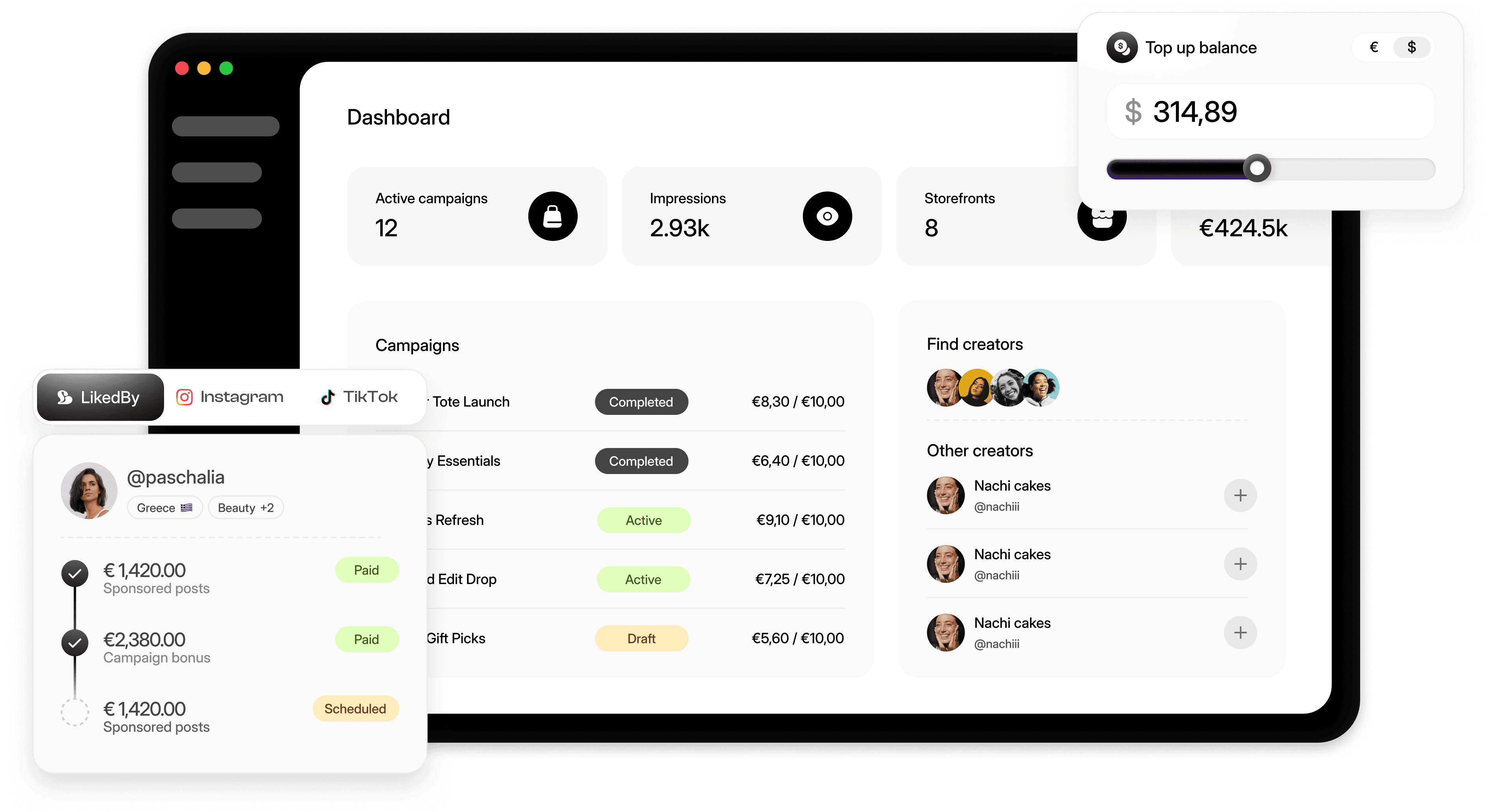
Beauty product launches often revolve around specific dates: a seasonal drop, a retailer exclusive window, or a PR embargo lift. Coordinating 20 to 100 creators to post within a narrow timeframe requires precise scheduling, and most teams lack a centralized system to track who has received product, who has submitted content, and who is confirmed to go live on launch day.
Managing Shade Matching and Product Seeding Complexity
Unlike many industries, beauty brands must match specific SKUs to individual creators. Sending the wrong foundation shade or lip color wastes product, delays content creation, and frustrates creators. Teams need a way to track creator preferences, skin types, and shade assignments alongside collaboration status.
Maintaining Brand Safety Across Diverse Creator Rosters
Beauty is a category where ingredient claims, before-and-after imagery, and regulatory language matter. A single creator making an unapproved efficacy claim can trigger compliance issues. Without a structured content approval workflow, brand safety risks multiply with every additional creator.
Fragmented Content Collection and Rights Management
Beauty campaigns generate enormous volumes of UGC: tutorials, swatches, get-ready-with-me videos, flat lays, and reviews. Collecting these assets from DMs, emails, Google Drive links, and WeTransfer folders is operationally painful. Tracking usage rights for each asset adds another layer of complexity.
Inability to Attribute Revenue to Specific Creators
Many beauty brands invest heavily in gifting and paid collaborations but cannot connect a specific creator's content to actual sales. Without creator-level performance tracking tied to affiliate links or shoppable content, teams cannot optimize spend or identify their highest-converting partners.
Scaling from Micro-Influencer Seeding to Full Campaign Programs
Beauty brands often start with small-scale seeding to micro-influencers and want to scale into structured affiliate creator programs. The jump from informal gifting to managed campaigns with deliverables, deadlines, and compensation structures requires tooling that most teams do not have.
Disconnected Communication Across Teams and Agencies
Product development, PR, influencer marketing, social media, and e-commerce teams all touch creator collaborations in beauty. When these teams use separate tools and communication channels, briefs get lost, approvals stall, and launch timelines slip.
Spreadsheets Cannot Handle Multi-Variable Beauty Campaigns
A typical beauty launch spreadsheet tries to track creator name, contact info, shade assignment, shipping status, content deliverables, approval status, posting date, and performance metrics in a single tab. By the time a campaign involves more than 15 creators, the spreadsheet becomes unmanageable. Filters break, rows get accidentally deleted, and no one trusts the data. Spreadsheets were never designed to be collaboration management tools.
Generic Project Management Tools Miss Creator-Specific Workflows
Tools like Asana, Monday, or Trello can organize tasks, but they lack native support for creator profiles, content approval flows, asset libraries, or performance analytics. Beauty teams end up building elaborate workarounds that still require manual data entry and constant context-switching between platforms.
Influencer Discovery Platforms Stop at the Handshake
Many influencer marketing platforms focus on creator discovery and outreach but offer limited functionality for what happens after a creator says yes. The actual work of beauty collaborations—briefing, product seeding coordination, content review rounds, asset collection, and sales tracking—falls outside their scope. Teams are left stitching together multiple tools to cover the full workflow.
Email-Based Approval Chains Create Bottlenecks
When content approvals happen over email, feedback gets buried in threads, version control disappears, and legal or compliance reviewers are looped in too late. For beauty brands launching products under regulatory scrutiny, this is not just inefficient—it is risky. A single missed correction on an ingredient claim can have real consequences.
No Single Source of Truth for Creator Assets
Beauty brands repurpose creator content across paid social, email marketing, product detail pages, and retail media. Without a centralized content storage system with proper tagging and rights tracking, teams waste hours searching for the right asset or unknowingly use content beyond its licensed period.
How Socialscale Powers Creator Collaboration for Beauty Brands
Socialscale is built to be the operating system for social commerce, and for beauty brands, that means managing every stage of creator collaboration from a single platform. Rather than cobbling together discovery tools, project management apps, cloud storage, and analytics dashboards, beauty teams use Socialscale to run coordinated influencer product launches with full visibility and control.
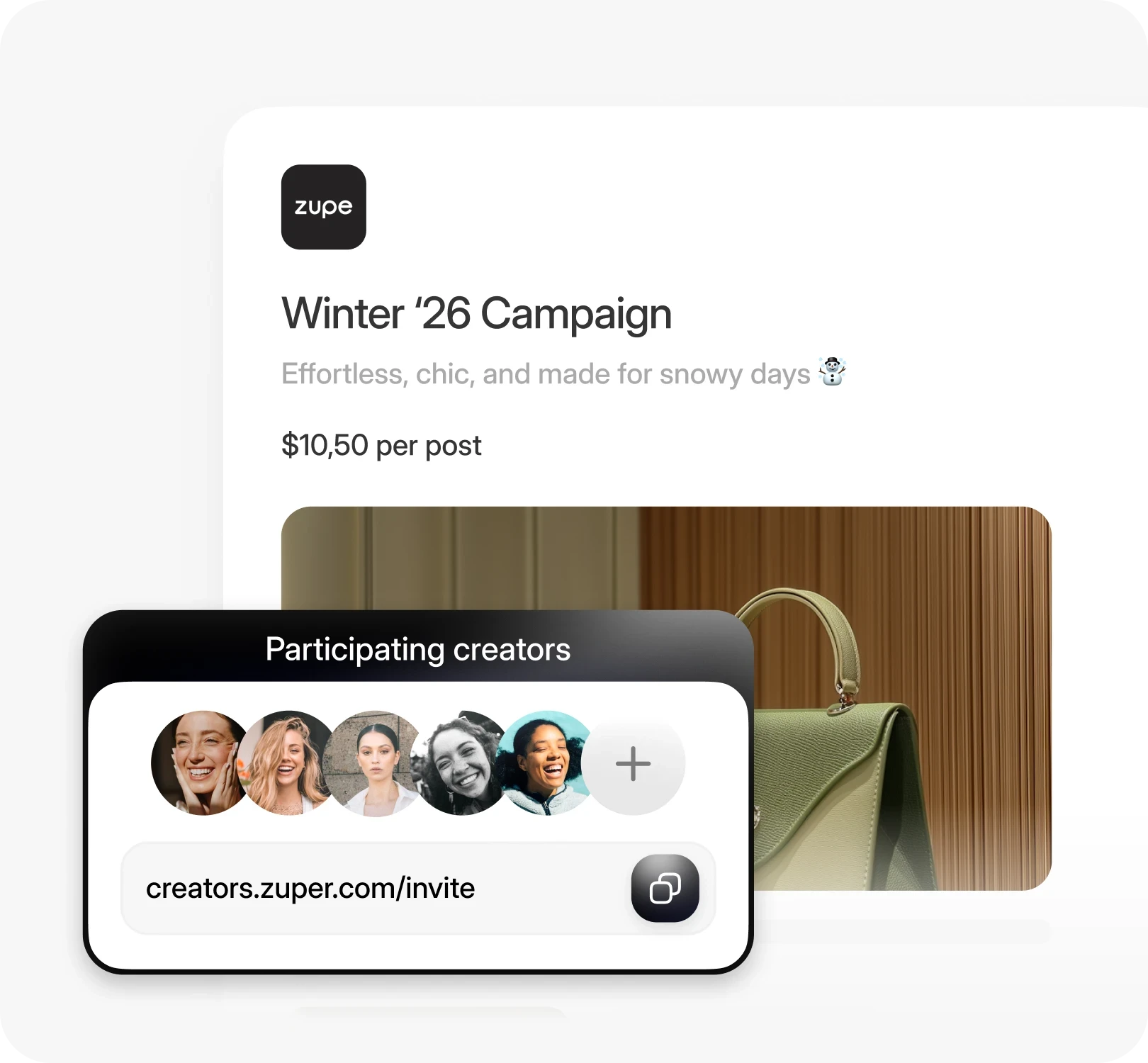
The platform's creator collaborations module lets teams structure campaigns with defined deliverables, timelines, and approval workflows tailored to beauty-specific needs. Whether you are coordinating a 50-creator launch for a new skincare serum or managing an ongoing affiliate program with 200 beauty micro-influencers, every collaboration lives in one place with real-time status tracking.
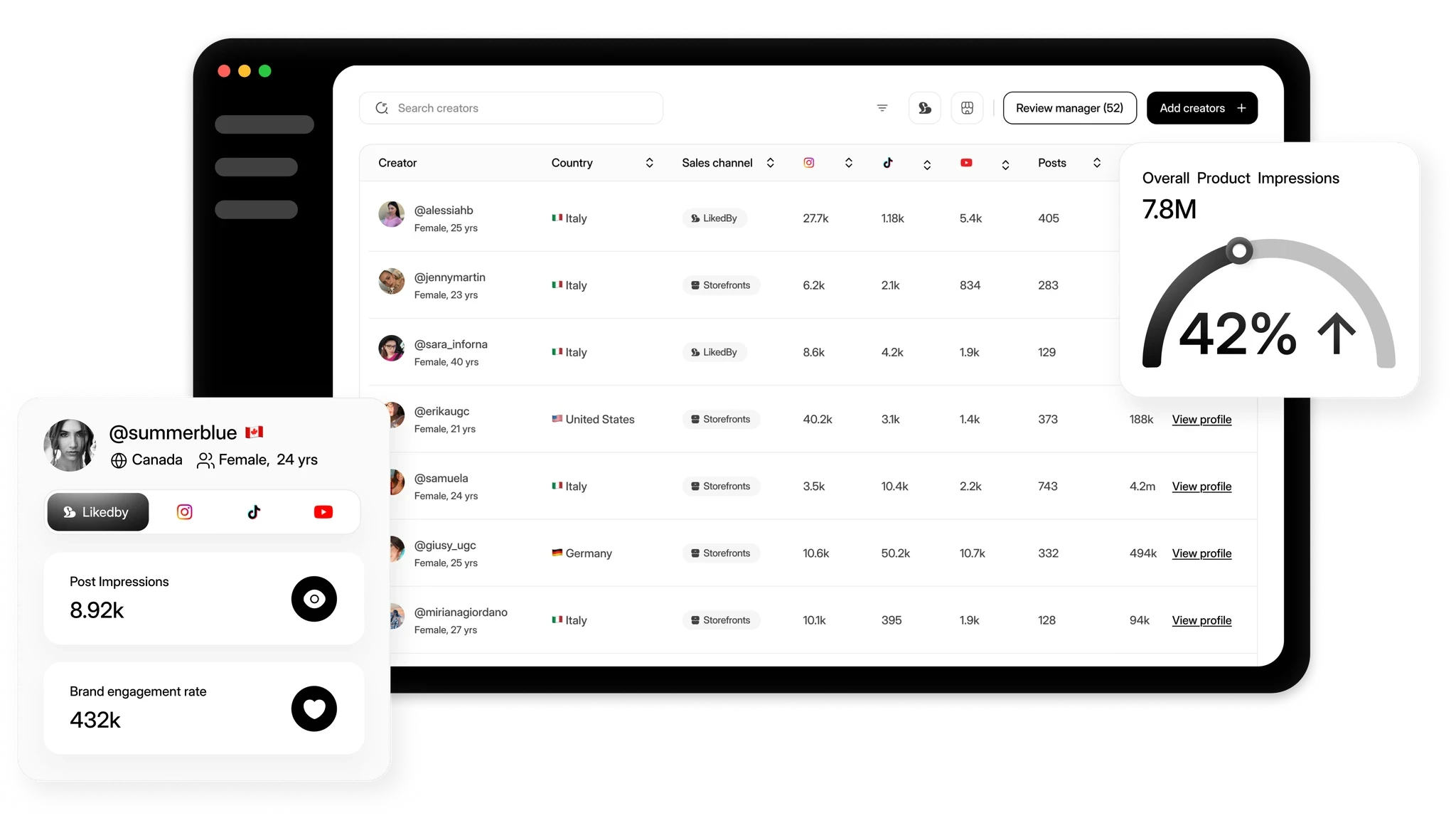
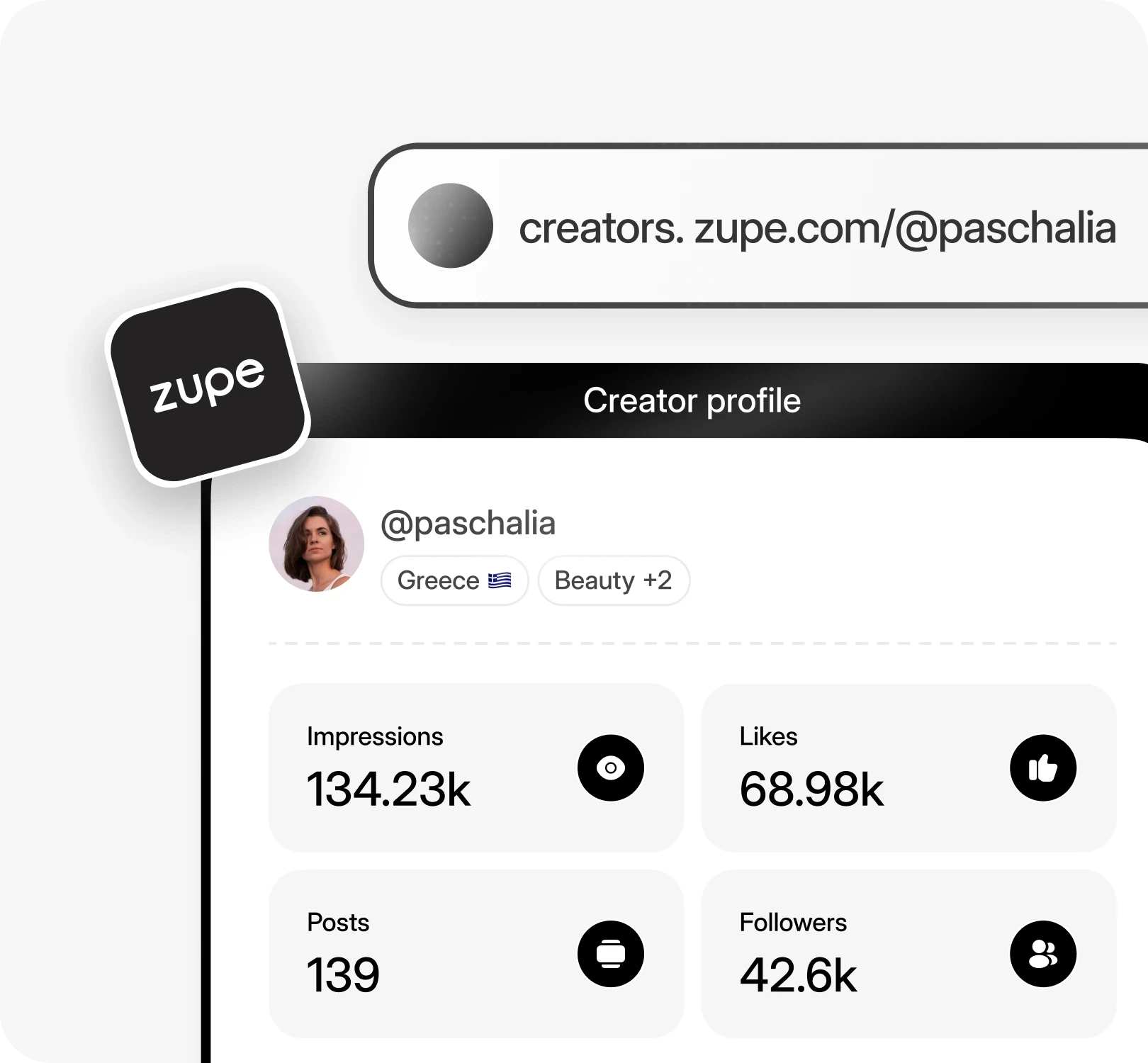
Beauty teams use the creator CRM to maintain detailed profiles for each creator, including skin type, shade preferences, past collaboration history, content performance data, and contractual terms. This eliminates the guesswork in product seeding and ensures every creator receives the right SKUs for their content.
Once content is created, the creator content storage system organizes every asset by campaign, creator, content type, and usage rights. Teams can quickly pull approved tutorials, swatch videos, or flat lays for repurposing across paid media, email, and e-commerce without digging through email attachments or shared drives.
Campaign Briefing and Deliverable Management
Create structured campaign briefs with specific deliverables for each creator: number of posts, content formats (Reels, TikTok, YouTube Shorts, Stories), required talking points, hashtags, discount codes, and compliance language. Beauty teams can include visual references for shade swatching techniques, lighting requirements, or packaging unboxing sequences. Each creator sees their personalized brief and can confirm acceptance directly within the platform.
Content Approval Workflows with Compliance Layers
Set up multi-step approval flows that route content through influencer marketing managers, brand managers, and legal or regulatory reviewers before a creator posts. For beauty brands, this is critical for catching unapproved ingredient claims, ensuring FTC disclosure compliance, and verifying that before-and-after imagery meets advertising standards. Reviewers can leave timestamped feedback directly on video content, reducing revision cycles.
Product Seeding and SKU Assignment Tracking
Assign specific product SKUs to each creator based on their profile data—shade, skin type, product preferences—and track fulfillment status from shipment to delivery confirmation. Beauty teams can see at a glance which creators have received product, which shipments are in transit, and which creators need follow-up before the content creation window closes.
Centralized Asset Library with Rights Management
Every piece of creator content is automatically organized in a searchable library tagged by campaign, creator, product, content format, and platform. Usage rights and expiration dates are tracked per asset, so teams know exactly which content can be repurposed for paid social amplification, embedded on product pages, or shared with retail partners.
Creator Performance Analytics
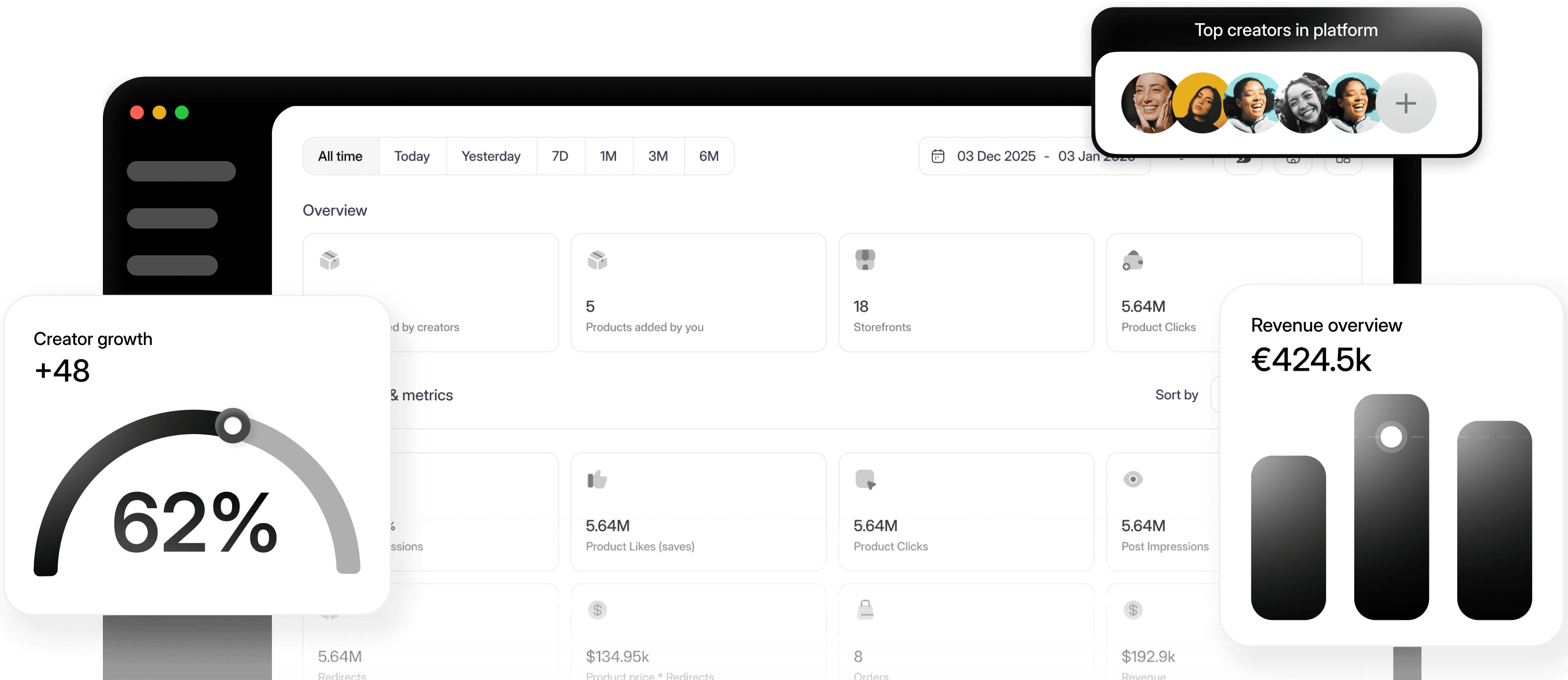
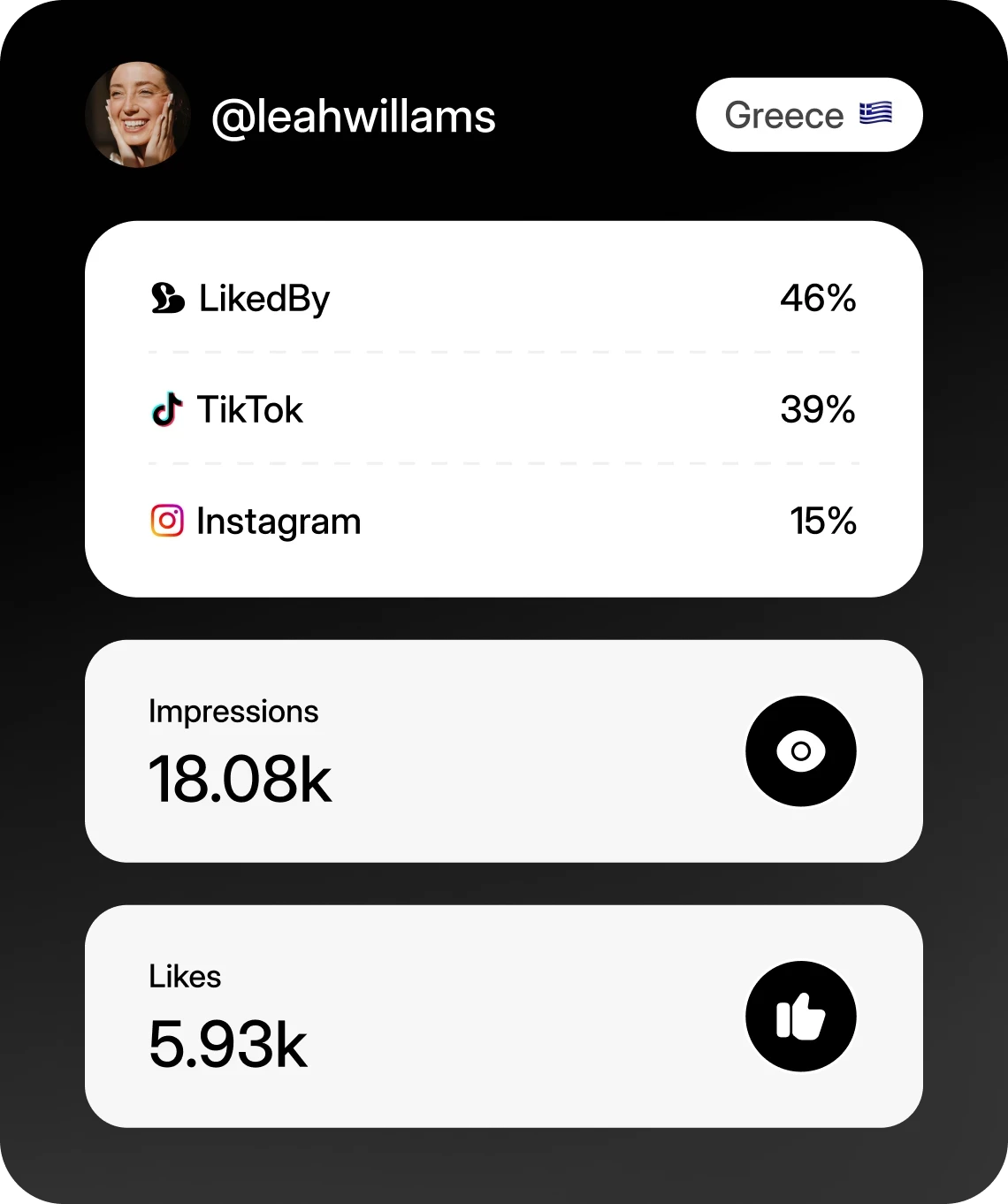
Track individual creator performance across impressions, engagement rate, click-through rate, and attributed conversions. For beauty brands running affiliate creator programs, the platform connects creator content to revenue signals so teams can identify which creators drive actual purchases versus those who generate awareness only. This data feeds directly into decisions about which creators to re-engage for future launches.
Shoppable Content Embedding
Turn high-performing creator content into shoppable experiences on your DTC site. Embed creator tutorials, reviews, and swatch videos directly on product detail pages, collection pages, or dedicated landing pages. For beauty brands, this means a customer browsing a new lipstick shade can watch a creator's application video and add to cart without leaving the page.
Real-World Scenarios for Beauty Brand Teams
Coordinated Seasonal Collection Launch Across 60 Creators
A prestige beauty brand is launching a holiday collection with 12 new SKUs across lip, eye, and face categories. The influencer marketing team needs to seed products to 60 creators across three tiers (mega, macro, and micro), with each creator receiving a curated kit matched to their skin tone and content style. The team uses a centralized collaboration platform to assign specific SKUs to each creator, track shipment delivery, distribute personalized briefs with embargo dates, and manage content approvals through a two-step review process. On launch day, all 60 creators post within a four-hour window, and the team monitors real-time engagement and click-through data to identify top performers for paid amplification within the first 24 hours.
Always-On Affiliate Program for Skincare Line
A DTC skincare brand runs a continuous affiliate creator program with 150 micro-influencers who regularly create routine videos, ingredient deep-dives, and honest reviews. Each creator has a unique affiliate link and discount code. The brand management team reviews new content submissions weekly, approves assets for repurposing, and uses creator-level conversion data to adjust commission tiers quarterly. High-performing creators receive early access to new product launches and exclusive collaboration opportunities, creating a self-reinforcing flywheel of content and sales.
Retailer-Exclusive Launch with Co-Branded Creator Content
A beauty brand is launching a limited-edition product exclusively at a major retailer. The collaboration requires creators to tag both the brand and retailer accounts, use retailer-specific hashtags, and drive traffic to the retailer's product page rather than the brand's DTC site. The team manages dual approval workflows—one for brand compliance and one for the retailer's marketing team—and collects all approved assets in a shared library that both parties can access. Performance tracking is segmented by retailer attribution to demonstrate the creator program's contribution to sell-through at the retail partner.
User-Generated Content Scaling for Paid Social
A fast-growing indie beauty brand needs a constant pipeline of fresh creator content to fuel its paid social strategy across Meta and TikTok. The team runs monthly micro-campaigns with 20 to 30 creators, each producing two to three short-form videos featuring product application, texture close-ups, and genuine reactions. All content is collected in a centralized asset library with paid media usage rights pre-negotiated. The performance marketing team pulls top-performing organic content weekly, runs it as paid ads, and feeds conversion data back to the influencer team to inform future creator selection.
Weekly and Monthly Operational Workflow for Beauty Brand Creator Programs
Running a structured creator collaboration program for beauty brands requires consistent operational rhythms. Below is a practical workflow that beauty marketing teams can follow to keep campaigns on track and maximize output from their creator roster.
Creator Identification and Roster Building
Begin each quarter by reviewing your creator CRM to identify gaps in your roster by skin type, aesthetic, audience demographic, and platform strength. Source new creators through organic discovery, inbound applications, or agency recommendations. Add them to your CRM with complete profile data including shade preferences, content style notes, and audience overlap analysis with existing creators.
Campaign Planning and Brief Development
Four to six weeks before a product launch, build the campaign brief with specific deliverables, key messages, compliance requirements, and visual references. For beauty launches, include shade assignment logic, unboxing instructions, and any retailer-specific tagging requirements. Share the brief with internal stakeholders for sign-off before distributing to creators.
Product Seeding and Fulfillment Tracking
Three to four weeks before the content window opens, initiate product seeding. Assign specific SKUs to each creator based on their CRM profile, generate shipping labels, and track delivery status. Follow up with creators who have not confirmed receipt within five business days. This step is where most beauty campaigns lose time if not managed through a centralized system.
Content Creation Window and Creator Support
Open a defined content creation window, typically seven to ten days, during which creators produce their deliverables. Provide a direct communication channel for questions about product usage, application techniques, or brief clarifications. For beauty content, creators often need guidance on lighting for accurate shade representation or specific claims they can and cannot make.
Content Review and Approval Cycles
As creators submit content, route it through your approval workflow. First review by the influencer marketing manager for brief adherence and quality, then by brand or legal for compliance. Provide specific, actionable feedback to minimize revision rounds. Target a 48-hour turnaround on first review to keep the campaign timeline intact.
Coordinated Publishing and Launch Activation
On launch day, confirm all creators have their approved content queued and publish within the designated window. Monitor real-time posting to ensure no one misses the window. Share live links internally so paid media, PR, and e-commerce teams can amplify top-performing content immediately.
Performance Monitoring and Weekly Reporting
In the first week post-launch, pull daily performance data: impressions, engagement, click-throughs, and early conversion signals. By week two, compile a comprehensive performance report at the creator level. Identify top performers for re-engagement, flag underperformers for roster review, and calculate campaign-level ROAS or cost-per-acquisition.
Asset Archiving and Repurposing
After the campaign window closes, ensure all approved content is archived in your centralized asset library with proper tagging and rights documentation. Share top-performing assets with paid social, email marketing, and e-commerce teams for repurposing. Update creator CRM profiles with performance data and collaboration notes for future campaign planning.
Key Performance Indicators for Beauty Brand Creator Programs
Tracking the right metrics ensures your creator collaboration program delivers measurable business outcomes, not just vanity metrics. Below are the KPIs beauty brand teams should monitor at the campaign and creator level.
Creator Activation Rate: Percentage of seeded creators who actually deliver content on time. Beauty benchmark target: 85% or higher.
Content Approval Turnaround Time: Average hours from content submission to final approval. Target under 48 hours to maintain launch timelines.
Content Output per Creator: Number of approved assets delivered per creator per campaign, segmented by format (video, static, Stories).
Click-Through Rate (CTR): Percentage of viewers who click through from creator content to product pages. Track by platform and creator tier.
Conversion Rate (CVR): Percentage of click-throughs that result in a purchase. Essential for evaluating affiliate creator program ROI.
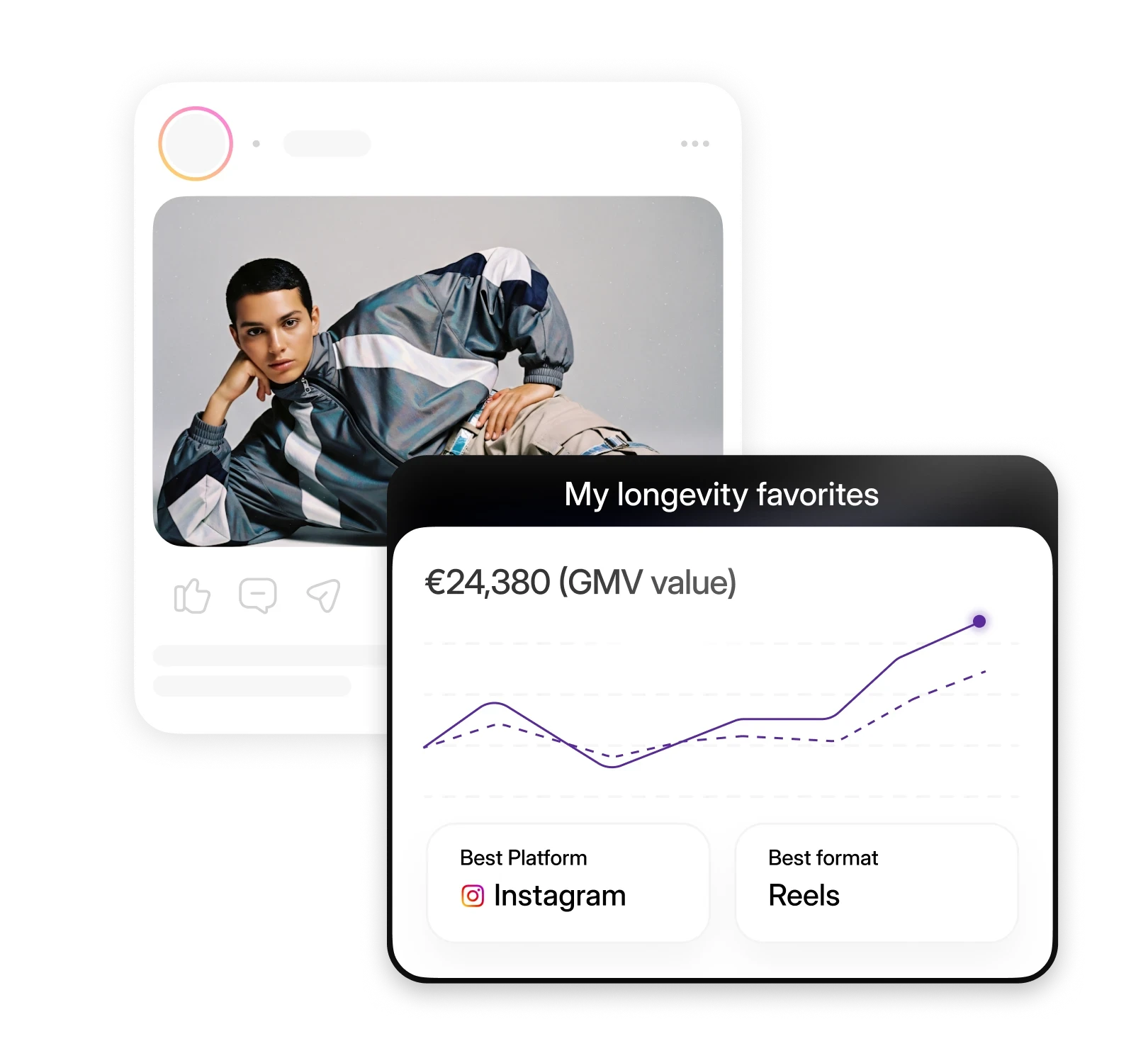
Gross Merchandise Value (GMV) per Creator: Total revenue attributed to each creator's content and affiliate links. Use this to tier creators and allocate future budgets.
Return on Ad Spend (ROAS) for Amplified Creator Content: When creator content is used as paid ads, measure ROAS separately from brand-produced creative to quantify the UGC advantage.
Cost per Acquisition (CPA): Total creator program cost divided by number of new customers acquired through creator-driven channels.
Content Repurposing Rate: Percentage of creator content that is repurposed across paid social, email, or e-commerce. Higher rates indicate better asset utilization.
Creator Retention Rate: Percentage of creators who participate in multiple campaigns. High retention signals strong creator relationships and program health.
Scenario: Mid-Size Clean Beauty Brand Launches Hero Serum with 45 Creators
A clean beauty brand with $12M in annual DTC revenue planned to launch a new vitamin C serum as its hero SKU for Q1. The influencer marketing team had previously managed creator collaborations through a combination of spreadsheets, email, and a basic project management tool. For this launch, they adopted a centralized creator collaboration platform to manage the entire process.
Setup
The team identified 45 creators across three tiers: 5 macro-influencers (200K–800K followers) for awareness, 15 mid-tier creators (50K–200K) for detailed tutorials, and 25 micro-influencers (10K–50K) for authentic review content. Each creator was profiled in the creator CRM with skin type, content style, and audience demographics. Product seeding was coordinated through the platform with shade-matched kits shipped three weeks before the launch window.
Execution
Personalized briefs were distributed with specific deliverables: macro creators produced one Reel and two Stories, mid-tier creators produced one TikTok and one Reel, and micro creators produced one TikTok with an honest review format. Content was submitted through the platform and routed through a two-step approval process (influencer manager, then brand compliance). The team completed all 45 content approvals within four days, compared to the 10 to 12 days their previous email-based process required.
Results Over 30 Days
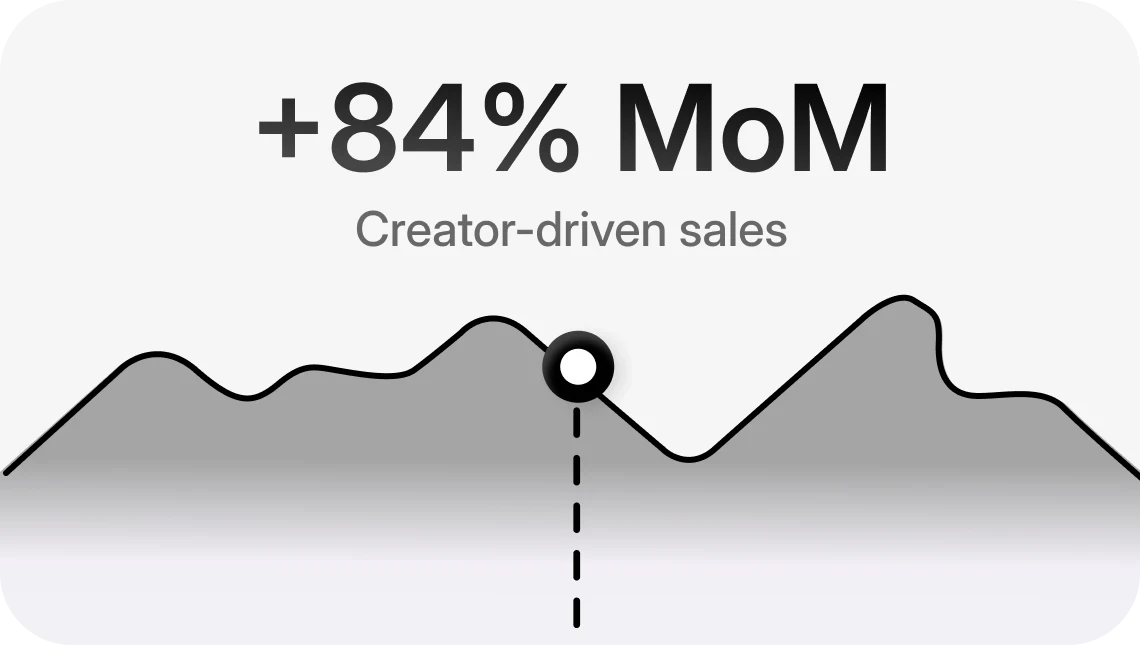
The coordinated launch generated 2.8 million impressions across platforms in the first 72 hours. Creator content drove 34,000 unique visits to the product page. The affiliate program attributed $187,000 in revenue directly to creator links and codes, representing a 4.2x ROAS on total creator program costs including product, shipping, and paid fees. The team repurposed 28 creator videos as paid social ads, which outperformed brand-produced creative by 38% on cost-per-click. Twelve of the top-performing creators were immediately re-engaged for the brand's Q2 sunscreen launch.
How does a creator collaboration platform differ from an influencer discovery tool for beauty brands?
Influencer discovery tools help you find creators based on audience size, engagement rate, and niche. A creator collaboration platform like Socialscale manages everything that happens after you identify a creator: onboarding, campaign briefing, product seeding coordination, content approval workflows, asset collection and storage, and performance tracking. For beauty brands running multi-creator product launches, the operational workflow after discovery is where most complexity and time is spent.
Can we manage both gifted and paid creator collaborations in the same system?
Yes. Beauty brands typically run a mix of gifted seeding programs for micro-influencers and paid collaborations with macro or celebrity creators. The platform supports both models within the same campaign structure, allowing you to track deliverables, content approvals, and performance regardless of the compensation type. This gives teams a unified view of their entire creator program.
How do we handle content approvals for beauty products with regulatory requirements?
The platform supports multi-step approval workflows where content can be reviewed sequentially by different stakeholders. For beauty brands, this typically means an influencer marketing manager reviews for brief adherence and quality, followed by a brand or legal reviewer who checks for compliance with advertising regulations, ingredient claim accuracy, and required disclosures. Feedback is provided directly on the content within the platform, reducing back-and-forth over email.
What happens to creator content after a campaign ends?
All approved creator content is stored in a centralized asset library with metadata including campaign name, creator, product, content format, platform, and usage rights expiration date. Beauty teams can search and filter this library to find assets for repurposing across paid social, email marketing, product detail pages, or retail media. Usage rights tracking ensures you never use content beyond its licensed period.
How do we measure which beauty creators actually drive sales versus just engagement?
The platform connects creator content to revenue attribution through affiliate links, unique discount codes, and integration with your e-commerce platform. You can see creator-level data on clicks, conversions, and gross merchandise value, not just impressions and likes. This allows beauty brand teams to make data-driven decisions about which creators to invest in for future campaigns and which to phase out of the program.